Fudangi First Friday – Funky Punk Yukata

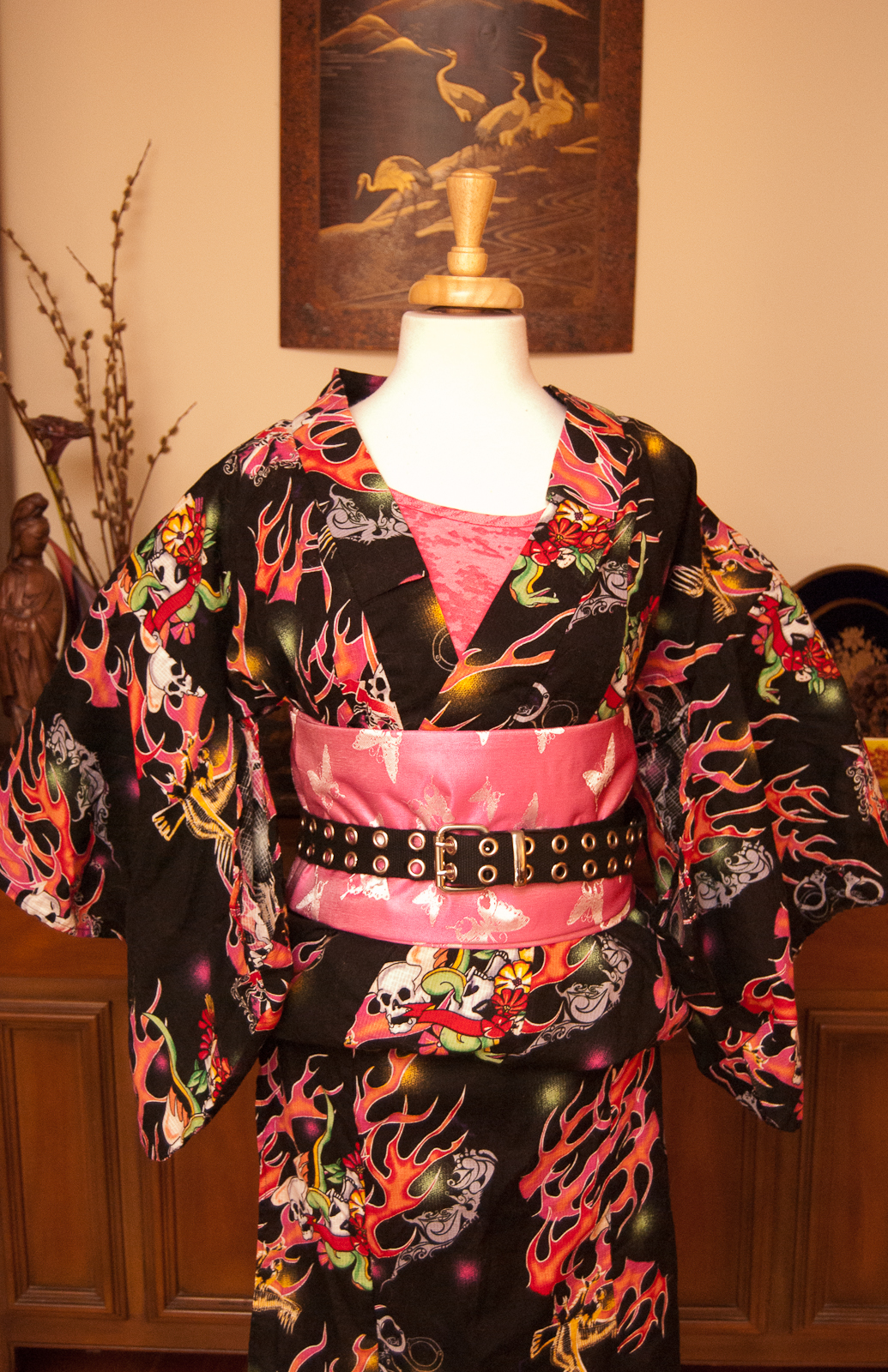
We’ve got a true first for this month’s Fudangi First Friday – I’ve actually never put a yukata on the mannequin until now! This coordination is actually something I had set out to wear to an event. On Wednesday, the lovely folks at Kimono Vintage Montreal organised an outing in yukata to the Montreal Jazz Festival, and what better place to wear something funky and non-traditional?

Unfortunately, the whole province was in the middle of a lethal heat wave (which has thankfully broken now).  Even when I was younger I never handled the heat well, and my chronic health problems only exacerbate the issue. I decided to be prudent and stay home, and thought it would be a good opportunity to feature the outfit on Friday instead.

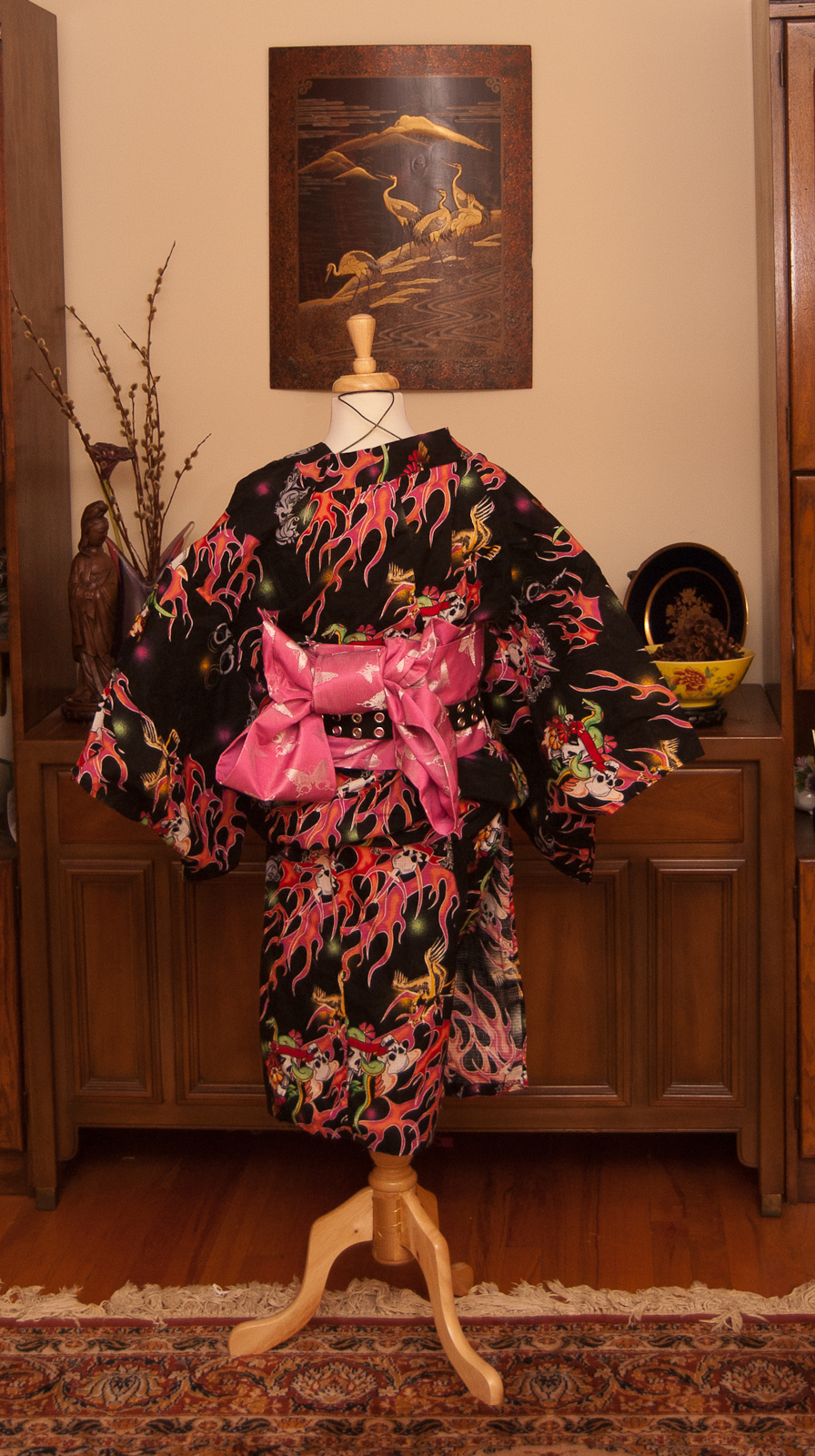
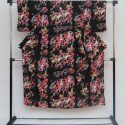
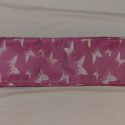
I love this yukata so much, and I’ve worn it out to a street festival before. It’s got a really unusual pattern of flames, skulls, handcuffs and snakes, amongst other things. The obi came with it and from a distance looks like it’s just got butterflies on it, but up close you can see that there are skulls in their wings. It seemed like the perfect thing to wear to a big outdoor music festival.

Rather than fight against my figure and try to bind my chest in this heat, I’d already decided to use a coordinating cotton tank top underneath and wear the yukata in a loose, open fashion. I stuck with that choice on the mannequin, as well as hiking the hem up shorter than standard, and I love how it looks! I was also inspired by Nichole and her epic kimono style to use a belt in lieu of obijime, and I really love how it all looks together. I think I will make a point of finding somewhere to wear it out like this, because it seems a shame not to!

Items used in this coordination

MonoKimono Challenge – Misty Mint

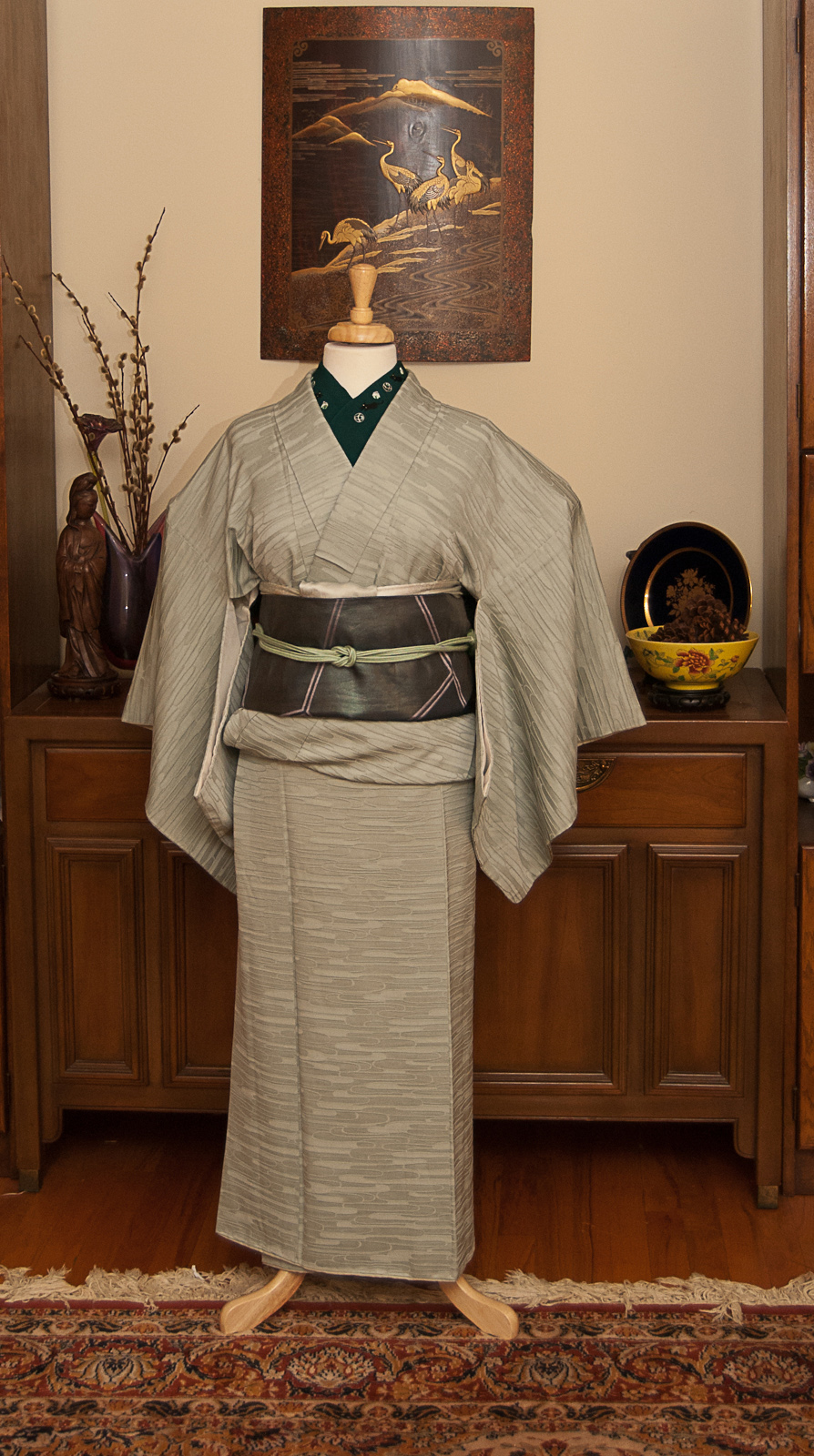
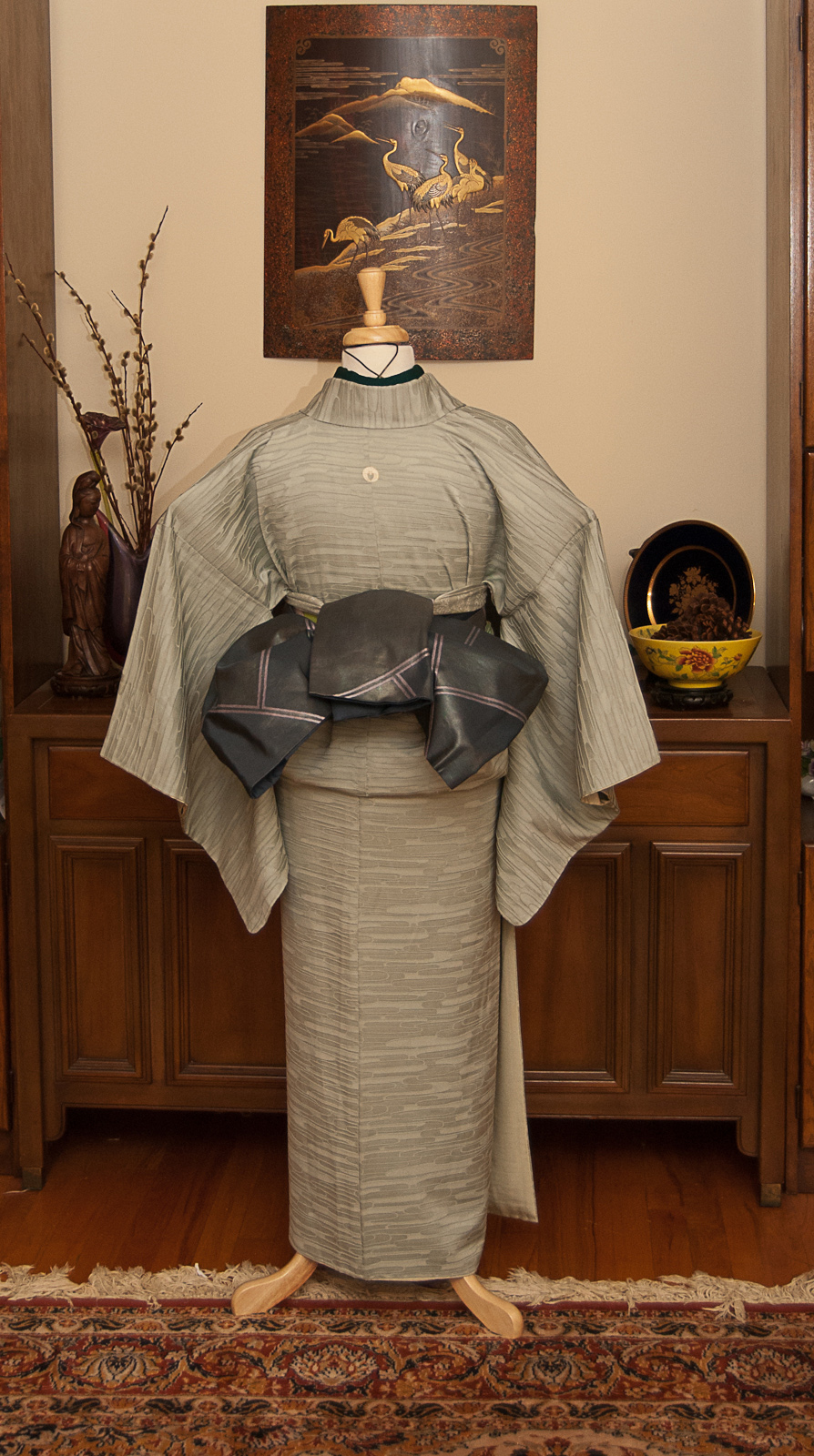
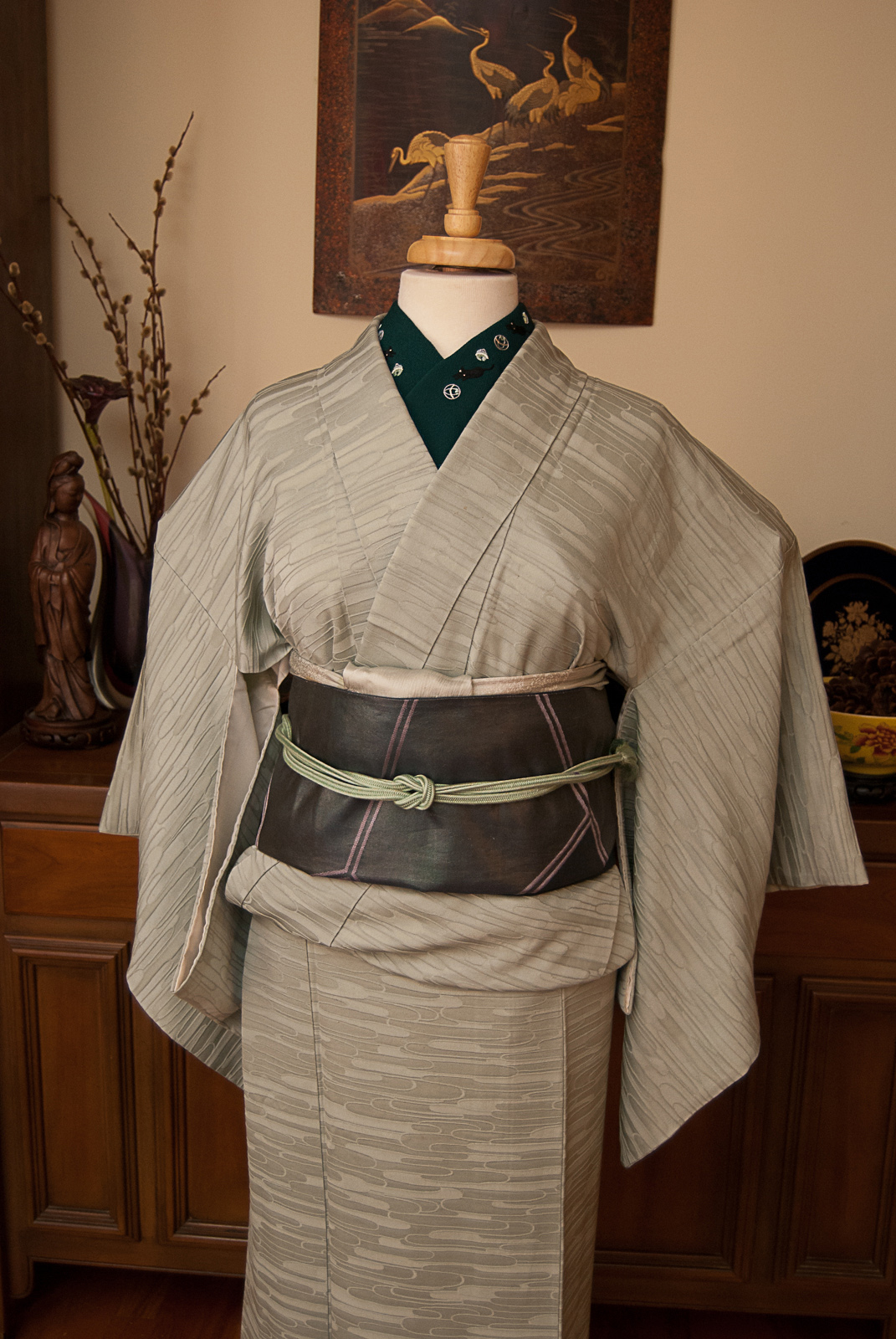
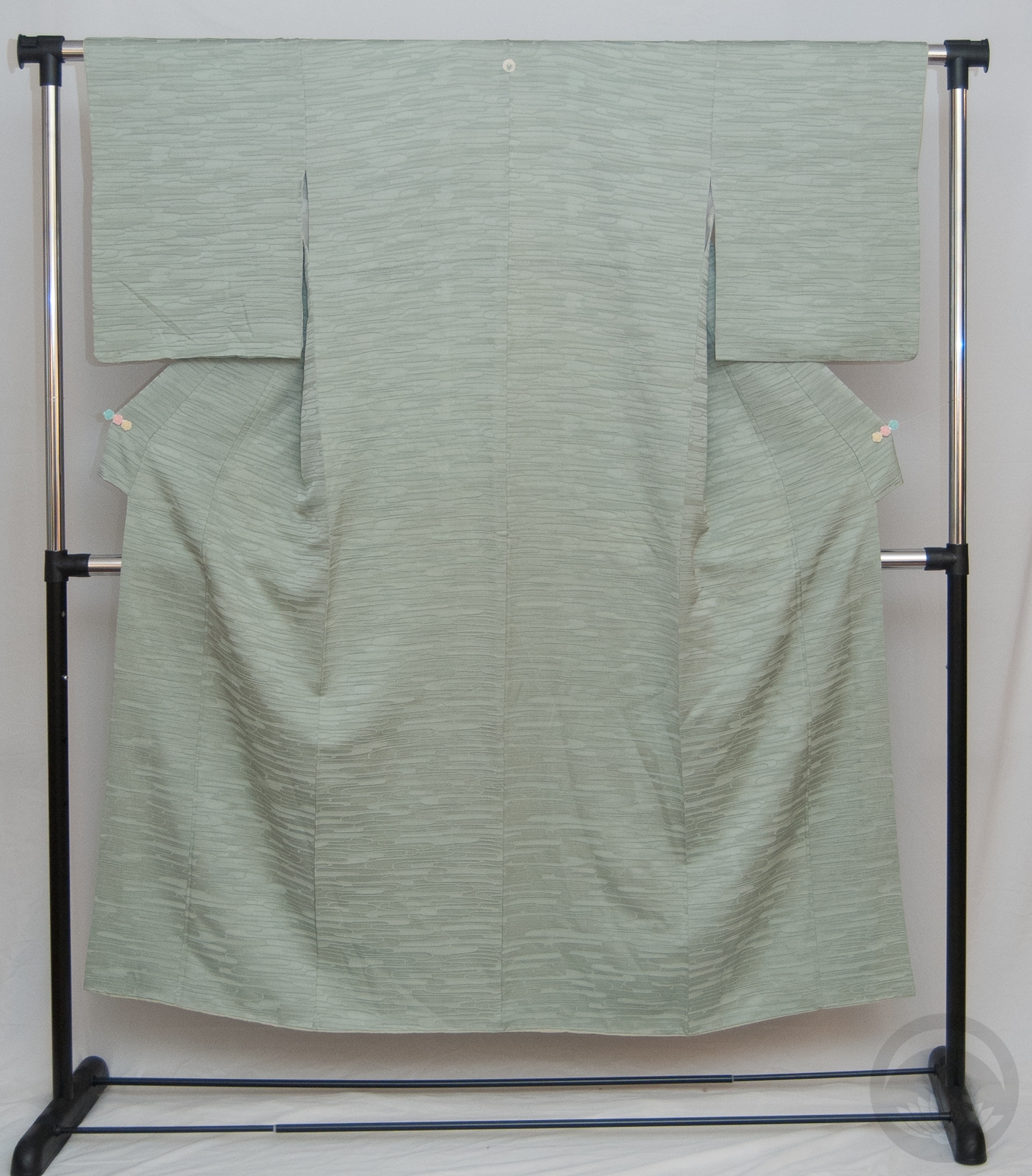
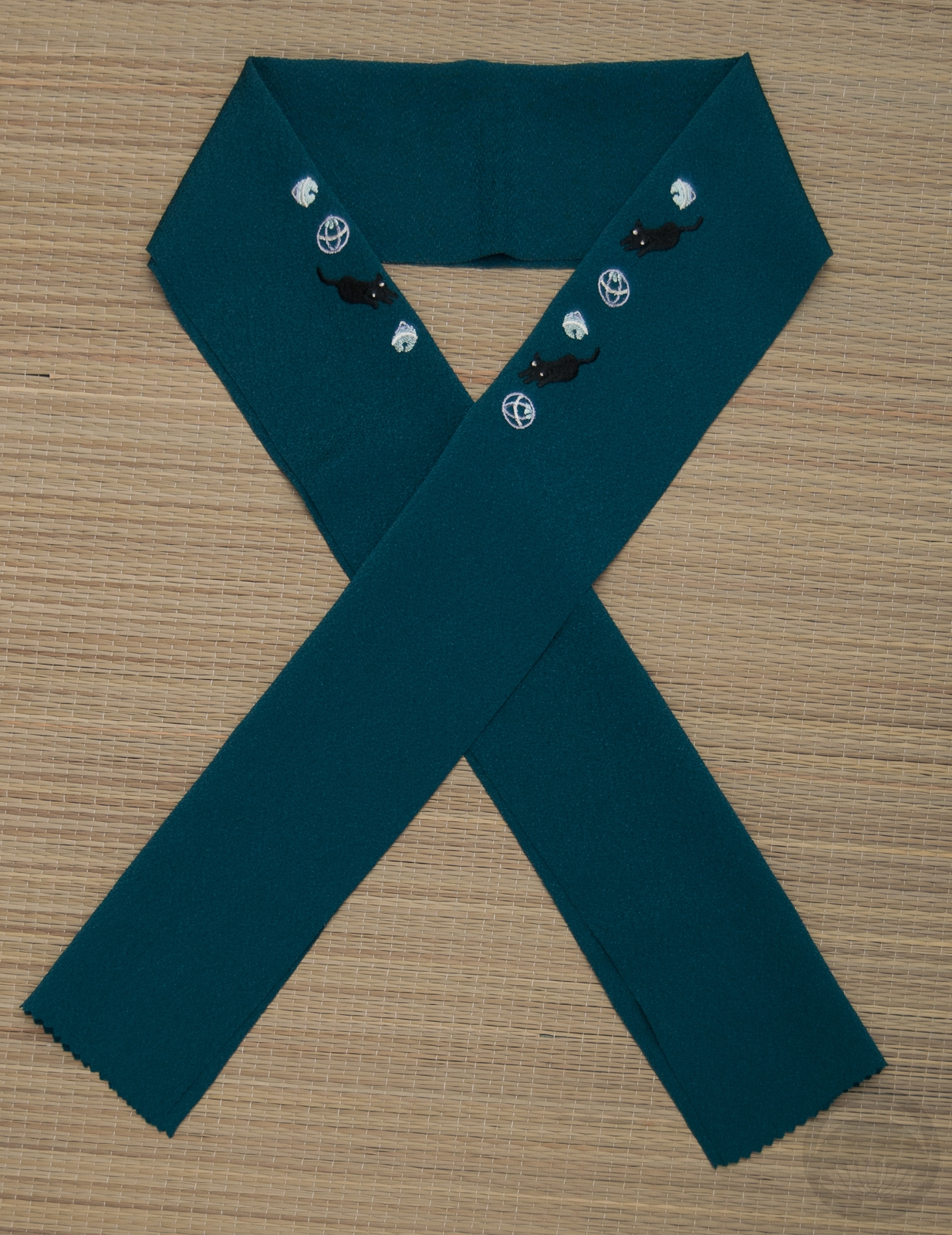
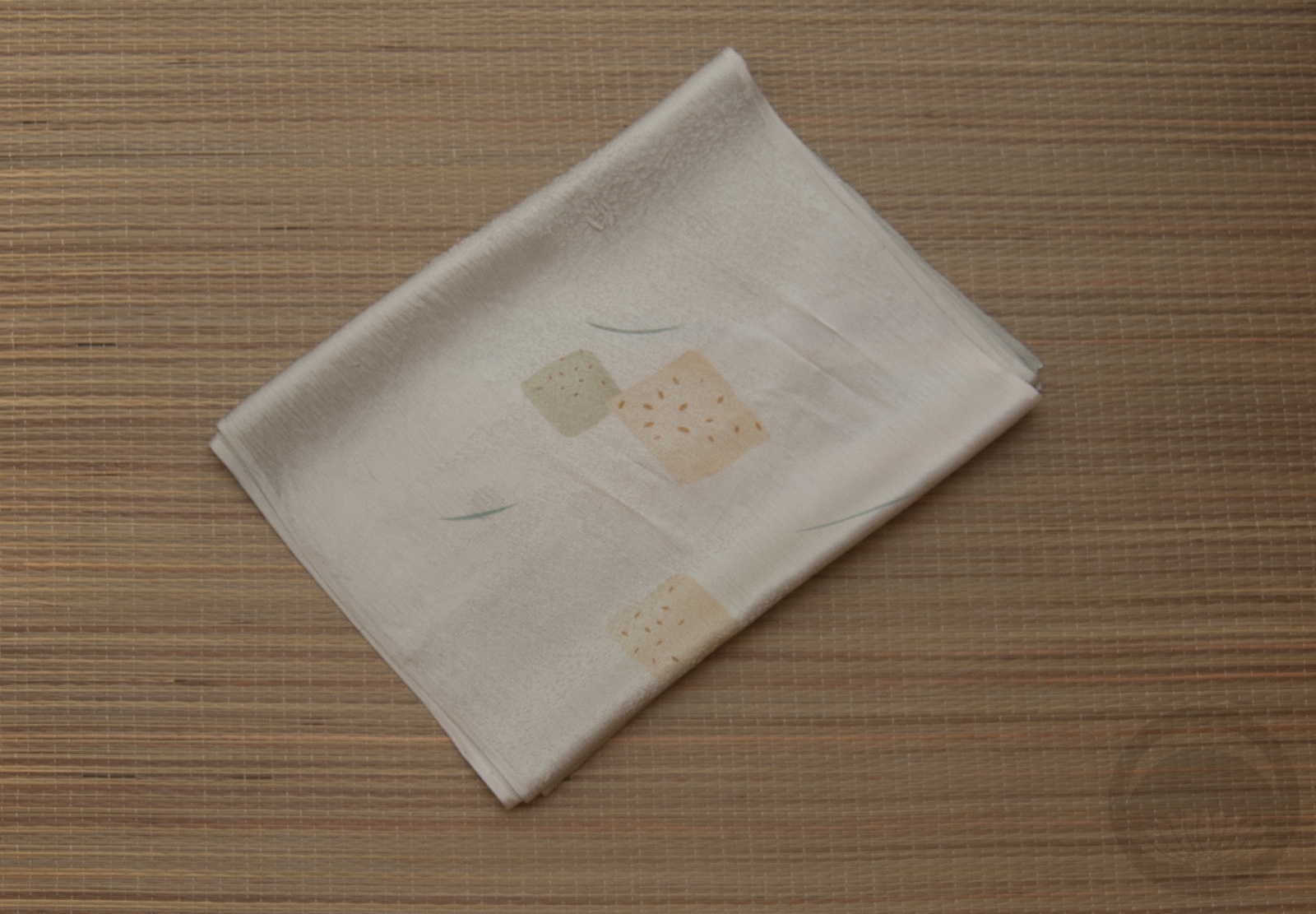
Does anyone else love Misty Mint candies? If you’ve never had them, they’re these wonderful, creamy, melty mint candy drops in beautiful pastel colours. They don’t make them anymore, sadly, and even if they did I couldn’t eat them since I’m allergic to dairy now, alas. However, the colour of this iromuji makes me think so fondly of them!

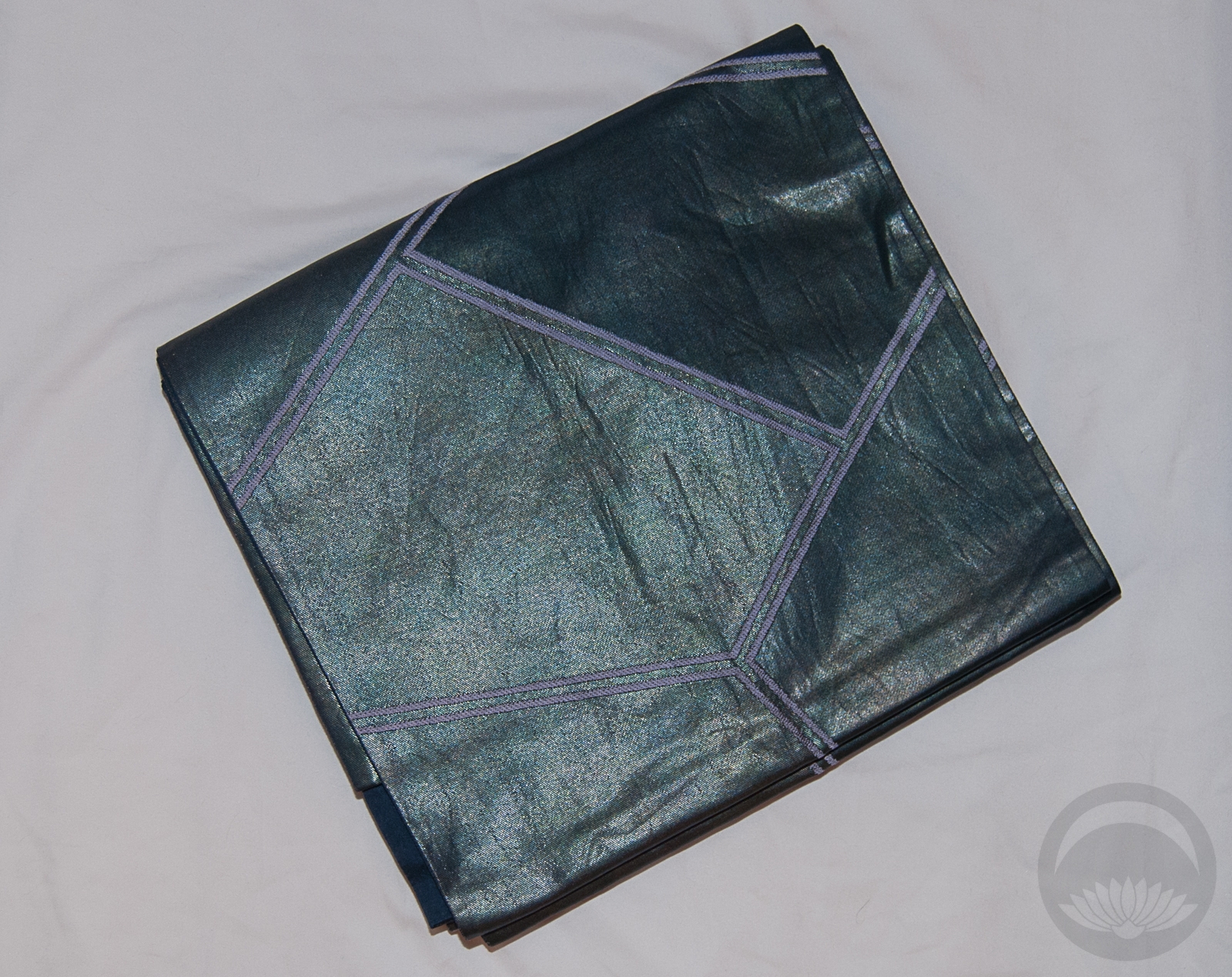
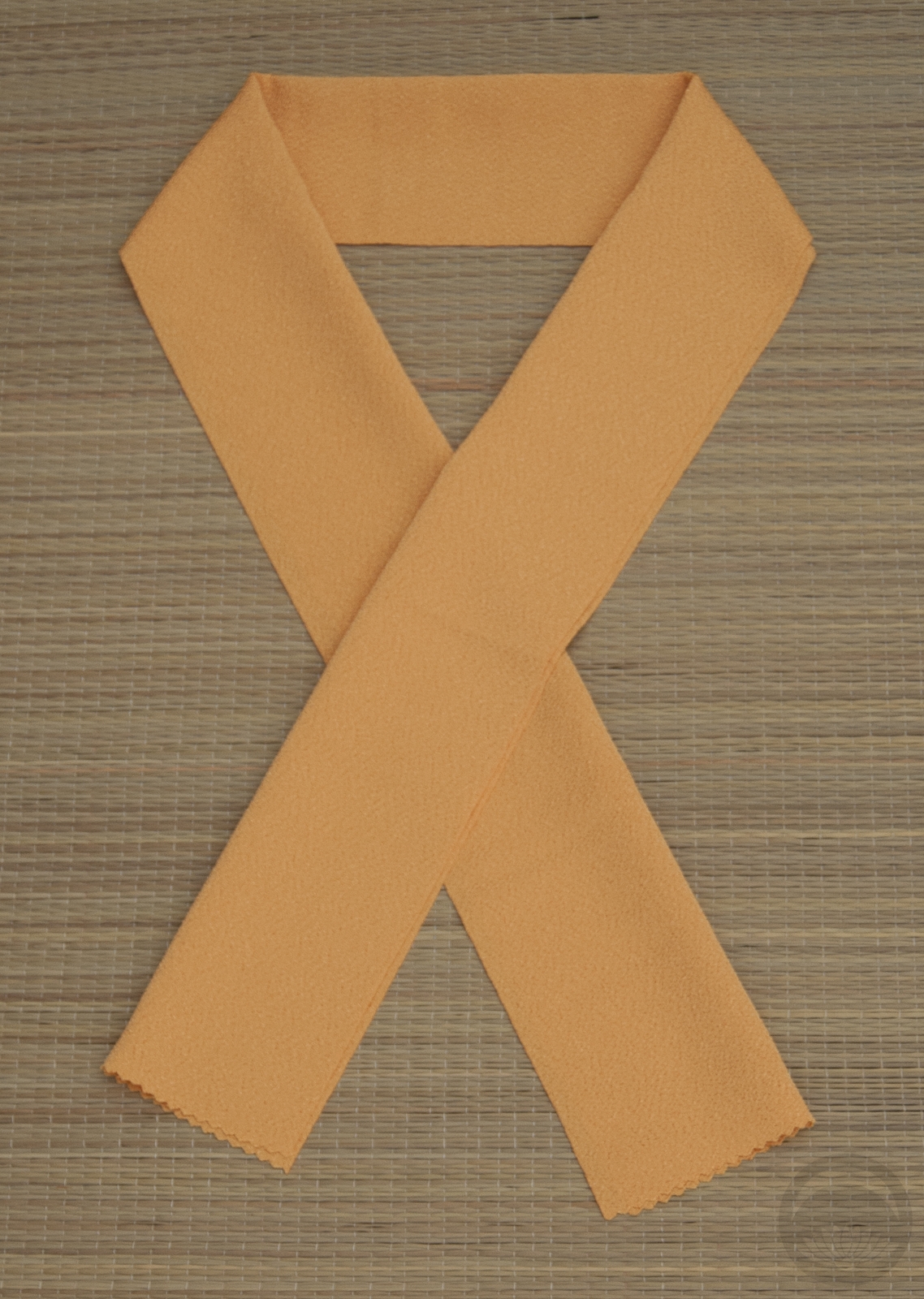
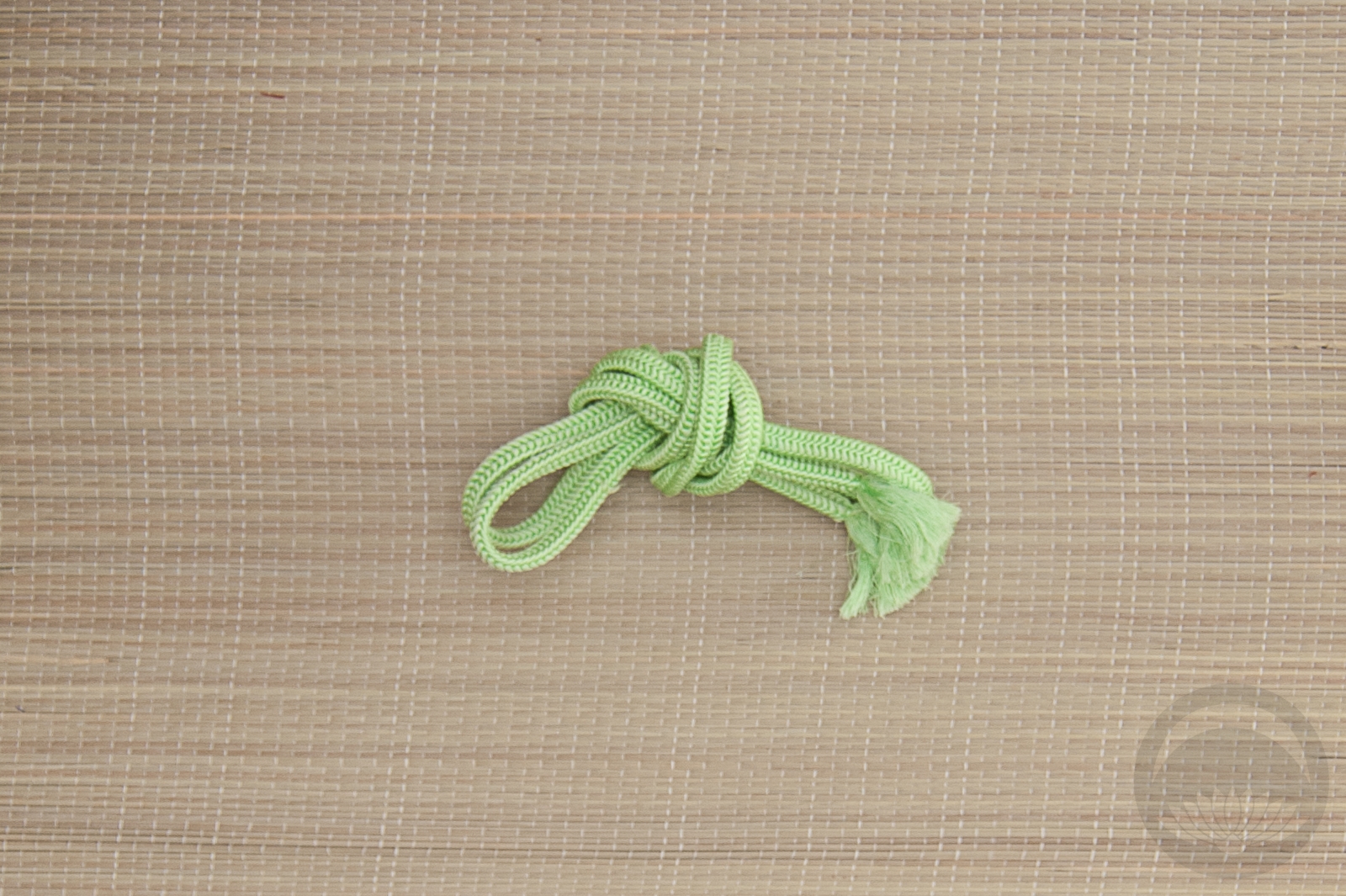
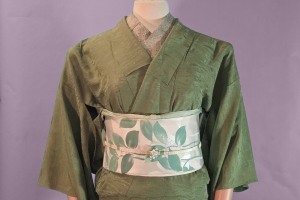
This coordination is basically a revisit of this monochrome outfit, but I wanted to do something softer, and without the hakama. This one feels more wearable, overall. I used the same kimono and haneri, but switched up to this shiny fukuro obi and accessories that blend in with the kimono itself. I had fun doing a sort of bunko variation with the obi, I quite like how it looks and it was very quick to do.

It’s also very interesting to me how this colour family photographs. In the original outfit with the hakama, it looks much more blue, today’s photos look much more green, and the catalogue photos below feel somewhere in between. All due to ambient light, time of day, and other external factors.

We’re halfway through the #monokimono challenge! I’m proud of myself for sticking with it, and already have plans for the second half of the year. Are you doing the challenge? If so, please share links in the comments, I would love to see!

Items used in this coordination

Pride Rainbow!

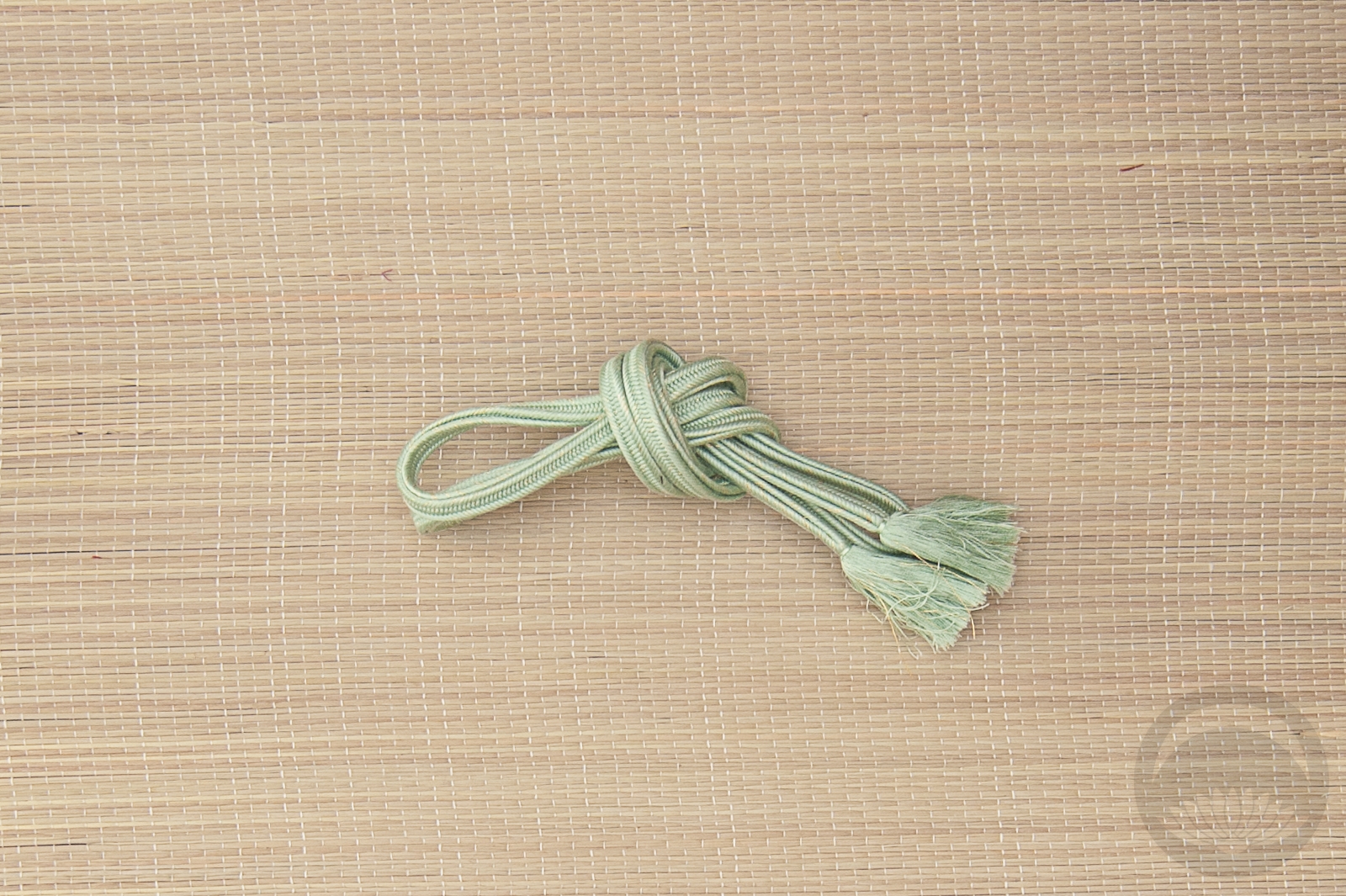
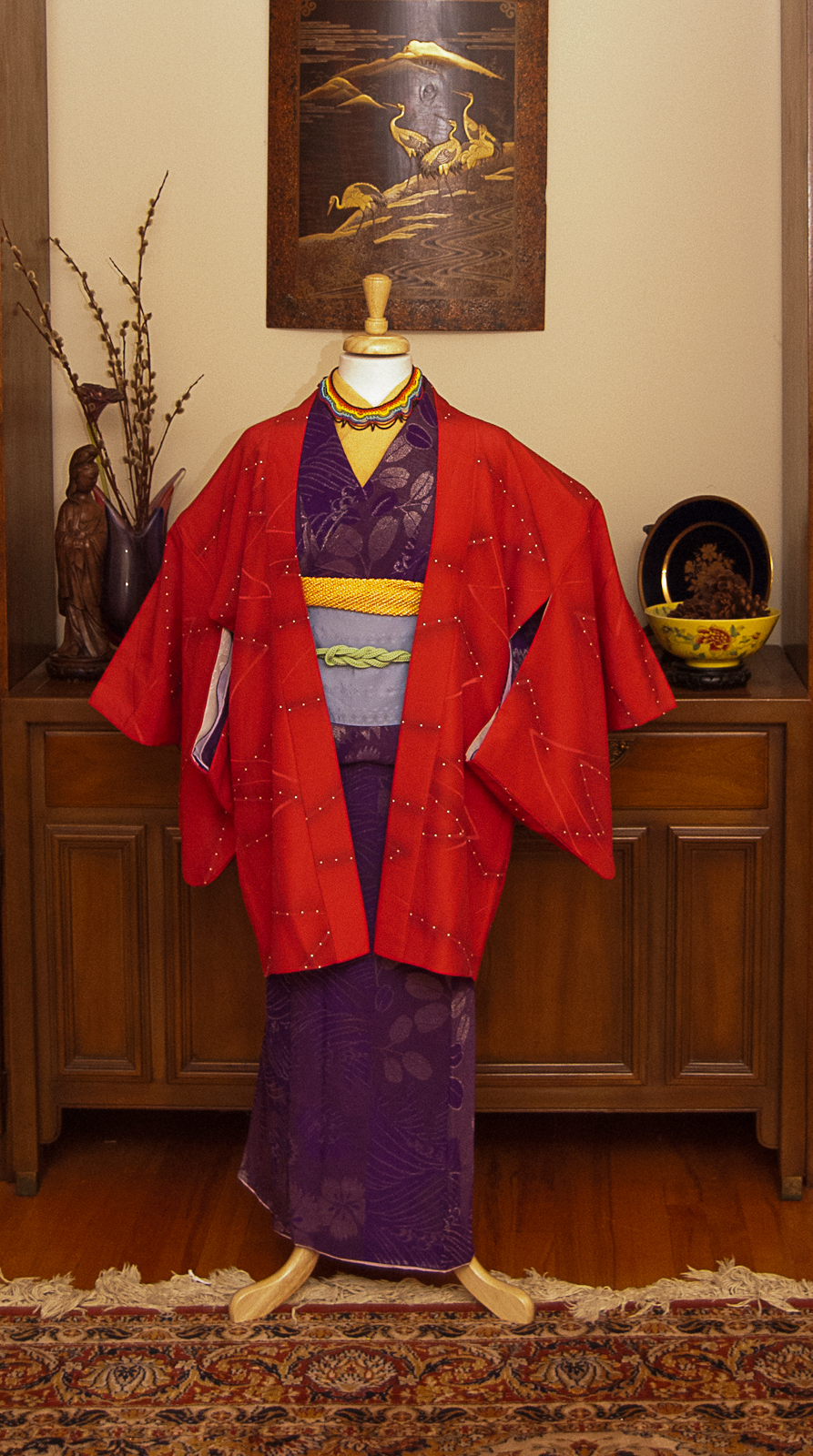
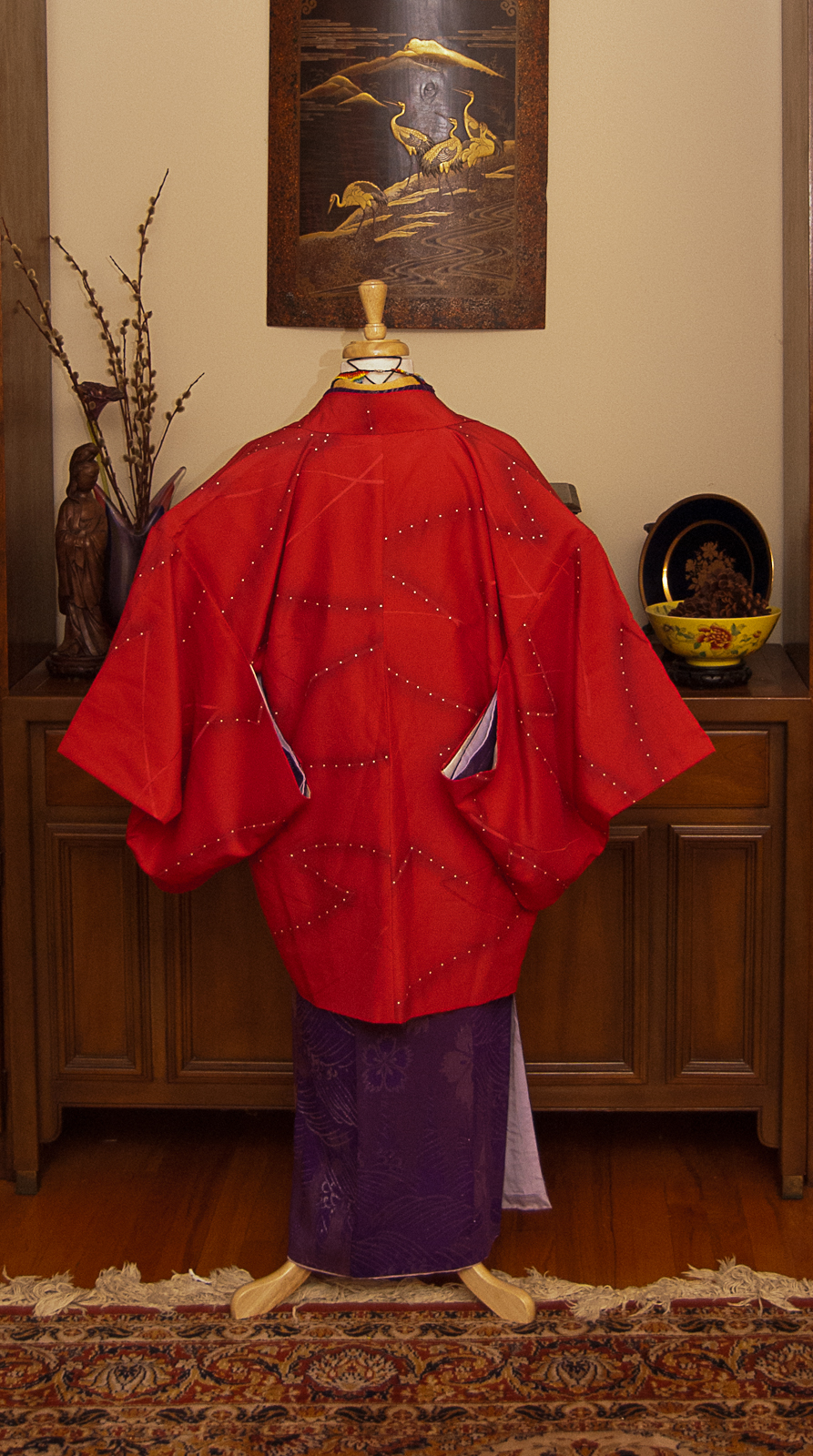
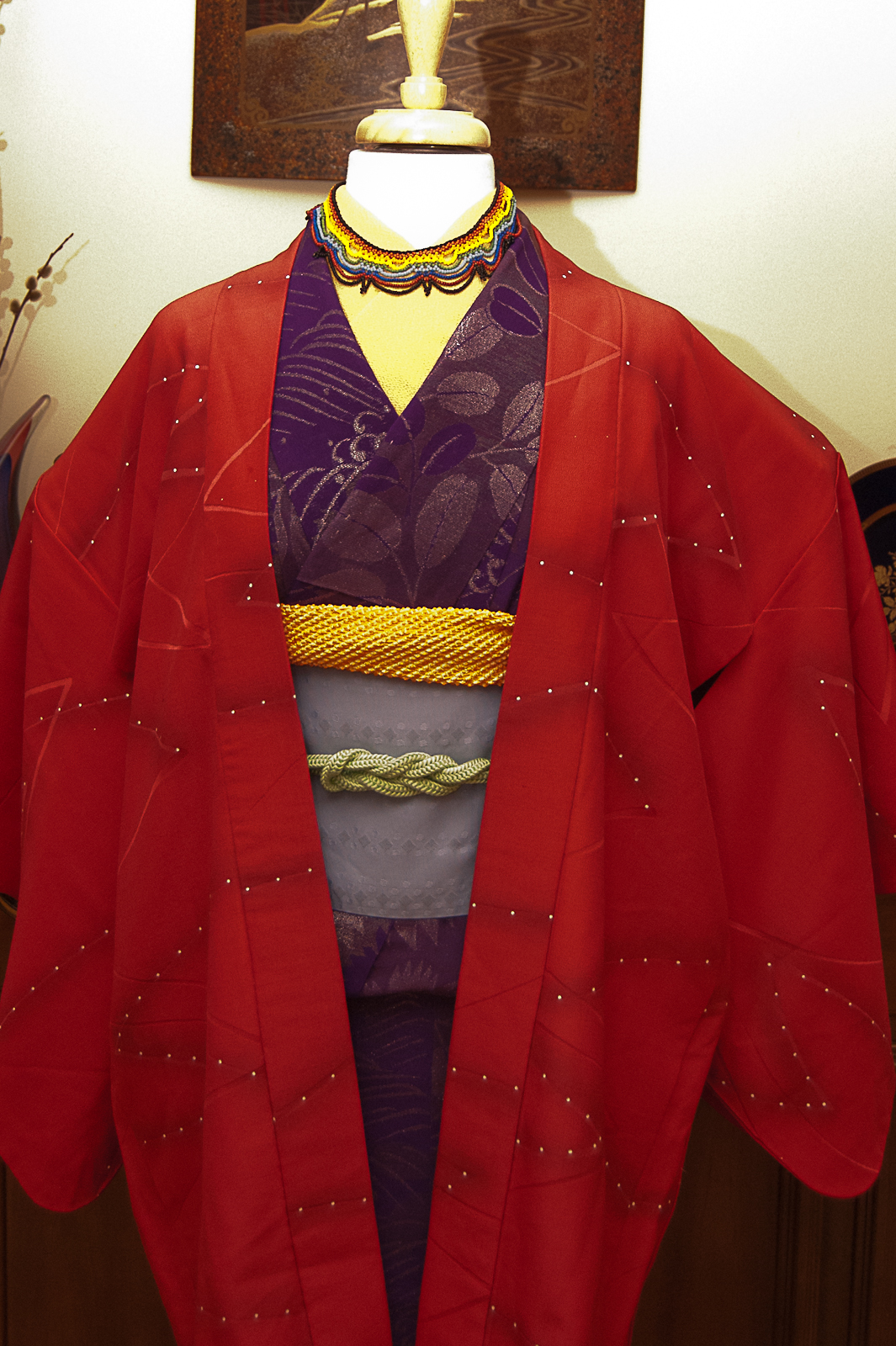
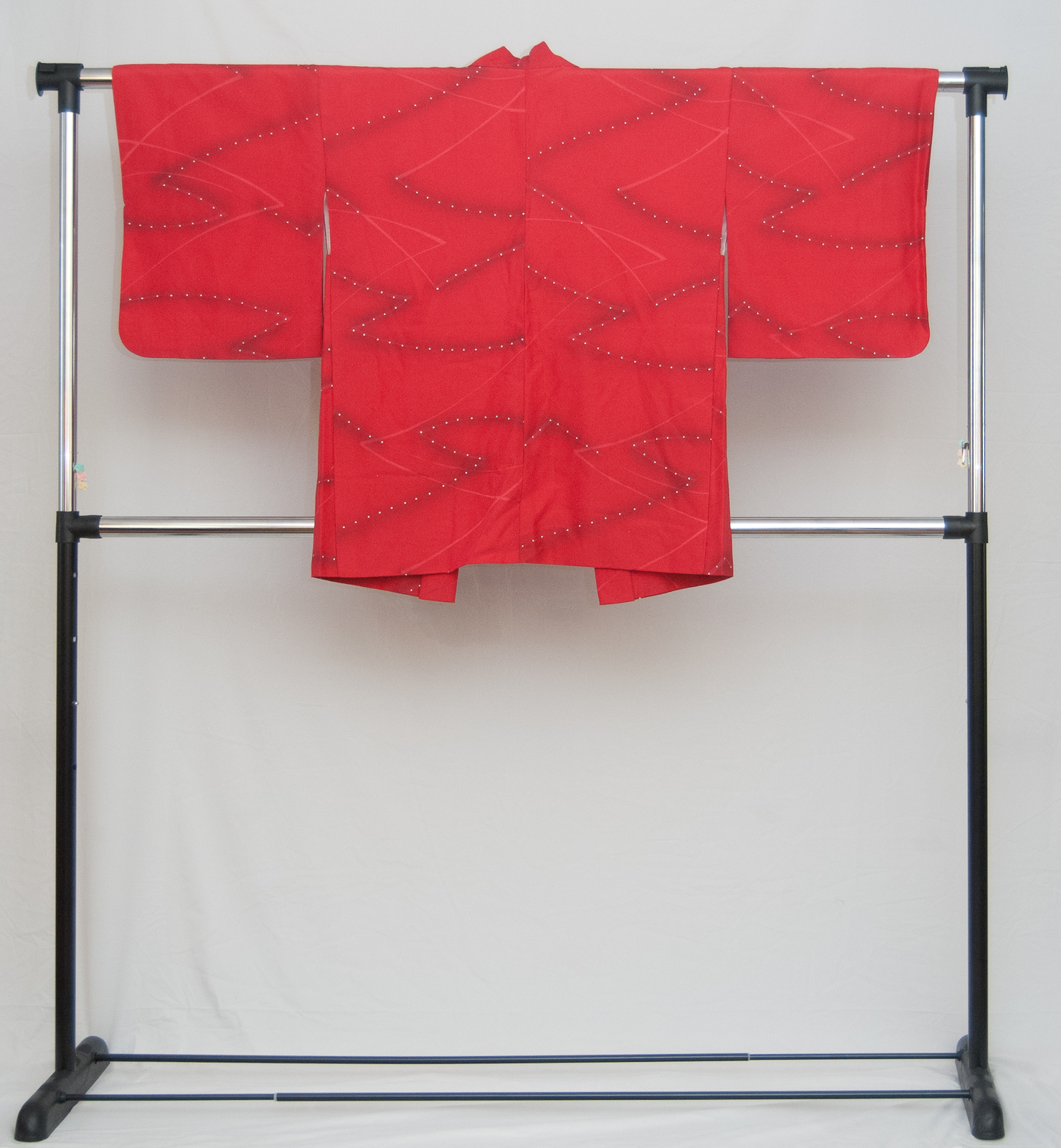
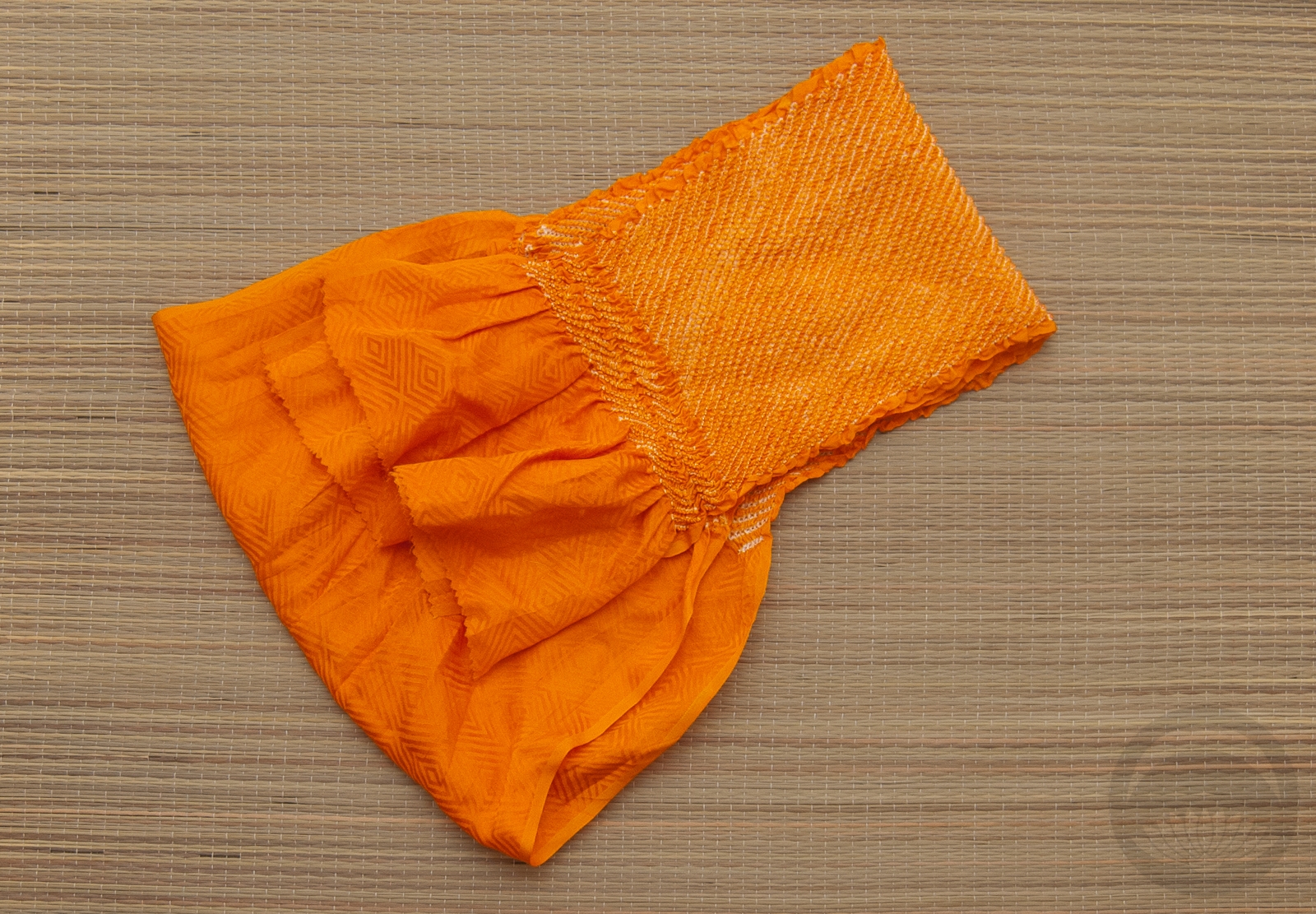
June, as you may know, is Pride month for the LGBT+ community. Here in Montreal we have a Pride festival of our own in August, but I wanted to do something for June. I don’t really own any rainbow-themed items, but I realised I could assemble a rainbow of solid-coloured pieces! My fabulous purple komon with silver lamé designs, complemented by a red haori, yellow haneri, orange obiage, green obijime and blue hanhaba obi. I love how bold and vibrant this outfit is! It would be fun to wear this to an event, but it’s all lined synthetic and incredibly hot and heavy, even just to dress the mannequin.

The finishing touch was a beaded rainbow choker I’ve had for eons. I know necklaces aren’t technically proper for kimono but this outfit is already all over the place formality-wise to suit the rainbow theme, so I just ran with it.

I do apologise for the photos, my flash batteries are close to dying and I didn’t realise how badly balanced they were until I got downstairs and started processing them. Unfortunately, it’s nearly 40 C (100+ F) in my living room right now and I can’t deal with the idea of going back upstairs and taking more photos.

The world is a scary place right now. Just know that I love you all, whatever your orientation and gender may be. Stand tall and never be ashamed of who you are inside, even if you’re in a place where being yourself openly puts you at risk.

Items used in this coordination

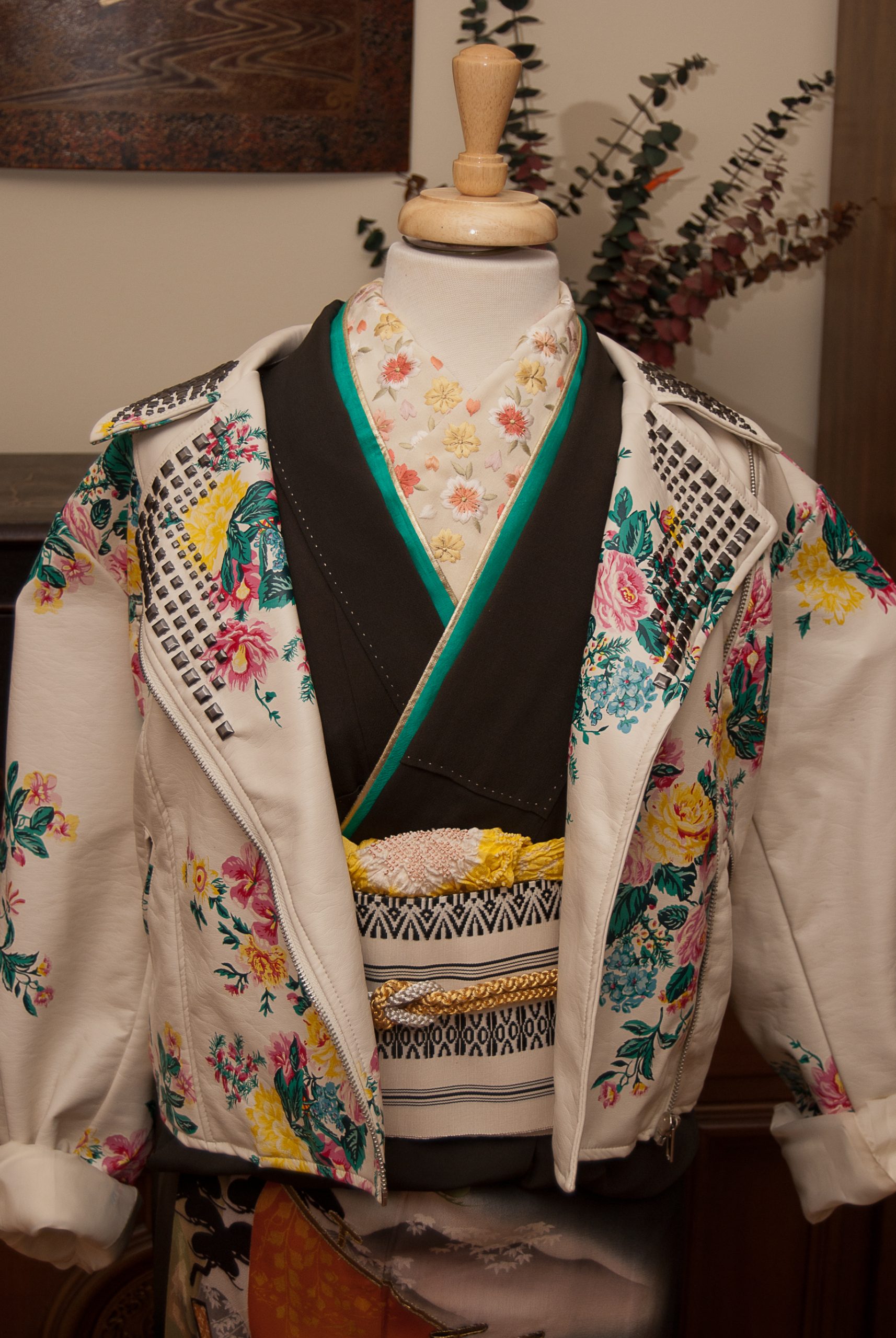
Kurotome & Jacket Experiment

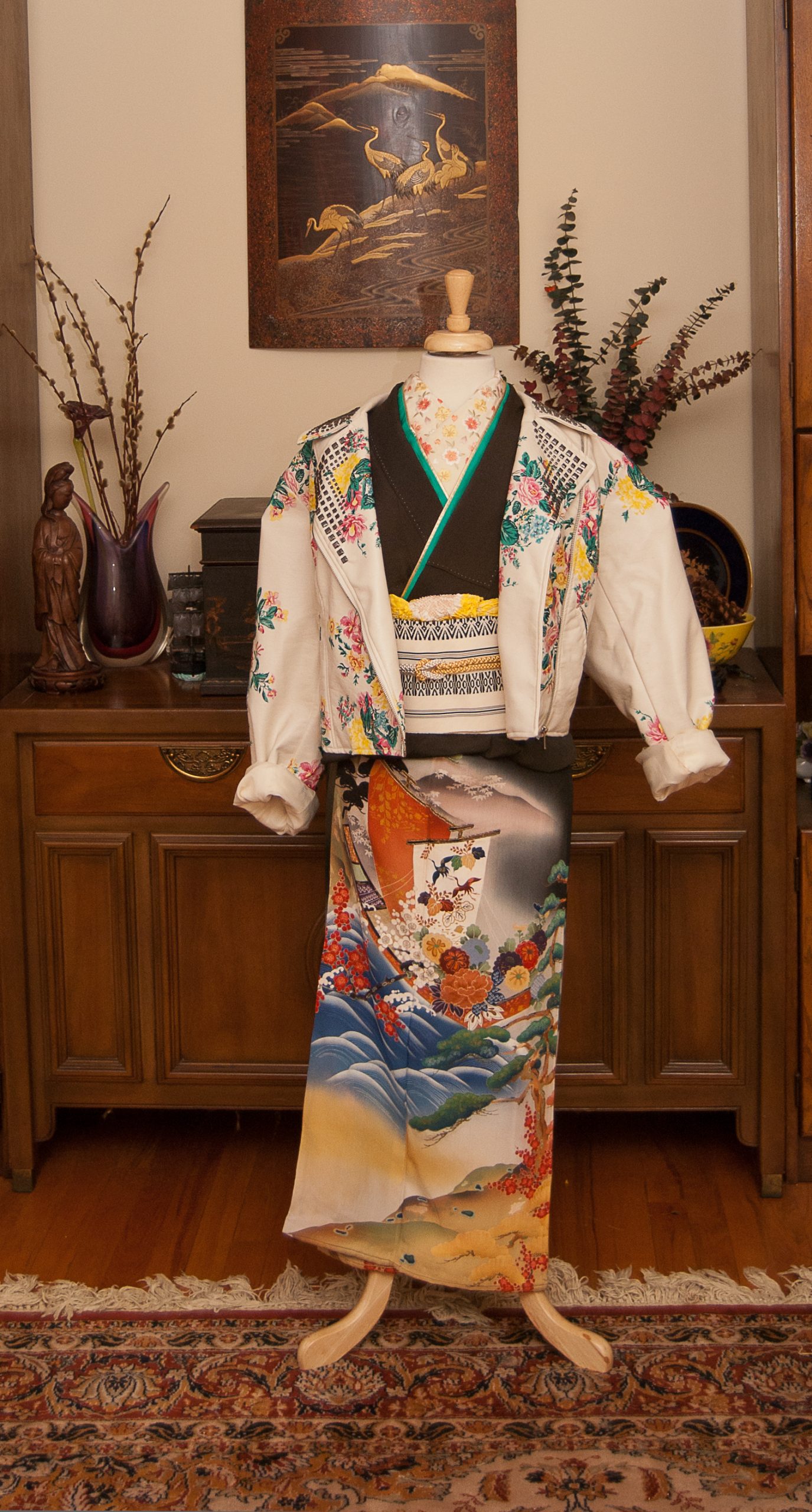
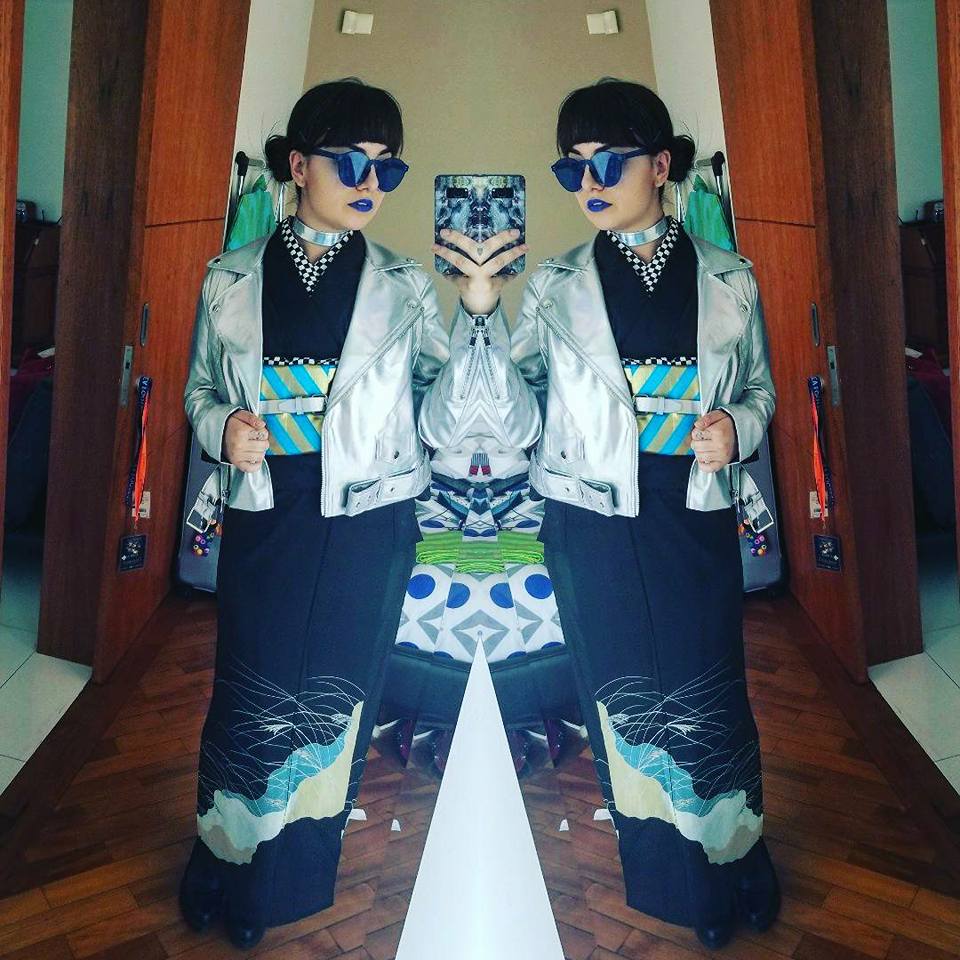
Last October, amazing and modern kimono stylist Akira put out Akira Times – Wafuku Anarchist, a book of his work. On the cover is a gorgeous woman in a fantastic, punk-feeling kitsuke with a leather jacket over top. Needless to say, I fell in love immediately. I knew I wanted to try something similar, but somehow never got around to it.

Fast forward to a few weeks ago when I was reminded by Nichole Fiorentino, who also does some utterly gorgeous and aspirational kimono styling, when she posted older photos of her doing a similar kitsuke with holographic accessories and a holographic leather jacket. I knew the time had come for me to do a kurotme & jacket experiment of my own!

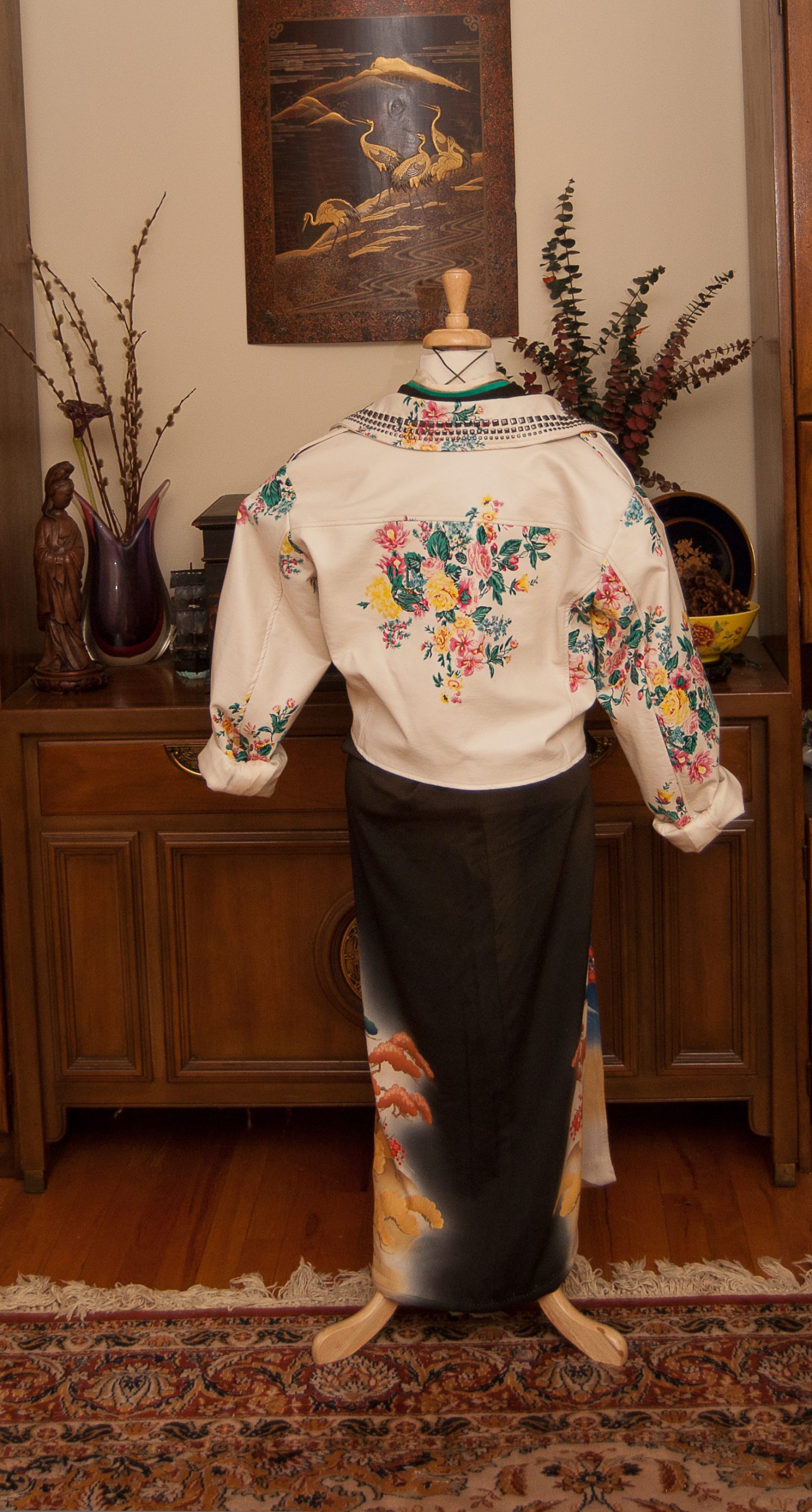
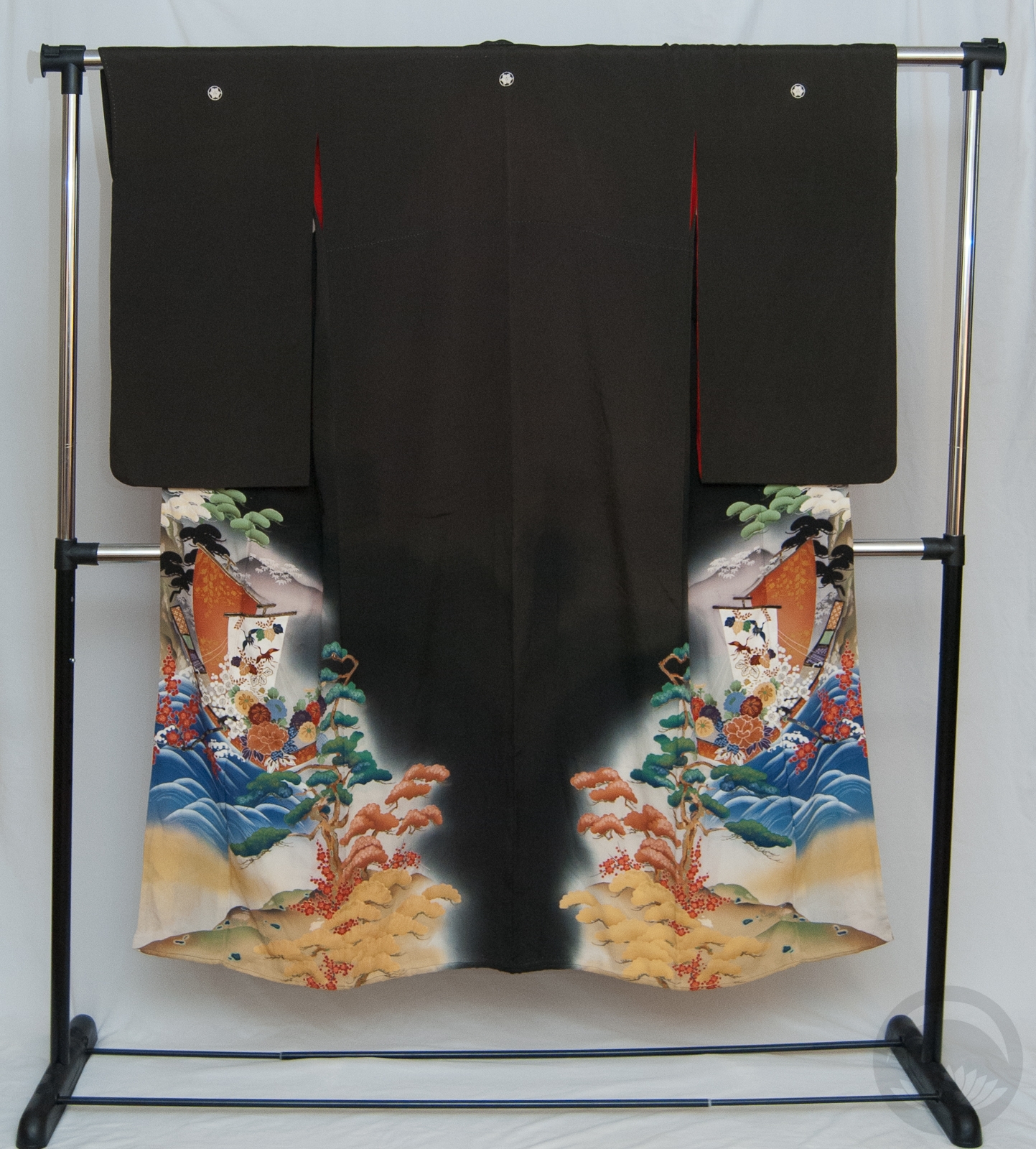
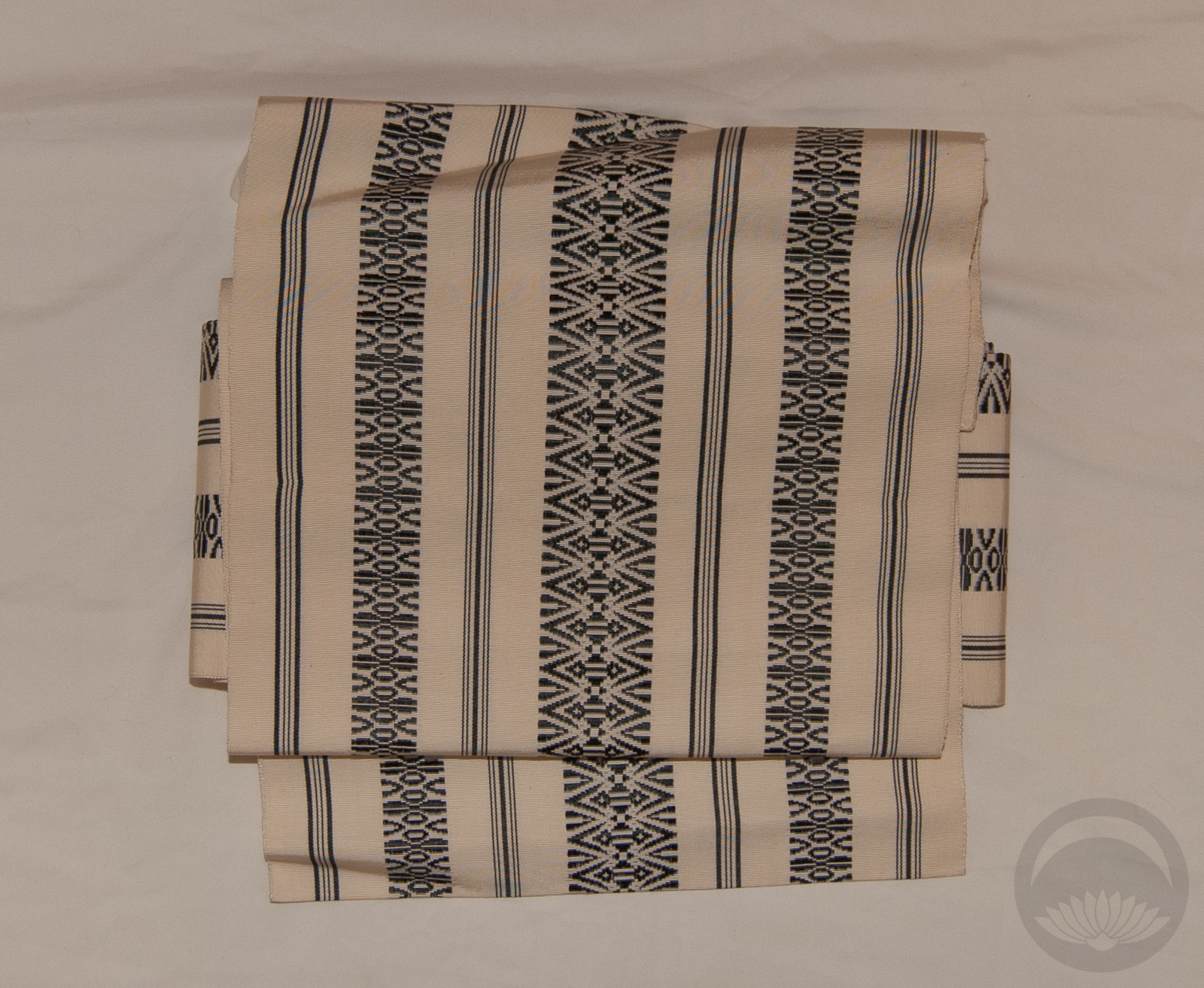
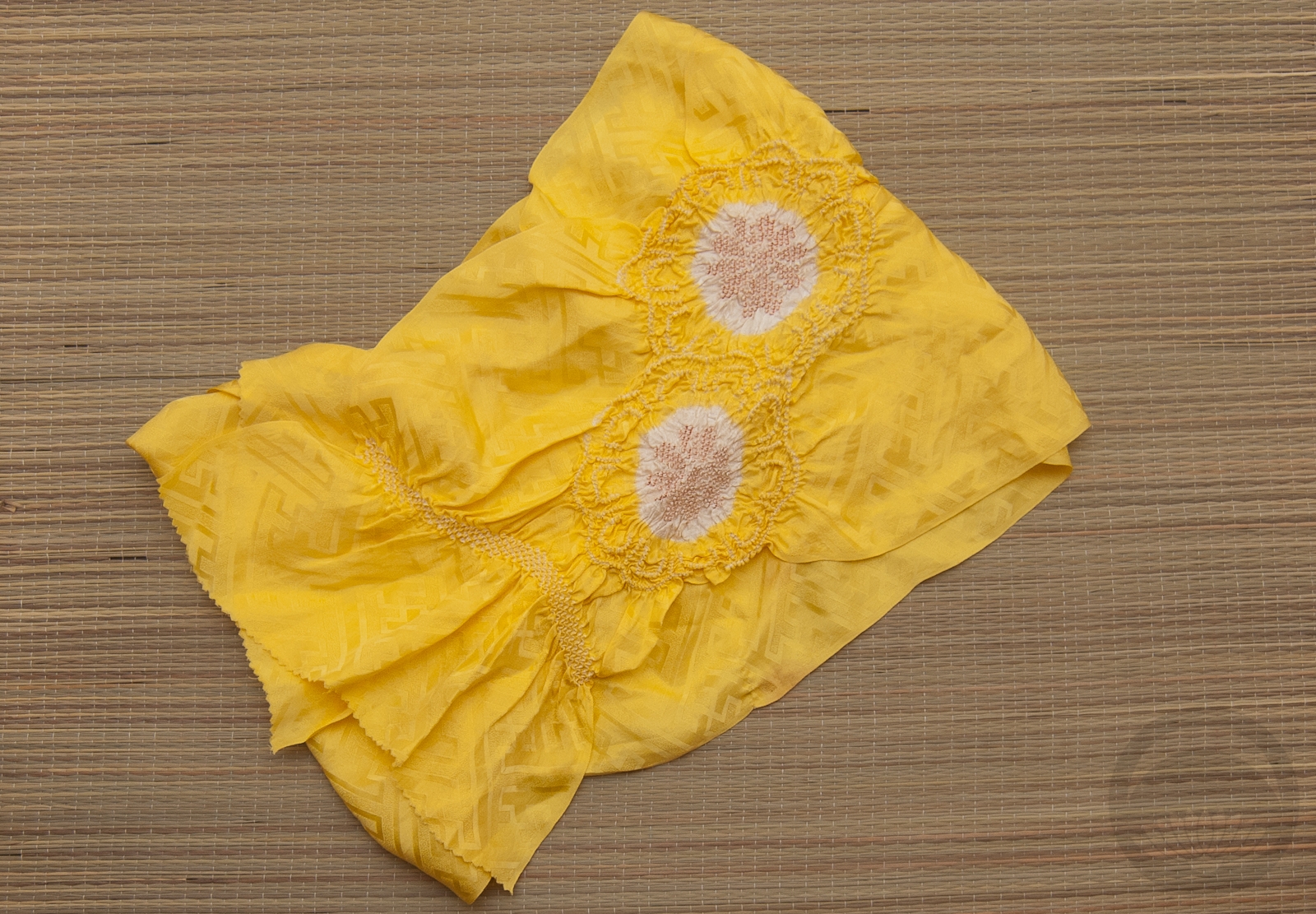
Amusingly enough, the jacket itself came from another dear friend named Nicole, and it’s one of my favourite things in my wardrobe. I knew I wanted to use it, instead of a plain black one, so I chose this vintage kurotome because of the similarities in colour accents, and the flower motifs. I figured since I was already doing something “wrong” I could just throw caution to the wind and have a little fun. I pulled out some really bold accessories, and went with the narrow band of my hakata tsuke-obi since the back would be hidden anyway, and it helped to reduce bulk under the jacket.

While I can’t say whether or not I’d ever be confident enough to wear something like this out in public, I do think the experiment was ultimately very successful and I’m glad I did it!

Items used in this coordination

(and one epic jacket!)

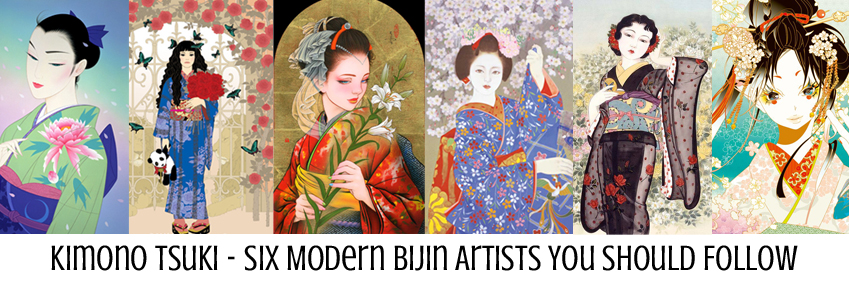
Art Gallery – Six Modern Bijin Artists You Should Follow

Bijin-ga (美人画) literally means “picture of beautiful person”. They originate in the woodblock prints of the Edo era, and typically depicted beautiful women from various walks of life – from everyday women doing everyday things to famous courtesans reclining in luxurious surroundings. Many famous artists produced bijin-ga prints; some of the most well-known being Utagawa Kunisada, Kitagawa Utamaro, and Tsukioka Yoshitoshi.

Around the transitional period from late Meiji through Taisho into early Showa era, artists such as Jun’ichi Nakahara, Yumeji Takehisa, and Katsuji Matsumoto‘s modern styles made an enormous impact on traditional bijin-ga and produced works that helped form the flowery, large-eyed shoujo manga aesthetic as we know it.

With the advent of more modern printing technologies and digital painting, art has become more accessible than ever before. There are incredible modern artists out there today producing breathtaking works that continue to challenge the way we think of traditional Japanese art of gorgeous women. These are the sorts of artists I’m going to focus on. I urge you to check out their galleries, follow them on social media, and buy their prints to support them if you can.

While these featured artists are all incredibly versatile and do portraits of women in kimono and modern clothes as well as floral studies and still-lifes, I chose to focus on kimono-clad beauties to keep with the spirit of bijin-ga.

This entry will be long and image-heavy, so please click through to keep reading! Continue reading