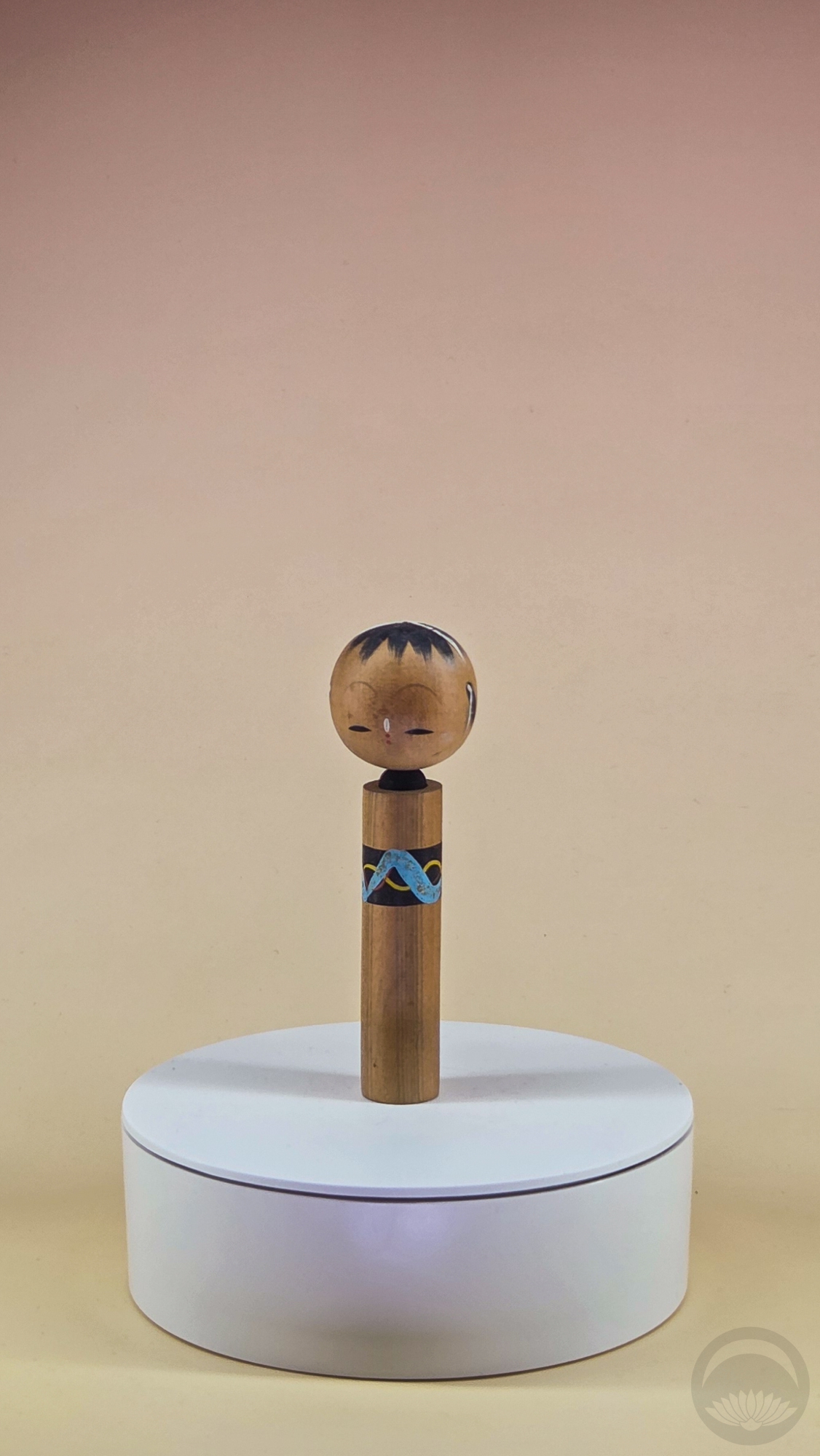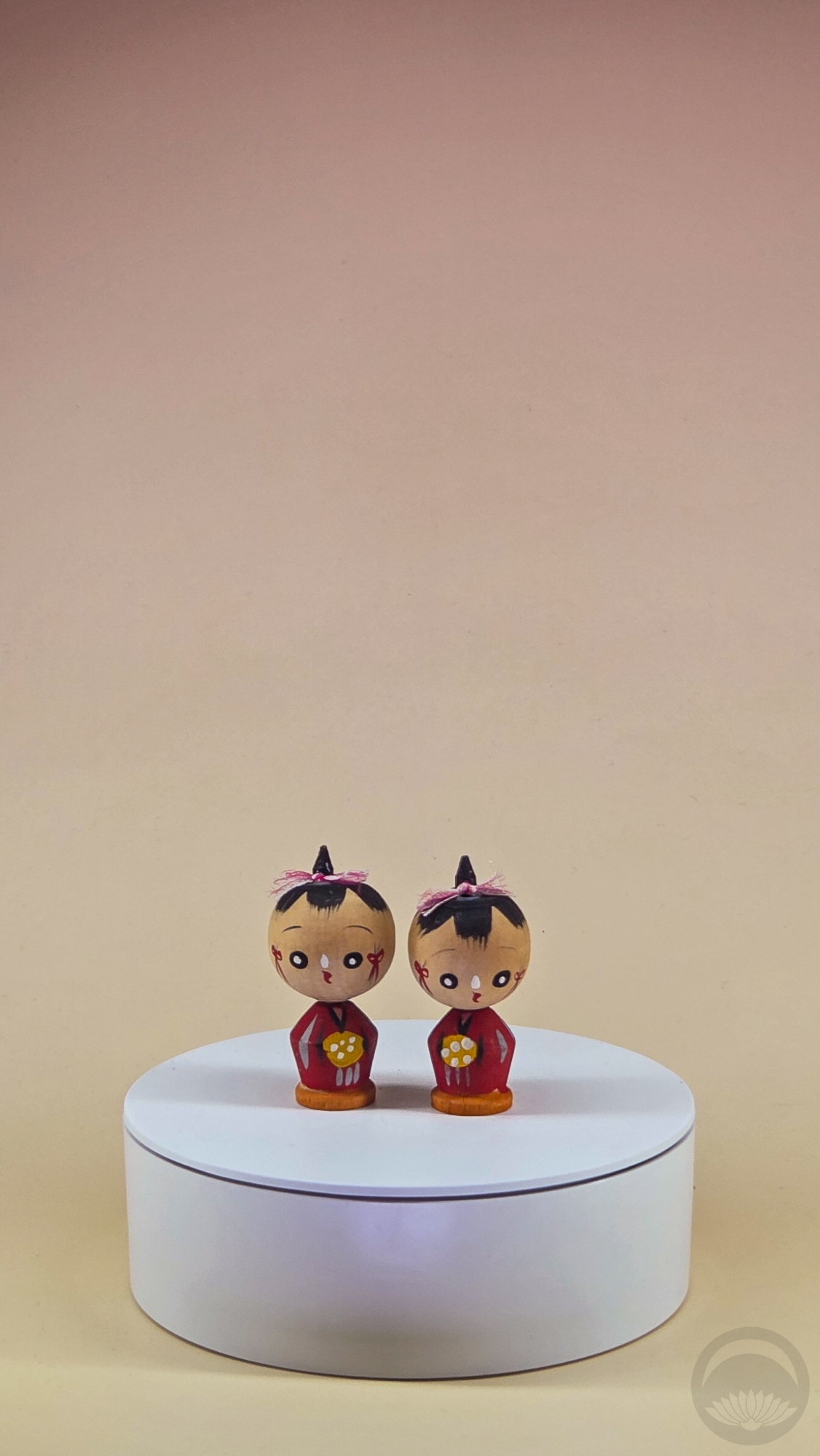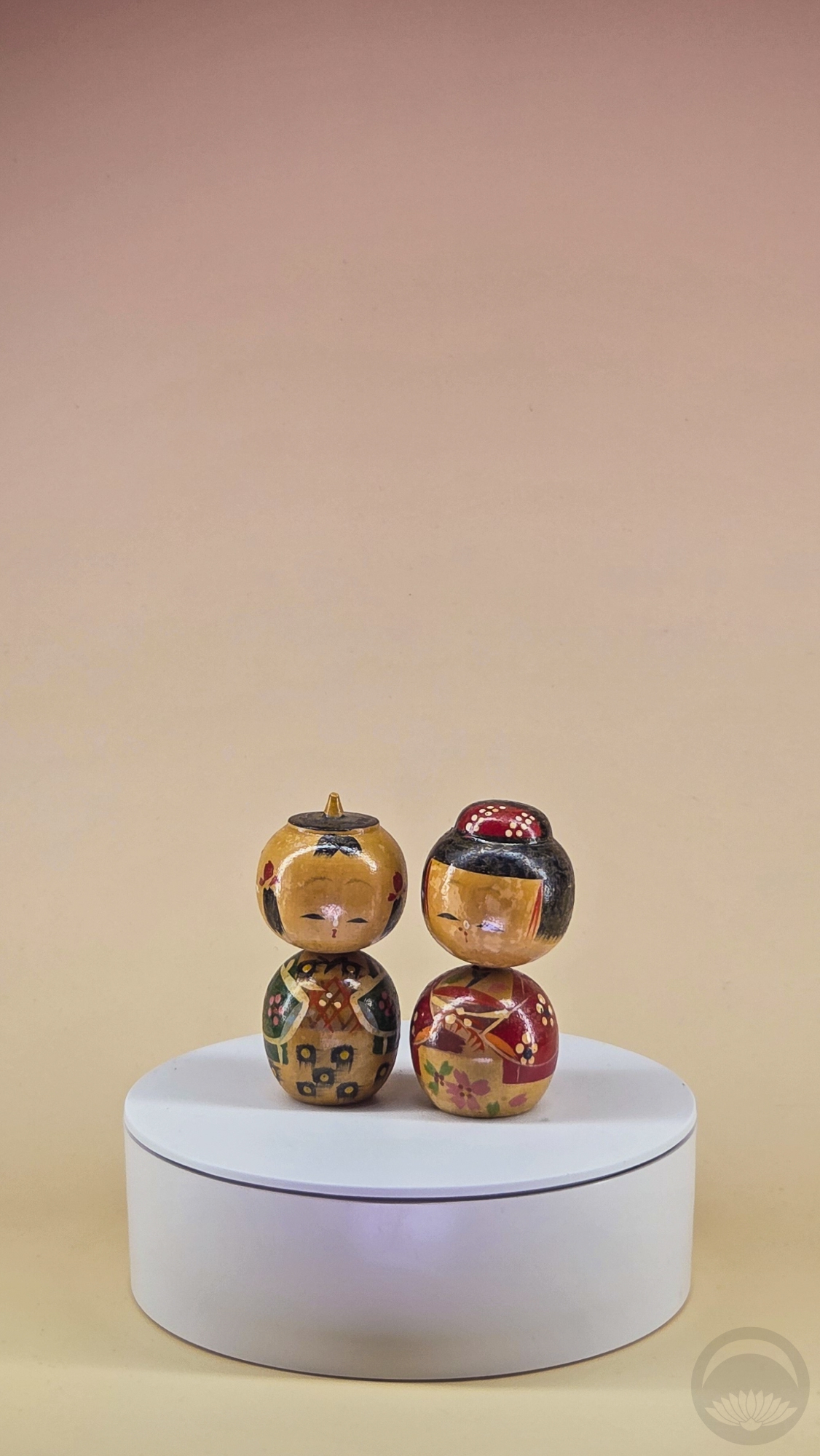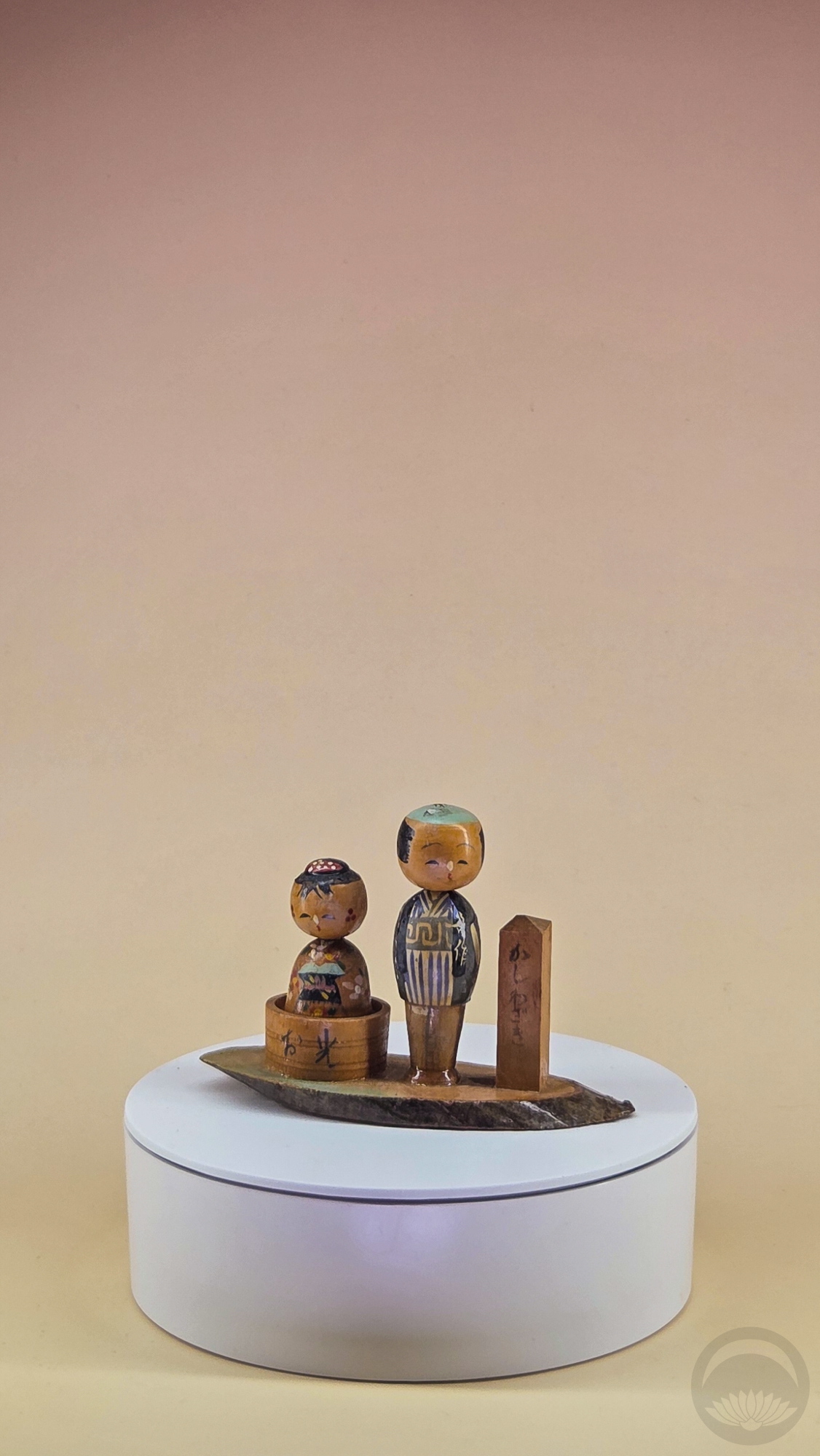
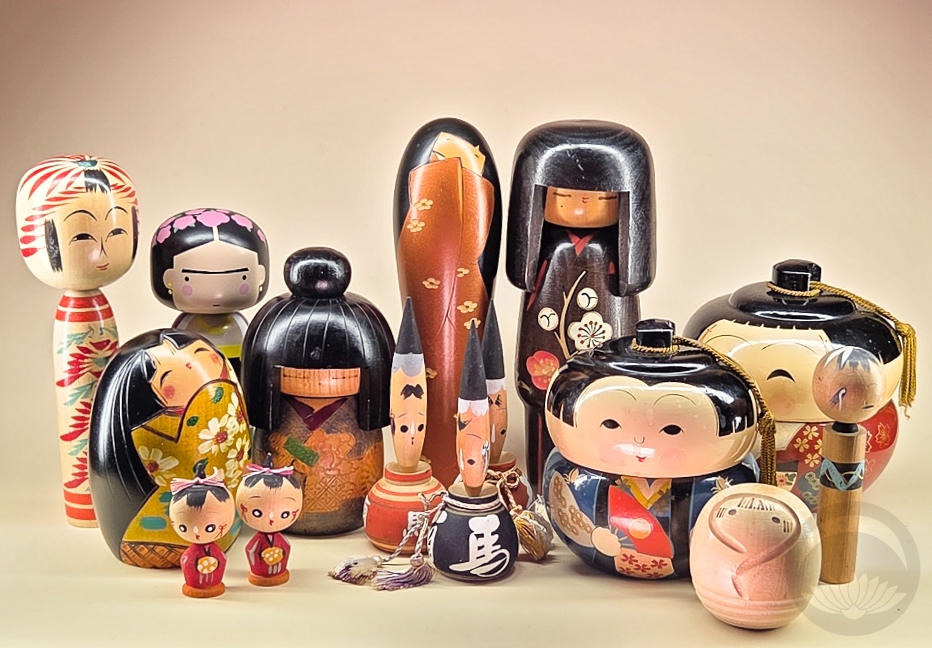
My Kokeshi Collection

I didn’t set out to start collecting kokeshi ( 小芥子, こけし) dolls, but let’s be realistic — if you’re in any way involved in Japanese traditional arts it’s going to happen eventually. Whether it be gifts, souvenirs, impulse purchases, or any other myriad options, these charming little figurines will find their way into your heart and your home.

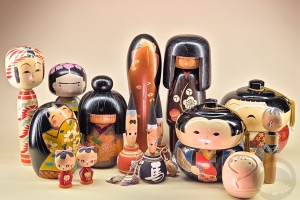
I’ve already posted about my Kimmidolls, which are a more modern Australian take on kokeshi-style figures, but as my actual kokeshi collection continues to grow, thanks in no small part to this incredible mystery bundle I got from the Los Angeles Toy, Doll and Amusements Museum, I figured it was time I gave these lovely ladies (and occasional gentleman) their moment in the spotlight.

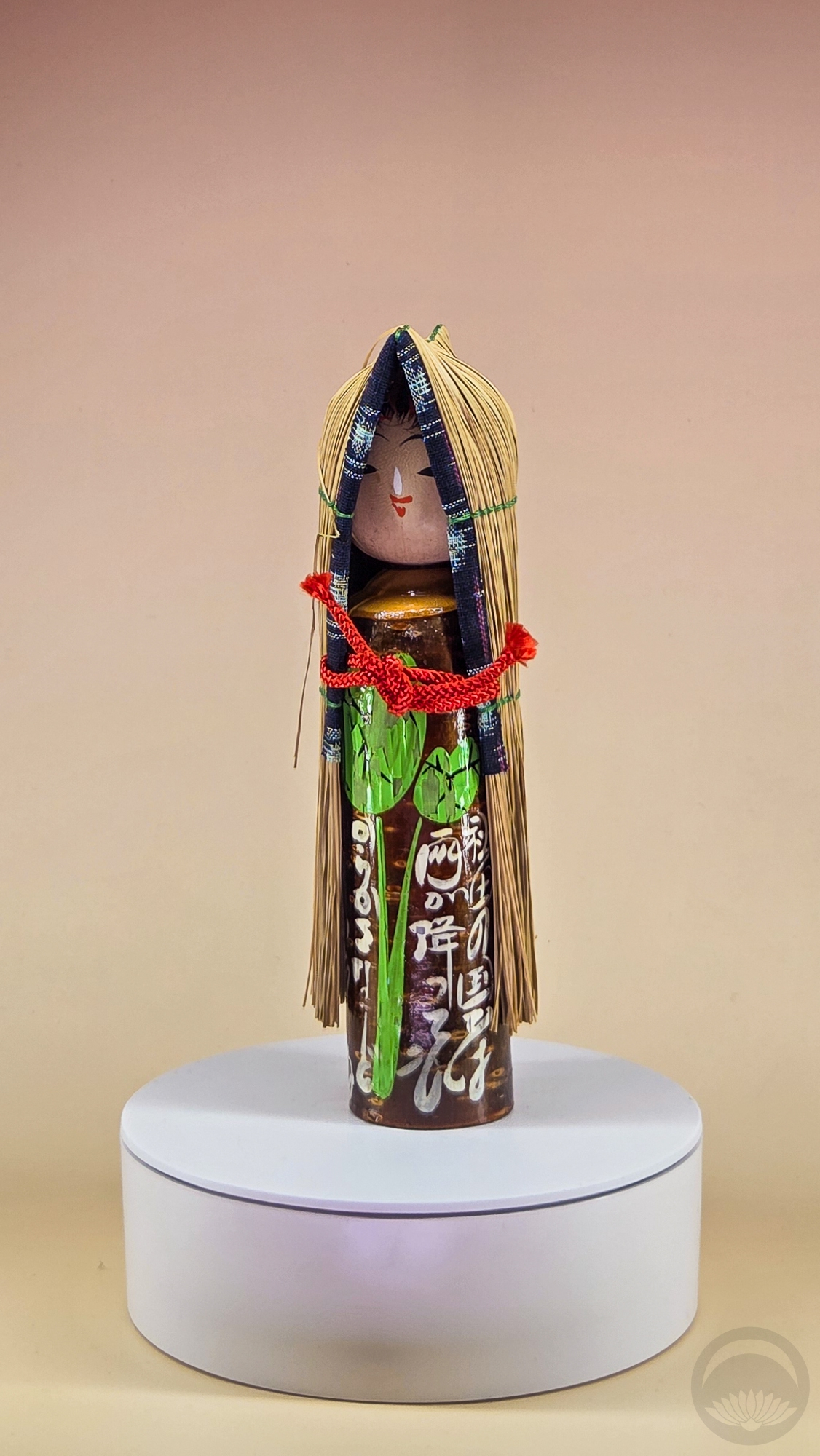
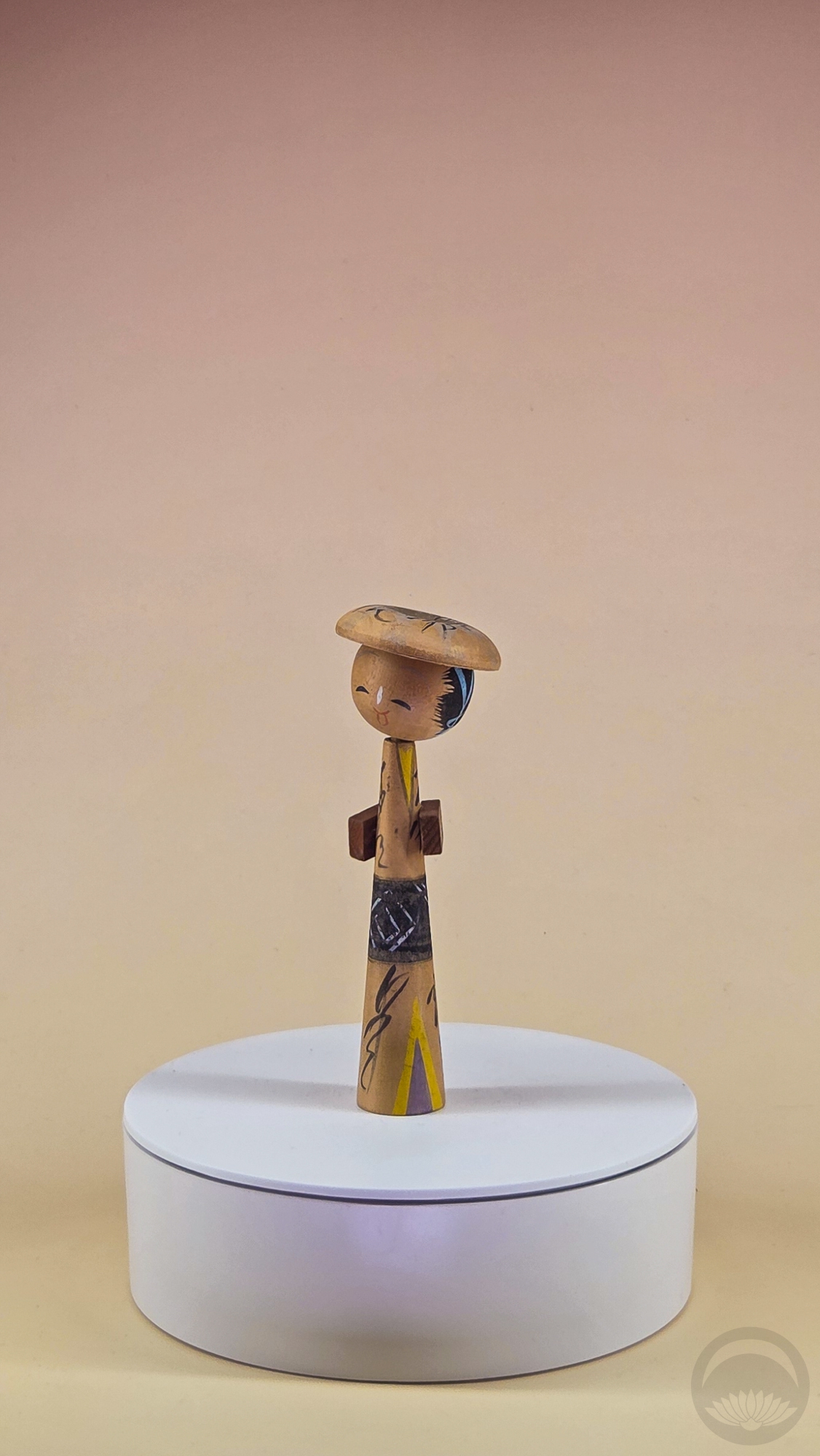
Dento (Traditional) Kokeshi

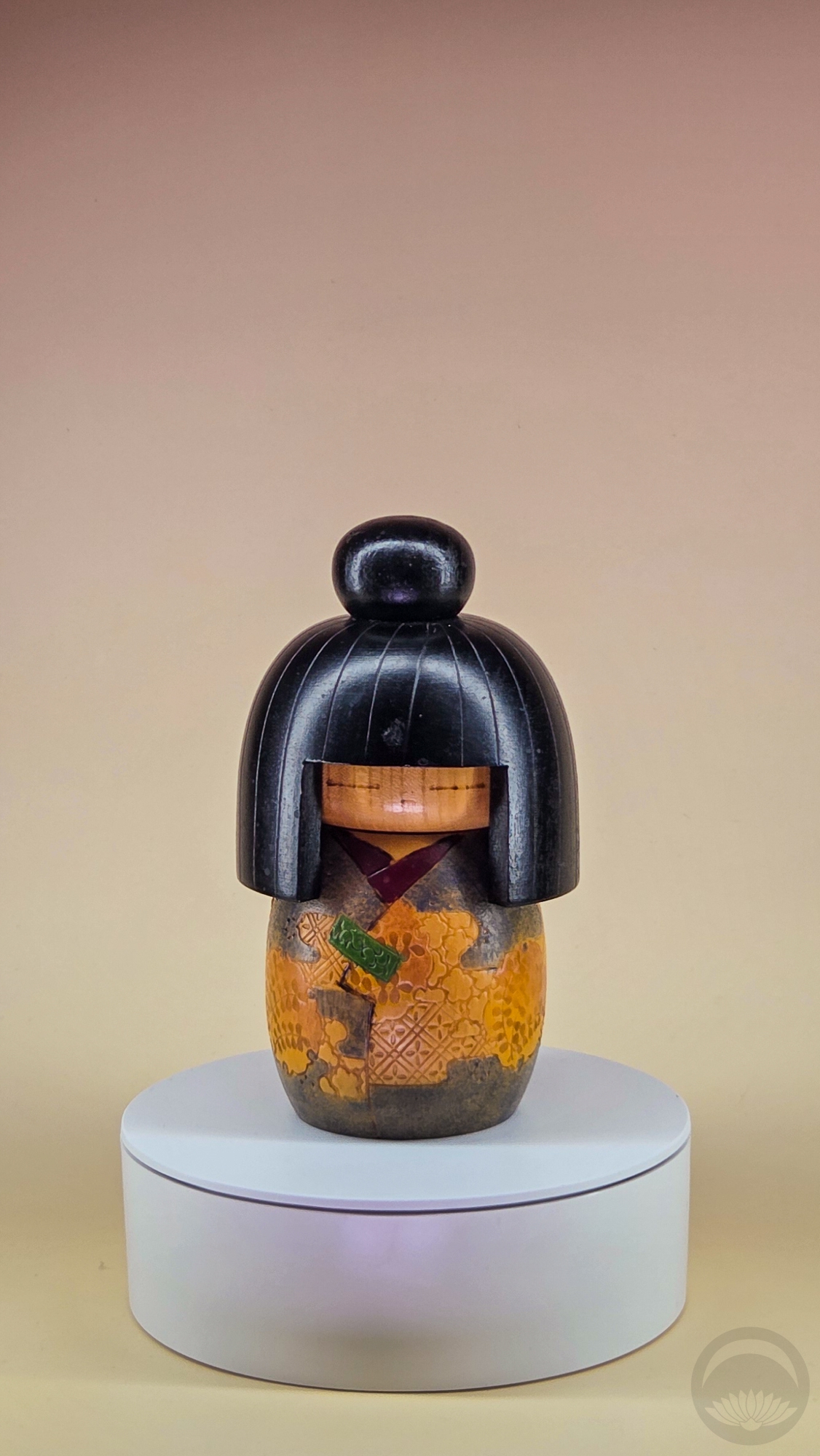
Starting with the classic Tohoku-style lathe kokeshi most folks are familiar with, and including regional variations and tourist souvenir types. These tend to have the most “vintage” style faces and decorations.
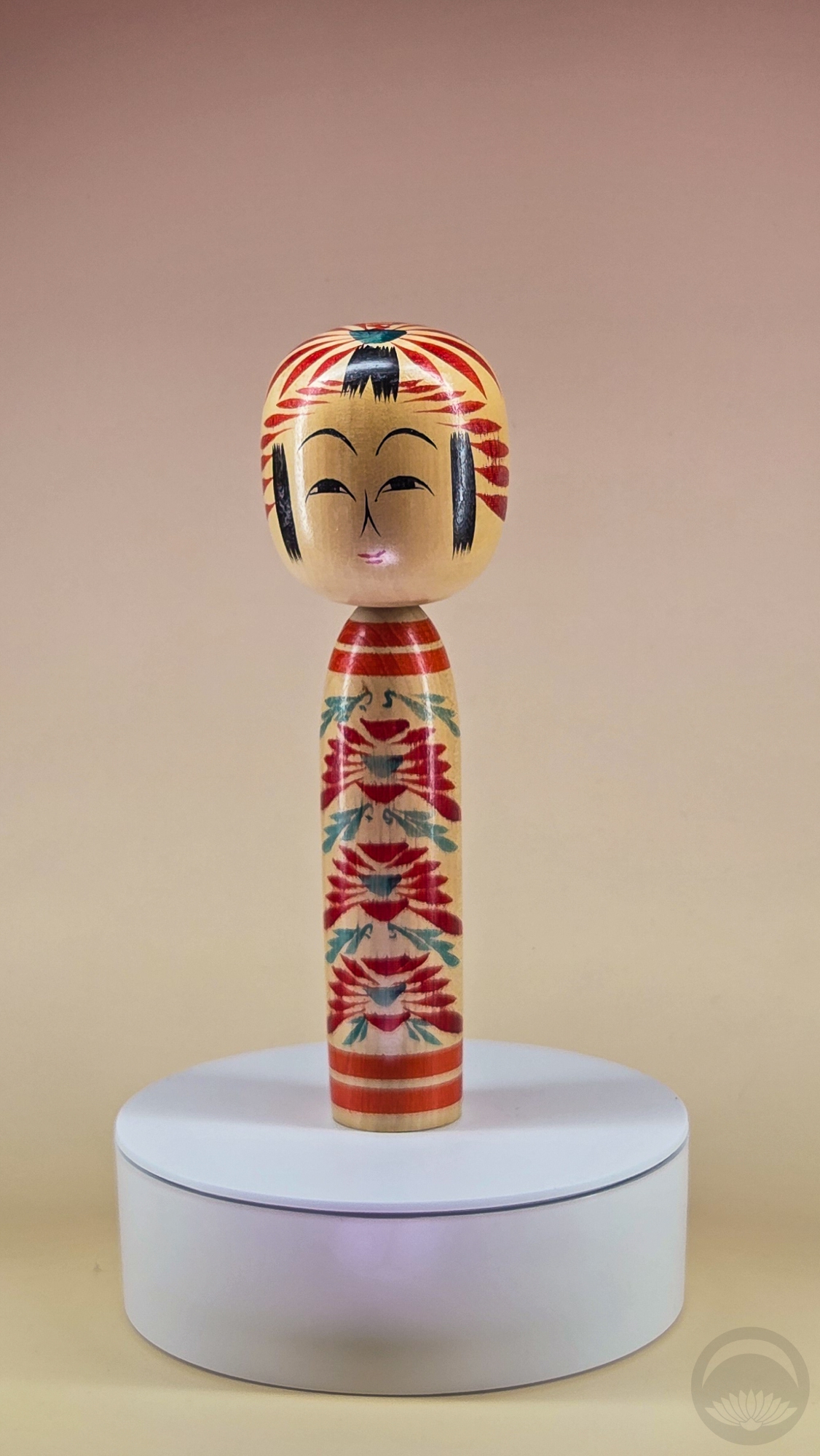
Traditional Togatta (遠刈田)-style kokeshi

gifted by a local kimono vendor in Montreal, QC
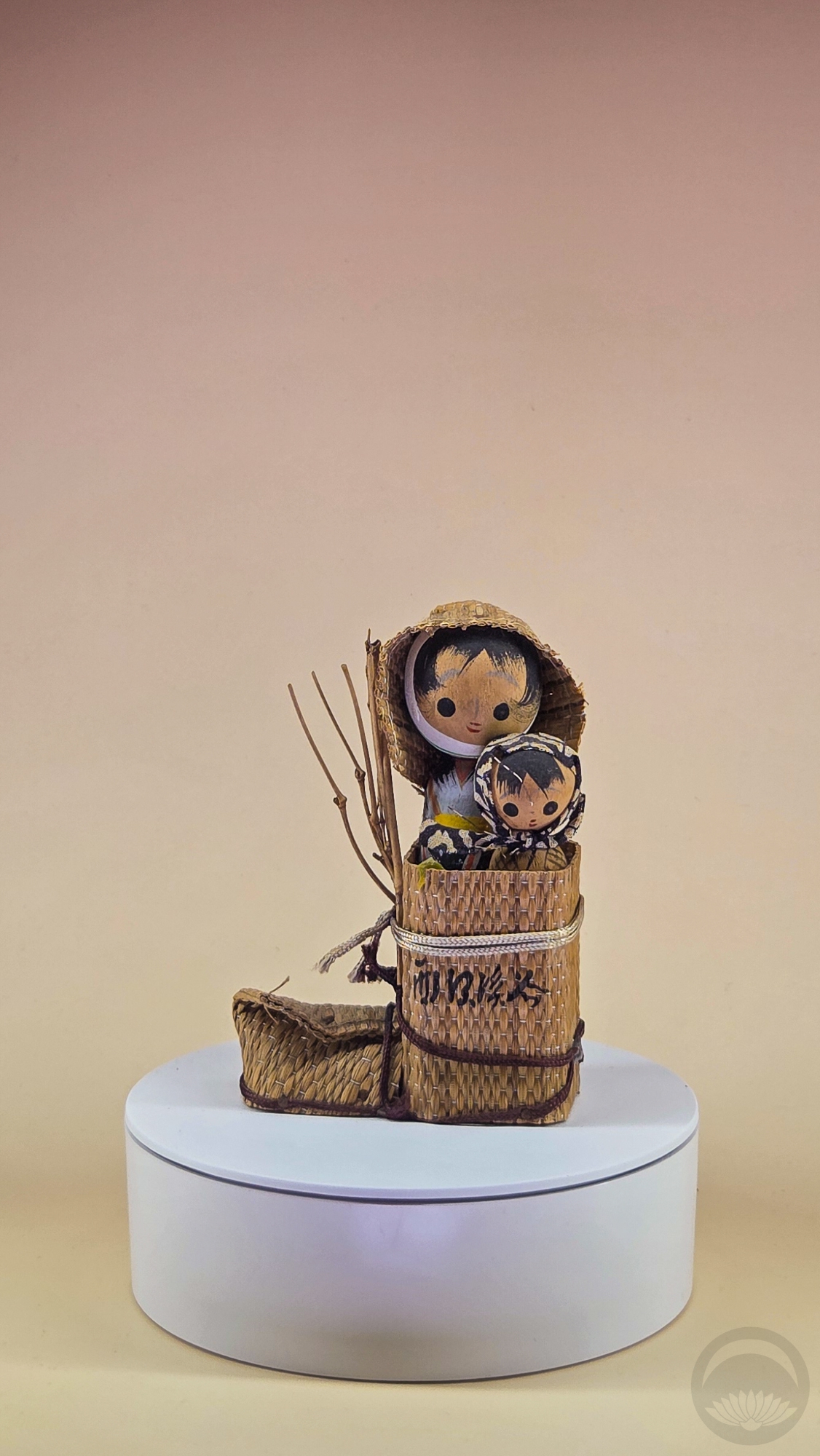
Yukinko (雪ん子) – Child in Snow kokeshi

LATDA kokeshi mystery box
Koke-shoe? Yukinko (雪ん子) – Child in Snow kokeshi

LATDA kokeshi mystery box
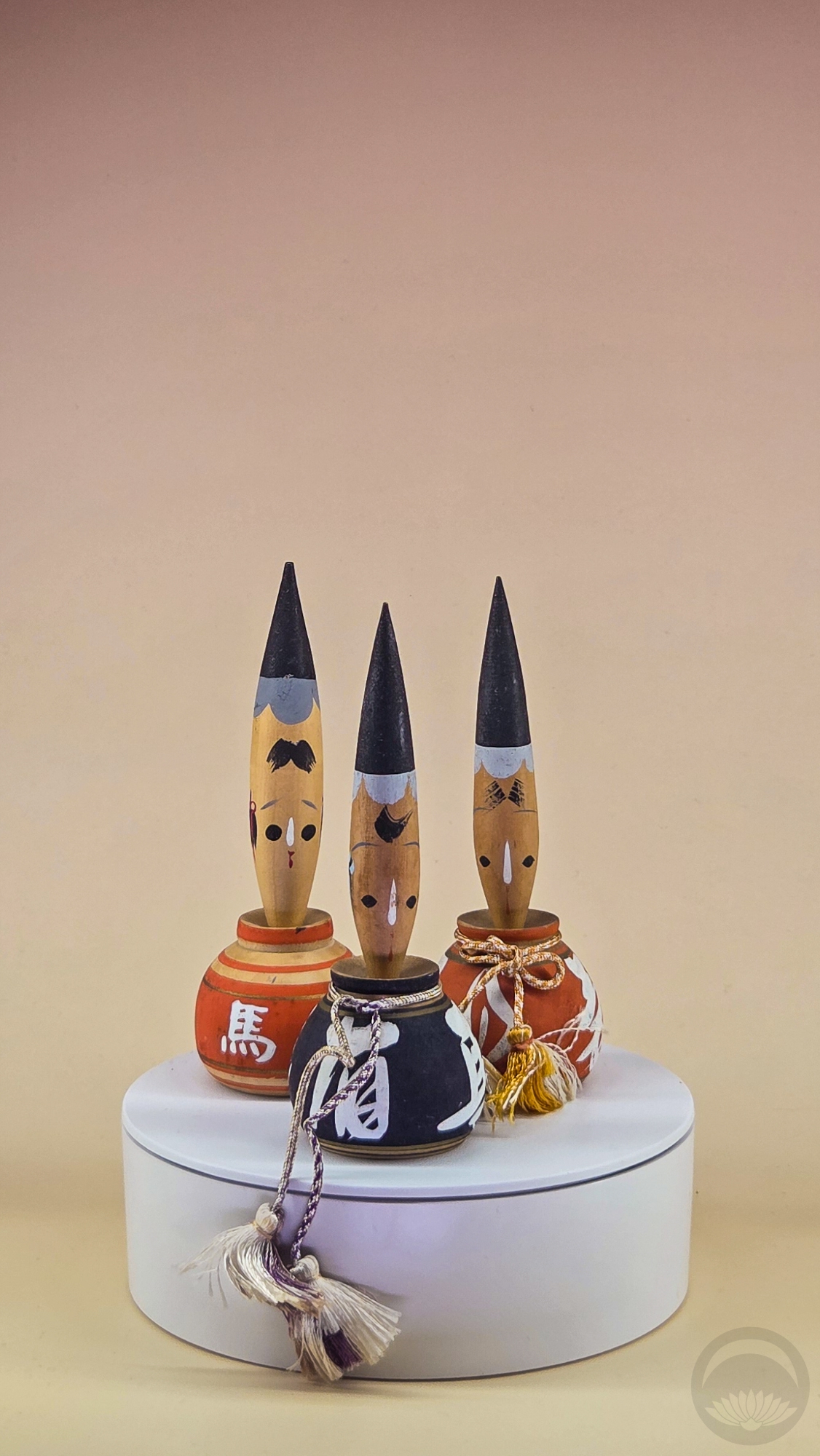
Three Fude (筆こけし) – Ink Brush kokeshi

LATDA kokeshi mystery box
Tall stylish kokeshi with packages and hat

LATDA kokeshi mystery box
Tall skinny kokeshi

LATDA kokeshi mystery box
Twin girl kokeshi-nodda (nodding/bobble head)

gifted by restaurant owners in Montreal, QC
Charming pair of kokeshi-nodda (nodding/bobble head)

LATDA kokeshi mystery box
Couple on wooden base

LATDA kokeshi mystery box
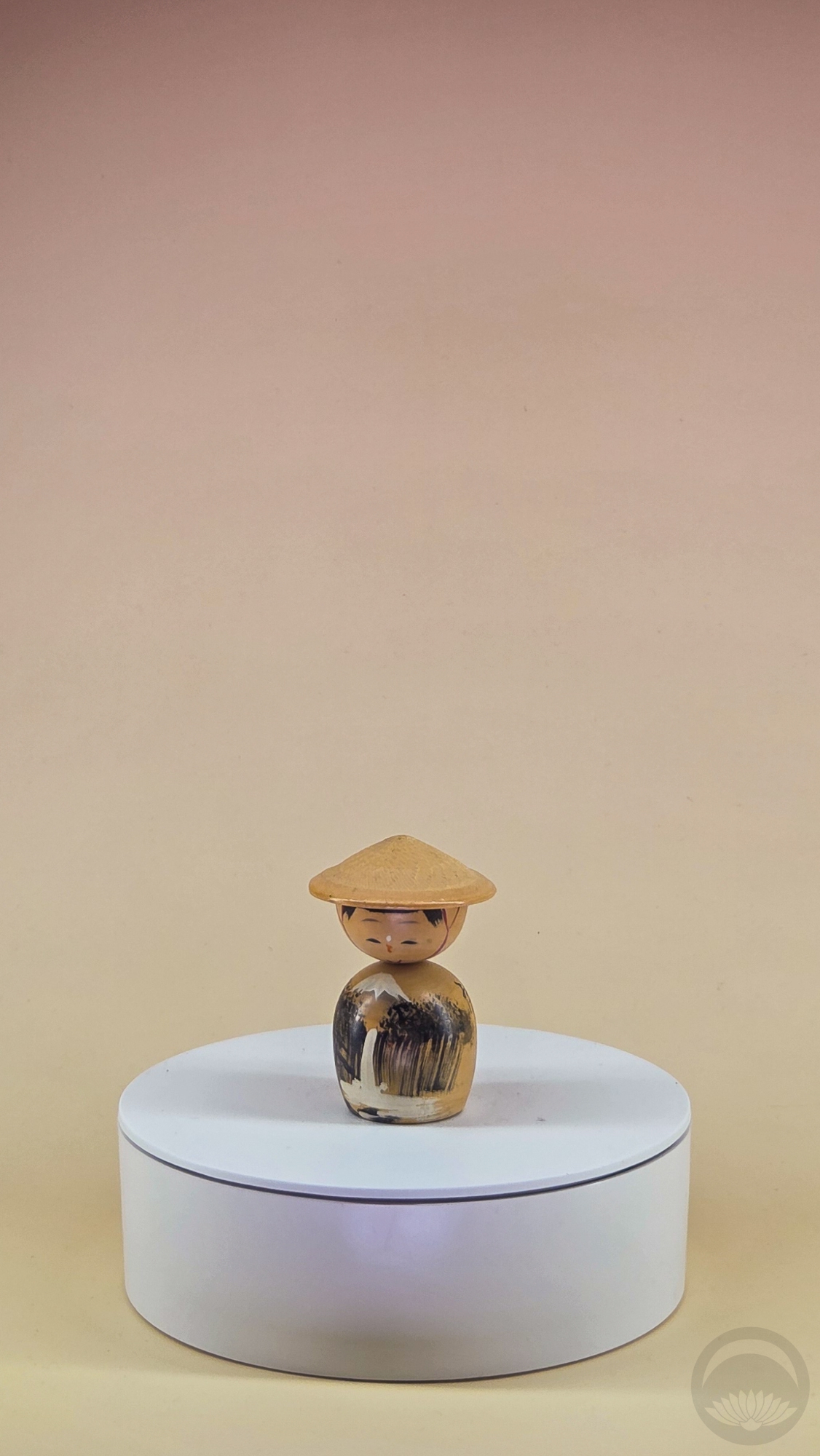
Adorable small kokeshi with landscape

LATDA kokeshi mystery box
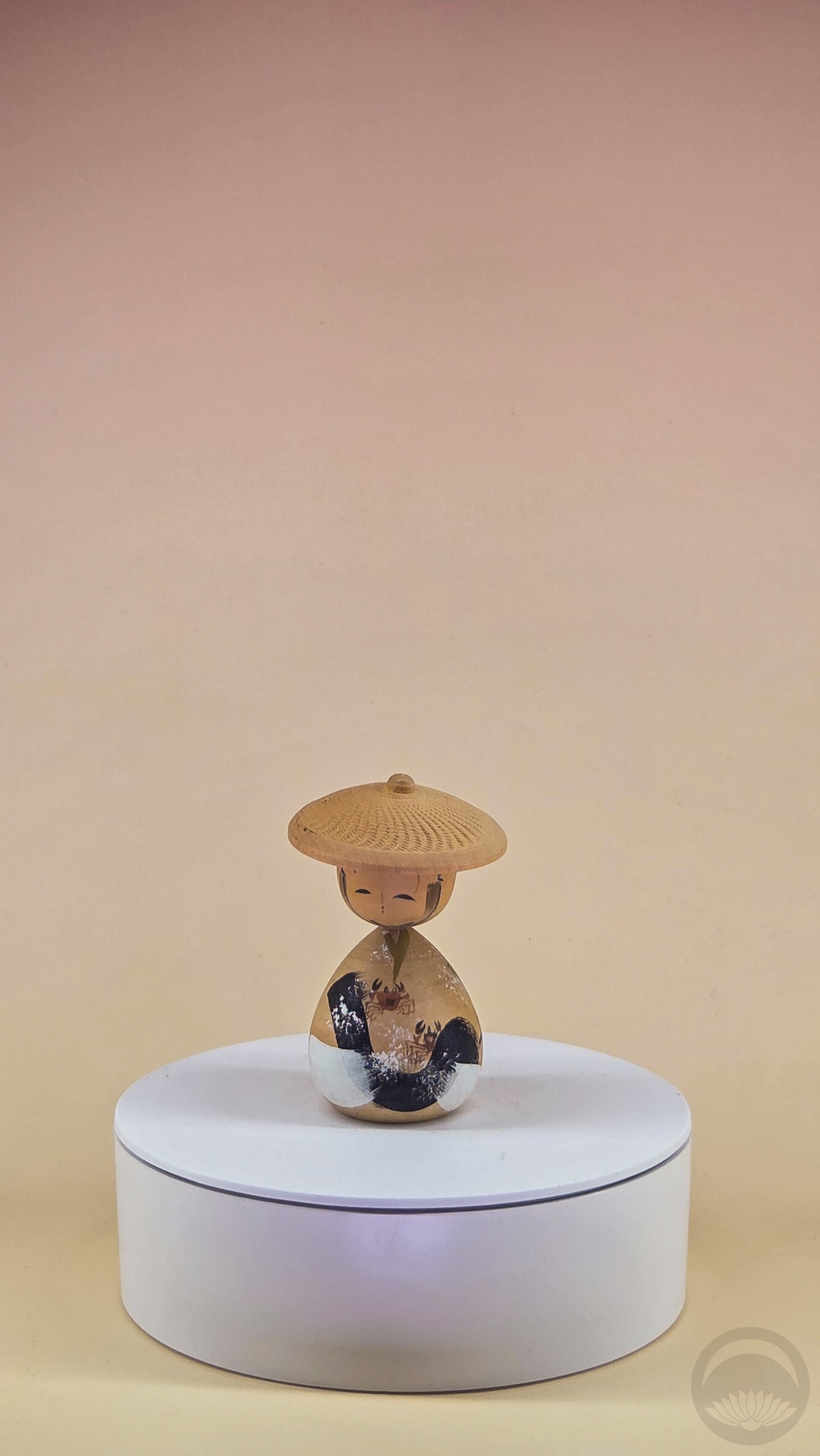
Small kokeshi with charming crab motif

LATDA kokeshi mystery box

Sosaku (Modern) Kokeshi

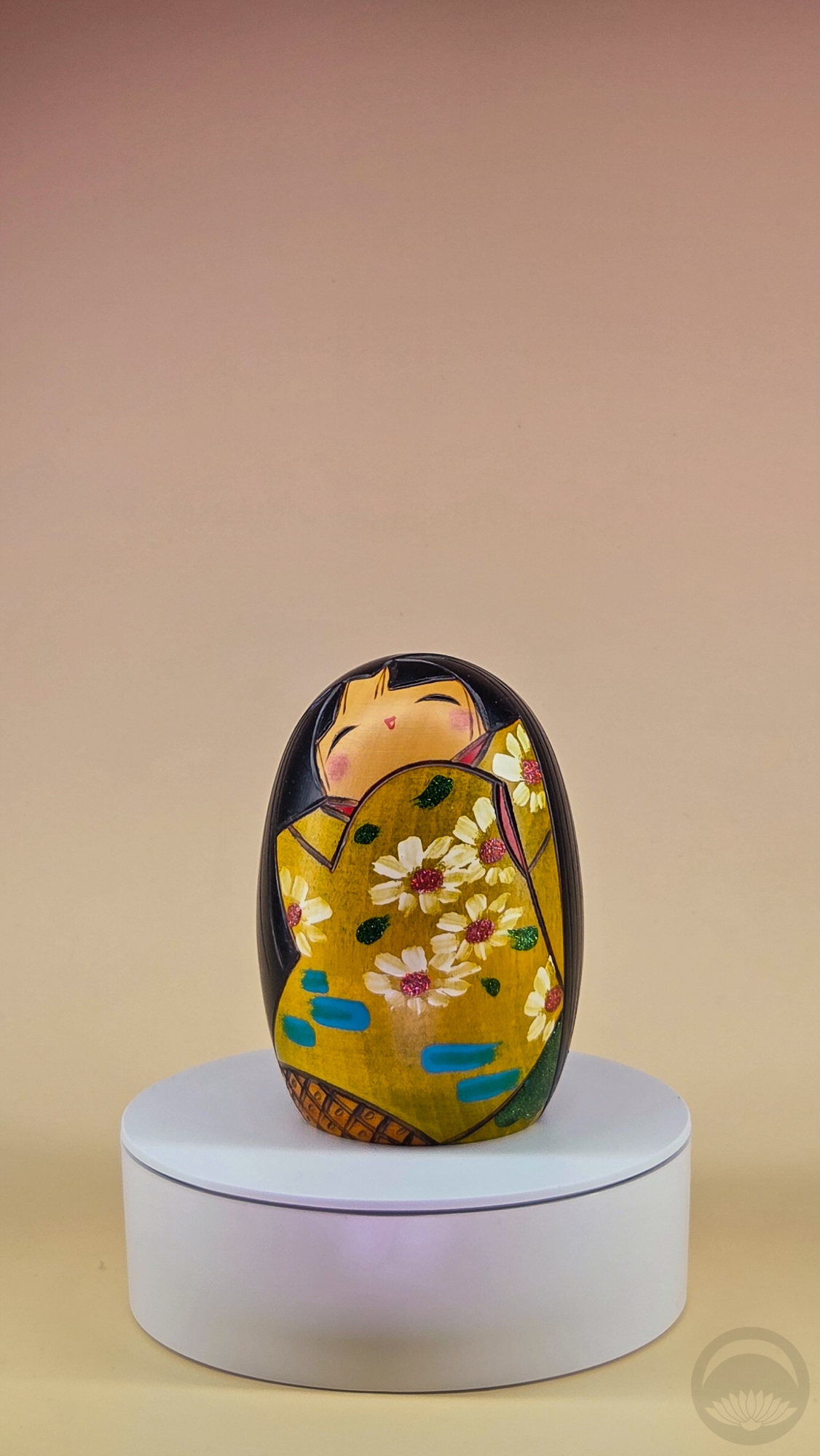
Still crafted by Japanese artisans, these fall under the modern style that became popular in the fifties and sixties. Their designs are more fluid, the shapes are more organic. This is personally my favourite style. I love how shapely they are, and tend to have an excellent and comforting feel when held.
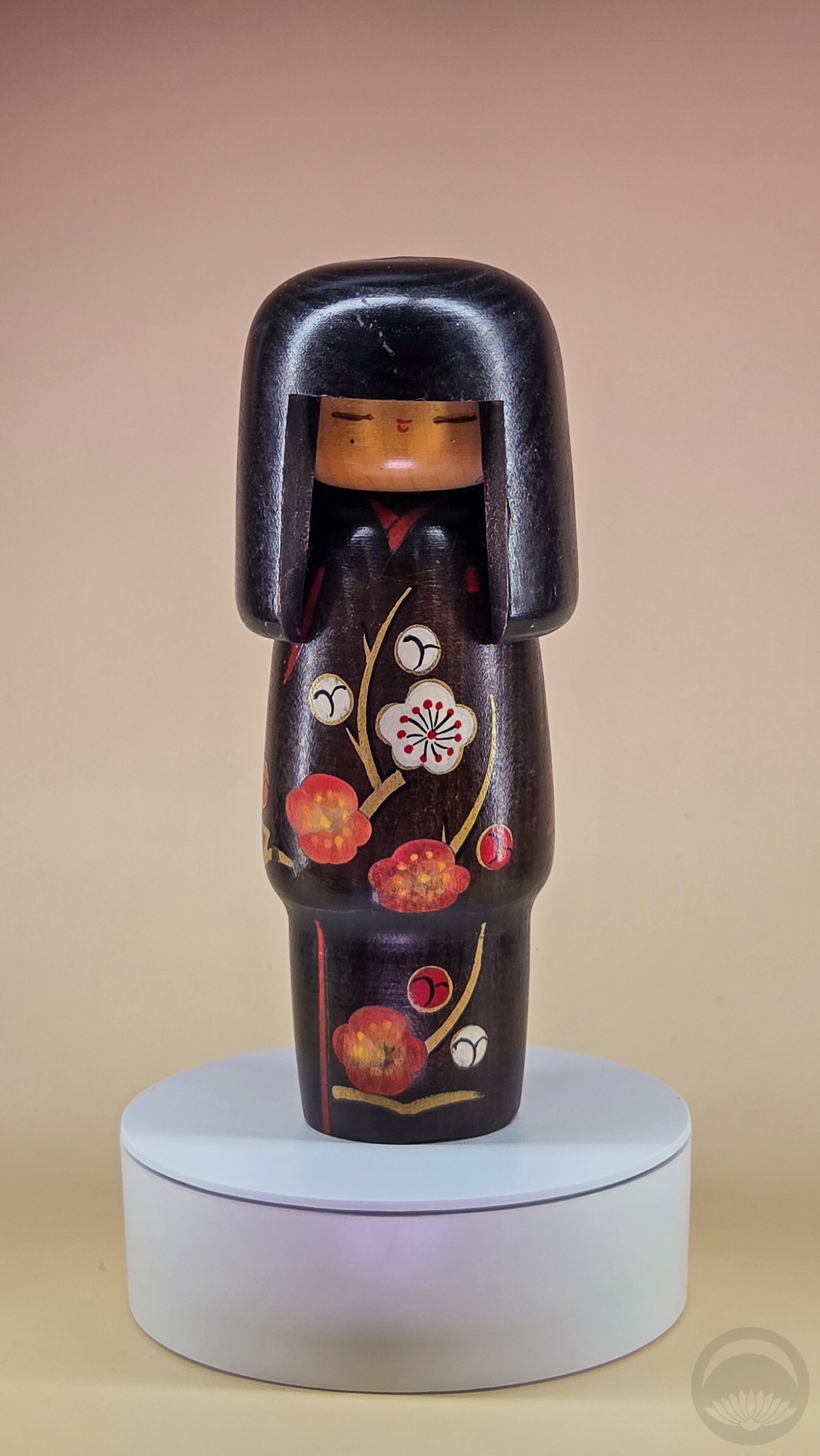
Ume kokeshi with interesting shape, unmarked

thrifted in Oak Glen, CA
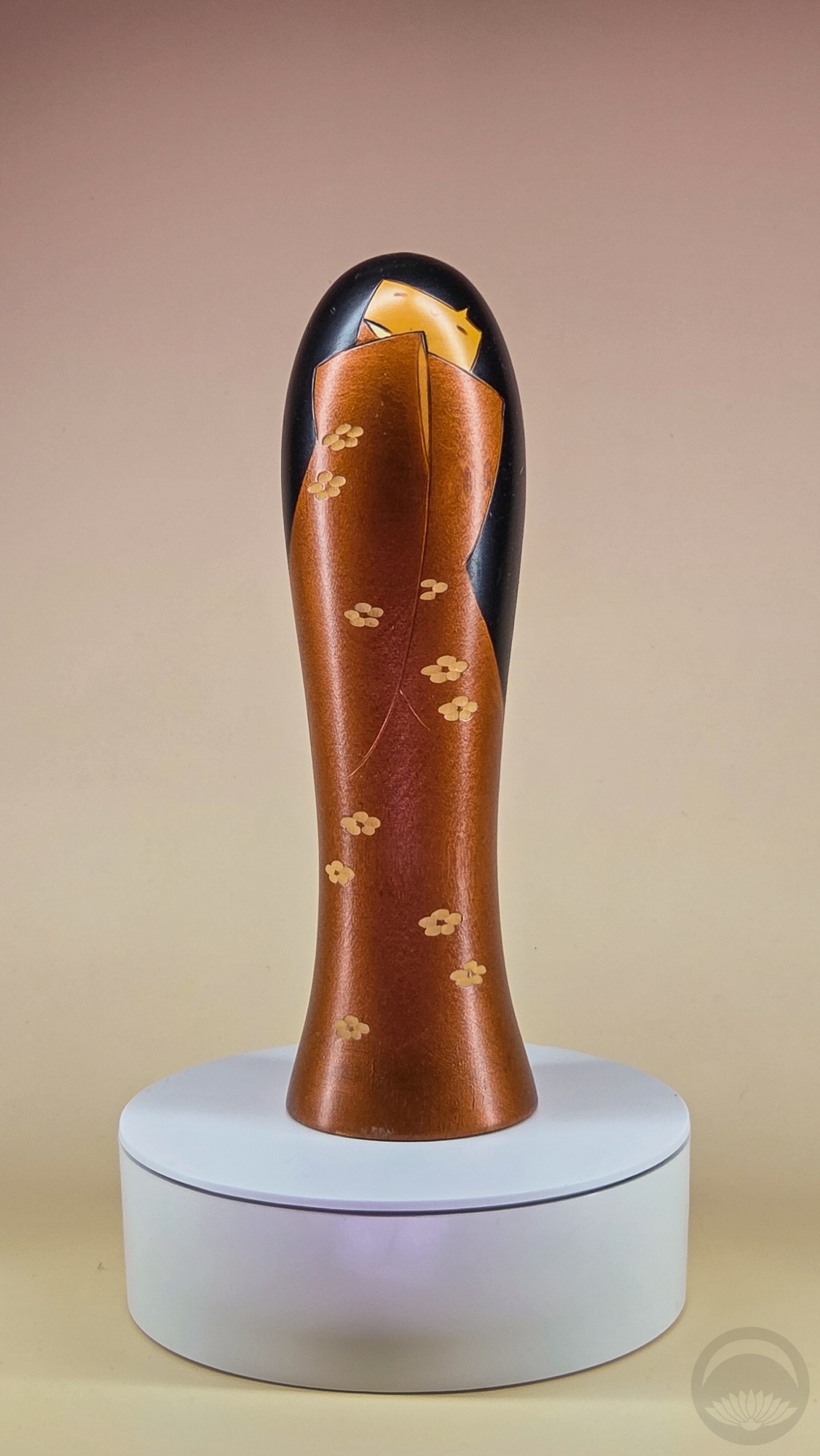
Slender Usaburo kokeshi

thrifted in Montreal, QC
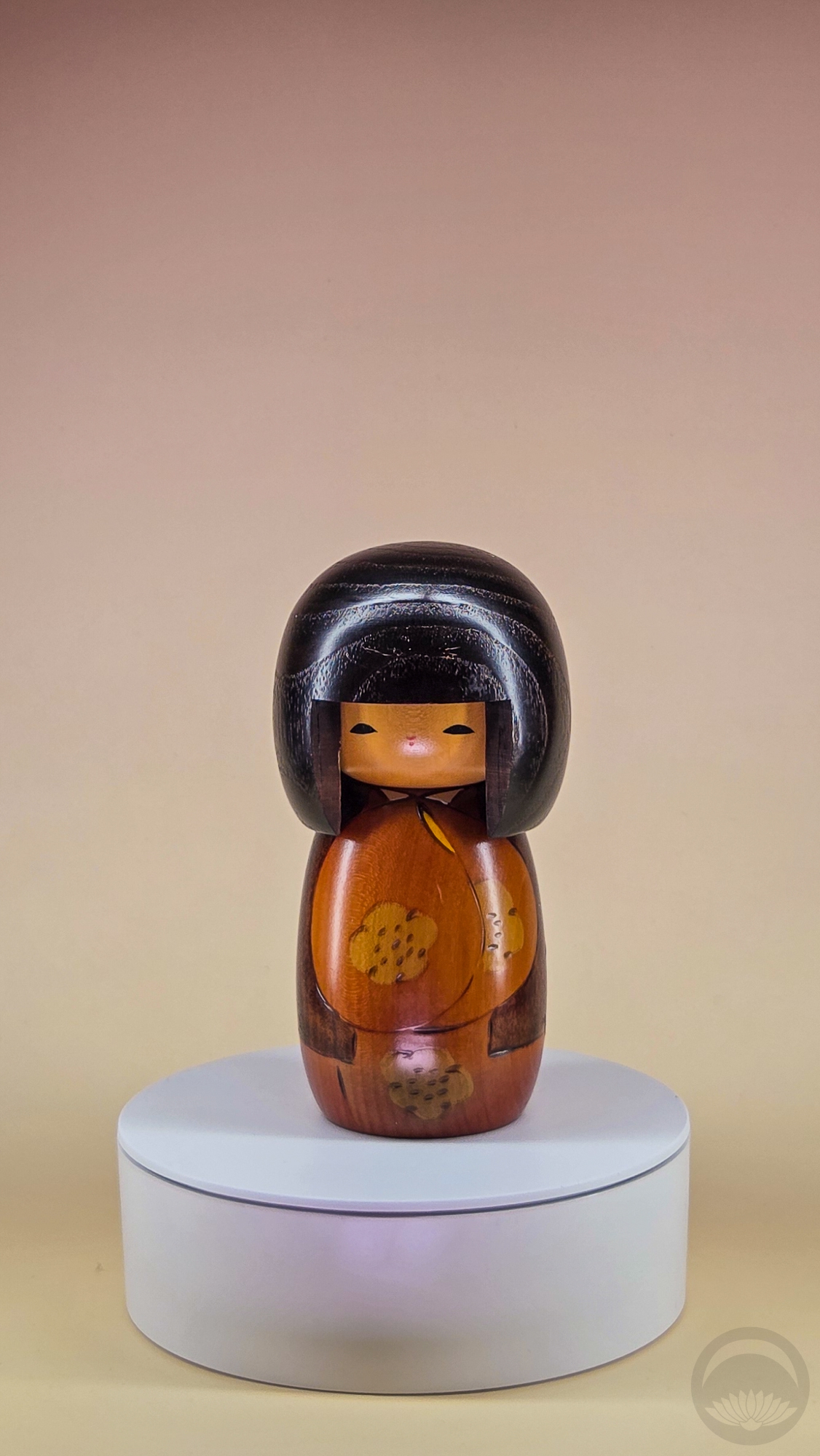
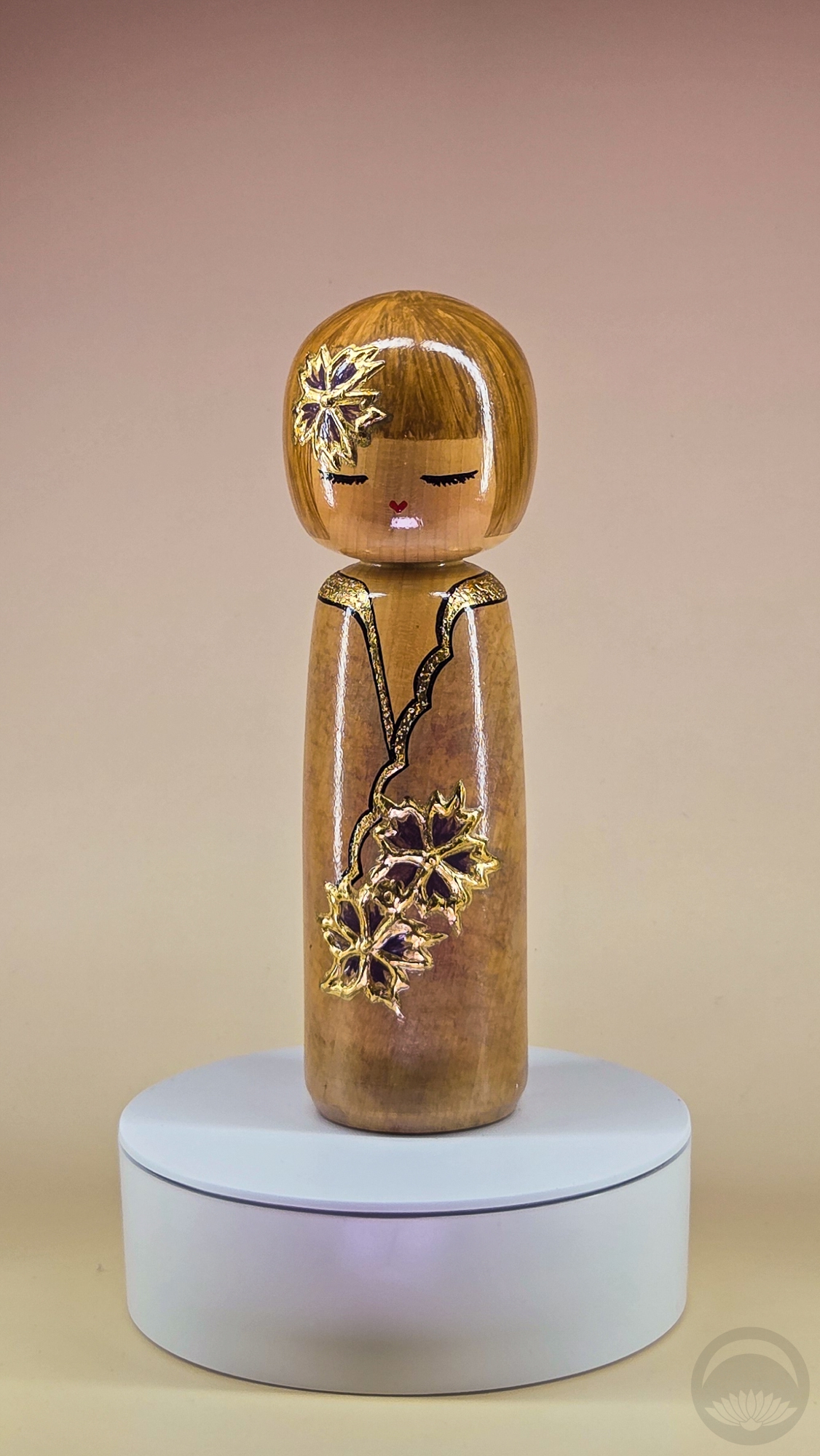
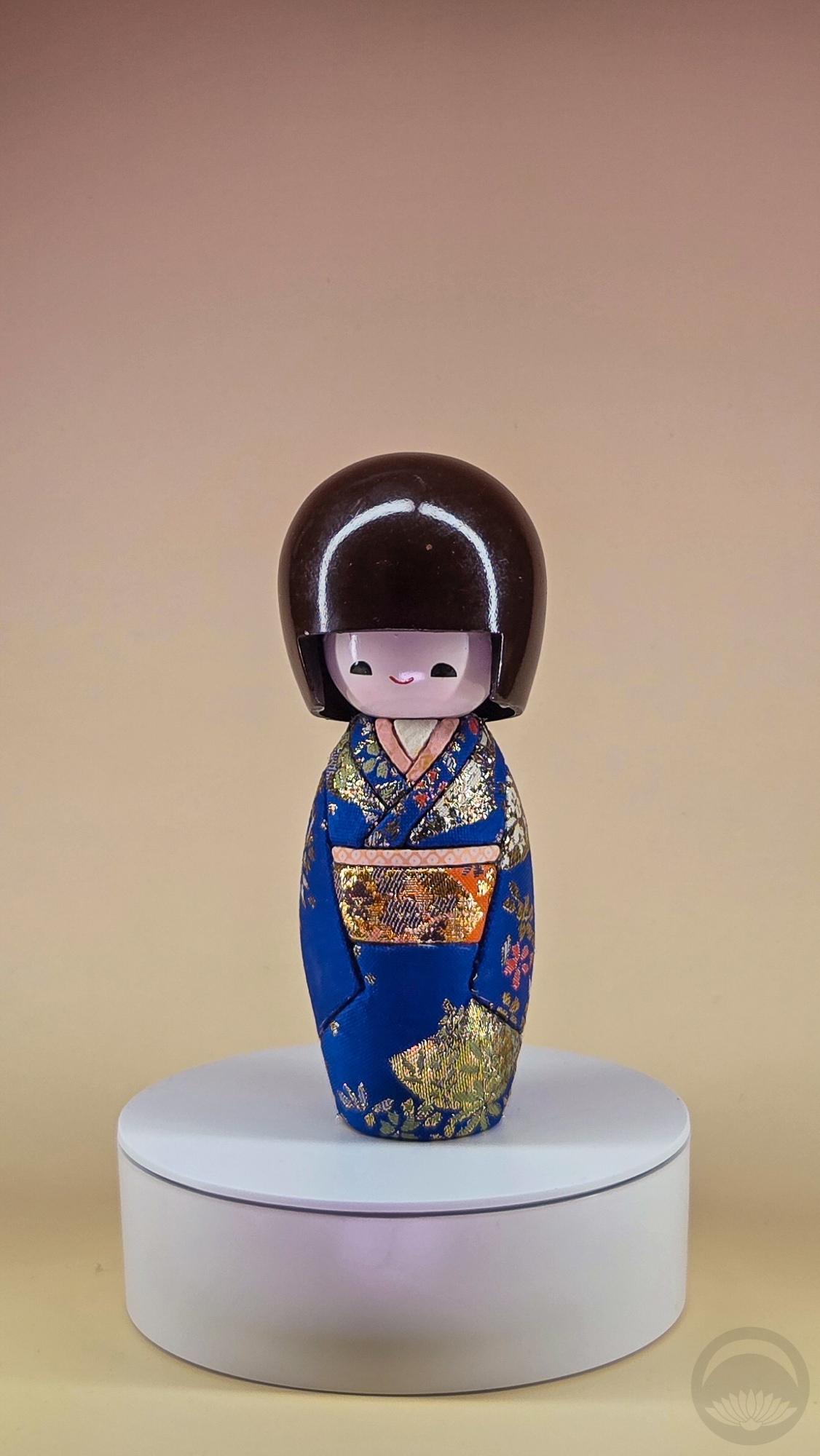
Petite kokeshi with bob, unmarked

gifted by a friend
Carved kimono kokeshi by Takamizawa Kazuo

LATDA kokeshi mystery box
Hanakasumi kokeshi by Artforum

gifted by a friend
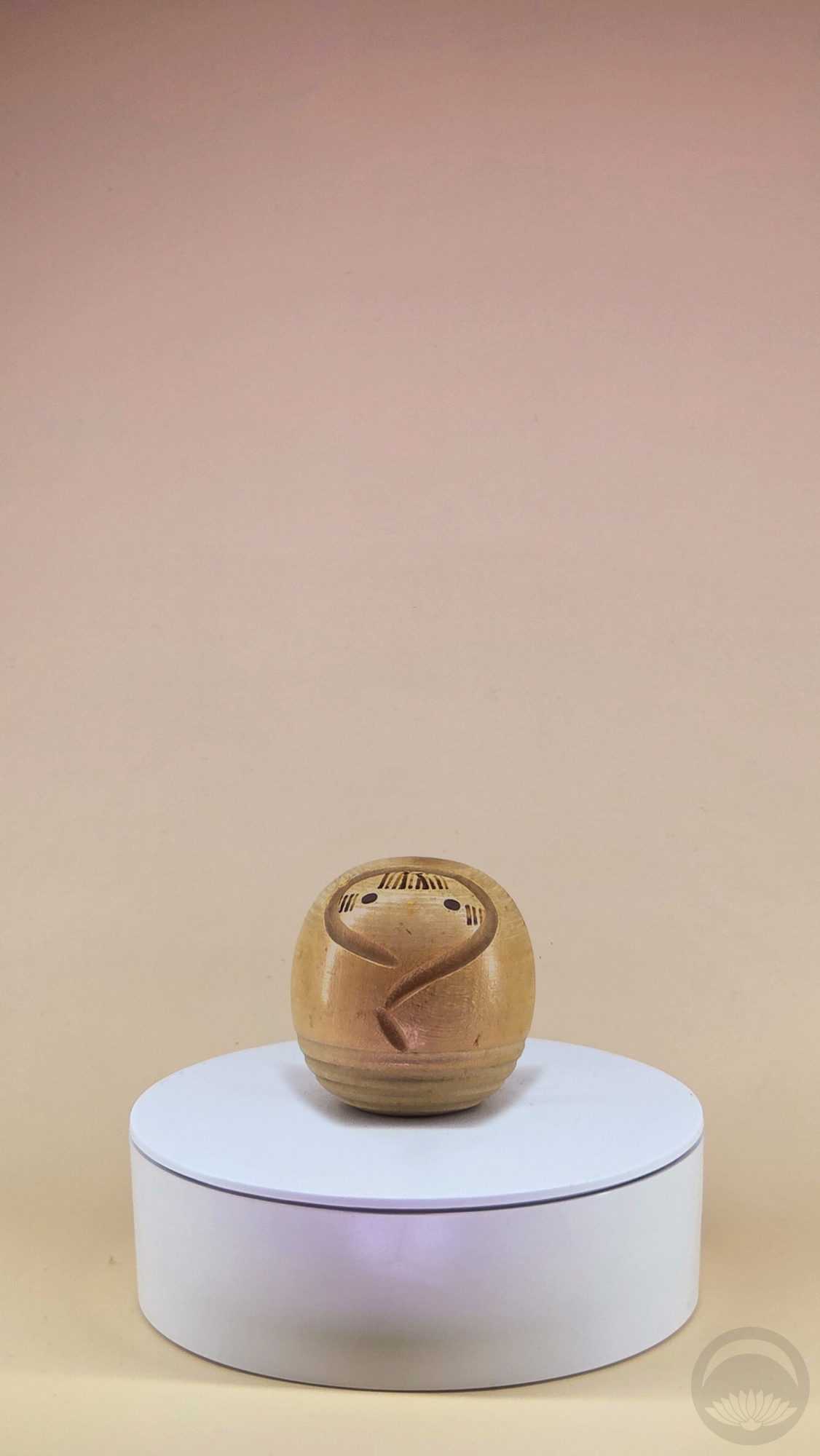
Diminutive unpainted round kokeshi

gifted by a friend

Alternative Kokeshi

These may include Japanese dolls that don’t fit elsewhere or kokeshi-inspired art dolls from around the world.
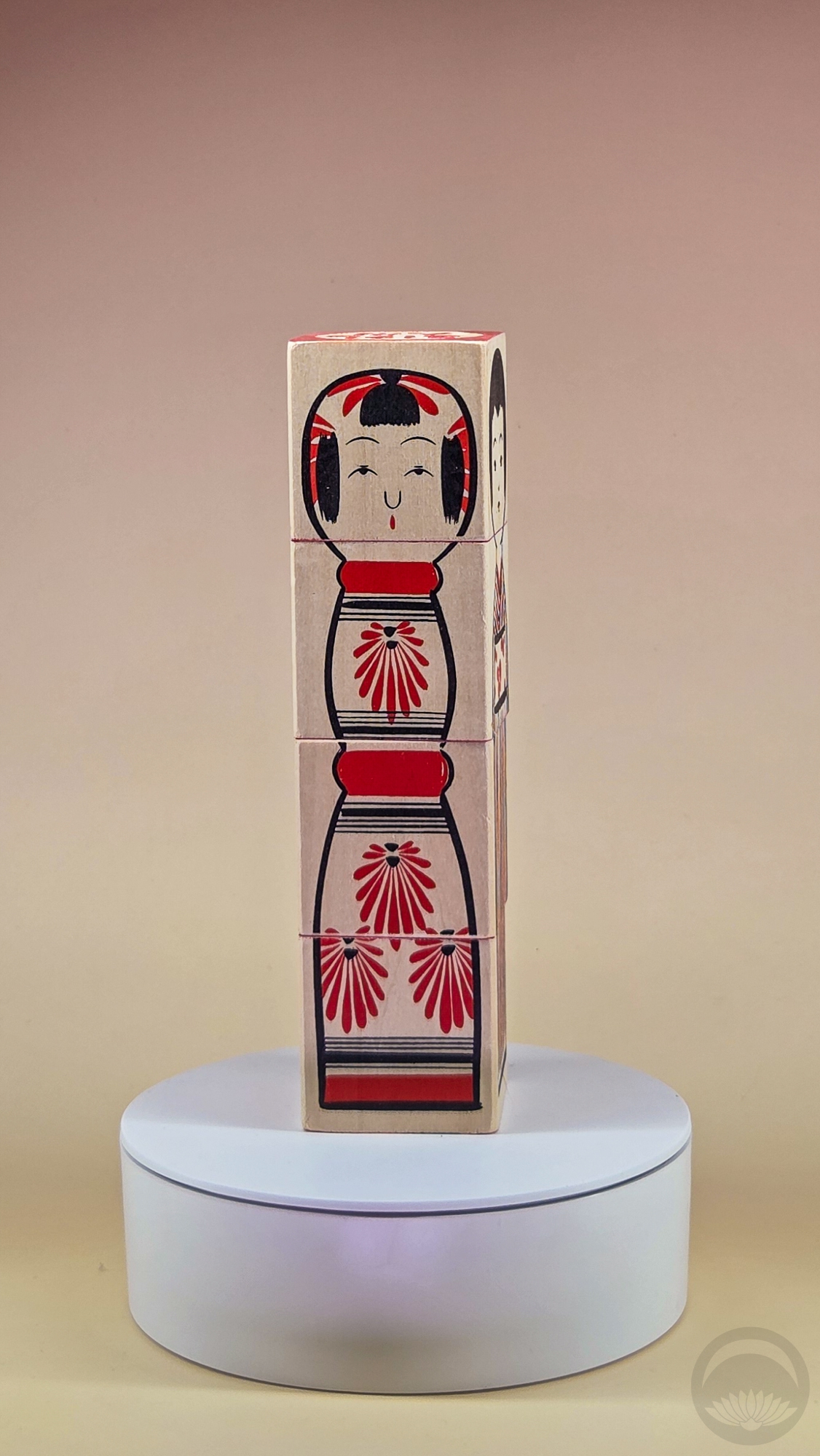
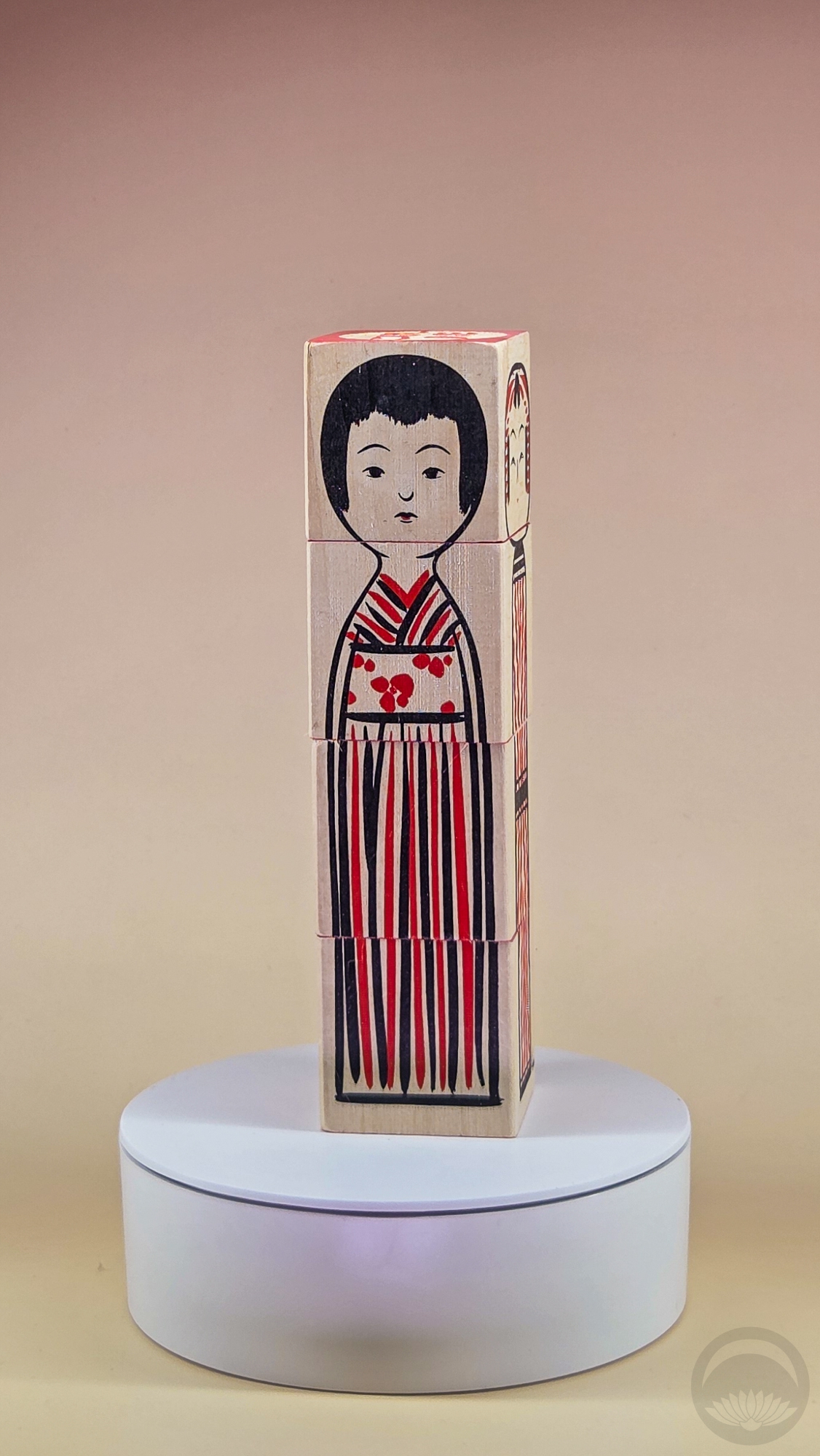
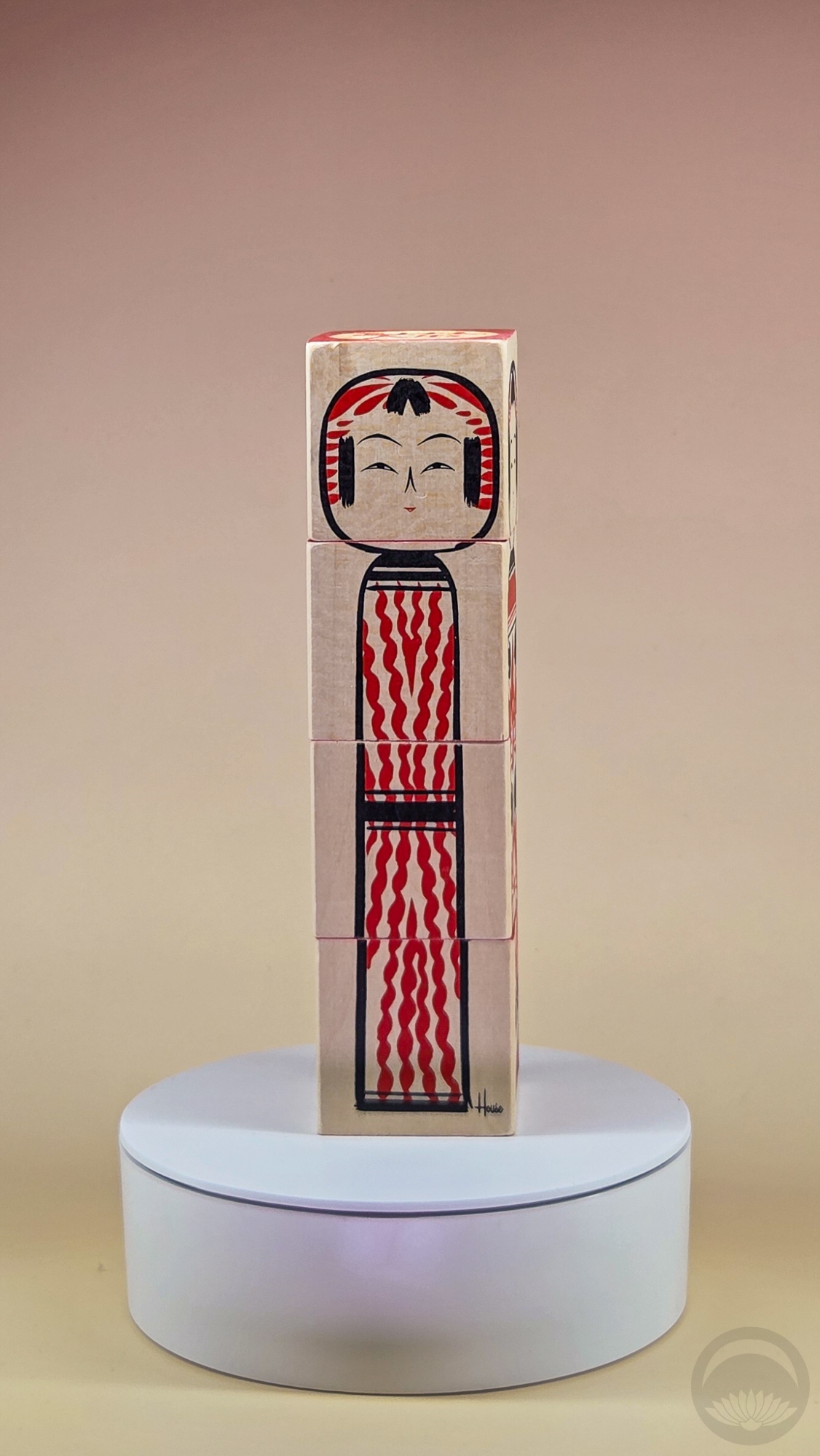
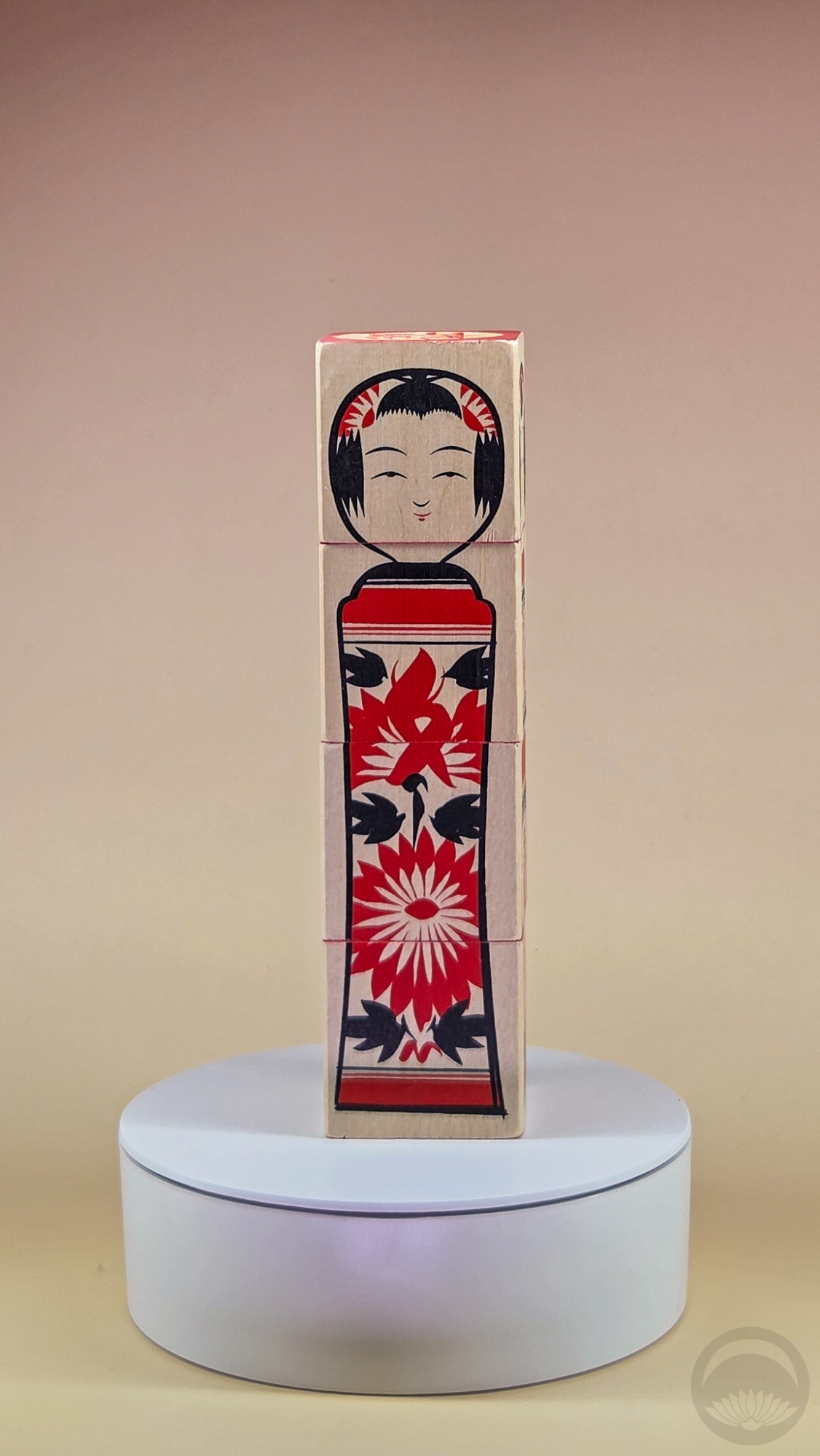
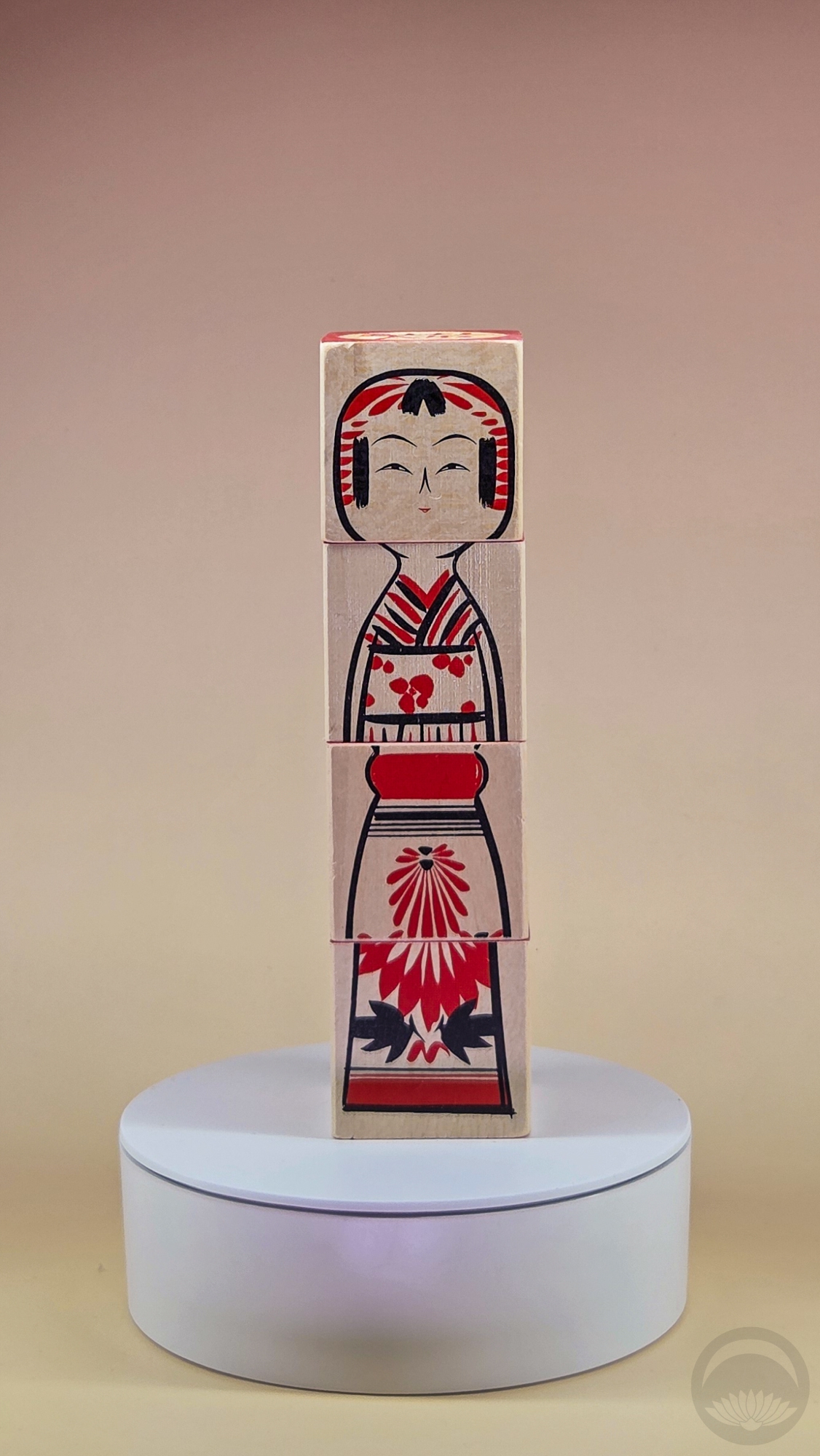
Kokeshi stacking block toys by House Industries x Uncle Goose

purchased on Etsy
Kokeshi stacking block toys by House Industries x Uncle Goose

purchased on Etsy
Kokeshi stacking block toys by House Industries x Uncle Goose

purchased on Etsy
Kokeshi stacking block toys by House Industries x Uncle Goose

purchased on Etsy
Kokeshi stacking block toys by House Industries x Uncle Goose

purchased on Etsy
Elegant kokeshi by Canadian artist Christiane Bissonnette

thrifted in Montreal, QC
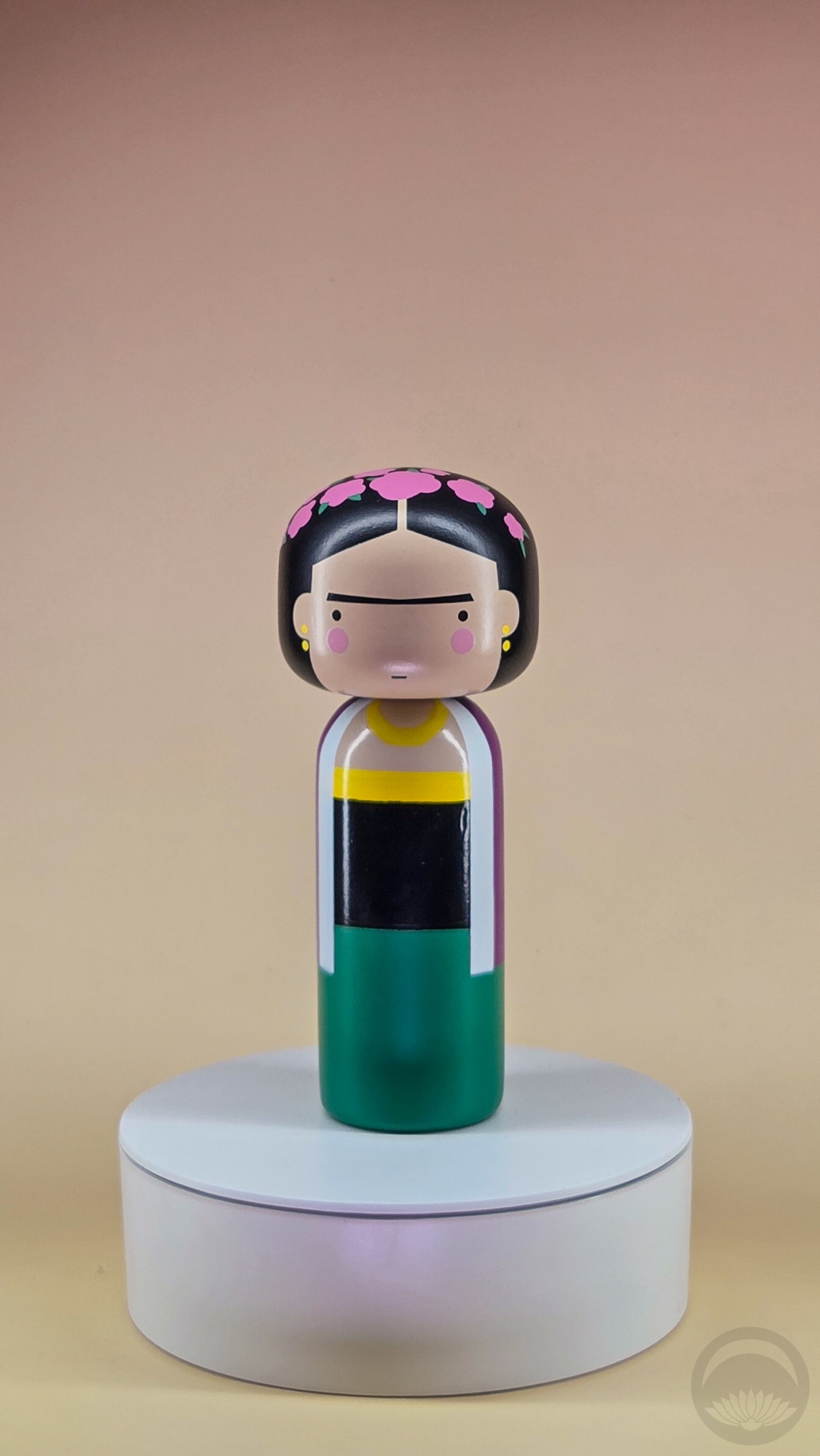
Frida Kahlo art doll Kokeshi by Lucie Kaas

purchased at Palm Springs Art Museum gift shop

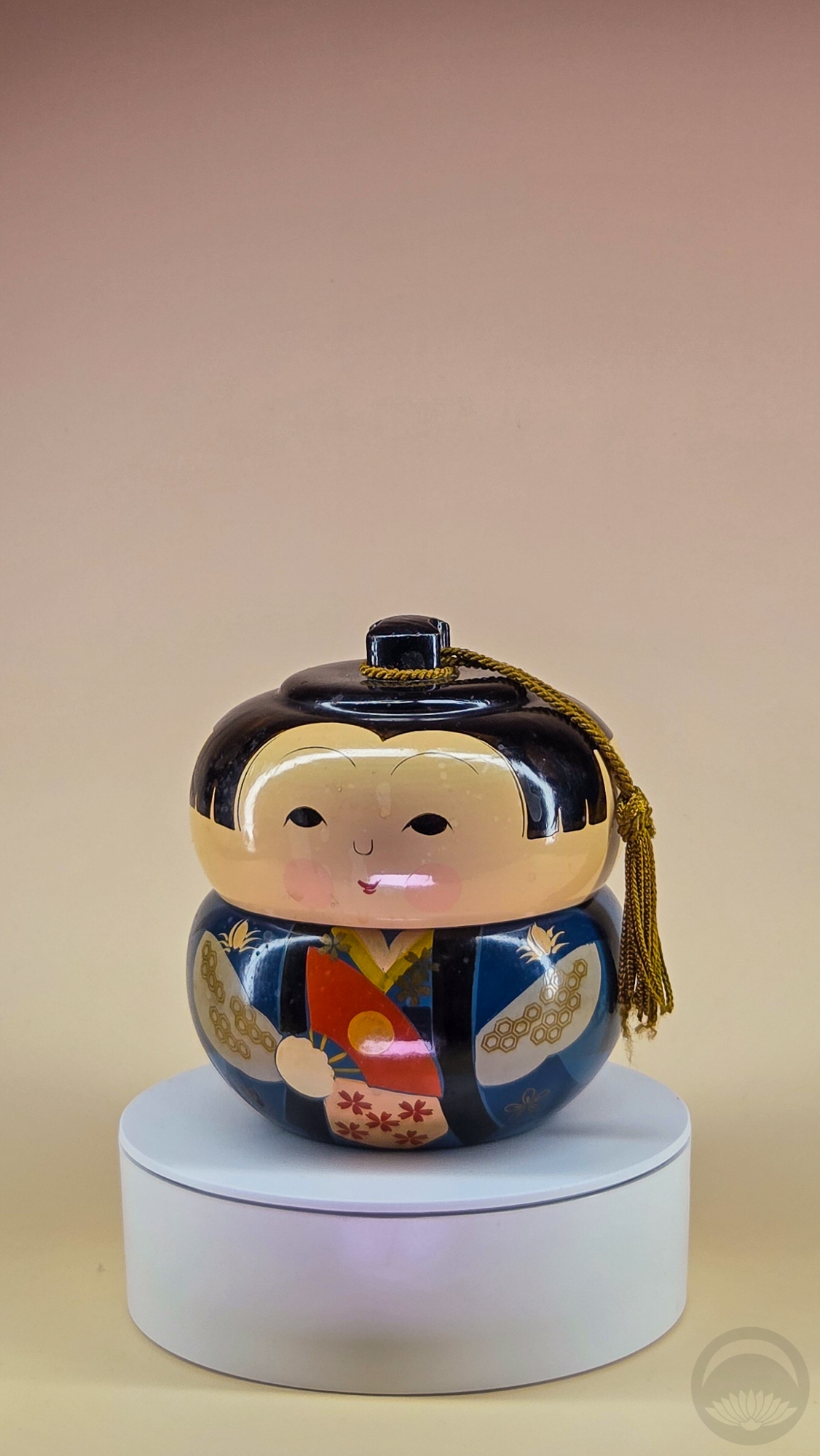
Kokeshi-style trinket box, girl

purchased at Palm Springs Vintage Market
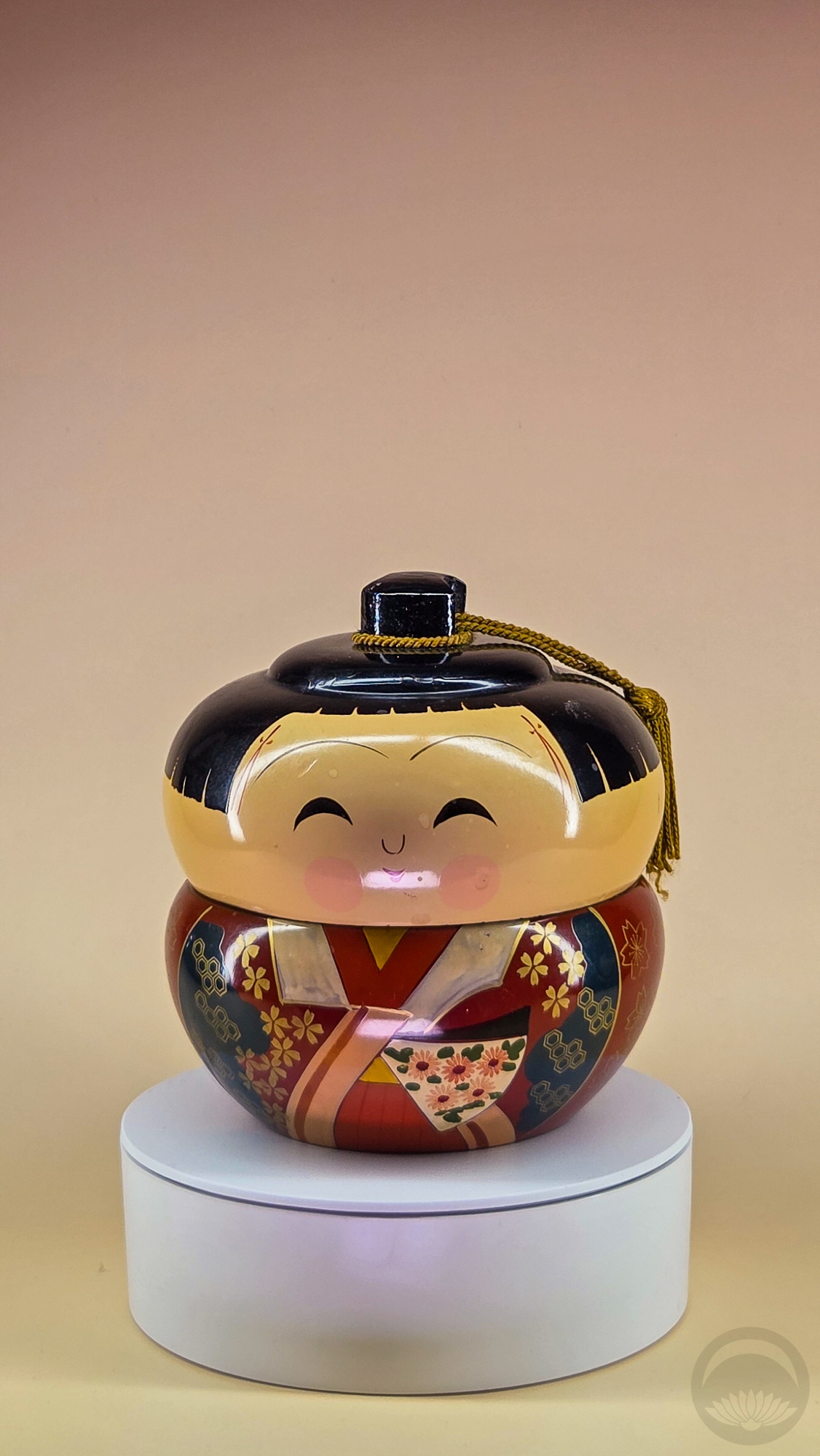
Kokeshi-style trinket box, boy

purchased at Palm Springs Vintage Market
Mass-produced tourist kokeshi I bought because it looked like me in this outfit.

purchased in Montreal QC’s Chinatown district
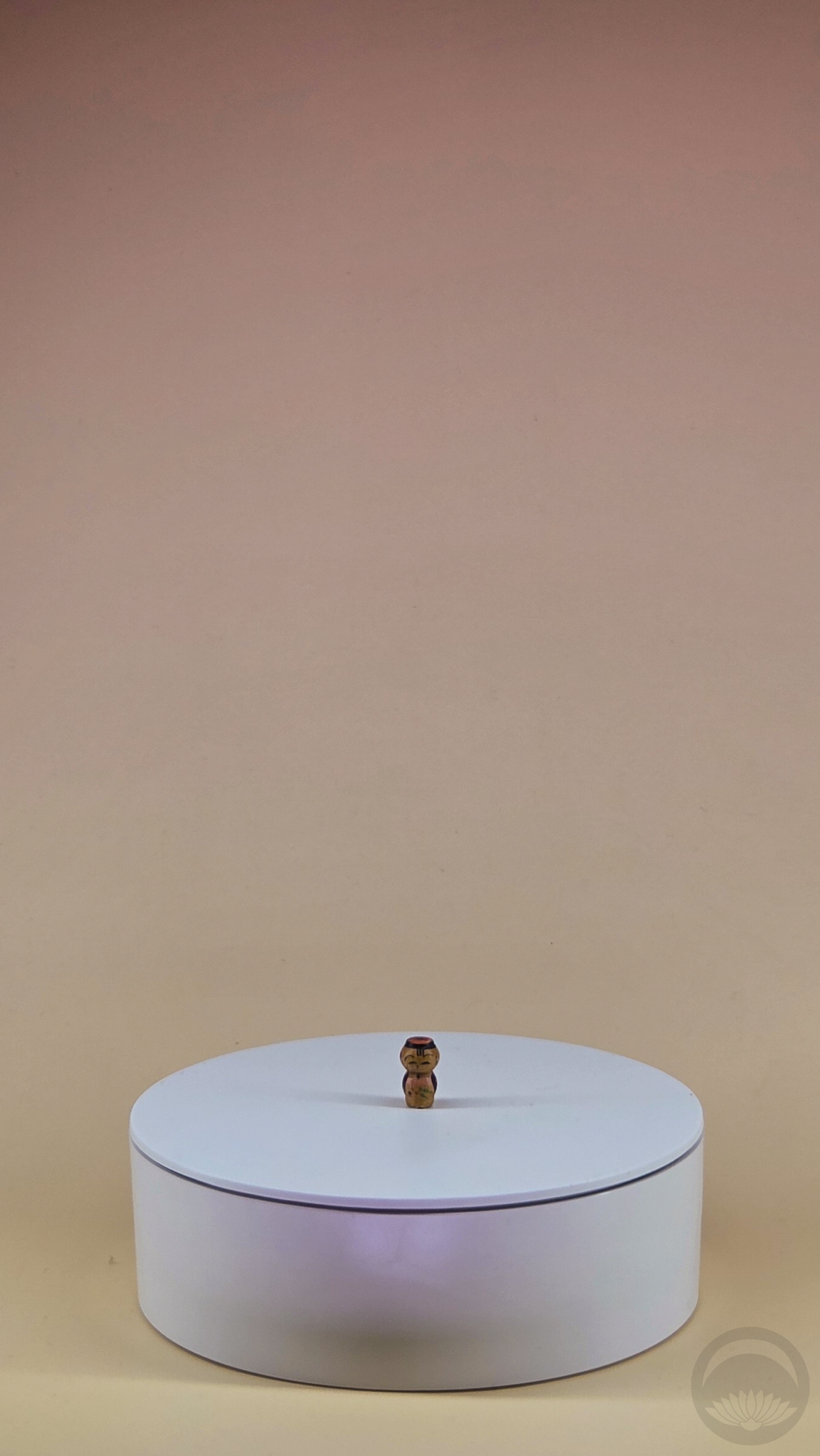
Teeeeny Tiny Kokeshi. You can view a close-up here. This one lives in this diorama now.

gifted by a friend

I do intend to get full 360 video of each of these beauties, since some of them have writing or fun details on alternate sides, but that’s a project for when I have more free time.

Because I am nothing if not shameless, I do have a wishlist of easily-available kokeshi on Amazon right now too. I am also on the hunt for the Usaburo Kuromi and may snag her soon, as well as Lucie Kaas Vincent Van Gogh but it’s not available at any North American retailers I can find at the moment.
A Work of Art

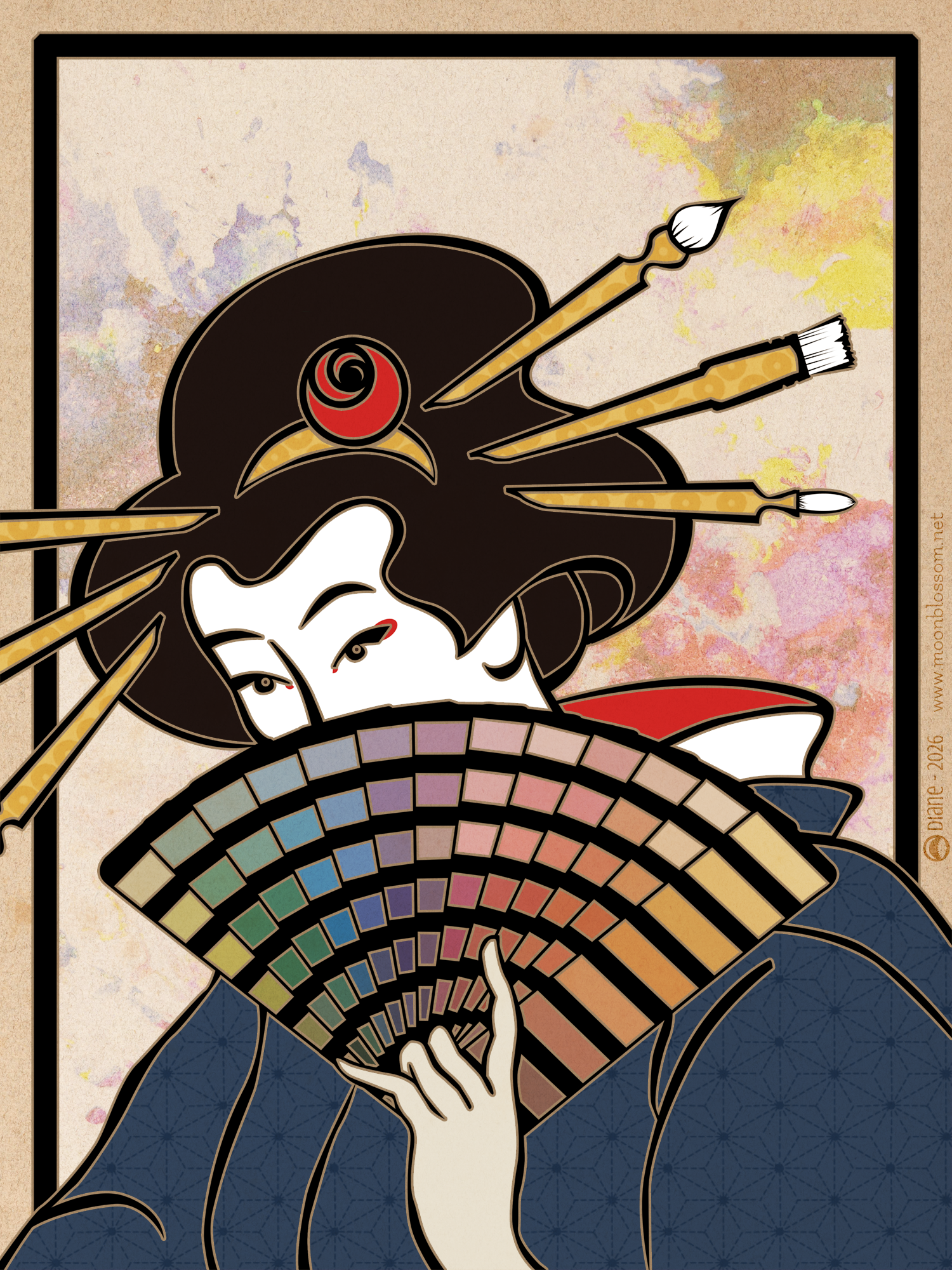
Some months back, someone on Reddit posted about an amazing vintage poster they’d found at a thrift shop of a woman in a traditional woodblock-print style holding a fan made of colour swatches. The only info on it was the name of a printing company, and she was dubbed the Pantone Geisha. And of course, as someone with a graphic design background and a borderline-unhealthy special interest in Japanese art, I fell completely in love.

I spent eons trying to track down the poster,  or find some sort of accreditation other than the facility where it was printed, so I could buy a copy but to no avail.

So I gave in, decided to use that damn graphic design background, and make my own take on her and her delightful palette fan. With the support and encouragement of my friends, I worked on pushing the “arts” aspect even further by turning her mimikaki kanzashi into paintbrushes, making her kimono have a blueprint inspiration, and possibly the easiest to miss but my favourite detail, turning a fibonacci circle into another hair ornament. A bit of a watercolour splash in the background, and the portrait was done!
Since this is inspired by extant, unaccredited art, I don’t feel comfortable selling prints, but if you would like to print a copy of your own, you can get a high-resolution copy right here. And if you do, you can always consider supporting me in other ways, if you’d like.

Kokeshi Picrew for Hinamatsuri!

Today is Hinamatsuri! In the past, I’ve usually either done a coordination, displayed dolls I’ve collected, or done some sort of DIY to celebrate. This year, I had bigger plans; Sophie and I were going to attend a gathering at a local tea house over the weekend. Unfortunately, I woke up with the most miserable cold and sore throat I’ve had in eons, to the point where I could barely swallow. I wasn’t up to doing much and did not want to risk spreading the ick. I was at a bit of a loss on what to do for today but then I realised it would be the perfect time to share my newest long-term project!

You all know how much I love finding and reviewing picrew avatar creators, and I figured it was high time I make my own! Presenting the official….

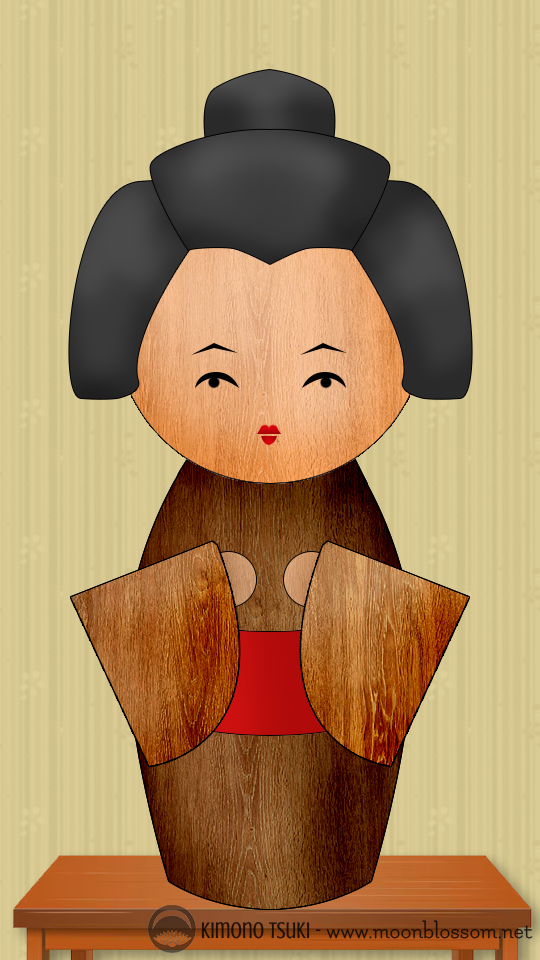
Kimono Tsuki Kokeshi Doll picrew maker!


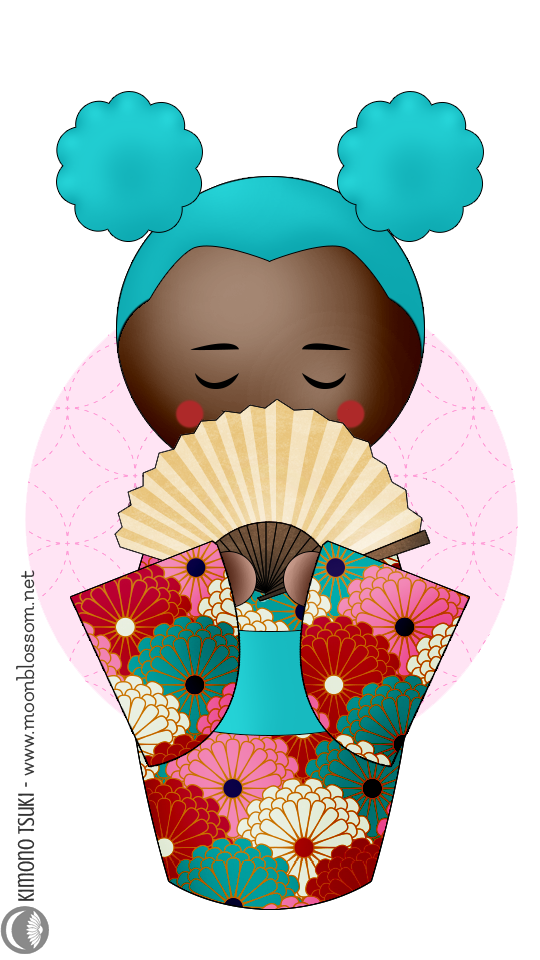
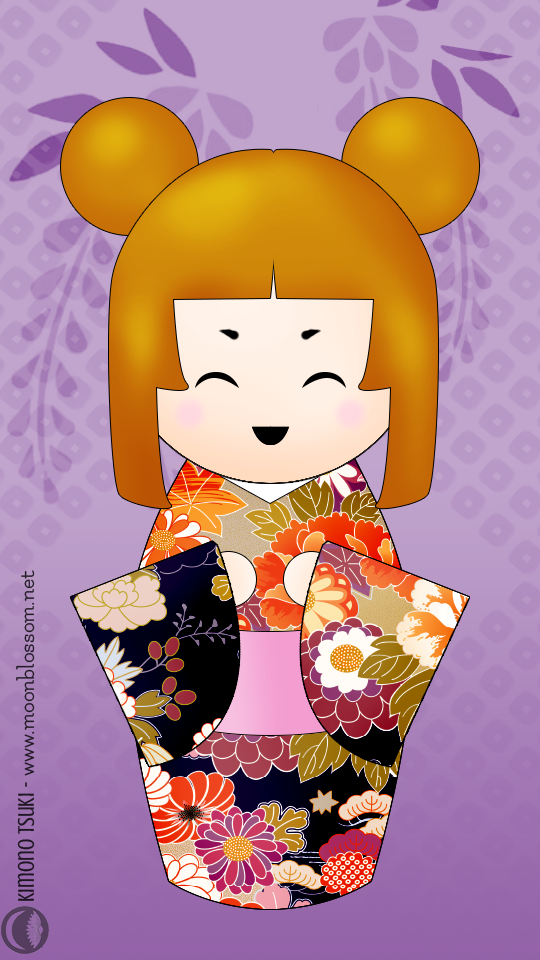
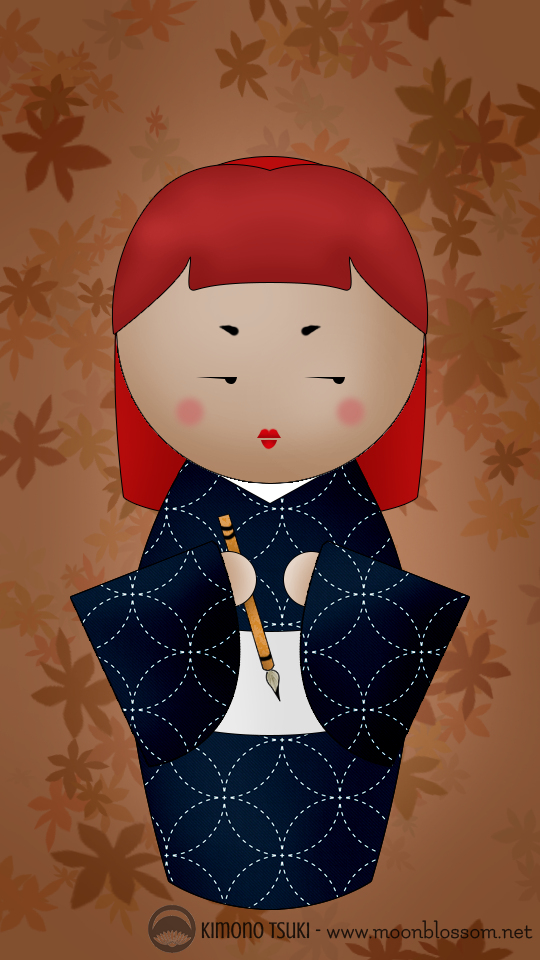
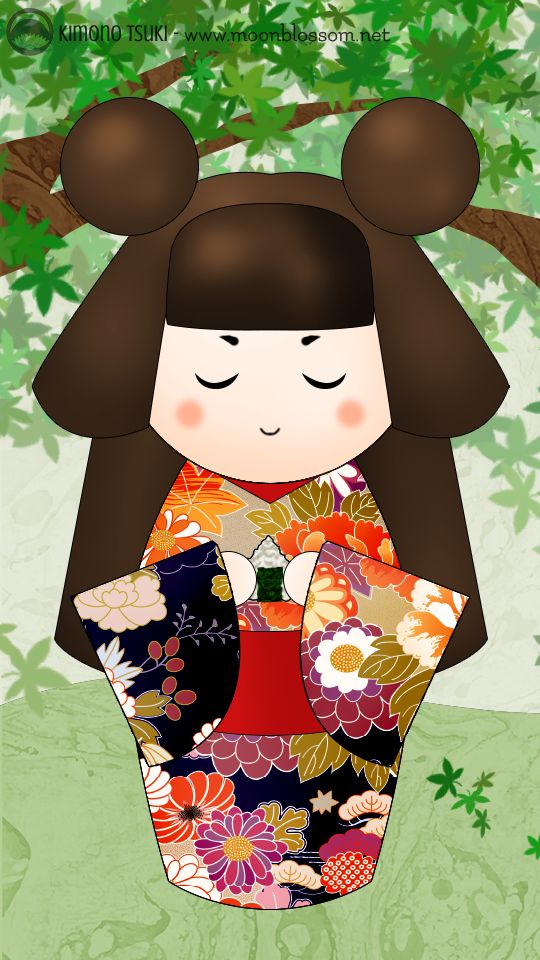
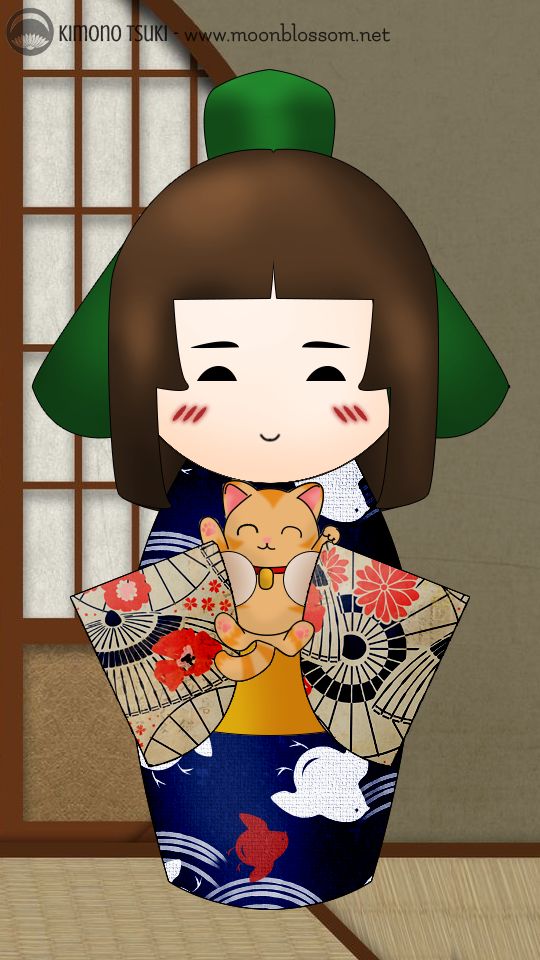
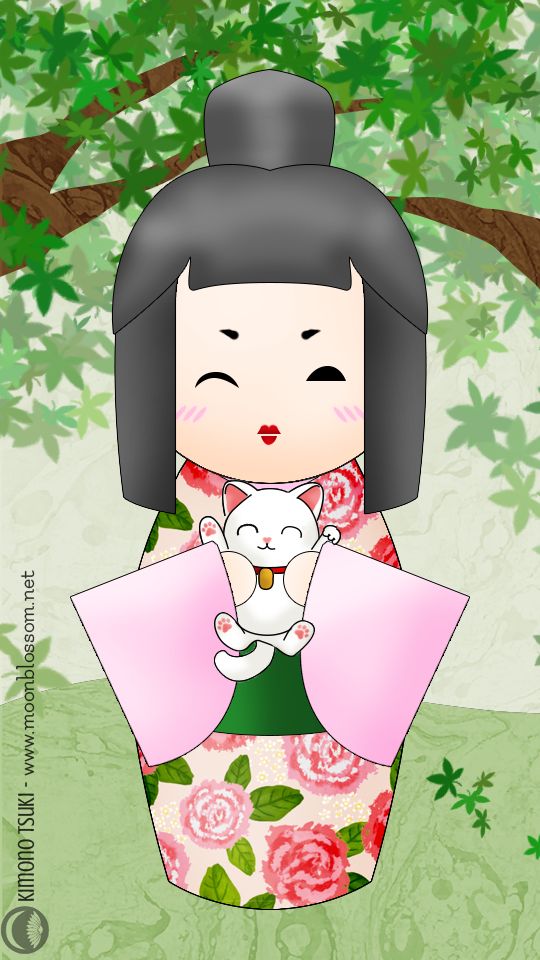
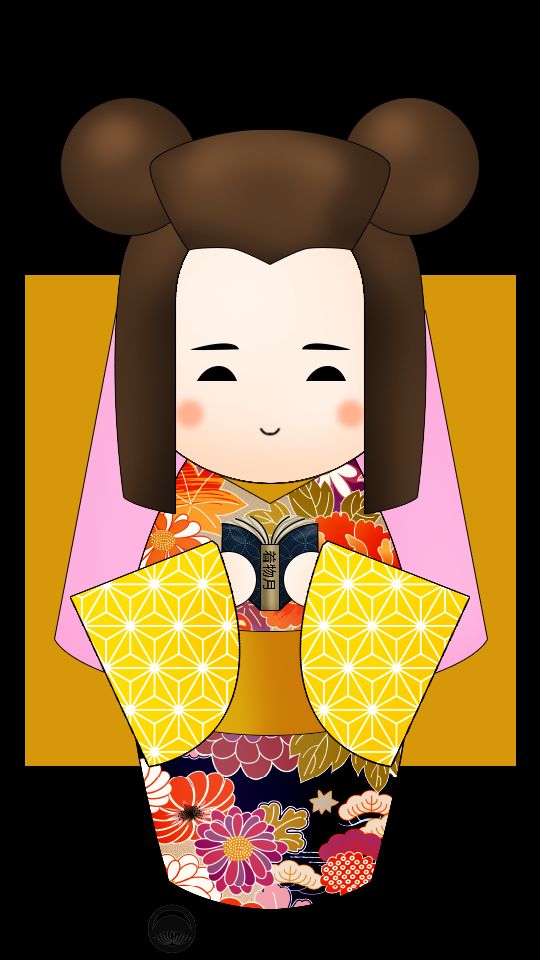
It’s been a labour of love for the past few months, puttering on weekends and after work. I still have plans to continue updating, adding more hairstyles, more hand-held items, a variety of kanzashi, maybe a haori layer… if you have any other ideas or suggestions please don’t hesitate to let me know! For fun, here’s a variety of dolls that have been made using it, by myself and my friends.


If you need a primer or a refresher on how to use the Picrew.me interface, I broke it down in my first post about the site, which you can read here. I hope you have fun with it, and if you make any cute dolls please show me! I would love to see!

Art Gallery – Spy X Family X Kimono

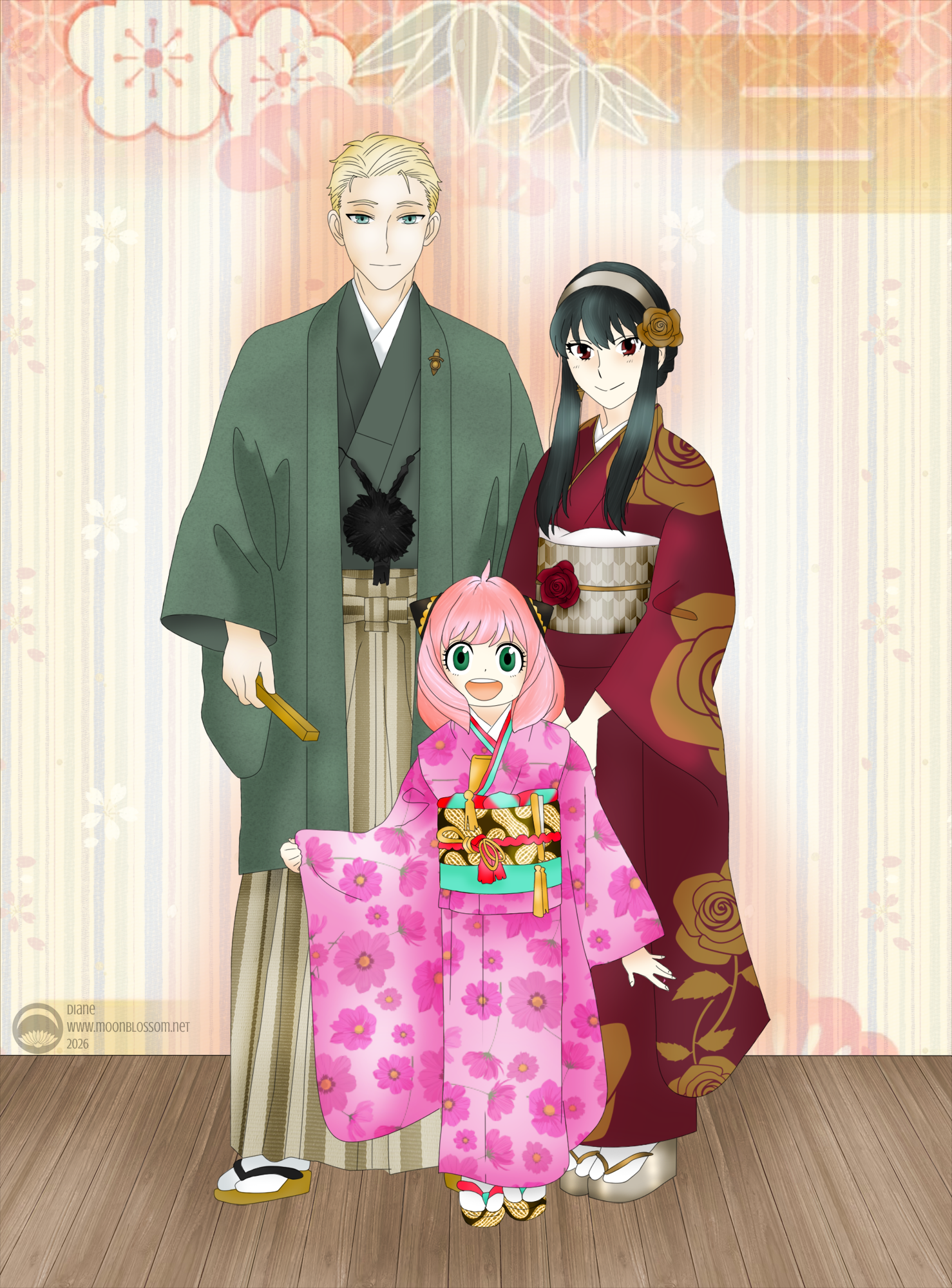
What’s this? I drew an actual male character in male kitsuke for once? Alert the presses! I was in the mood to draw more comfy anime kimono fanart, and ended up with these three perfect precious idiots. Very capable idiots,  but idiots nonetheless.

My original plan for this was just to draw Anya because I love her so much. But as I started on it, I realised it would be even cuter if it I took a riff on a traditional family portrait. I like to think they’re celebrating Anya’s shichigosan (even though we don’t know exactly how old she is, we know she’s in the right range).
Once I had that in mind, their outfits sort of fell into place. Anya’s in a bright and cheerful pink furisode (which admittedly I should have tucked at the sleeves as well as the shoulders, but I realised it too late) with a cosmos pattern. She’s holding them in the first season closing credits, and they fit the pink theme well. They’re also said to represent pure and innocent love, which is what Anya feels for her family. If you look closely at her obi and zori, what initially looks like a fairly traditional black and gold obi with a geometric design is actually a tessellation of her favourite snack; peanuts!

Yor had to be red and gold with a rose motif, of course. Nothing less for our Briar Rose Princess. Her updo hairstyle already suits kimono so well, she was possibly the most natural fit for this picture. I gave her a yabane motif obi as a nod to her secret life as an assassin; I know she doesn’t use a bow and arrow, but I wanted something a bit less literal. Maybe she’s got some daggers tucked into her obi?

Loid was a bit more of a challenge, since he’s such a blank slate. In the end, I stuck to the usual colours of his clothing and think it works well. He provides a nice neutral counterpoint to Yor’s elegance and Anya’s vibrancy. Of course, as much as I don’t condone piercing holes in your kimono, I had to include his WISE lapel pin.

Mini Washitsu 2026

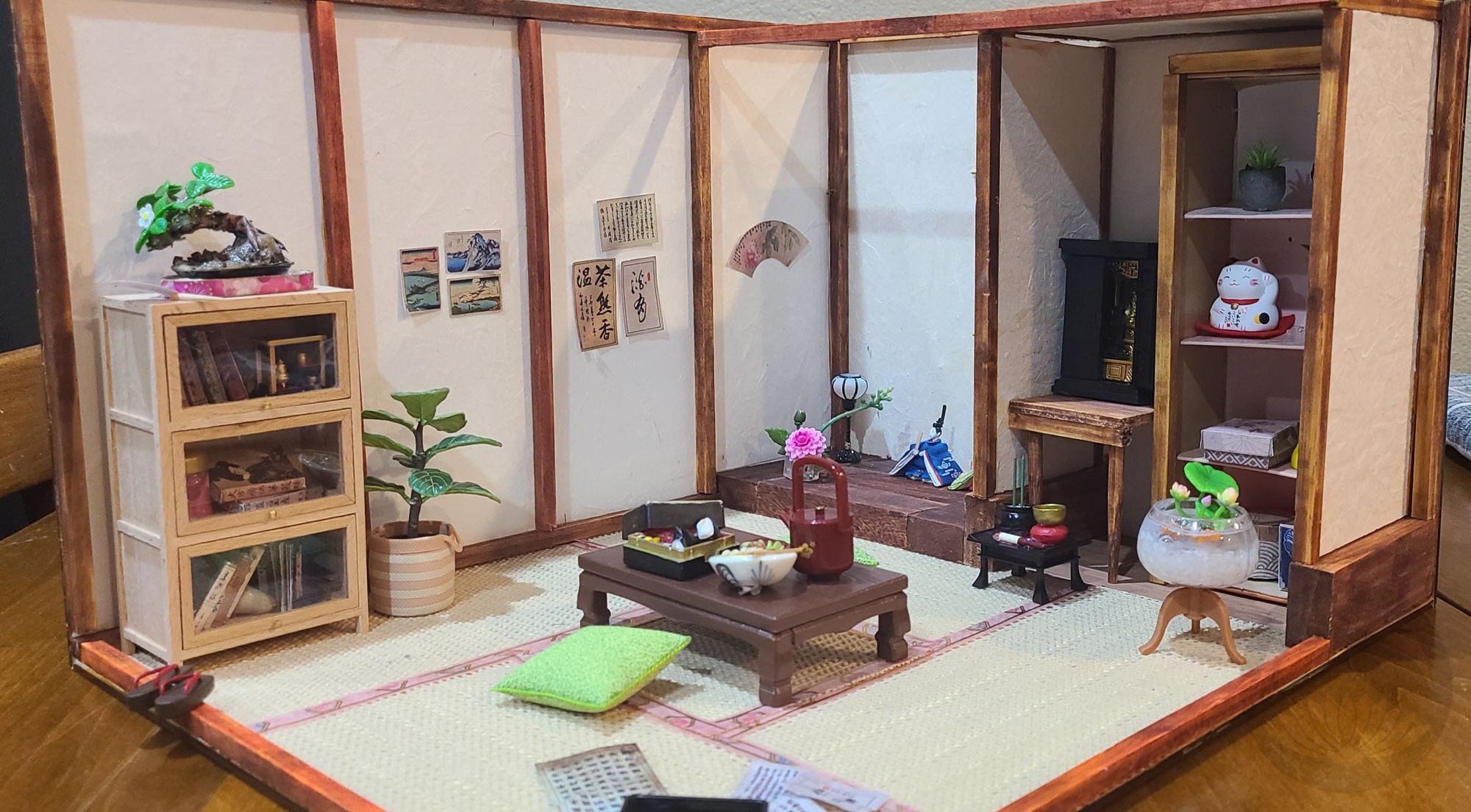
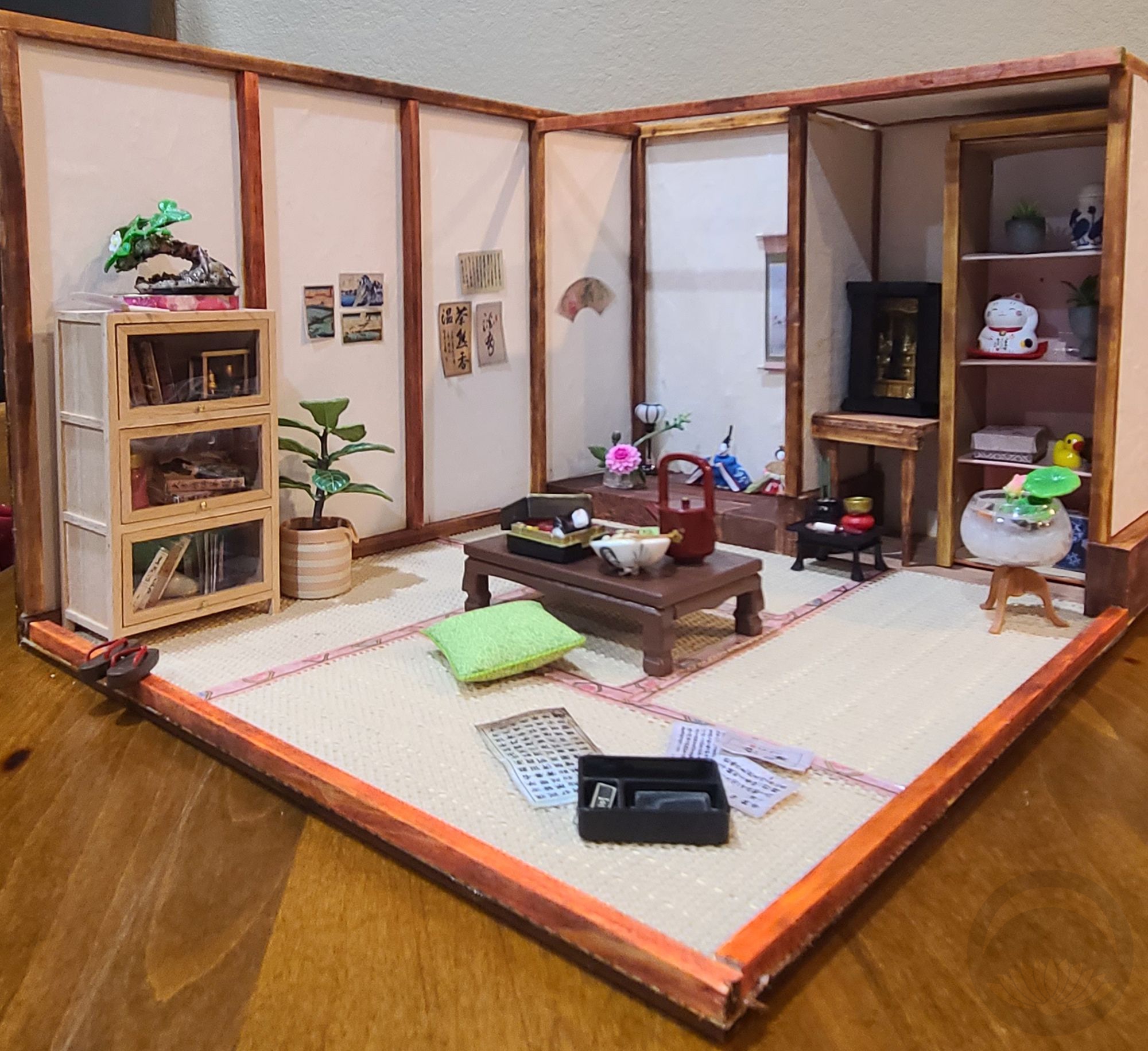
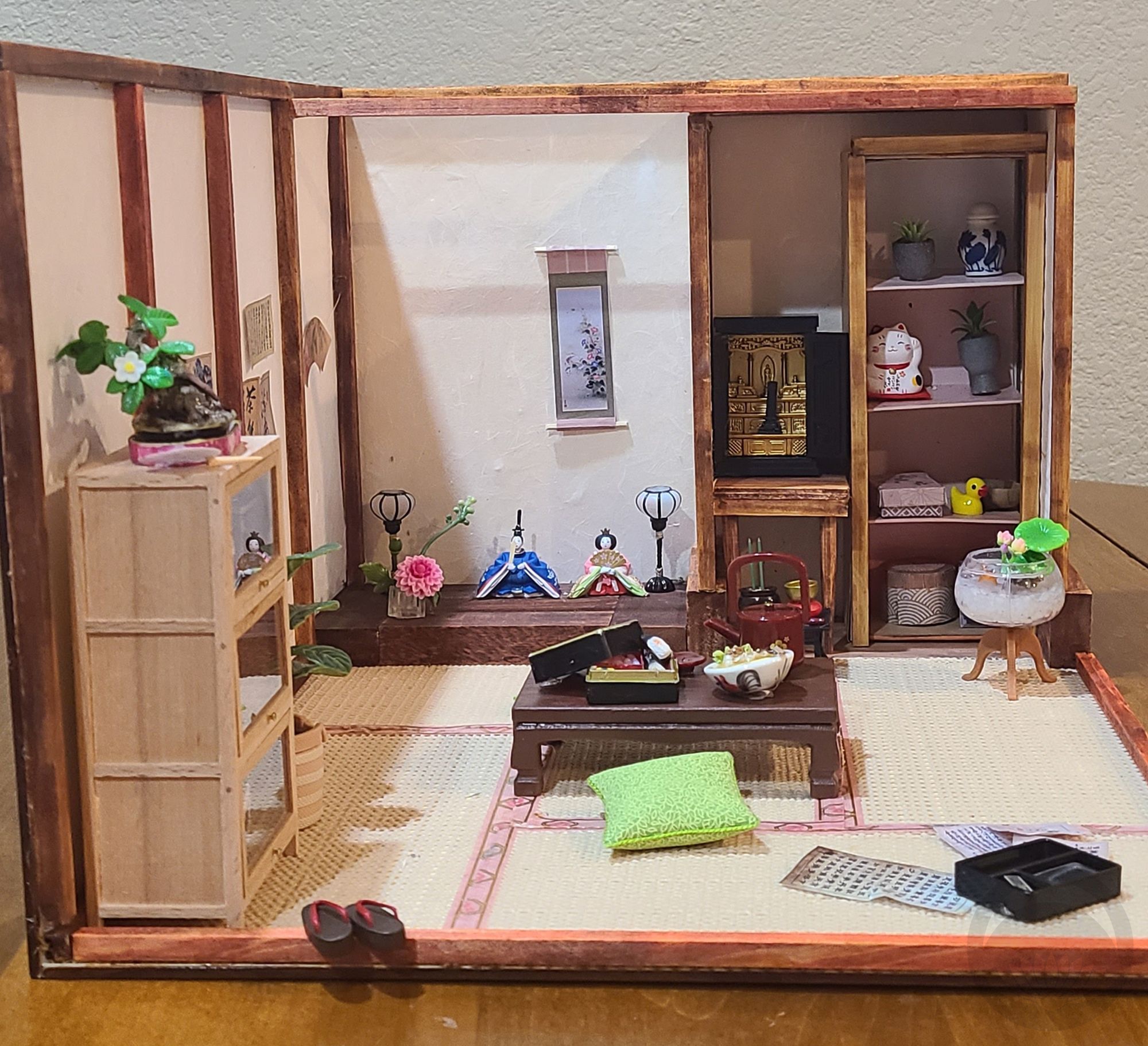
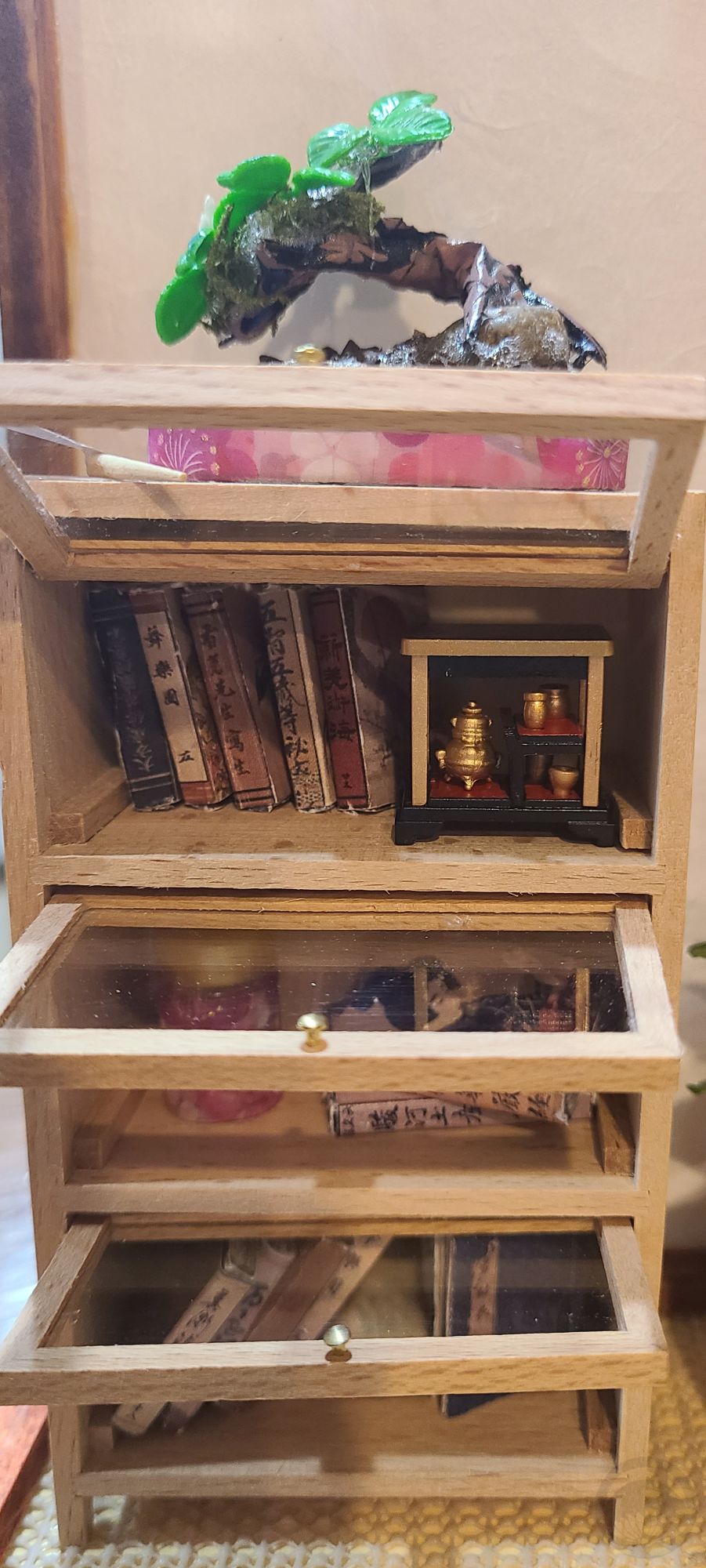
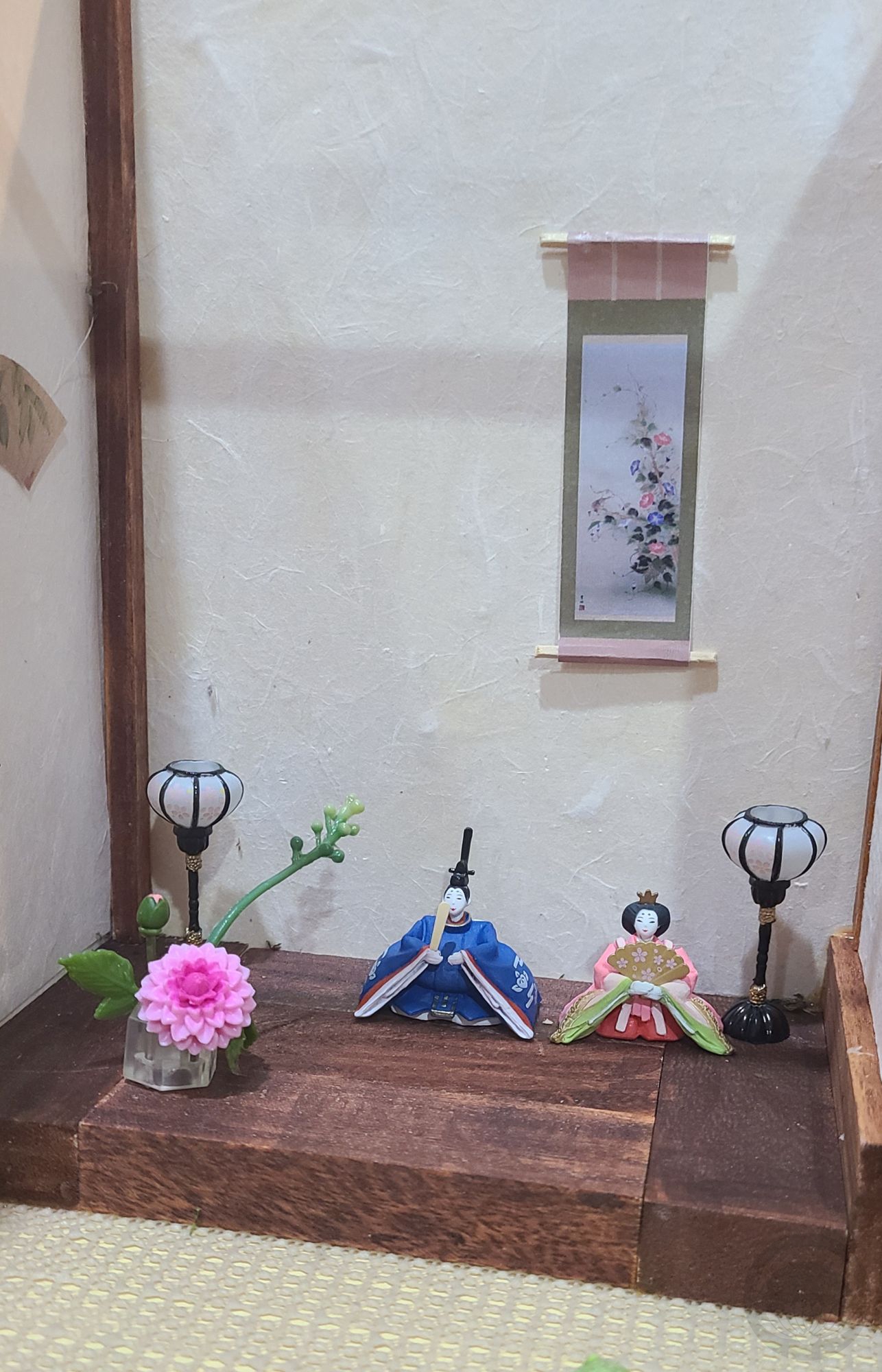
I am no stranger to making Japanese-inspired dioramas (see here and here), but until this time they’ve not been particularly accurate. The first one was assembled from literal junk including a cardboard box, and the second was a kitbash into an “inspired” home. But I was itching to do something a bit more detailed, proportional, and accurate than my previous attempts, so I hauled some of my miniature supplies from Montreal to California and got to work.

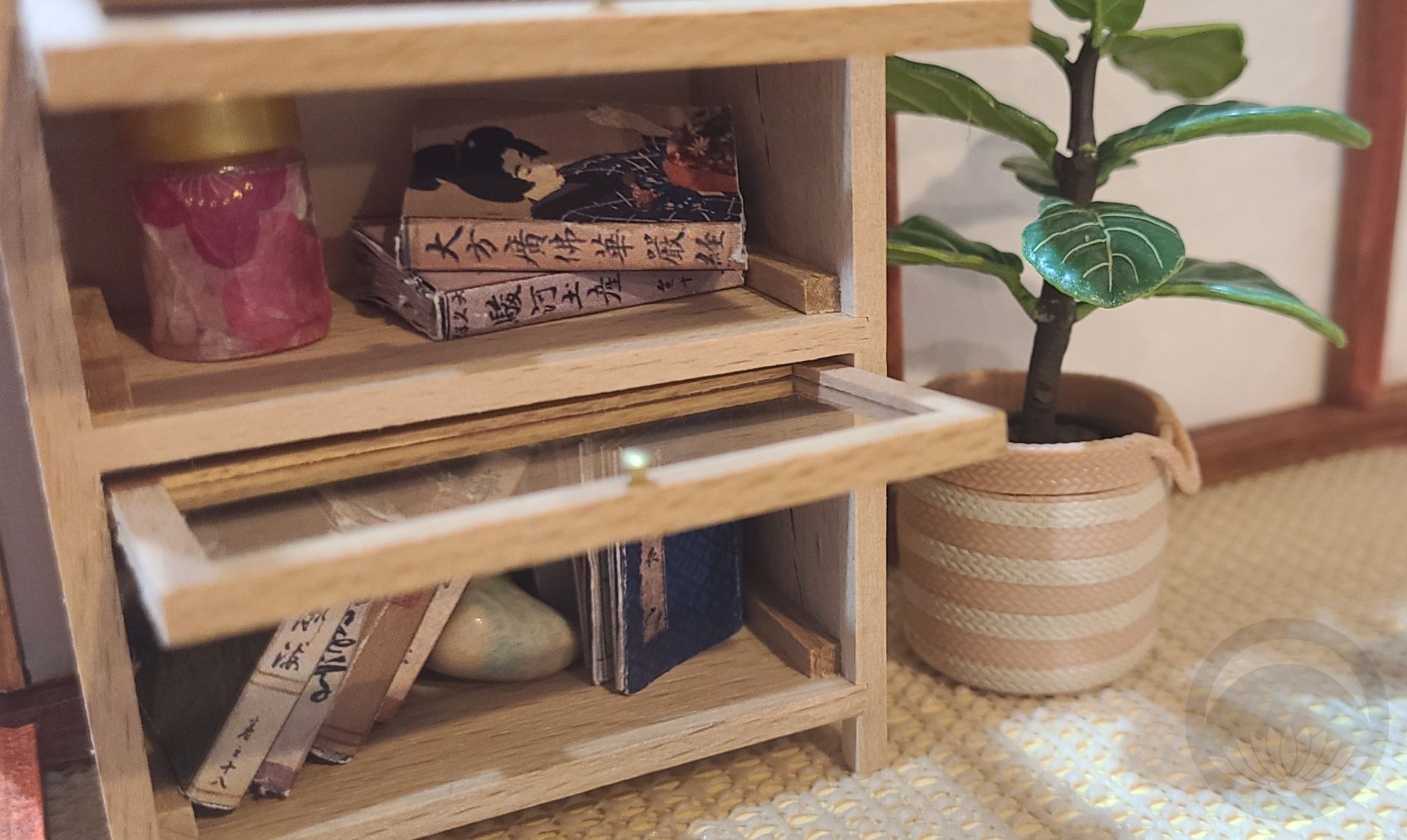
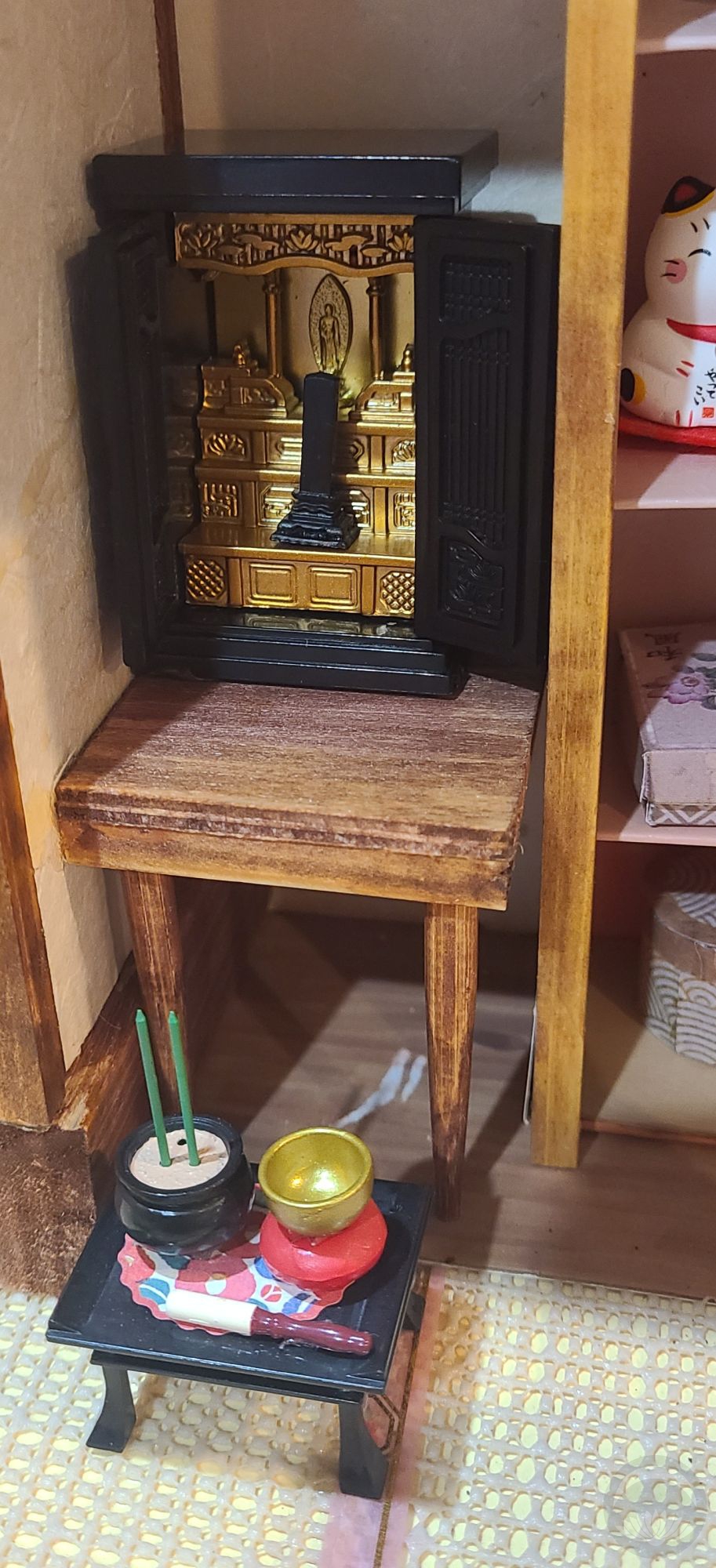
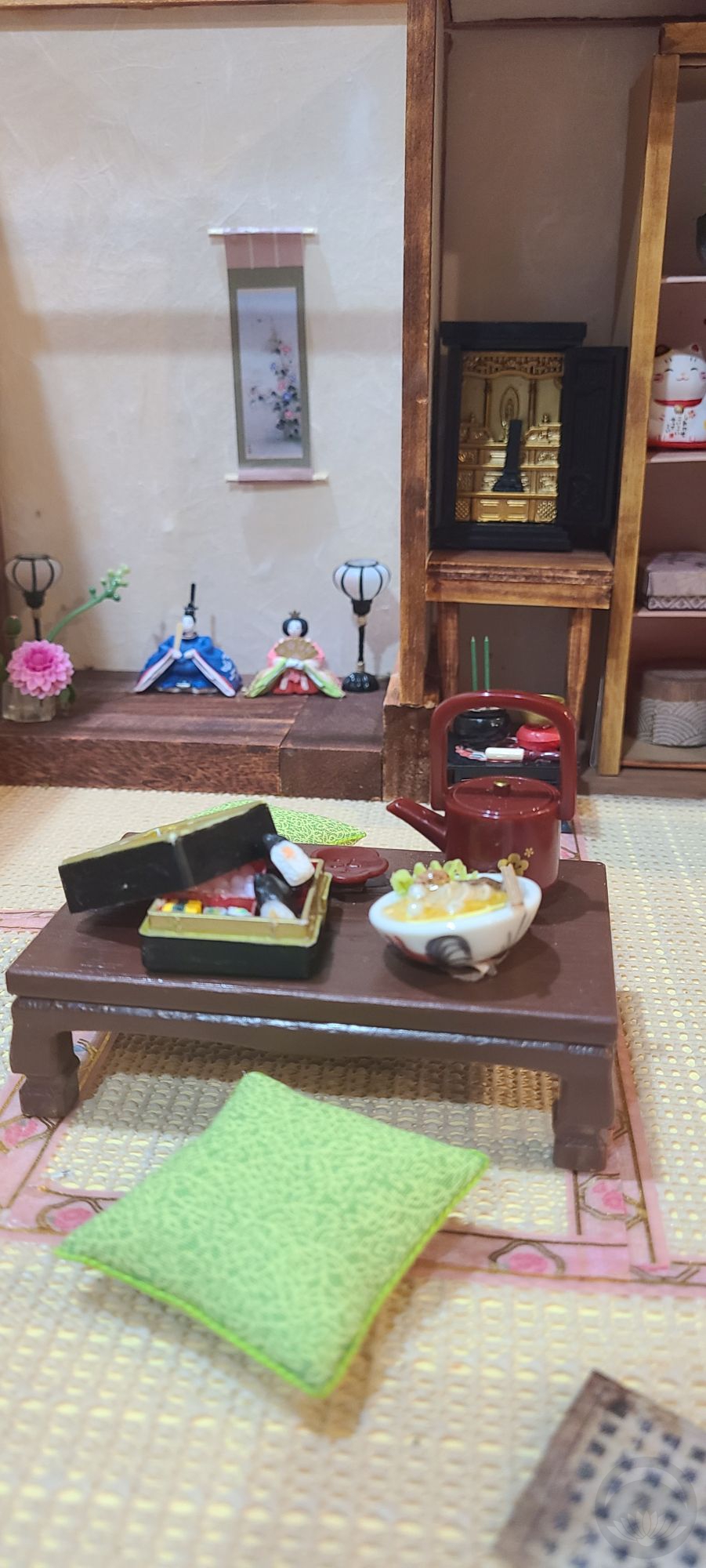
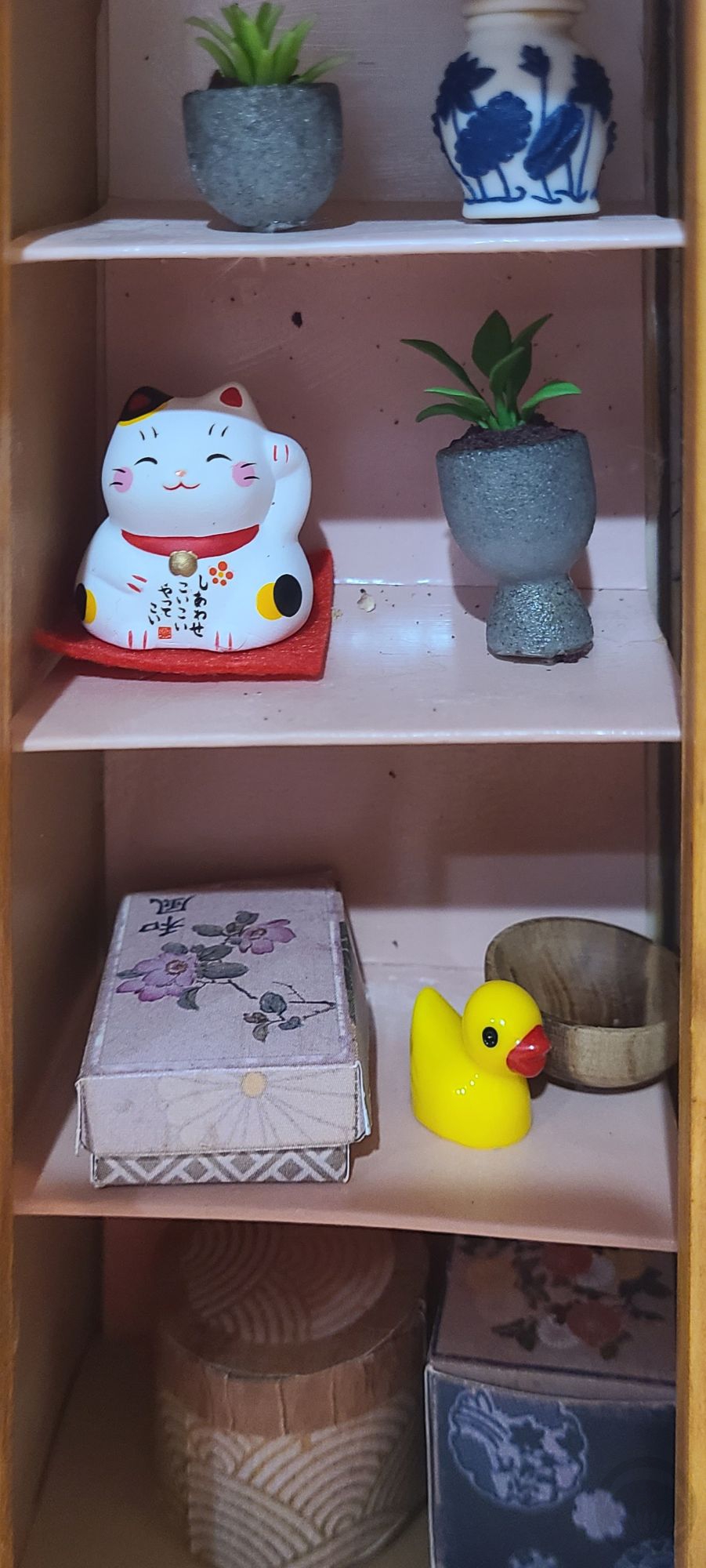
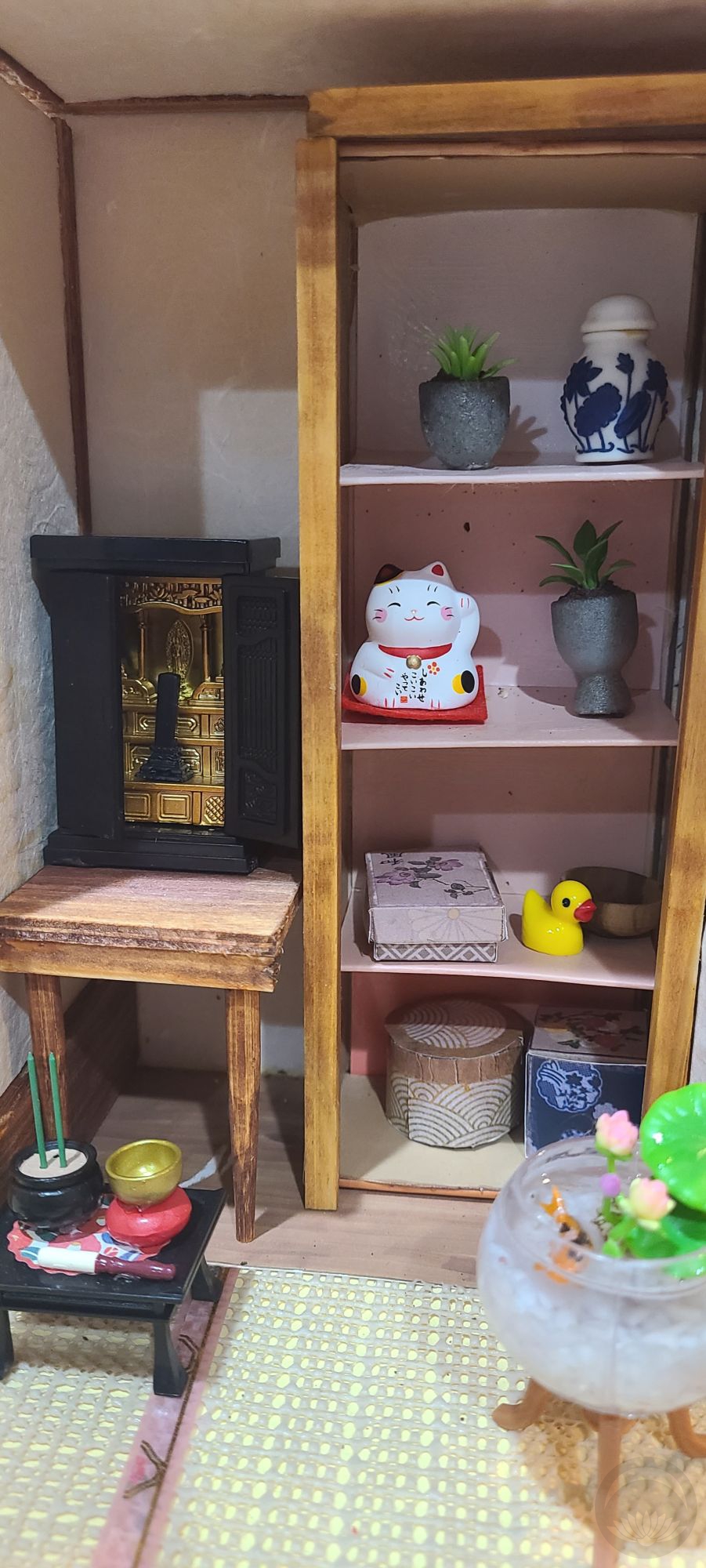
I started out with a basic MDF room-box kit with two walls and a floor. From there, I constructed the inner walls to create the tokonoma, butsudan alcove, and decorative shelving using square balsa dowels I hand-staned, and pine craft rectangles. I wallpapered the whole thing in decorative rice paper. The tatami ended up stumping me for a while, and then I remembered I had this beige textured shelf liner left over from organising the pantry. A bit of beige paper underneath it and some washi tape to form the borders, and voila. Itty bitty tatami committee! I divided it into typically balanced proportions, ending up with a room that’s four and a half tatami, plus the toko and shelving spaces.

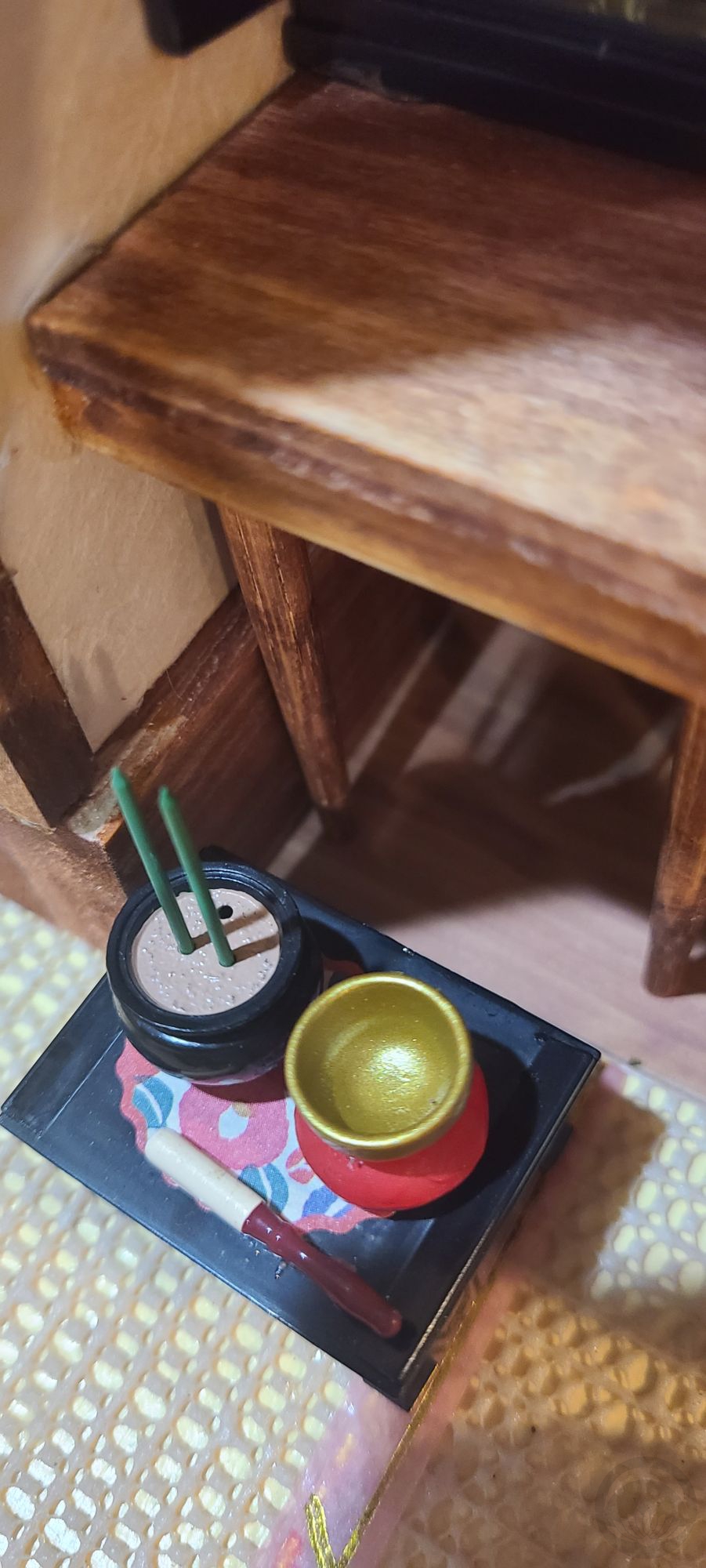
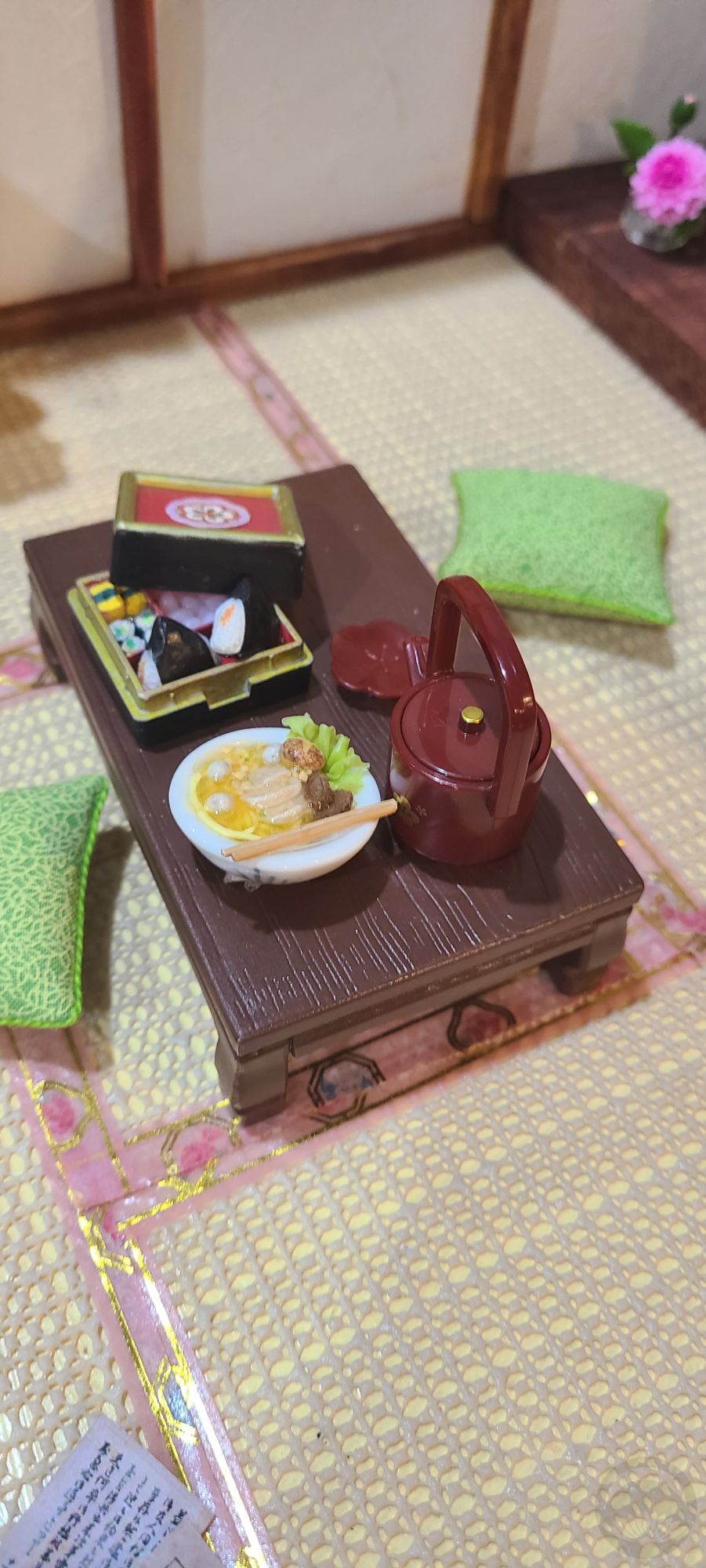
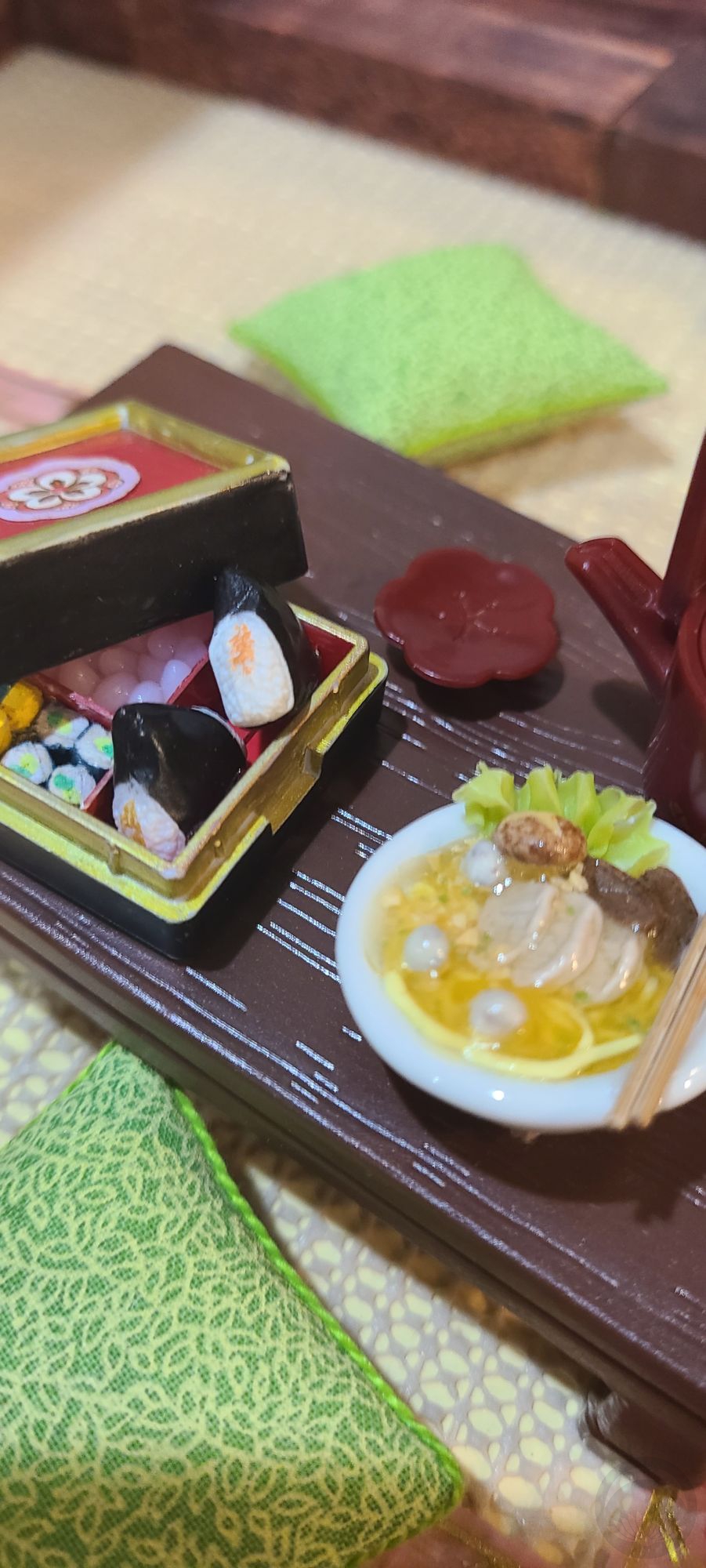
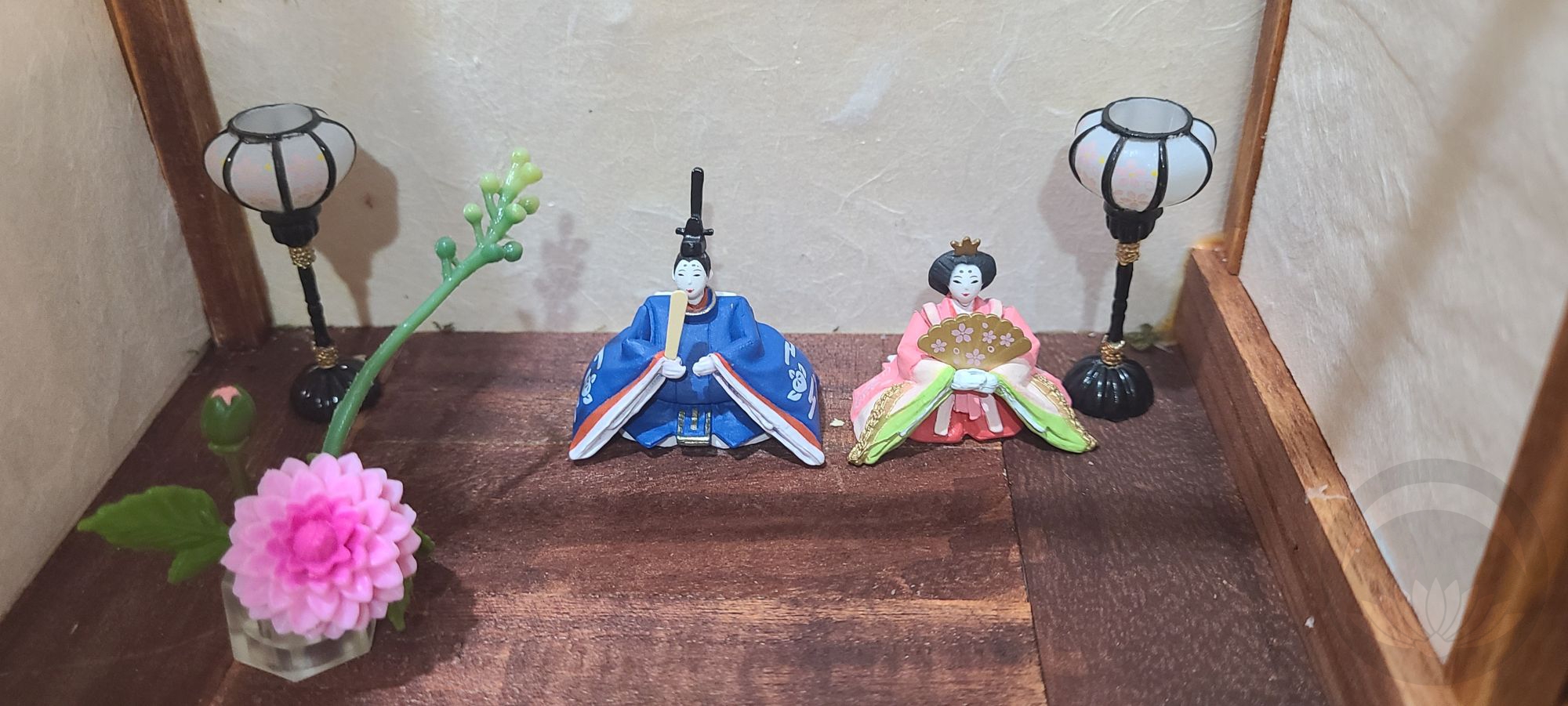
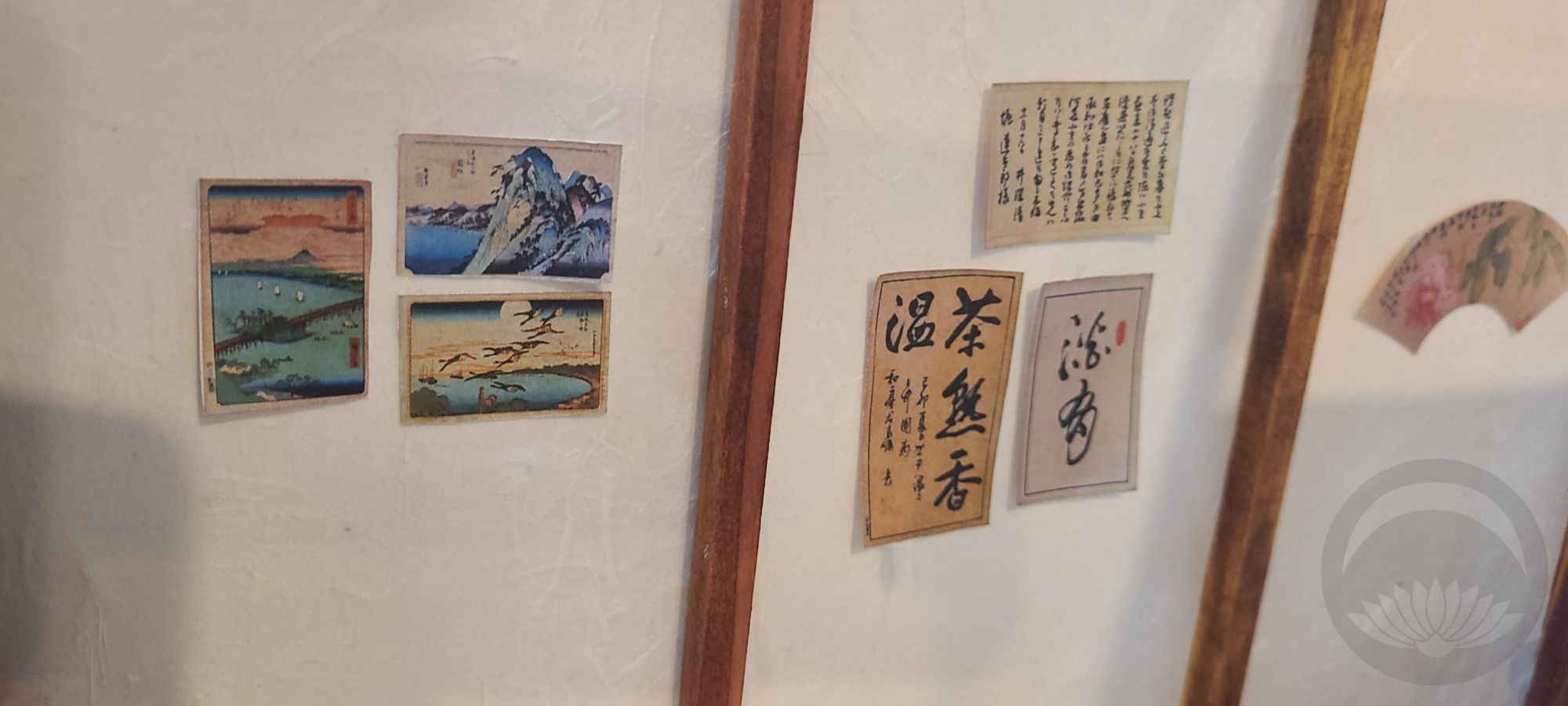
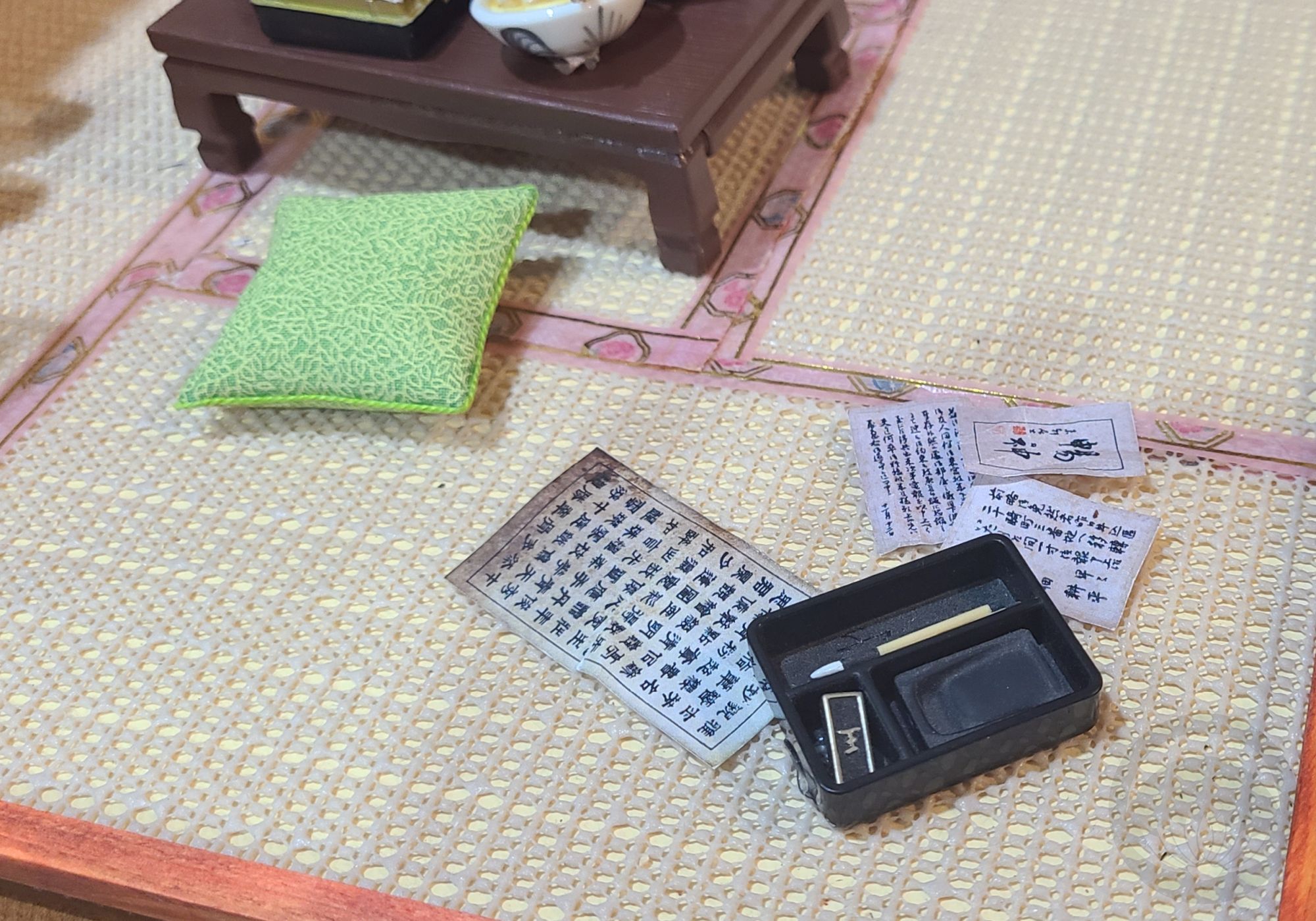
Once the room structure was complete, it was time for the fun part – decorating! This is always my favourite part of making a miniature or diorama, since it’s where things really start to come to life. They go from looking like boxes to looking lived-in. I like to imagine the resident of this room is a young woman trying to balance modern and traditional life based on her hobbies (calligraphy, reading poetry). She knows she’s too old for it, but she still puts her childhood hina dolls out for Girl’s Day and still pays her respects to her family altar, but she’s also busy enough that she picks up pre-made meals on her way home from university. I don’t generally imagine this much of a resident in my scenes, but every detail I added here just kind of helped flesh her out, what can I say?

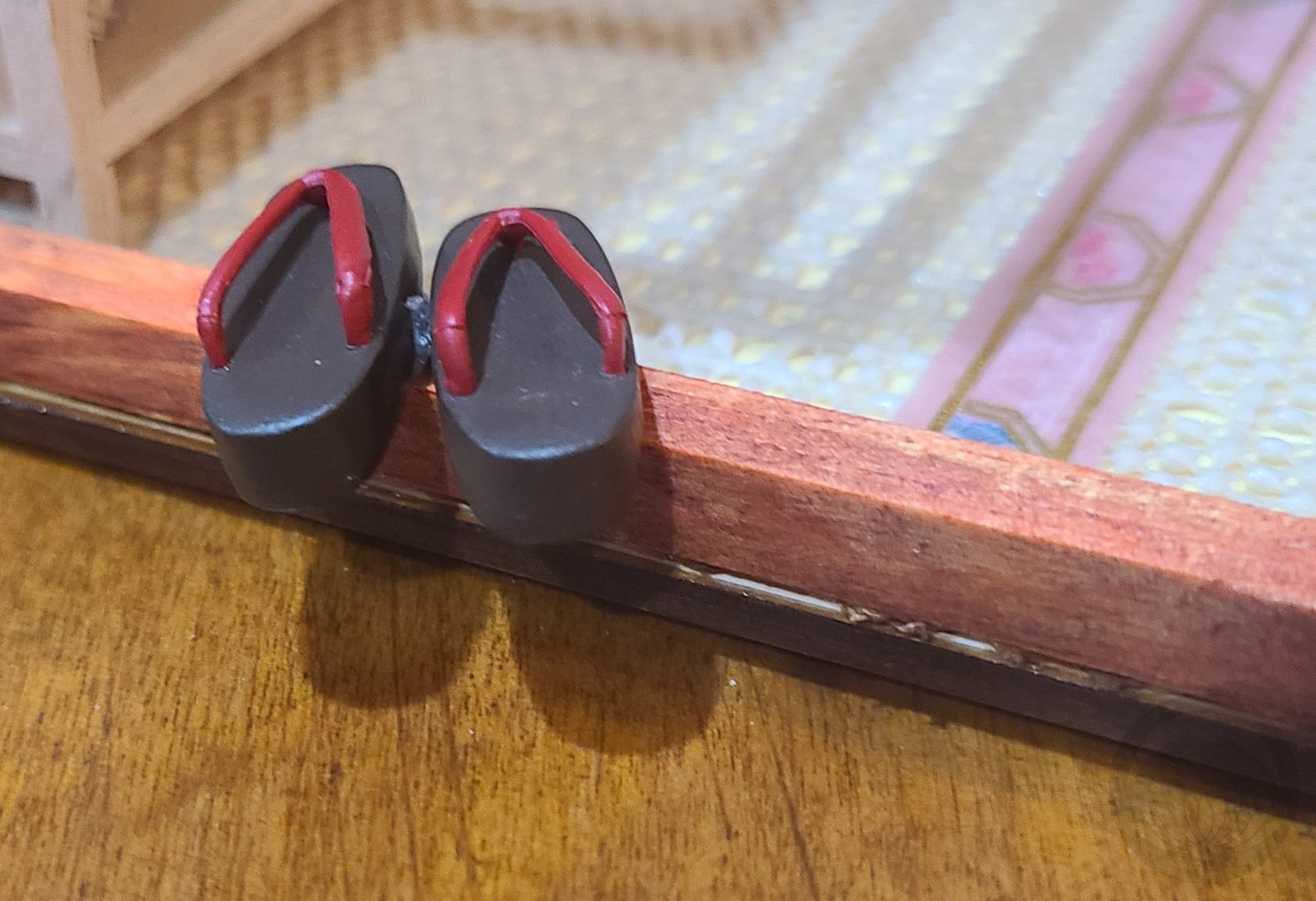
The details are a combination of printables from Etsy (links to the shops below), Re-Ment miniatures (the hina dolls, zori, and butsdan set, as well as the onigiri in her bento box), and a few small items I picked up from specialty shops on our recent trip out to Torrance. The tiny blue and white ginger jar was quite possibly the most expensive individual element here, at nearly twenty dollars, but it’s so stunning in person I knew I had to have it.

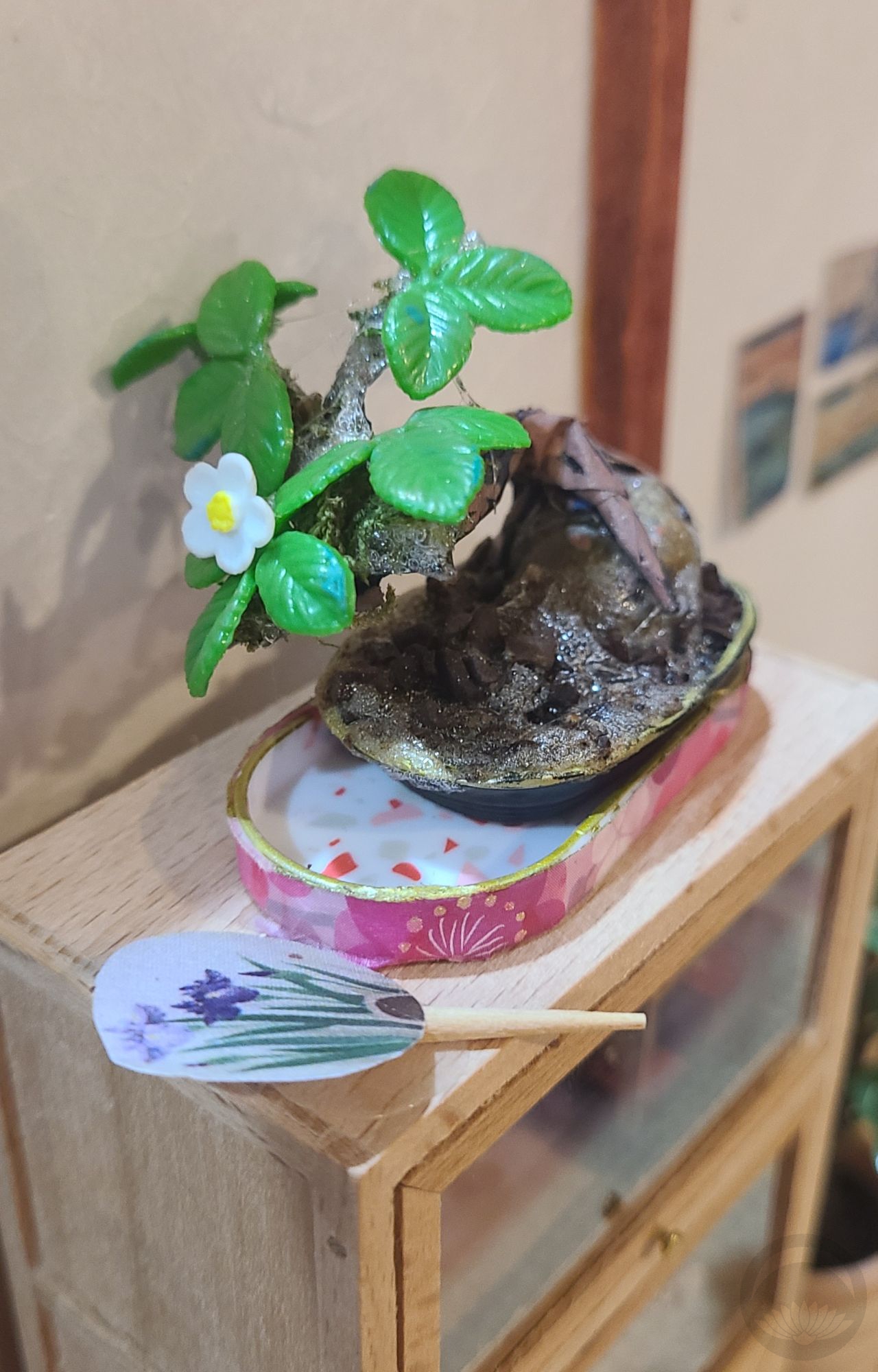
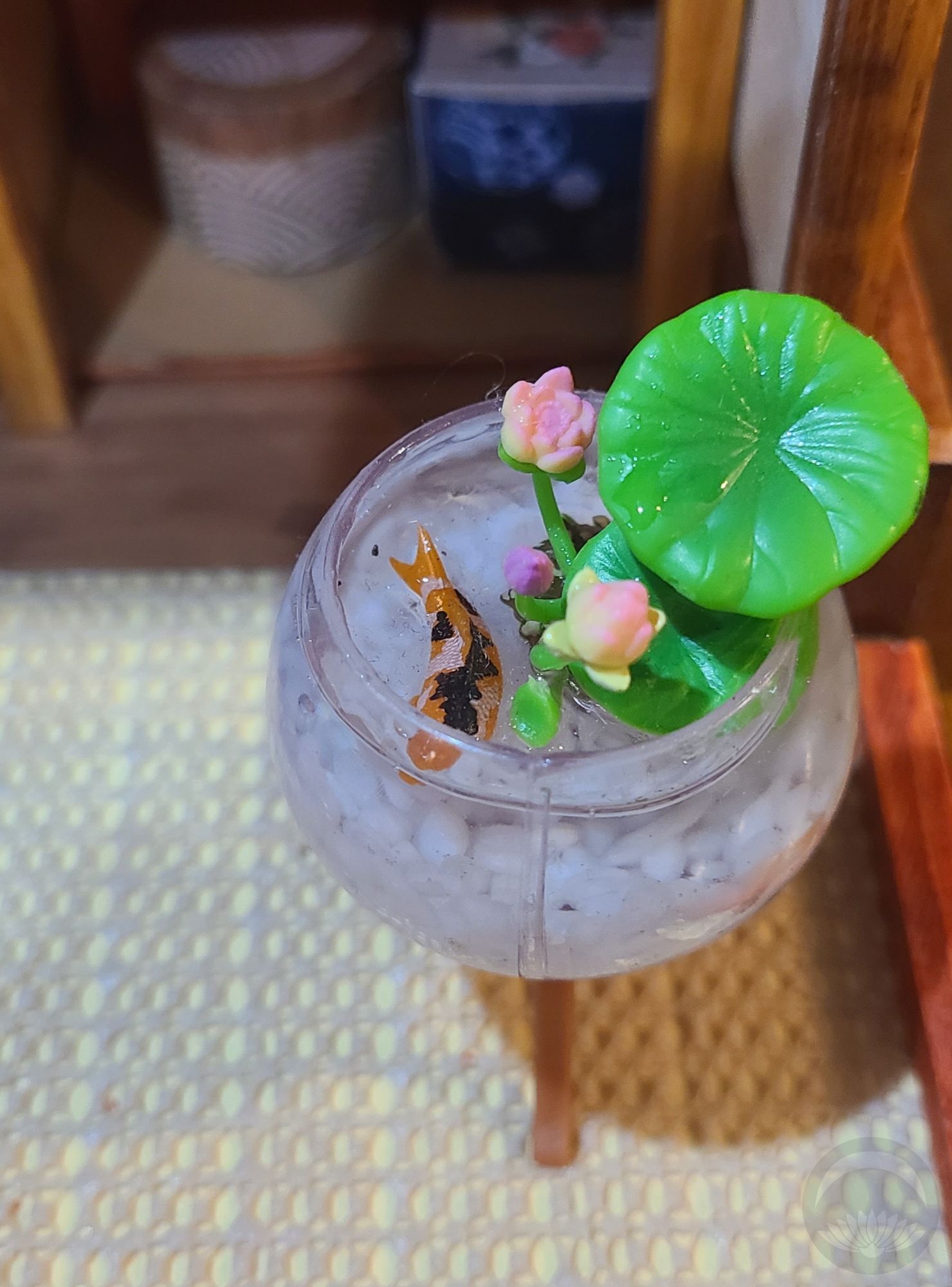
The greenery is all from MGA’s MiniVerse DIY sets. The ikebana was a kitbash of a few flower sets, the bonsai trunk was handmade and the leaves came from a strawberry kit, the fig tree and small plants in the shelving unit were just placed in as-is, and so was the tiny koi in the bowl with lilies. They’re not quite to 1/12 scale but I think there’s a lot of leeway to be had with plants, since they’re never one fixed size anyway.

Please enjoy exploring this tiny space as much as I loved creating it!

Printables came from the following  Etsy shops, but I’m afraid I’ve lost the references as to what came from where.

As for the Re-Ment miniatures and MGA’s MiniVerse; they can both be found on Amazon.

 This post contains affiliate link(s). If you choose to purchase, I receive a small rebate or commission which goes to the continued maintenance of this site.