Tsuke-obi – cheat or genius?

Sorry for the lack of updates! Sometime between Christmas and Boxing day I received the heartwarming and thoughtful gift of gastroenteritis. I’m starting to feel better, but still don’t have a lot of energy for kitsuke. Since I’ve acquired a few new ones lately, I thought it would be a good time to discuss tsuke-obi, or pre-tied obi.

There are a few camps when it comes to tsuke-obi. Some people are staunchly against them in any situation, some people have to rely on them because they’re not confident enough yet, and some, like myself, think that well-made ones have their place in any decent kimono wardrobe. They’re a godsend when you’re not feeling well and don’t have the energy to deal with an obi, or if you need to dress a bunch of people in a hurry. They’re useful for fancy furisode musubi that would otherwise require two people to tie. They’re also great for dressing people who don’t have a lot of experience wearing kimono, since they don’t need to be tied as tightly as a “real” obi would be.

Some of them definitely look cheap and are obviously pre-tied. The brightly coloured polyester types with a large butterfly bow that often come with yukata sets are a prime example of these. Except in the direst of situations, I’d never recommend going out and getting one of those, because nothing says “I can’t be bothered!” more than one. Especially if worn with anything dressier than a yukata! However, there are definitely nicer examples. Often times they’re made with solid old obi that have been damaged, or were owned and loved by someone who may have gotten too old to tie her obi efficiently. Some of them are also mass-manufactured, but in a way as to look more like “real” obi. They come in several different musubi, or bows, such as otaiko, niijudaiko, and some larger and more elaborate ones for furisode. Often times, once these are tied on properly and an obiage and obijime added, it’s virtually impossible to tell they are pre-tied. I’ve got a few of them, and two of them are probably some of my favourite obi in my collection.

Pente Lobster obi
Pente Lobster Tsuke-obi

This is such a stunning piece. I found it on eBay right before the holidays and my folks encouraged me to go ahead and get it and it would be a gift from them. I’m so thrilled. I’ve mentioned my fondness for lobster motif before, and this is not my first lobster obi, but it felt different enough from the one I had that I felt fully justified in buying it.

Pente is an interesting and relatively uncommon technique – it’s a thin layer of paint daubed onto the surface of usually solid black silk. It was popular after WWII when there were a lot of damaged pieces floating about and people generally didn’t have huge budgets for fancy embroidery techniques or high-end dye methods. It was also used to re-work mofuku (funerary wear) into something more useful for everyday, stretching the wardrobe budget further. Unfortunately, due to the nature of most paint, it’s incredibly fragile. It sits on the surface of the garment rather than sinking in, and decades of tugging and pulling on the obi while it’s being tied leaves most vintage pente obi in states of disrepair, paint flaking off or peeling in huge chunks. Because of this I generally avoid anything pente, but because this was a tsuke-obi there was virtually no stress on the paint and it’s in flawless condition.

One of the other interesting and relatively unique things about this particular obi is the way it’s tied. Like most pre-tied obi, it’s in a standard otaiko musubi, but unlike more mass-market ones, it’s tied on a quirky, jaunty angle. This really helps make it look like a “real” obi, and definitely gives it a lot more personality than a perfectly level one.

Black and white hakata obi
hakata
hakata-2
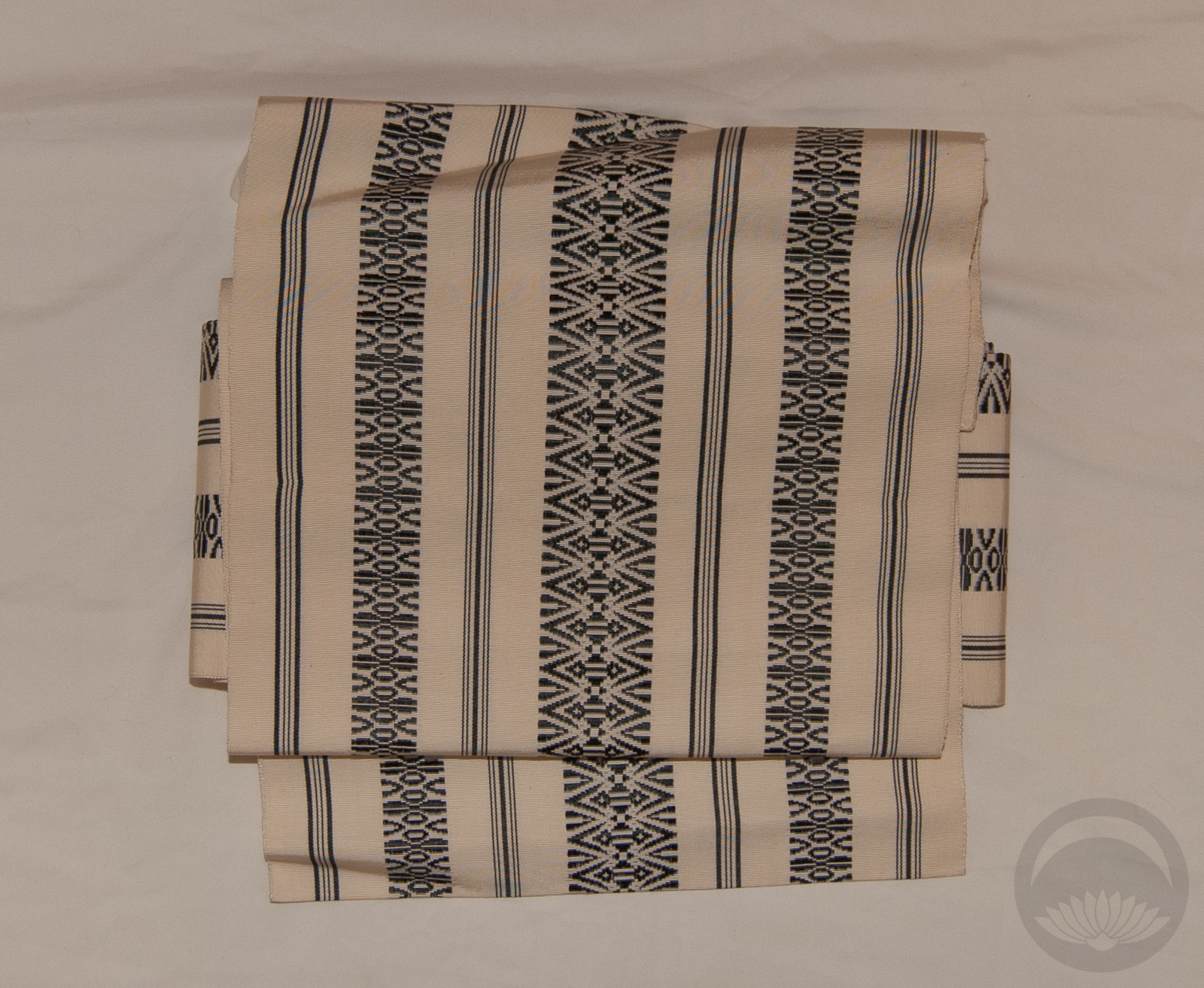
I make no secret of my ridiculous love affair with all things hakata, but somehow I’d never managed to acquire a standard black and white weave. When I found this one I fully expected it to go for more than I was willing to spend, but I figured I’d throw out a bid and see what happened. Imagine my shock when nobody else bid! This is another variation of an easy obi, it’s not really pre-tied, just separated into a narrow waist bit and a wider bit to tie the actual drum with. It requires a bit more time and effort than a fully tied one, but also allows for more leeway in tying.

Cream tsuke-obi with navy, ruby, and silver foliage
White Tsuke-Obi
This is the first tsuke-obi I purchased, and was really the one that made me a convert. It’s a heavy almost silk blend that almost feels like parchment or canvas. The majority of the vines and leaves are dyed, but the red and silver ones, and a small selection of the navy ones, are embroidered over top, which adds a depth you don’t usually see in mass-market pre-tied obi.

Red synthetic with black flocked irises
Red Tsuke-Obi
This one is a synthetic, washable faux-tsumugi in a bright fire-engine red. It also has the strangest inflatable obi-makura (obi-pillow) sewn into it. I bought it mainly because of the flocking, which I loved, but it’s become a mainstay for a quick hit of colour.

Shabu-shabu with Ame and Mischie!

Tonight I met up with a few of the awesome girls from the Immortal Geisha forums for a warming dinner of shabu-shabu. It’s cold and damp and snowy and icy here, so I decided to wear my black, white, and red wool kimono and hike it up a bit with some boots. I figured it would be a great time to wear my new red-orange Tokaido obi, and had a bit of fun accessorizing with a sandy beige and red keffiyeh (shemagh).

Shabu Shabu

Ame went along the same lines and wore an adorable black wool ensemble, but mischie was very brave and wore a gorgeous black silk houmongi with ume. It was entirely accidental, but we were all wearing black, white, and red outfits!

Shabu Shabu Shabu Shabu
Shabu Shabu

The food was delicious. We went to Kagayaki Shabu-Shabu in Montreal’s Chinatown. It was warming and flavourful and perfect for the weather.

Shabu Shabu
Shabu Shabu

After we finished dinner, we went to a fancy hotel nearby to take photos over their gorgeous koi pond and to relax and have a drink. As usual, I could not resist being a giant ham. Look! Fishies!
Shabu Shabu

Ame with her Pink Lady
Shabu Shabu

Mischie with a cappucino (in a super pretty cup!)
Shabu Shabu

And me being a jackass with a Bloody Cesar. Hey baby, come here often?
Shabu Shabu

I had a great time, and can’t wait to have another kimono meetup. Maybe not until it warms up a little though!

Red Tokaido Nagoya

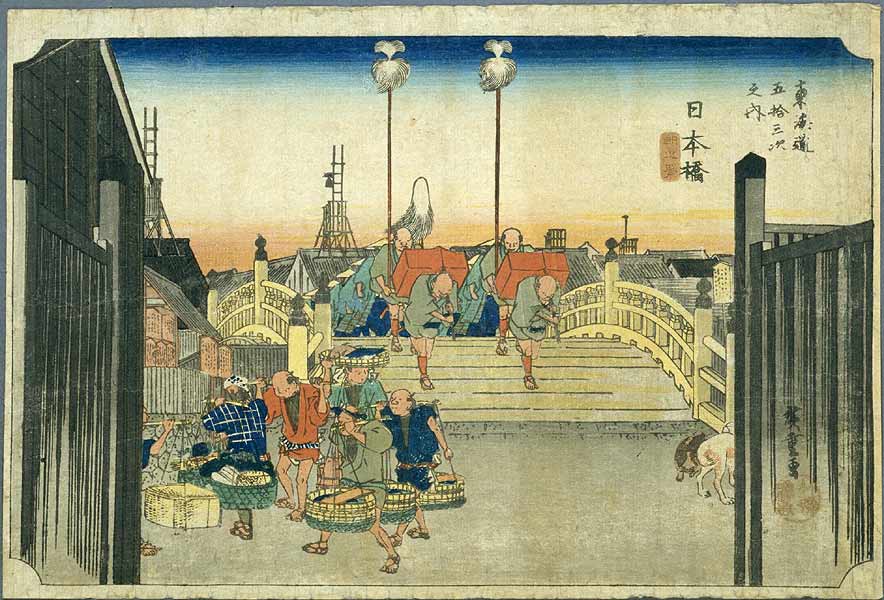
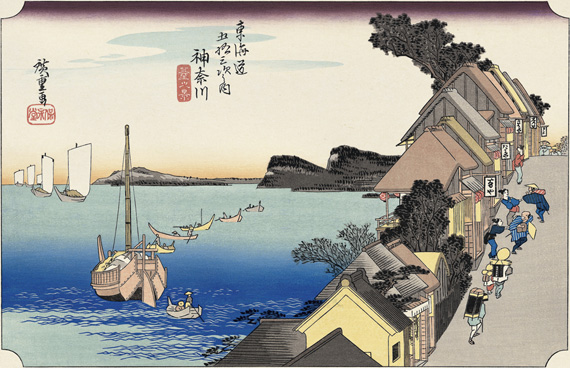
If you’re anything of a regular reader, you’ll know of my fondness for items with the 53 Stations of the Tokaido motif. I also love the colour red. So when I saw this online, I clearly had to go for it!

I like it because it’s simple and vibrant, and also has two stations I did not have yet on obi. I had Nihonbashi on a fan, but I like having them on wearable pieces better. I also find it interesting that the other station, Kanagawa, is from Aritaya, one of the “other” editions of the prints (the standard one used for this sort of thing being the Hoeido edition).

Red Tokaido hakata obi

Start point, Nihonbashi Bridge
Red Tokaido hakata obi

Station 4, Kanagawa (Aritaya edition)
Red Tokaido hakata obi


Geisha-inspired Meta-kimono outfit

I was so smitten with the kimono that arrived yesterday that I decided to put it on today, despite not having anywhere to go. Sometimes it’s nice to wear kimono just for the sake of wearing kimono – especially delicate vintage pieces.

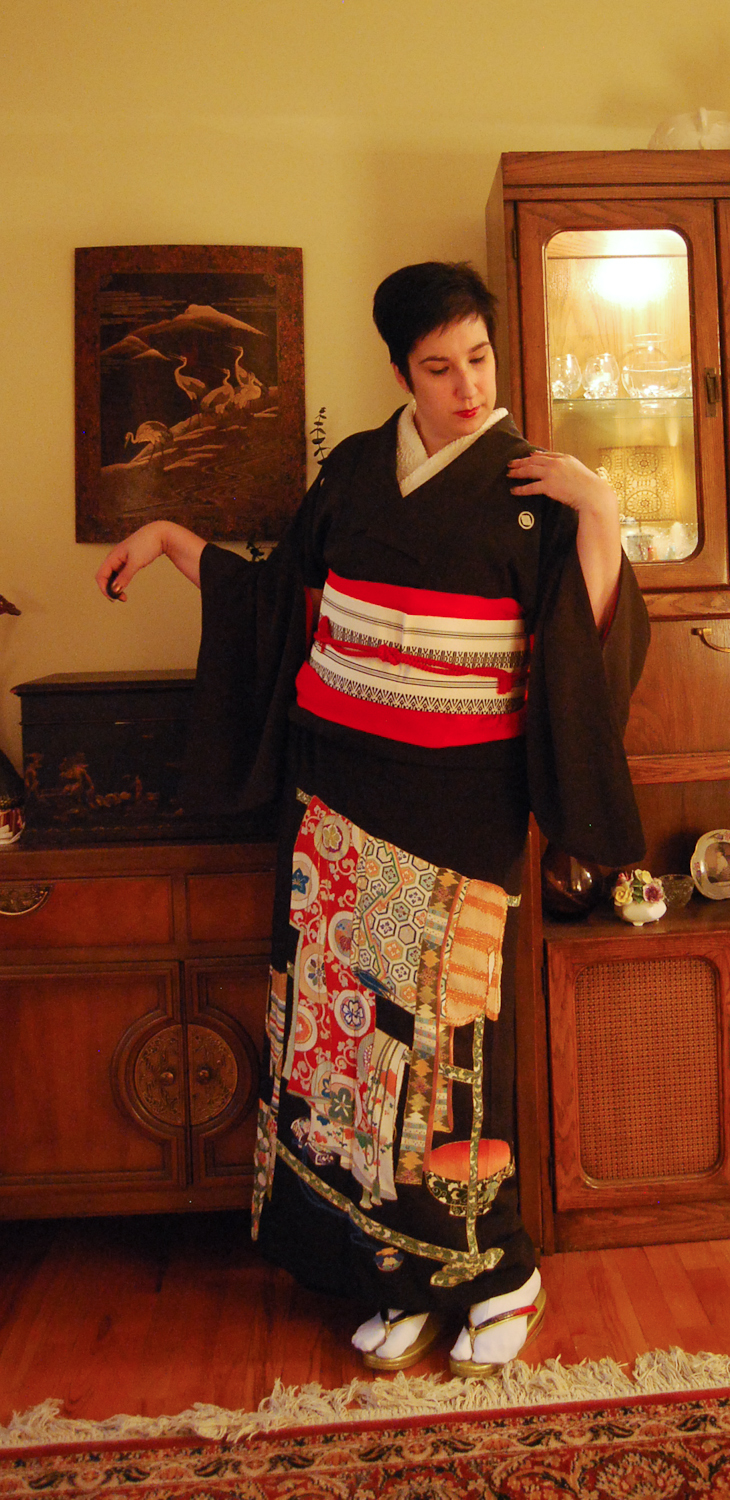
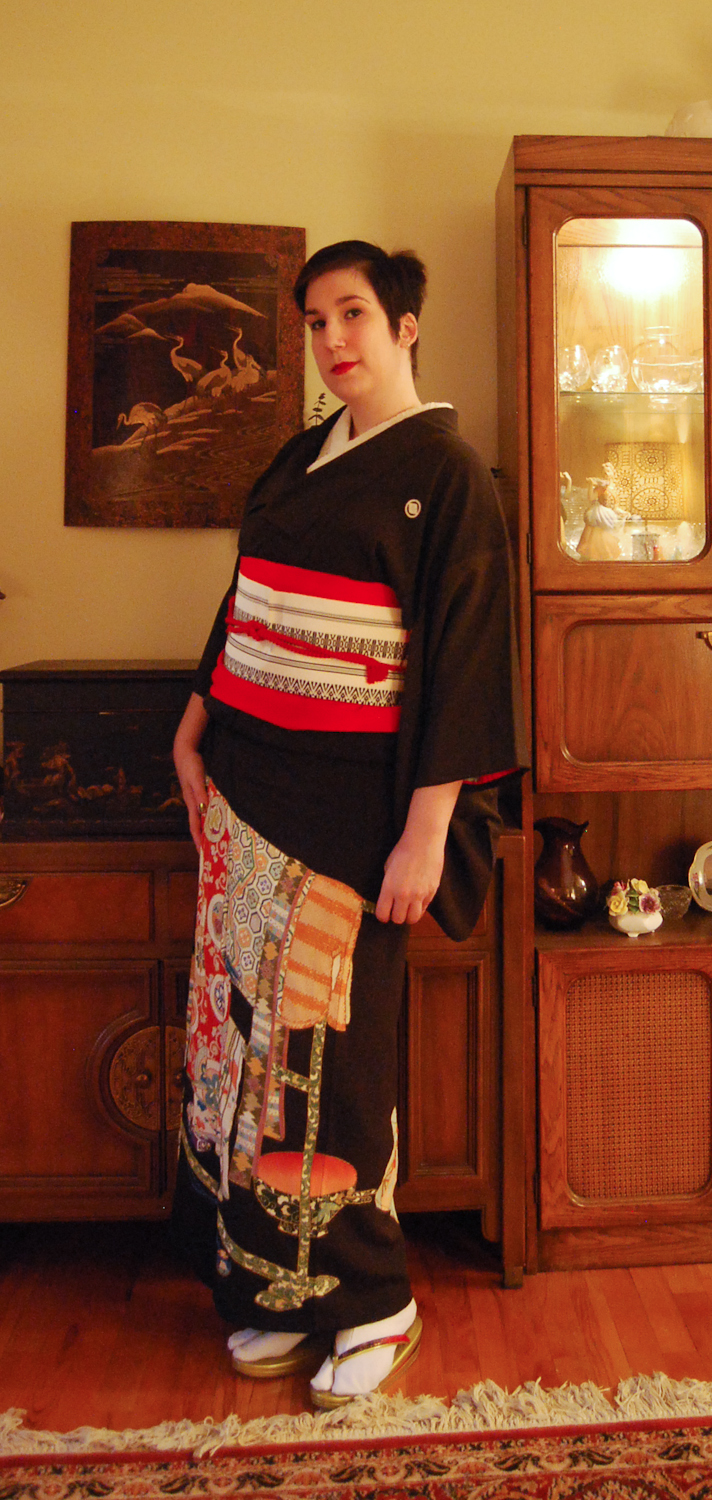
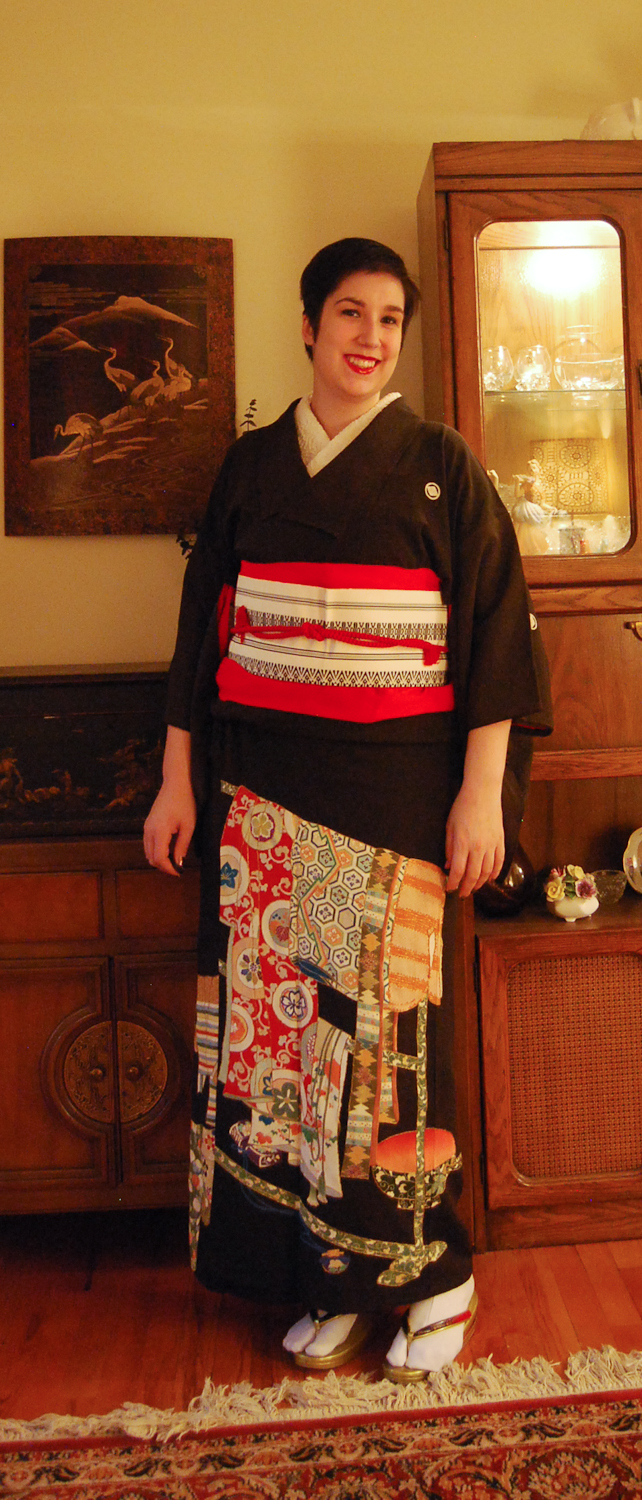
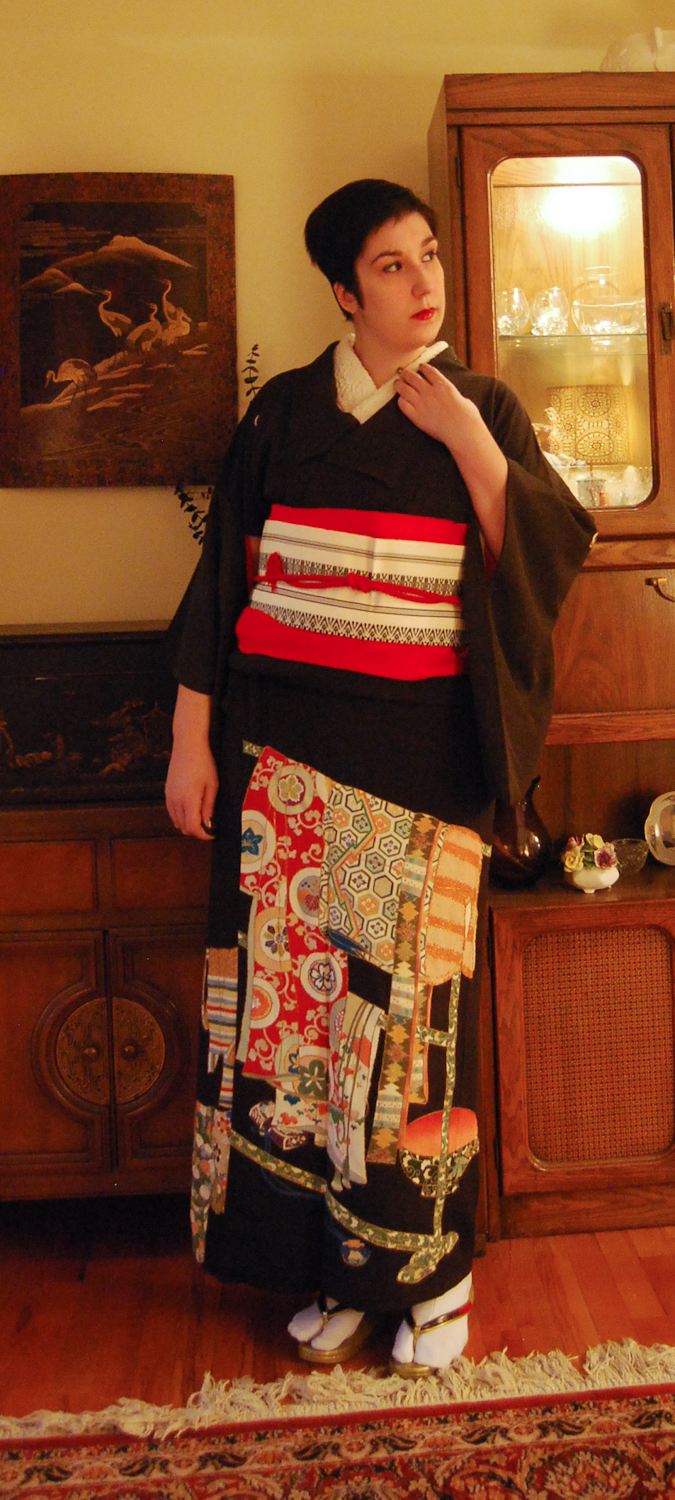
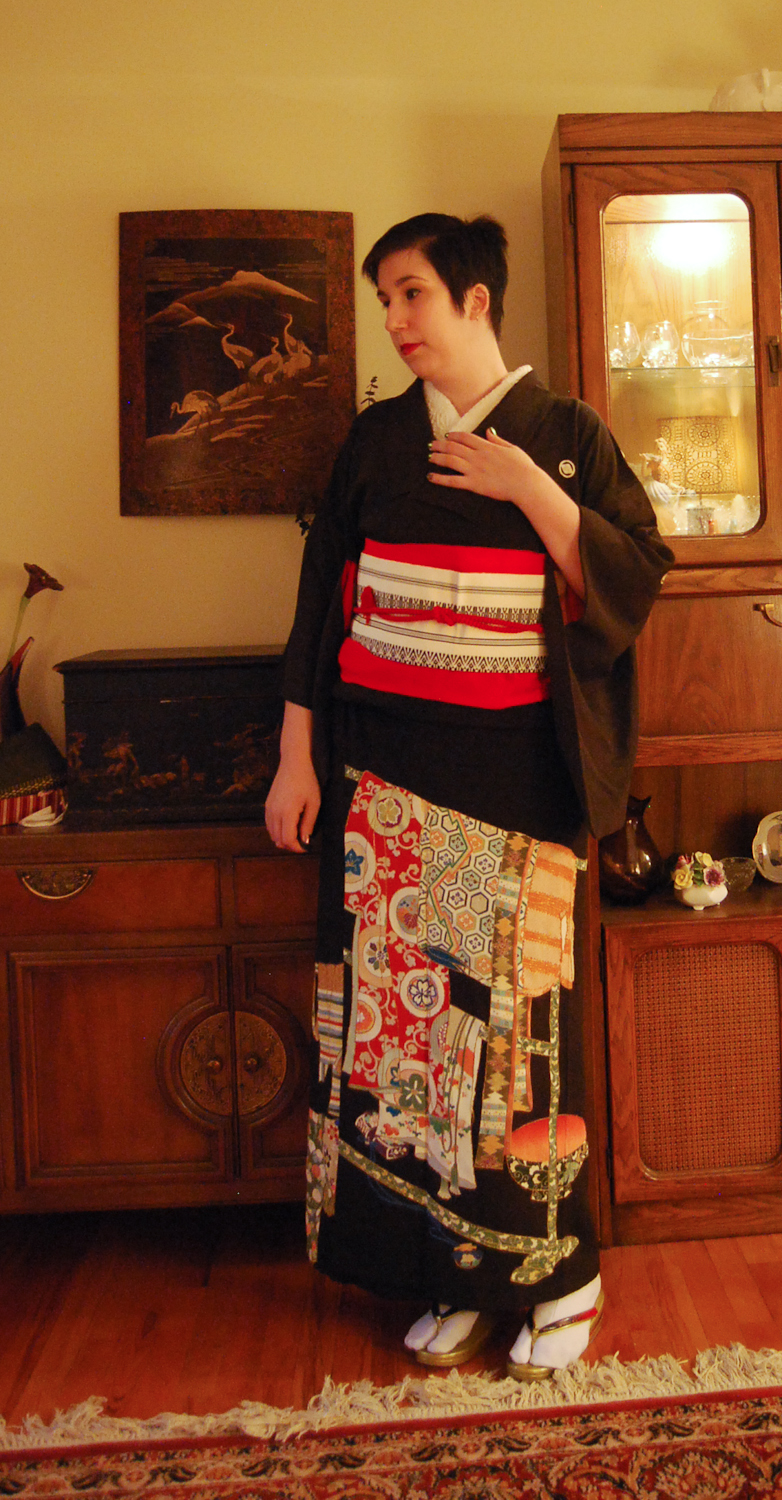
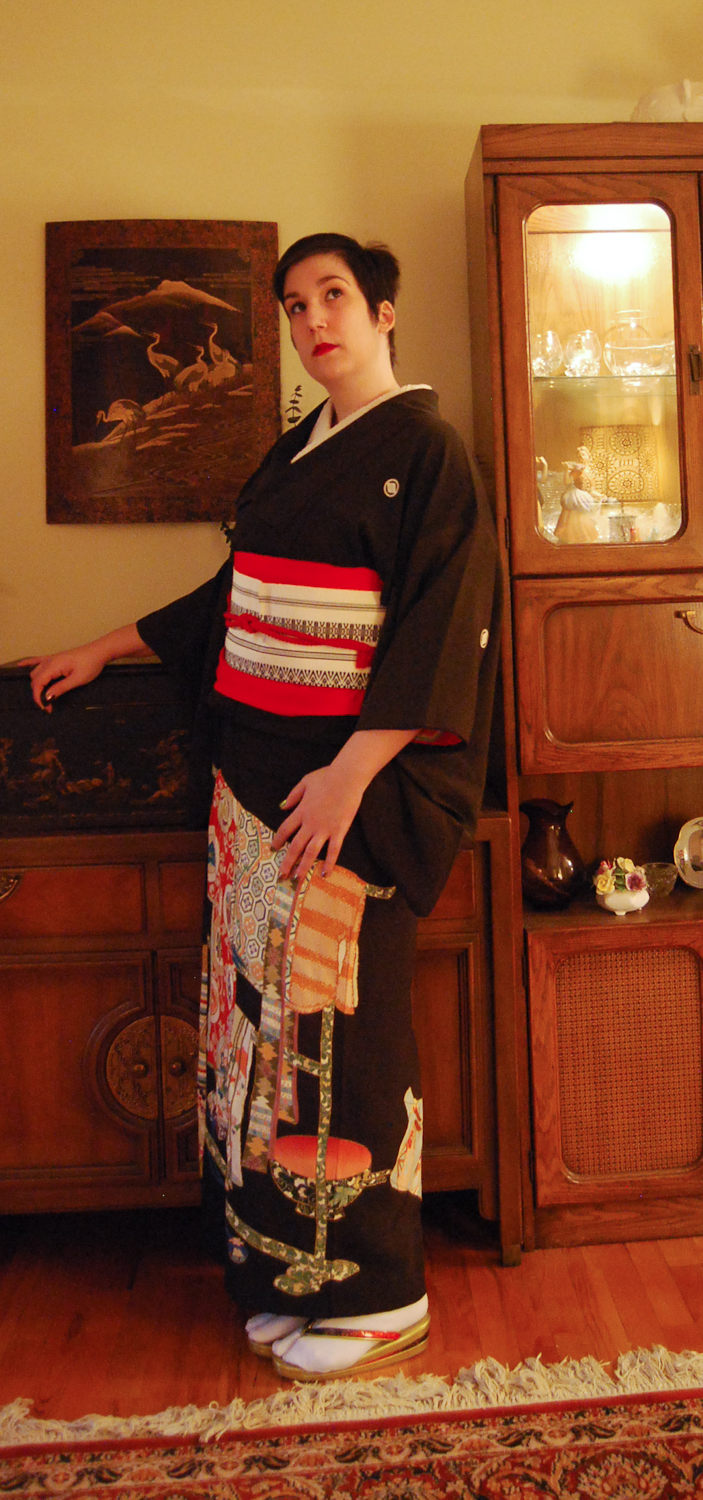
There’s still a bit of ambiguity about what this piece actually is, but the general consensus on the Immortal Geisha forums is that it’s likely a vintage hikizuri. Because of that, I decided to go with a geisha-inspired outfit. Not a full on costume, but proper kimono with a bit of “flair”, if you will. I paired the kimono up with a red juban, a black and white hakata obi, and used a red shigoki obi in lieu of a momi (the red cloth geisha wear wrapped around their torso under the obi). I am really pleased with how this pulled together, and took far more photos than I usually do. Sorry about that!

Because of the formality, the styling choices, and the age of the kimono, this is not an outfit I’d feel particularly comfortable wearing out of the house, but I think it turned out well and I felt very pretty in it.

Items used in this coordination

It’s not enough. We have to go deeper.

Why yes, that was indeed a reference to Inception as today’s subject line. Not only is it one of my favourite movies of the year (and possibly of all time), it is entirely relevant to the kimono I received this morning. If you’re familiar with Inception, the concept of a “dream within a dream” will be very familiar to you. So imagine someone like me, who dreams of kimono regularly, finding “kimono within kimono.”

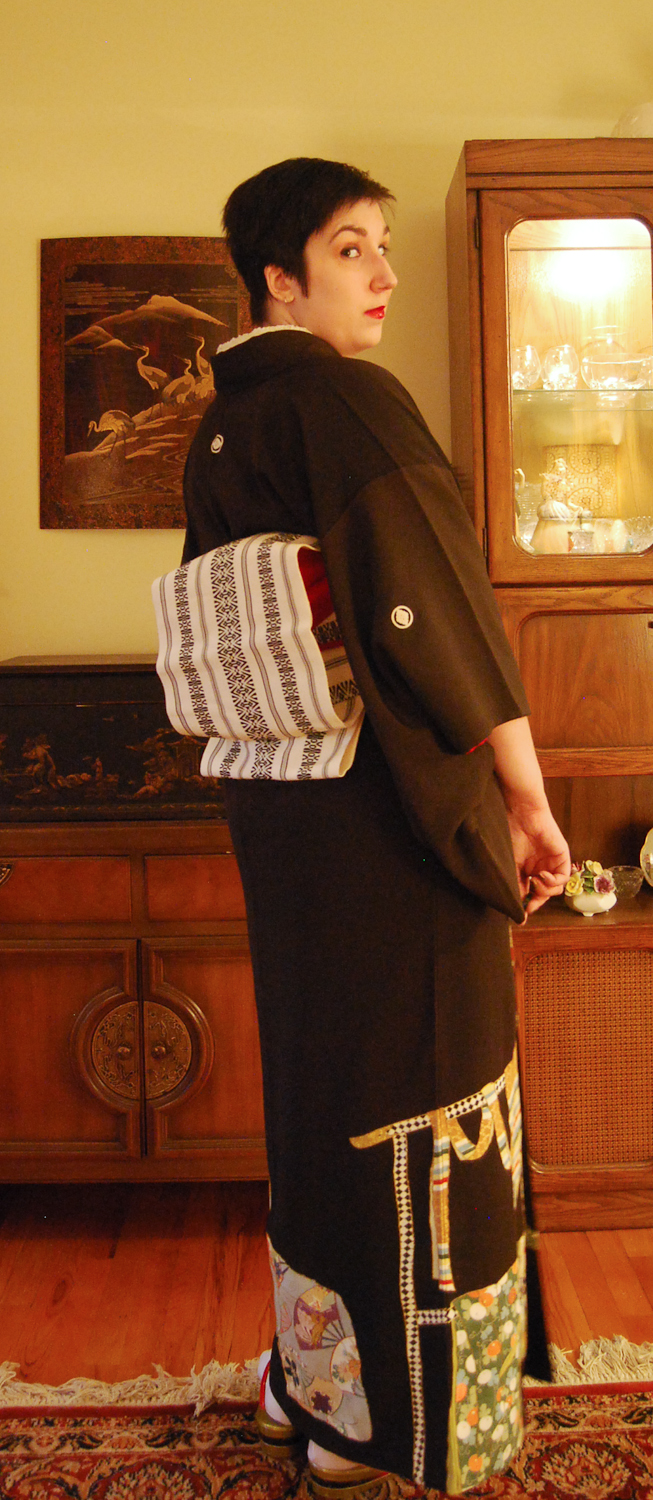
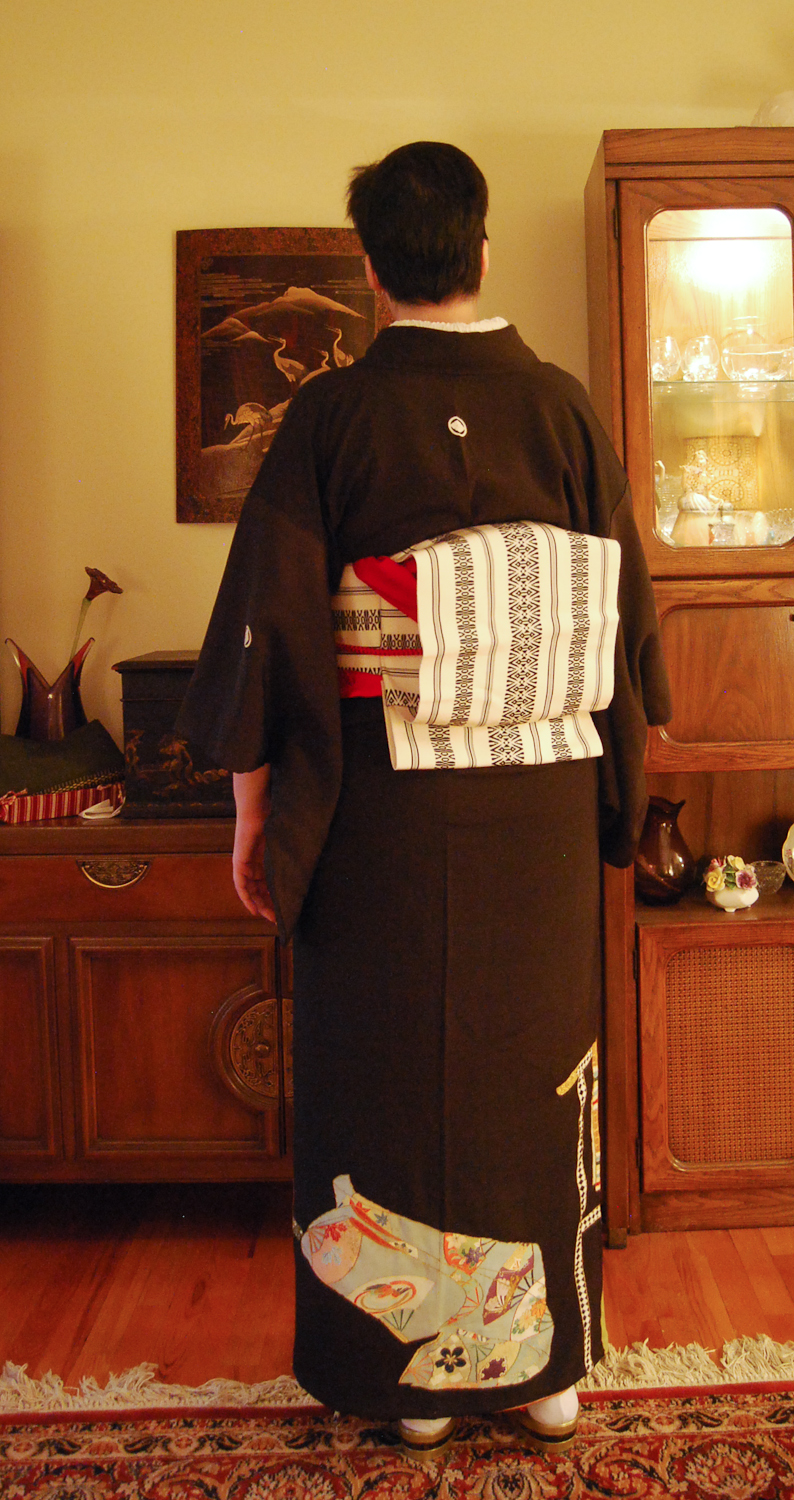
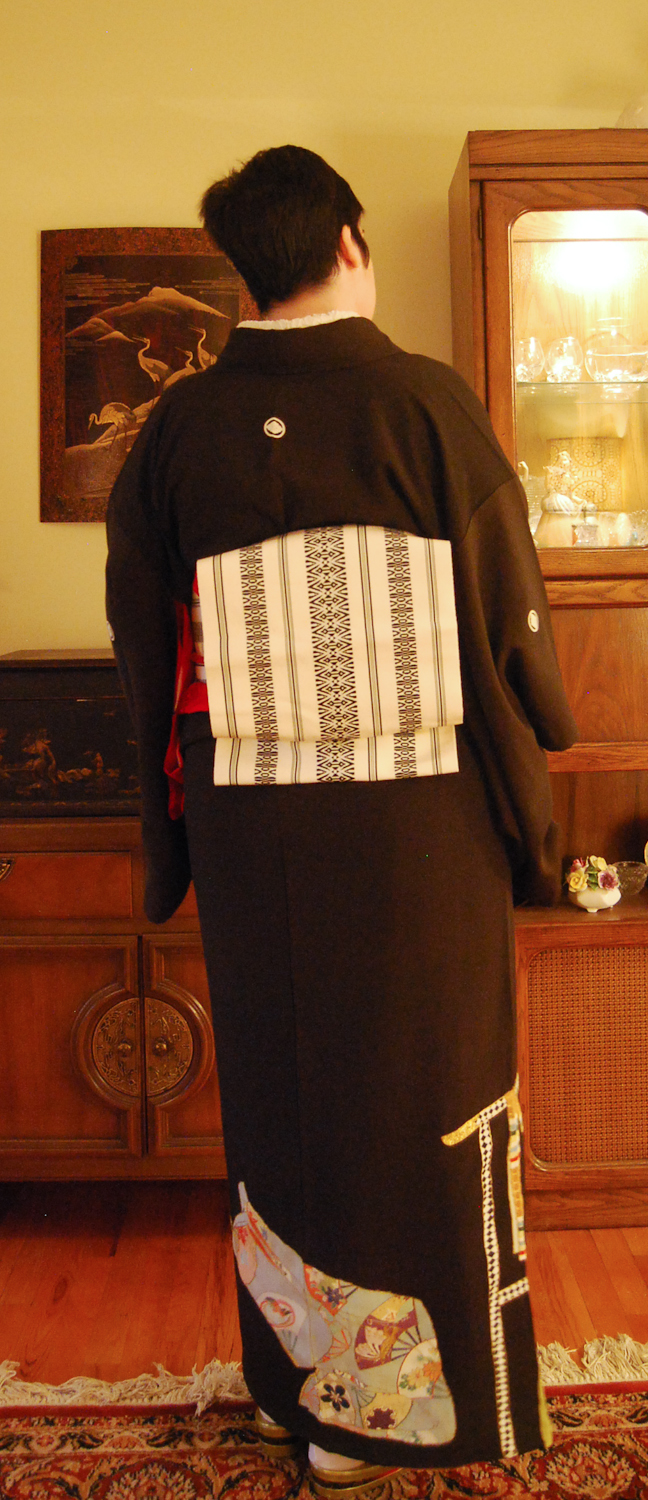
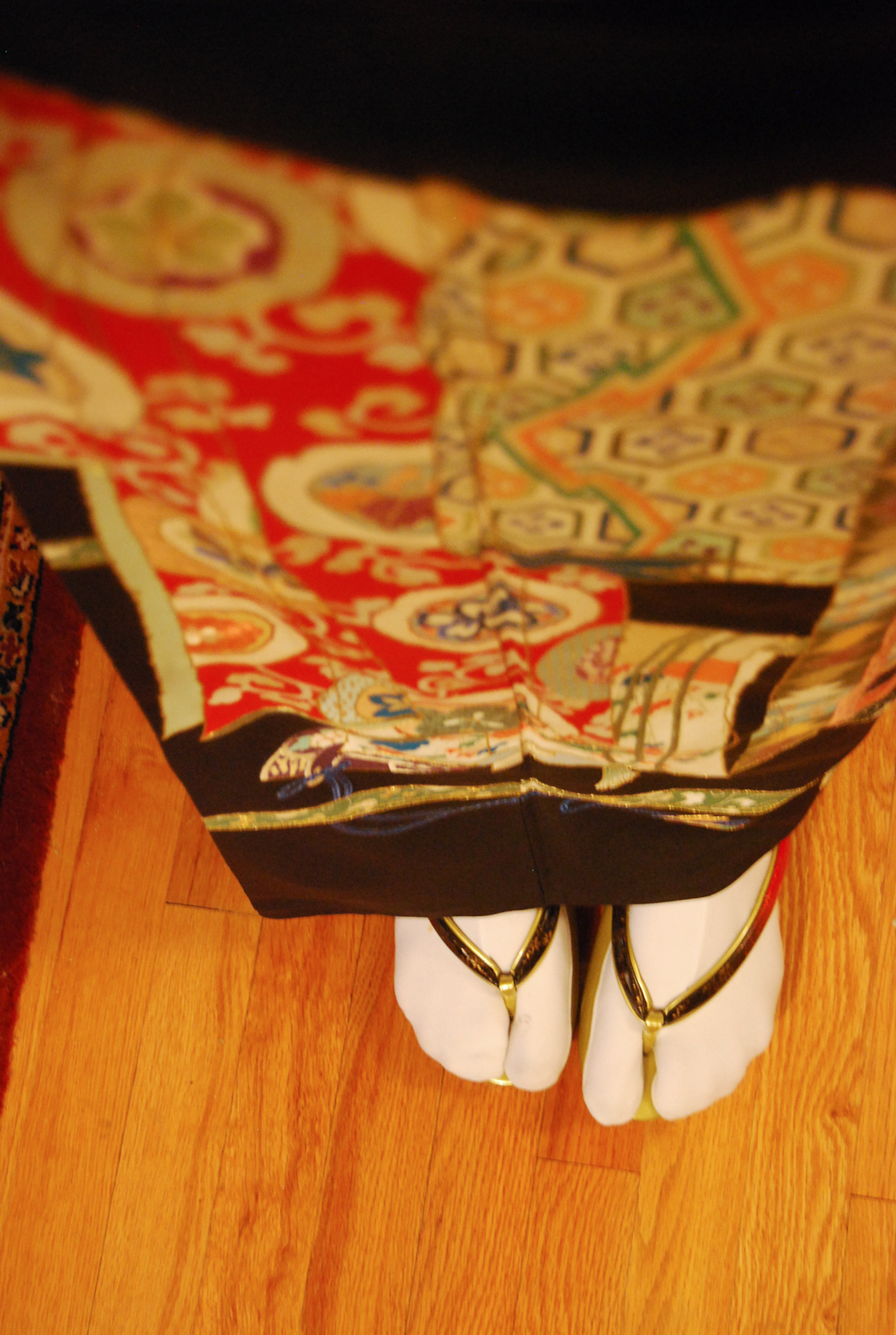
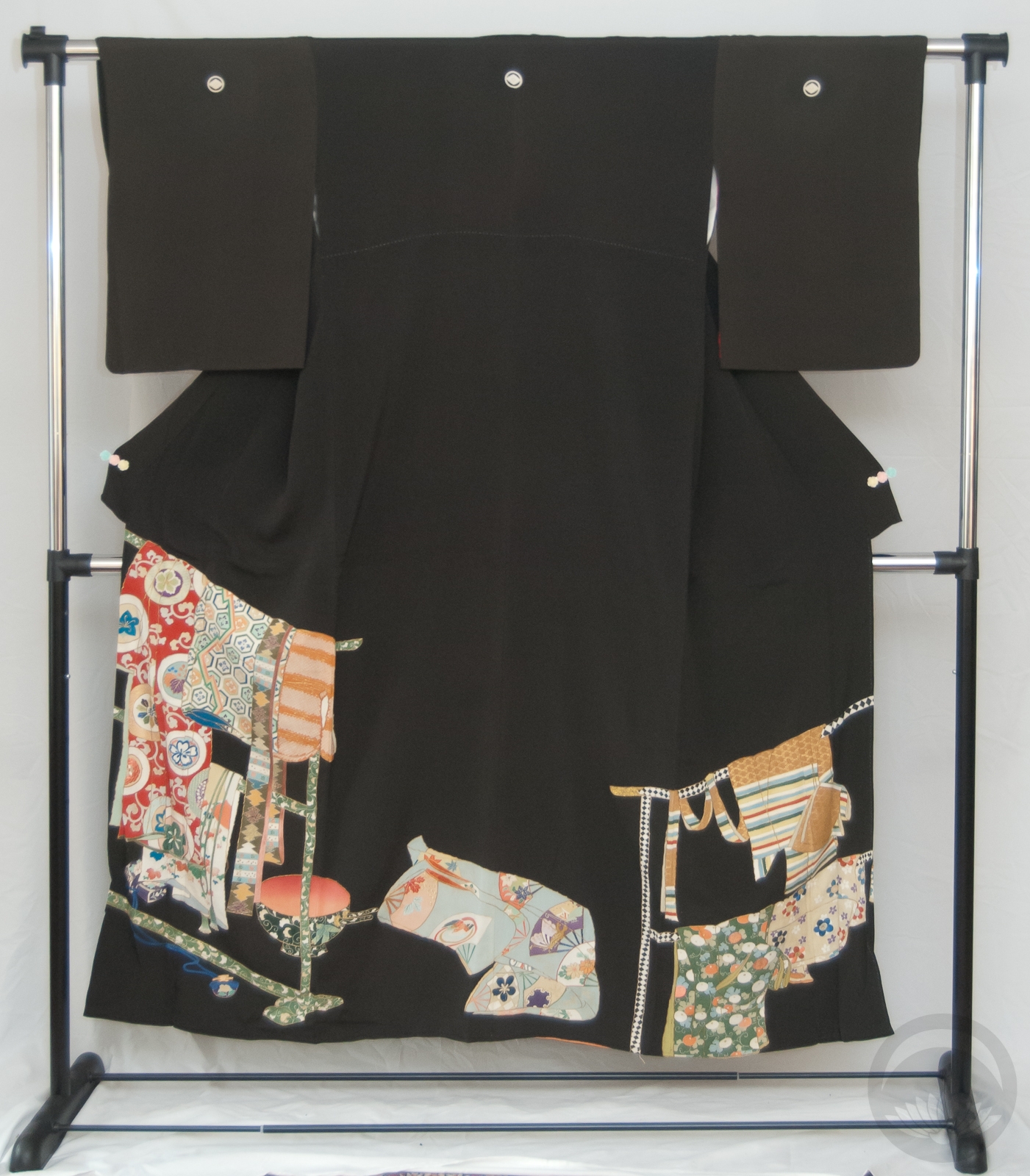
When I first saw it on eBay I was completely smitten. It is a kurotomesode (short sleeved, five-crested black formal kimono), which is definitely something I don’t need more of. However, rather than the relatively typical celebratory designs of cranes, flowers, carts, fans, etc, the pattern on this kimono is… kimono! All around the inside and outside hem of this kimono are wooden racks with kimono out to dry, as well as bowls and tools for washing. I’ve never seen anything like it, and I knew I had to have it. It ended up going for a bit more than I’d hoped to spend, but was still well worth the investment.

Both the age and the usage of this kimono are a bit of a mystery. The design is very avante-garde and non-standard for a normal woman, and the hem is slightly padded, which weigh in the favour of it being a hikizuri of some sort. The length of the kimono is also longer than average for its apparent age, but not quite long enough to be proper hikizuri. It may have been made for a particularly short geisha, or possibly just a very stylish woman. It’s hard to say. The sleeves are lined in red, which is a typical element of Taisho and early Showa era kimono, but they are slightly shorter than average for that era. The body is also lined in white, not red, but that may have been replaced at some point during its lifespan.

Update, April 22, 2012 – Naomi recently discovered the existence of a motif known as tagasode, or “whose sleeves?”

Literally, “whose sleeves?.” Painting theme depicting beautiful kimono 着物 draped across a wooden rack, ikou 依桁. The subject was usually painted on folding screens *byoubu 屏風 and became popular in the late Momoyama and early Edo periods (16c and early 17c). Although the subject is highly decorative, the word tagasode has deep literary connotations and probably originated from a line in KOKIN WAKASHUU 古今和歌集 (905): “Iro yorimo/ka koso aware to /omohoyure/tagasode fureshi/yado no ume zomo 色よりも/香こそあはれと/おもほゆれ/誰が袖ふれし/宿の梅ぞも”. Tagasode often implies a beautiful woman whose absence is missed, since beautiful sleeves are thought to evoke the image of an elegant woman and the fragrance arising from her kimono.
In early examples, typical objects belonging to a room in the pleasure quarters or even a beautiful woman herself were depicted; a screen in the Burke Collection, New York (early 17c), includes a musical instrument, koto 琴, while two young women are painted on early 17c screens in the Nezu 根津 Museum, Tokyo. Variations on the tagasode theme became more removed from literary associations, and finally the kimono and stand remains as the only motifs depicted against gold foil background. There are many examples from the Edo period, often by unknown genre artists.


source – JAANUS, tagasode

Outside view
Meta-Kimono

Inside view
Meta-Kimono

Outer details
Meta-Kimono

Meta-Kimono

Meta-Kimono

Inner details
Meta-Kimono

Meta-Kimono

It’s absolutely beautiful up close – everything is covered in tiny and delicate patterns, from the kimono to the racks holding them up. The kimono are all outlined in gold couching thread which is in impeccable condition, no drooping or detached threads anywhere that I can find.

I seem to have a knack for finding kimono that are technically kurotomesode but have characteristics that may throw them off. My chidori and matsu hybrid kimono is another prime example. As for this piece, it may be an oddity, and I may not know who wore it or when, but I love it nonetheless.