Back to School, Meiji-Style!

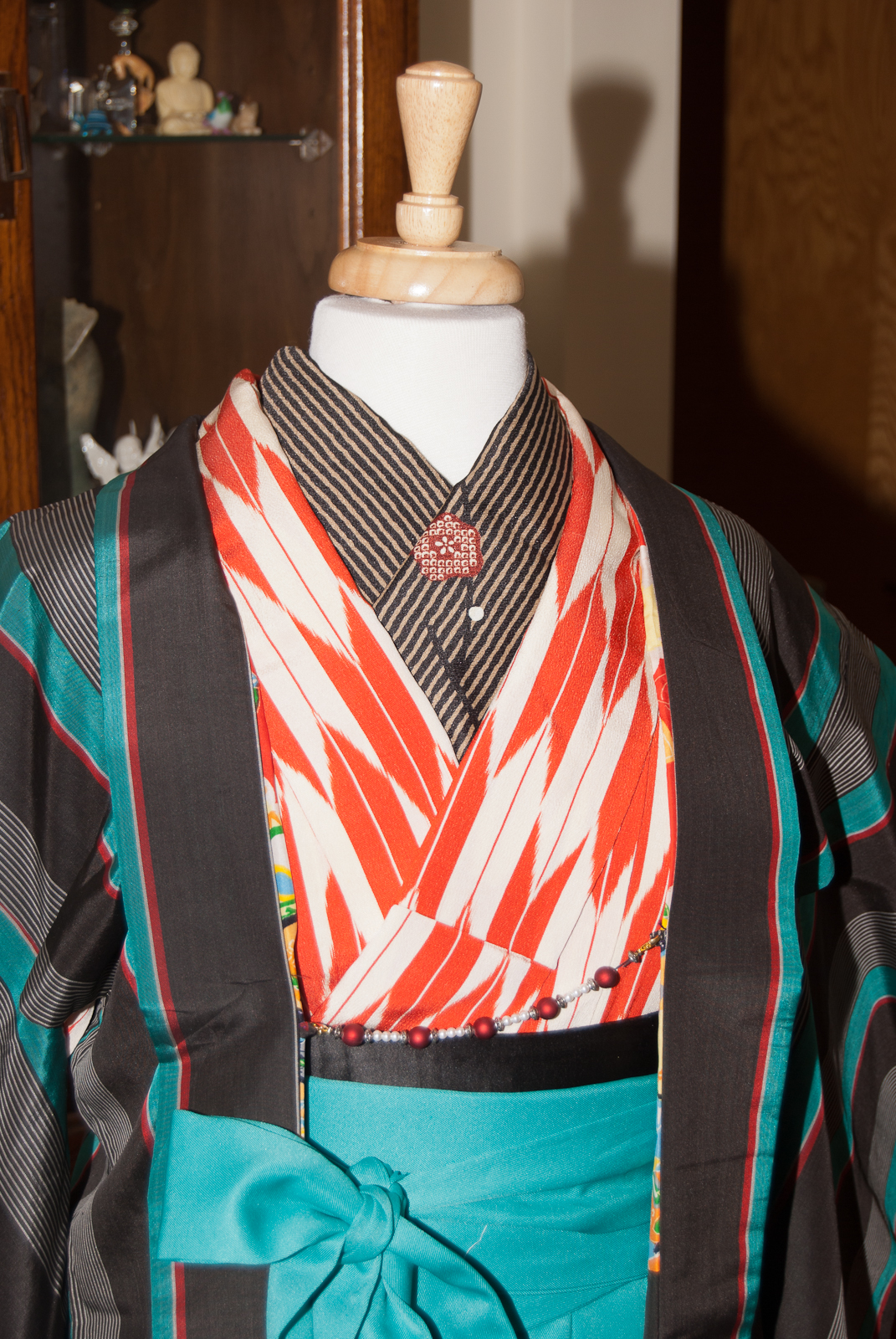
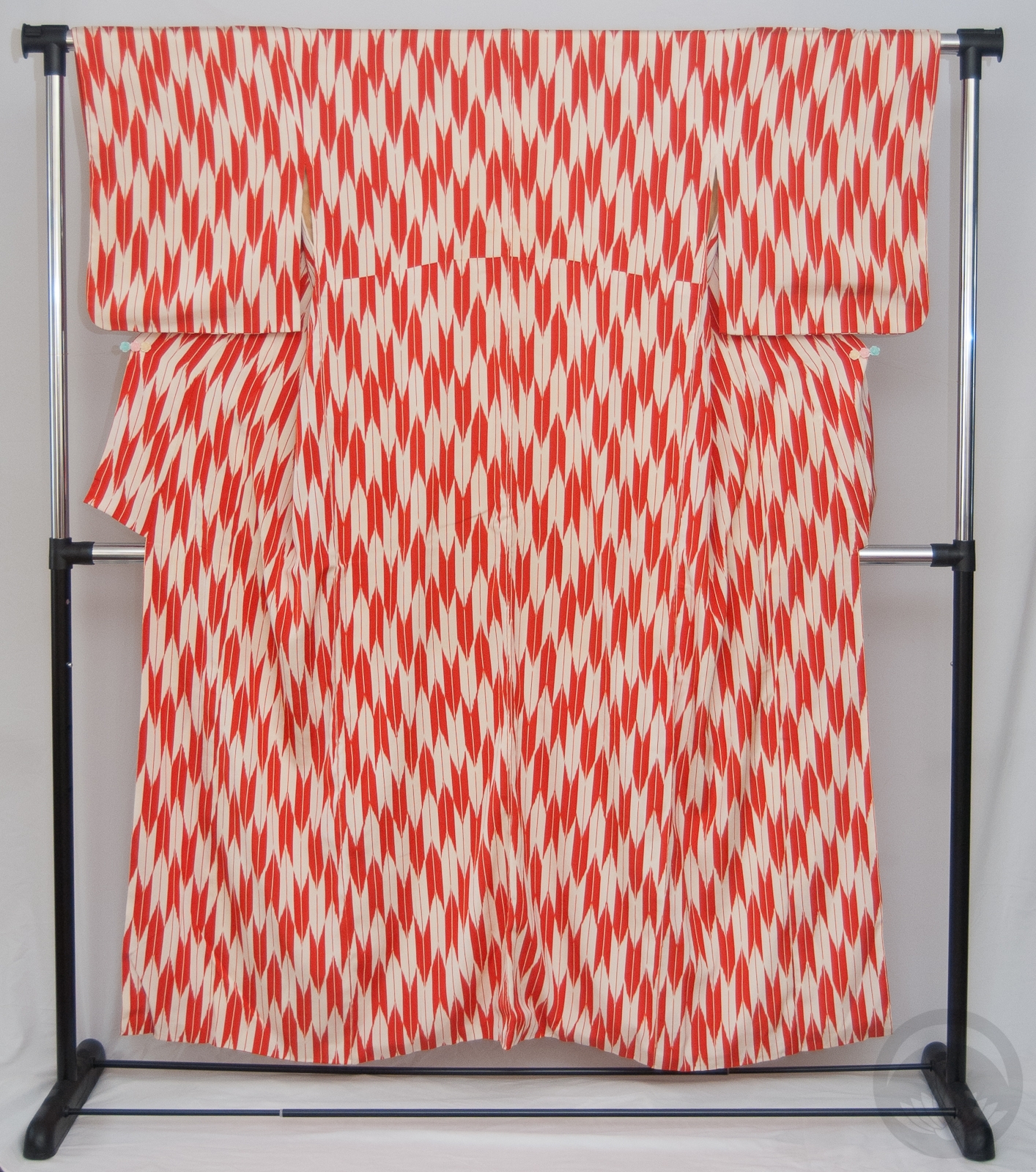
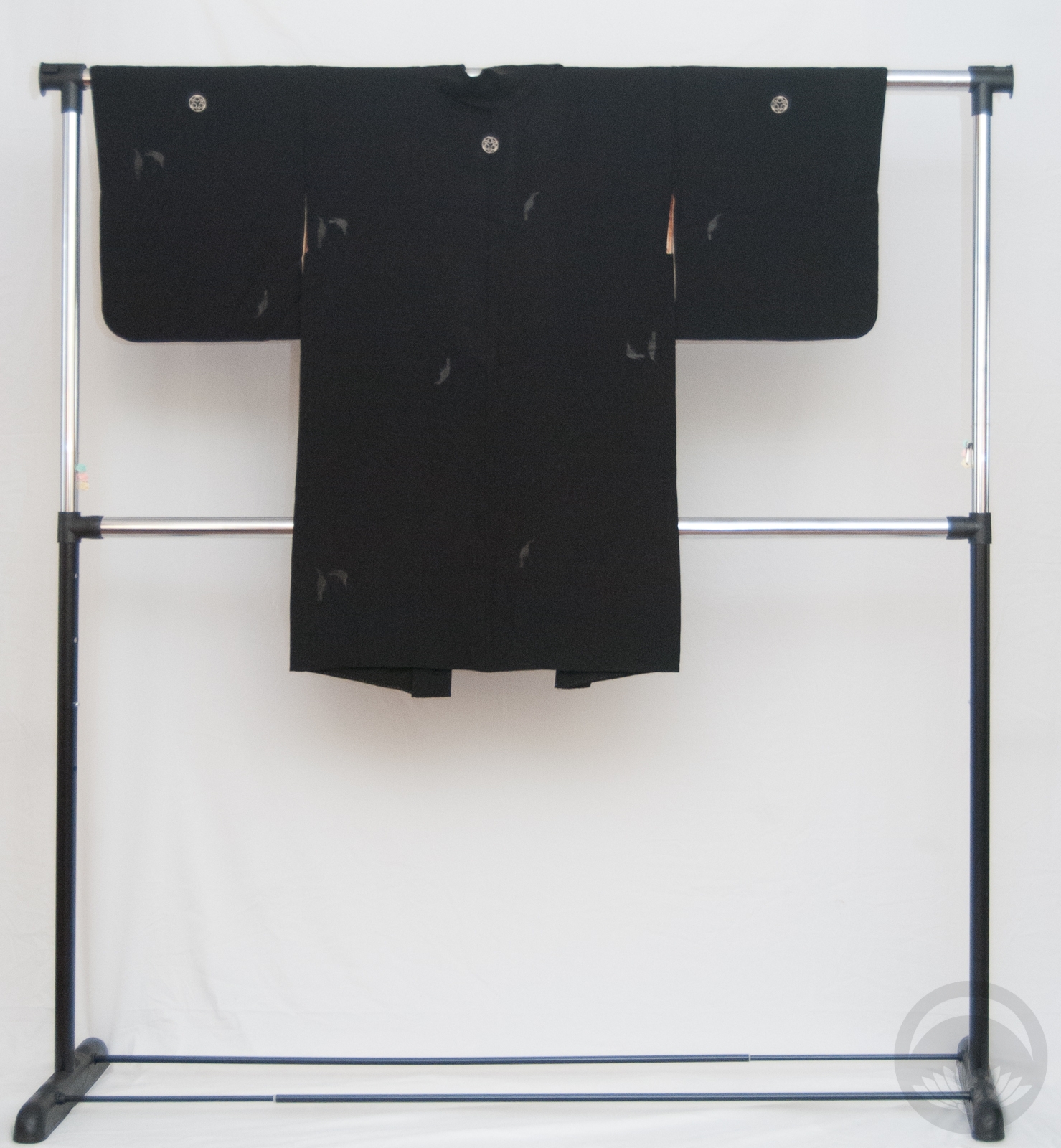
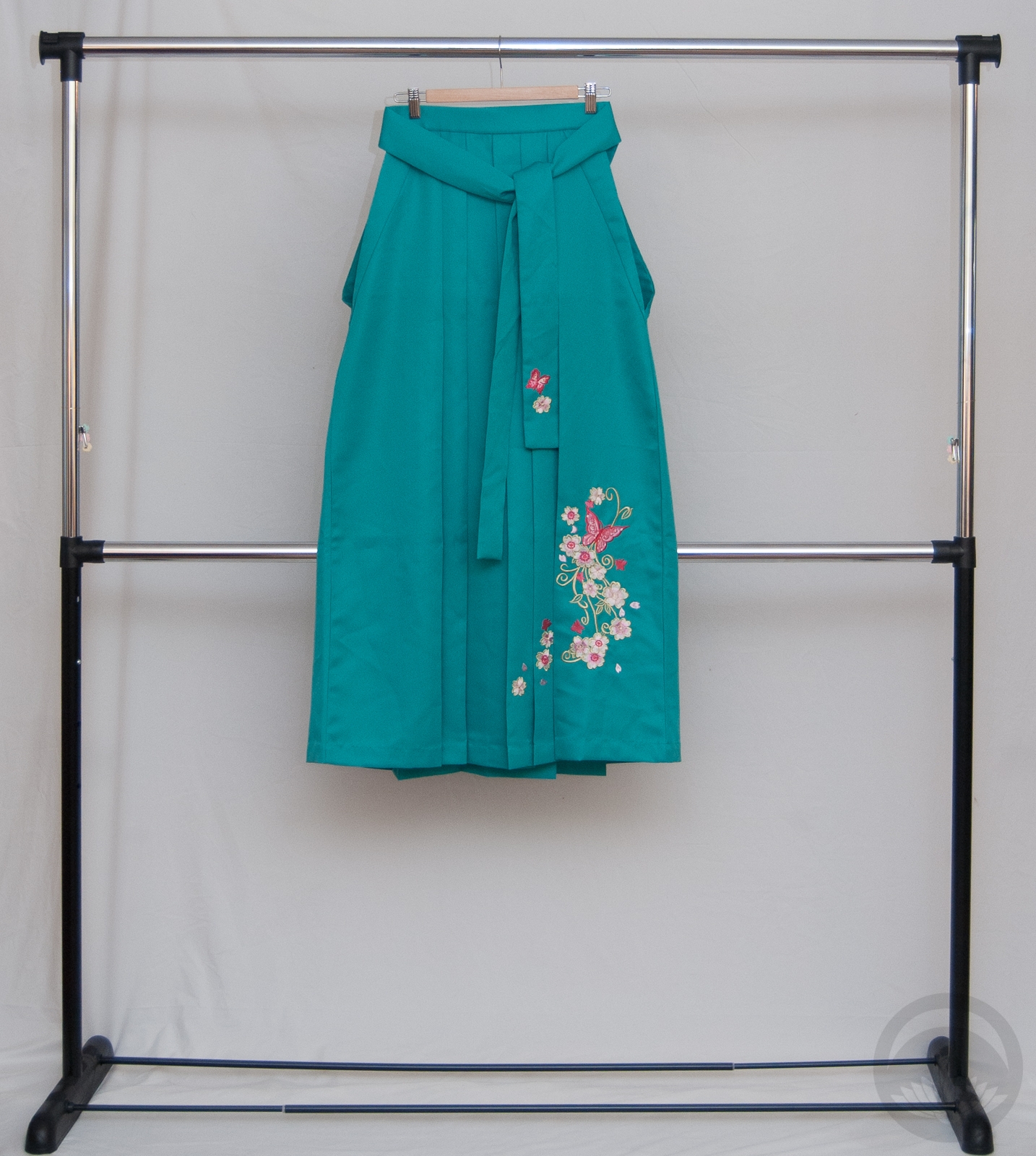
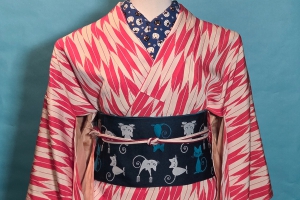
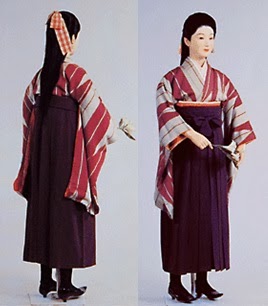
I have always loved the look of the traditional Meiji/Taisho era schoolgirl outfits; the youthfulness of the hakama, the timeless feel of the yagasuri kimono, the modern and almost masculine touches of little leather ankle boots. When I splurged on this teal hakama a few months back, I’d imagined pairing it with my red and white yagasuri komon. What I hadn’t thought of was including this vintage taffeta haori I love to death, but as soon as I saw the three pieces sitting together in a pile I knew I’d found the perfect finishing touch to this outfit and with lots of schools starting this week, it seemed like an ideal time to pull it all together.

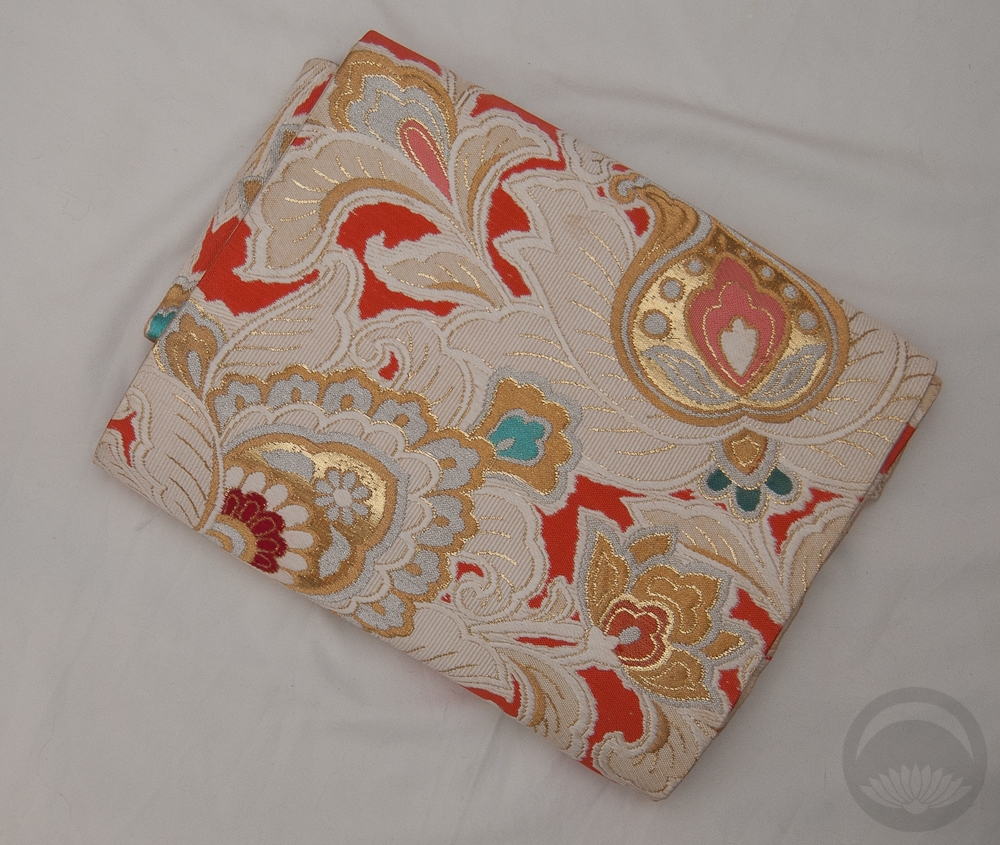
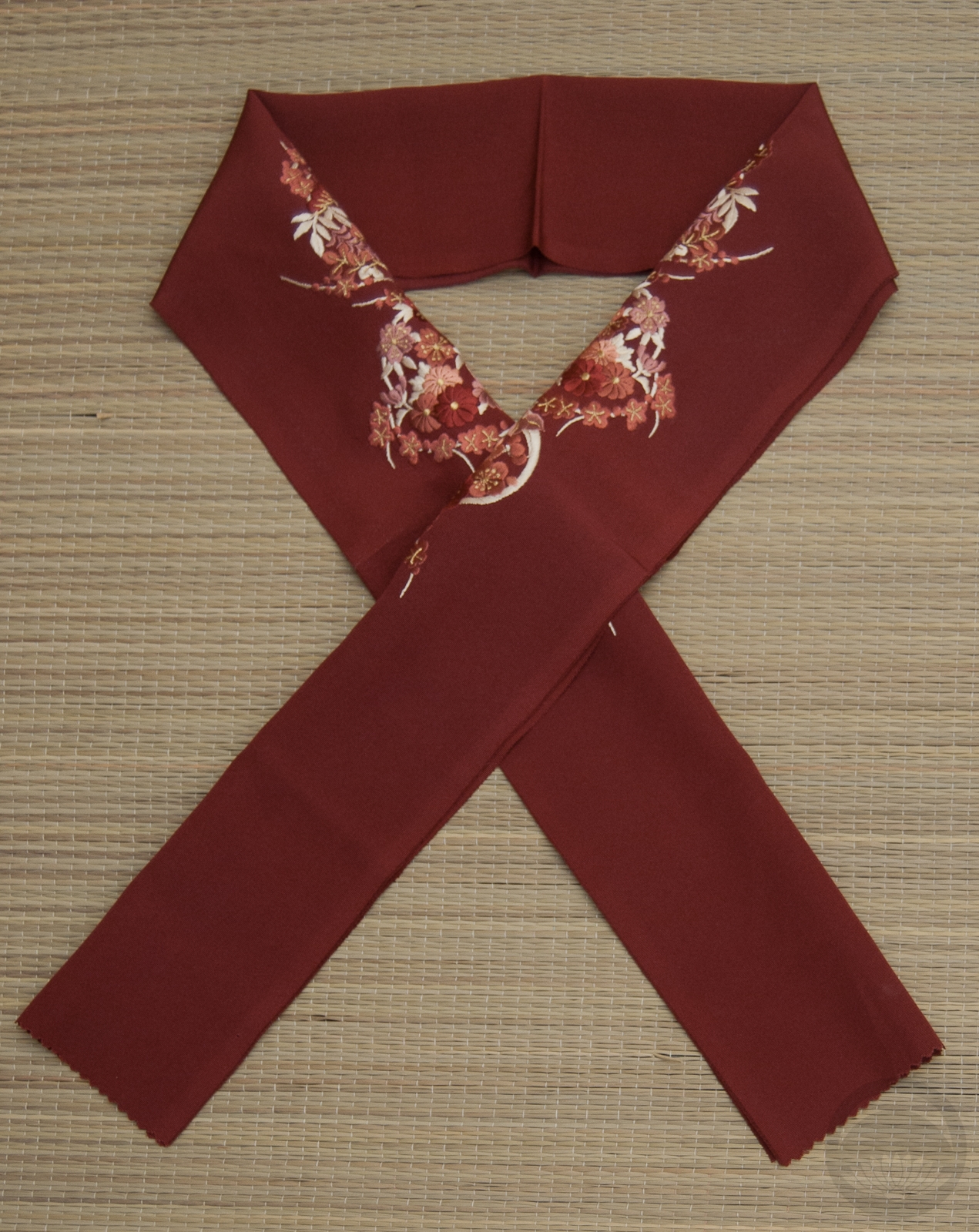
I knew I wanted to use a black obi to help anchor everything, but I don’t actually own a black hanhaba obi. Thankfully, because I was just dressing the mannequin, I could fudge things a little. I used the waist part of a two-piece tsuke-obi and a big obi-makura in the back to give the hakama something to anchor to. The plum motif of the haneri might not be totally seasonally appropriate for a “back to school” outfit, but the colours felt so right I had to run with it.
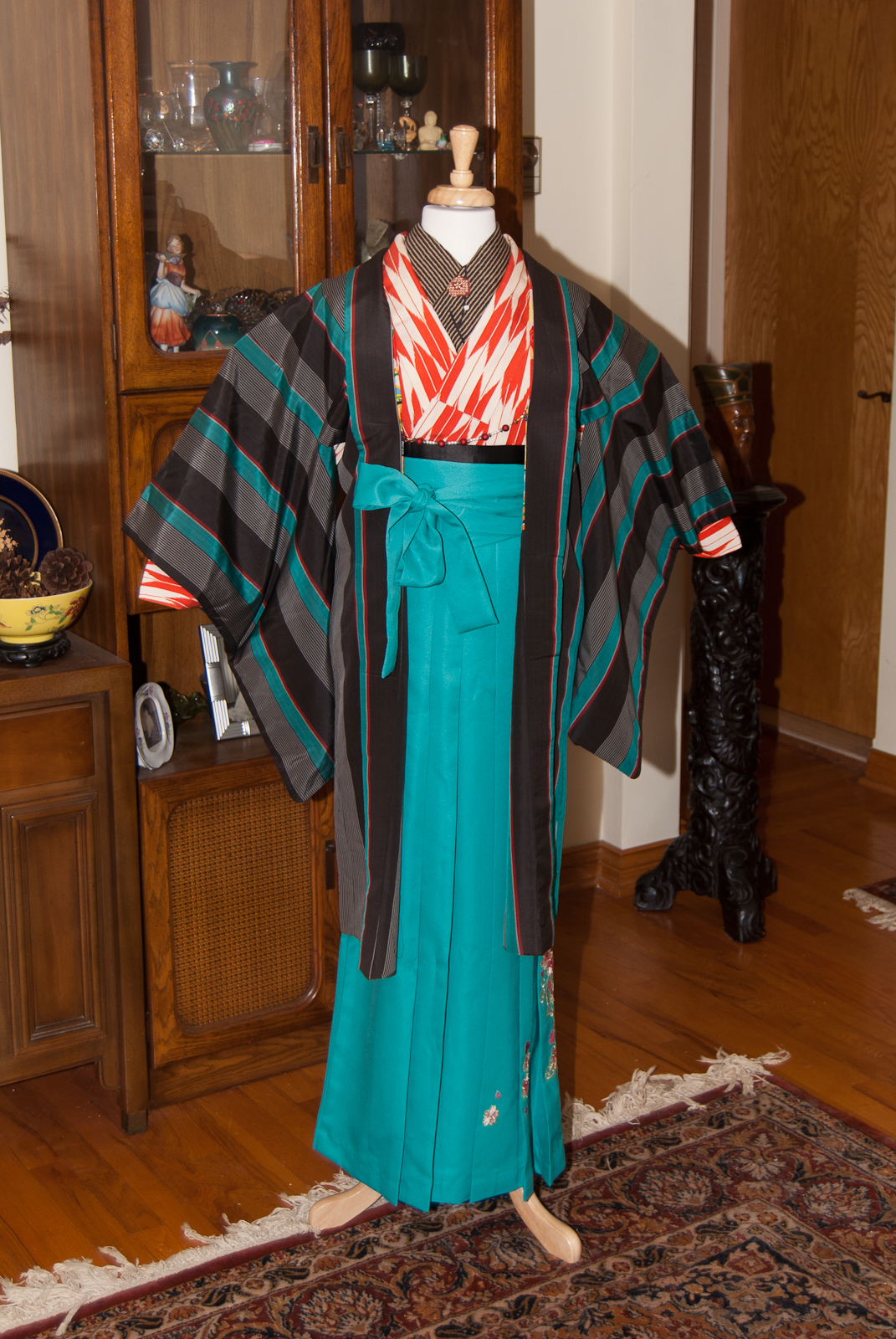
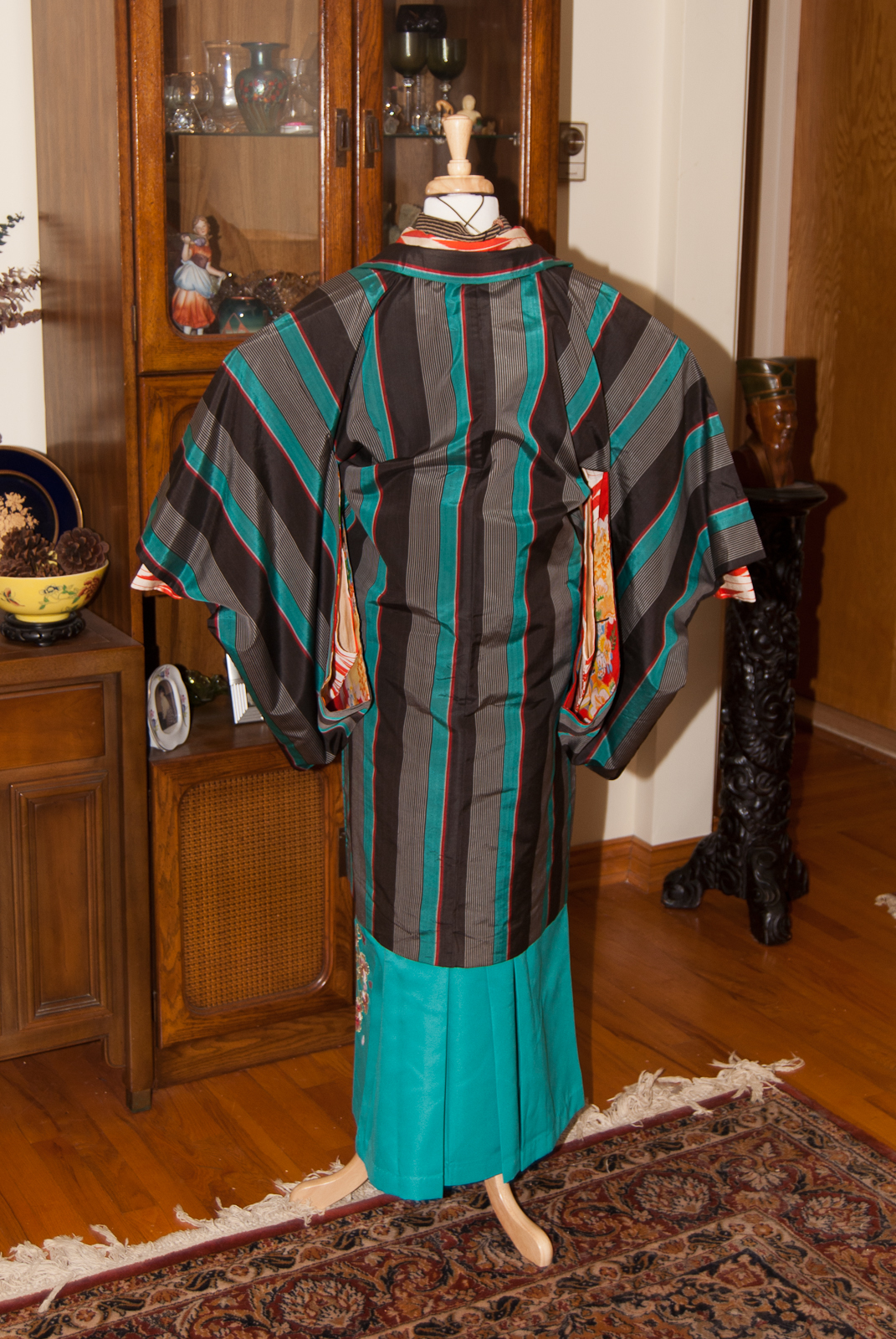
Aside from the haori (which is incredibly narrow, even by vintage standards), these pieces are all quite large which means I can totally fit into them. The hakama especially makes it easier and more comfortable for me, so expect to see this coordination on yours truly at some point in the near future. A cute pair of ankle boots would make things easy and still be appropriate to the ensemble. I just need to invest in a proper black hanhaba obi and then find somewhere to go and hope that the cooperates!
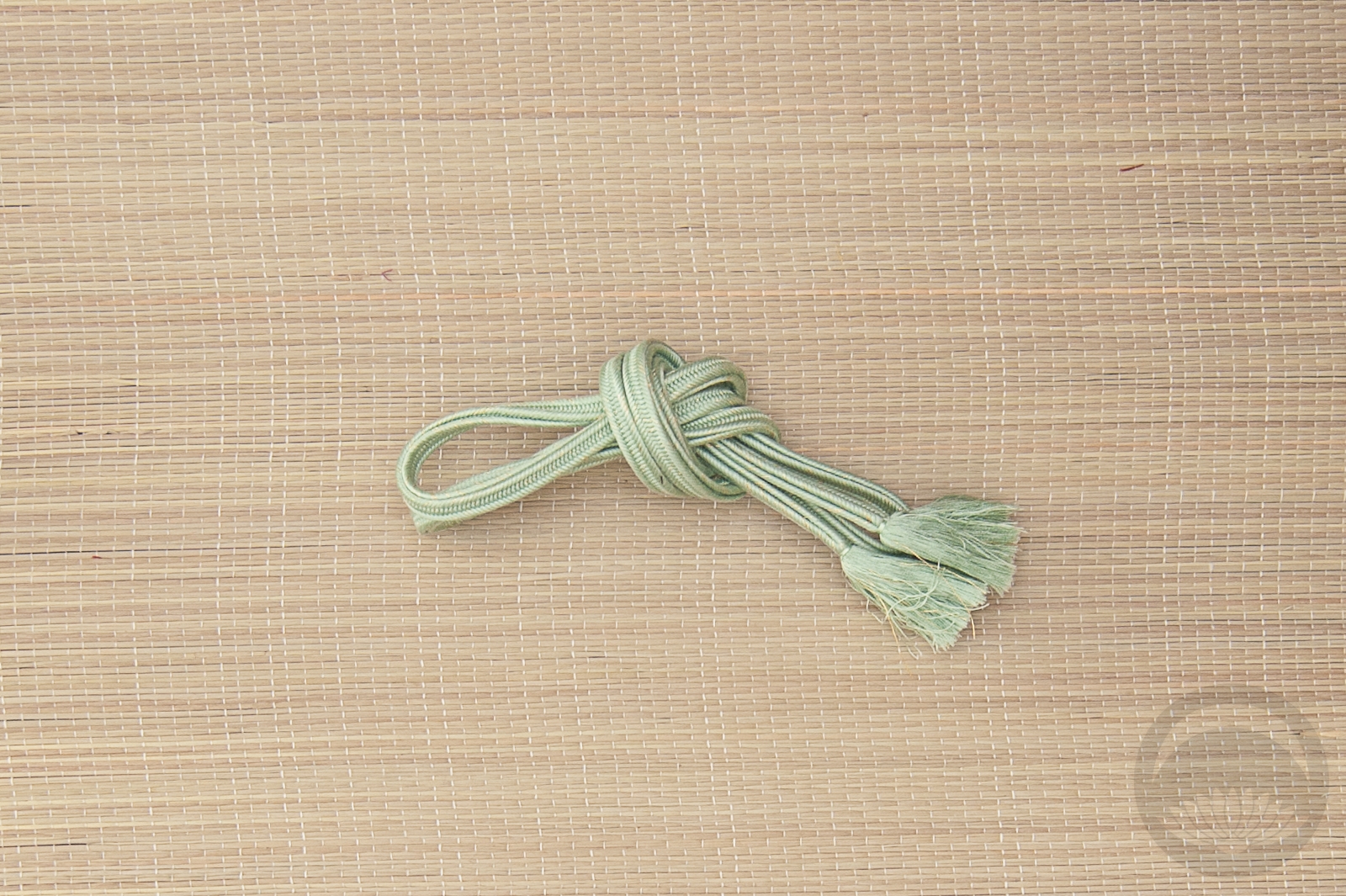
Items used in this coordination

Here Comes the Bride

The bride is not me! Let me get that out of the way! But if you follow me on Instagram you’ll have seen this uchikake already. If you’re not following me on Instagram, now’s a great time to start.

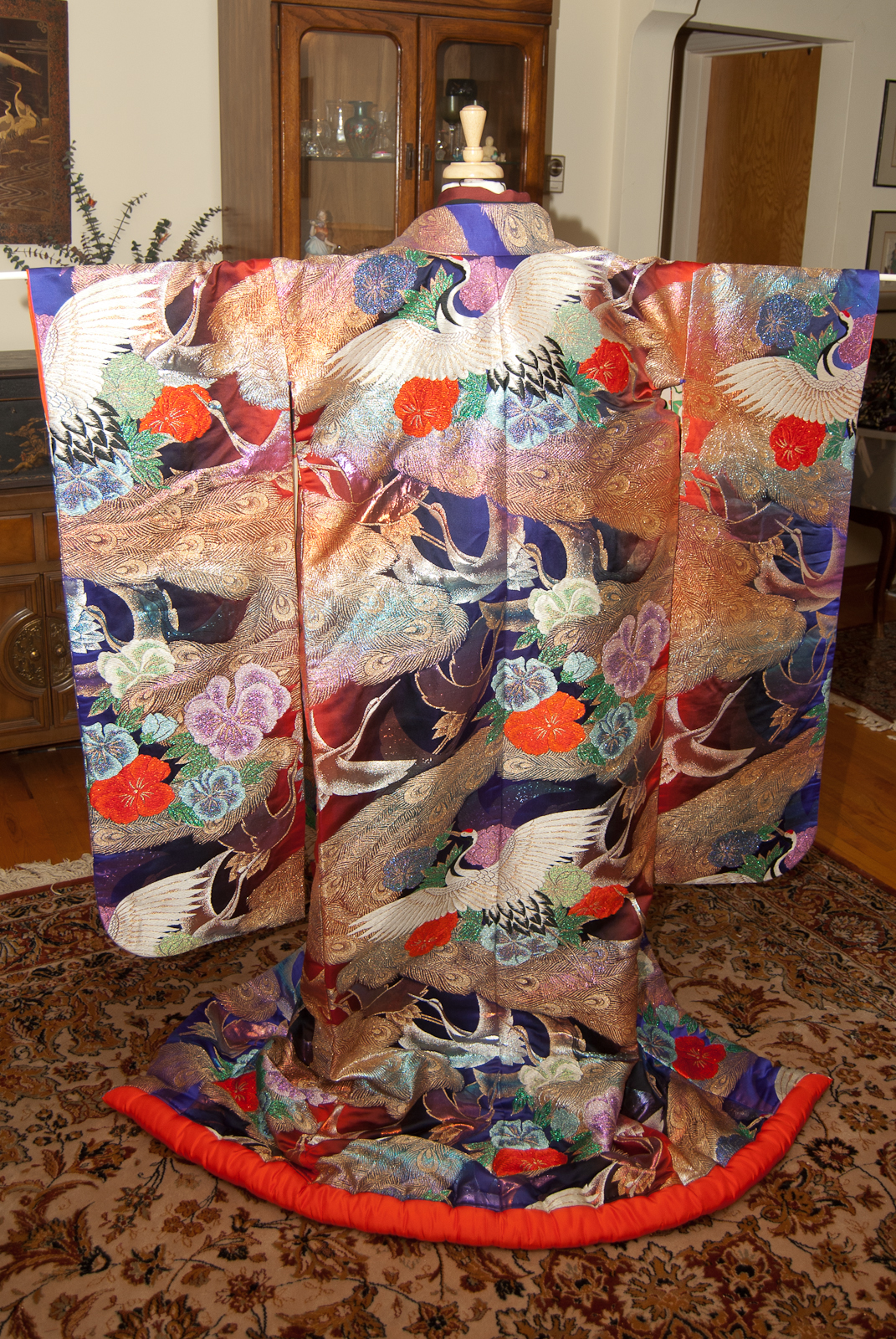
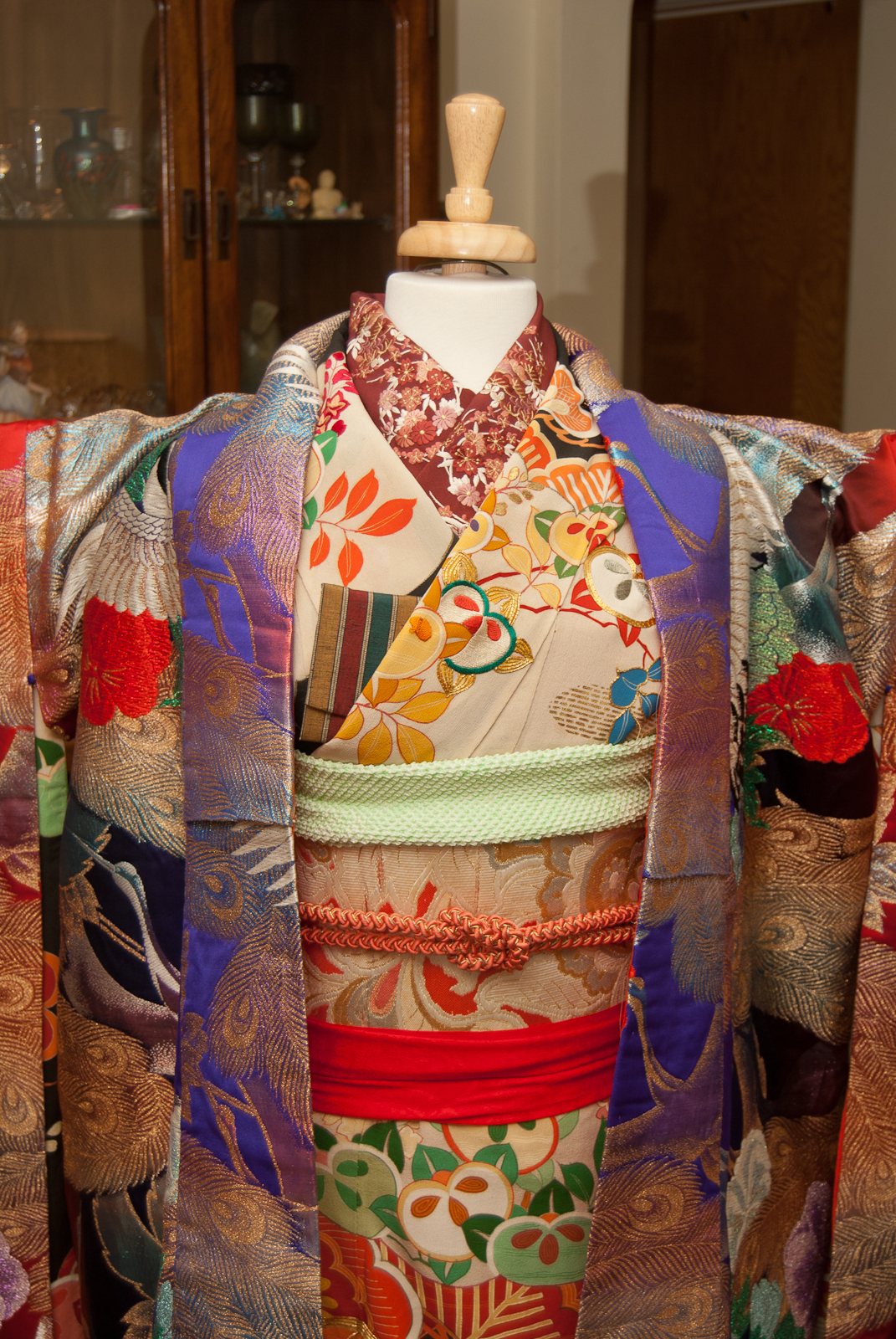
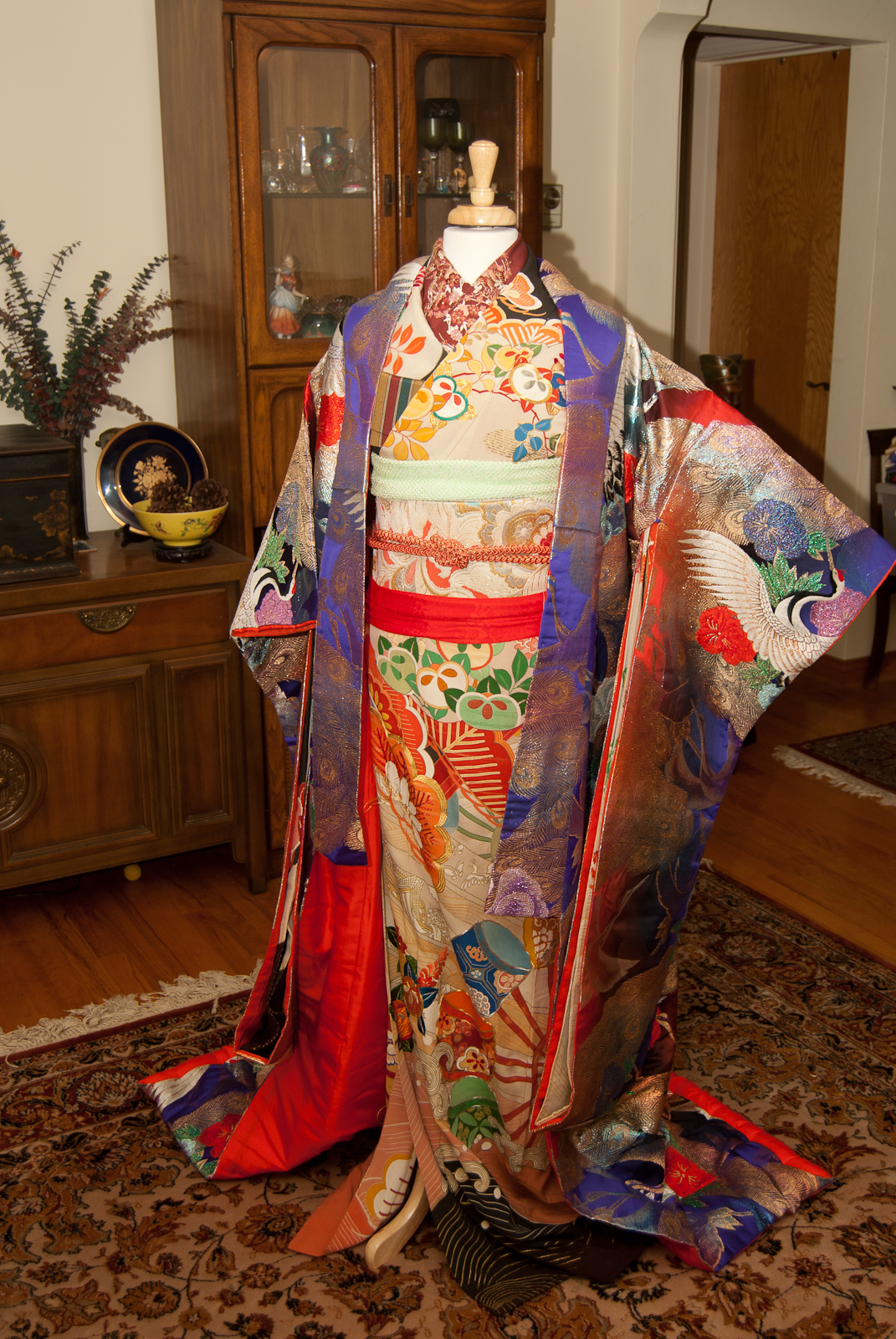
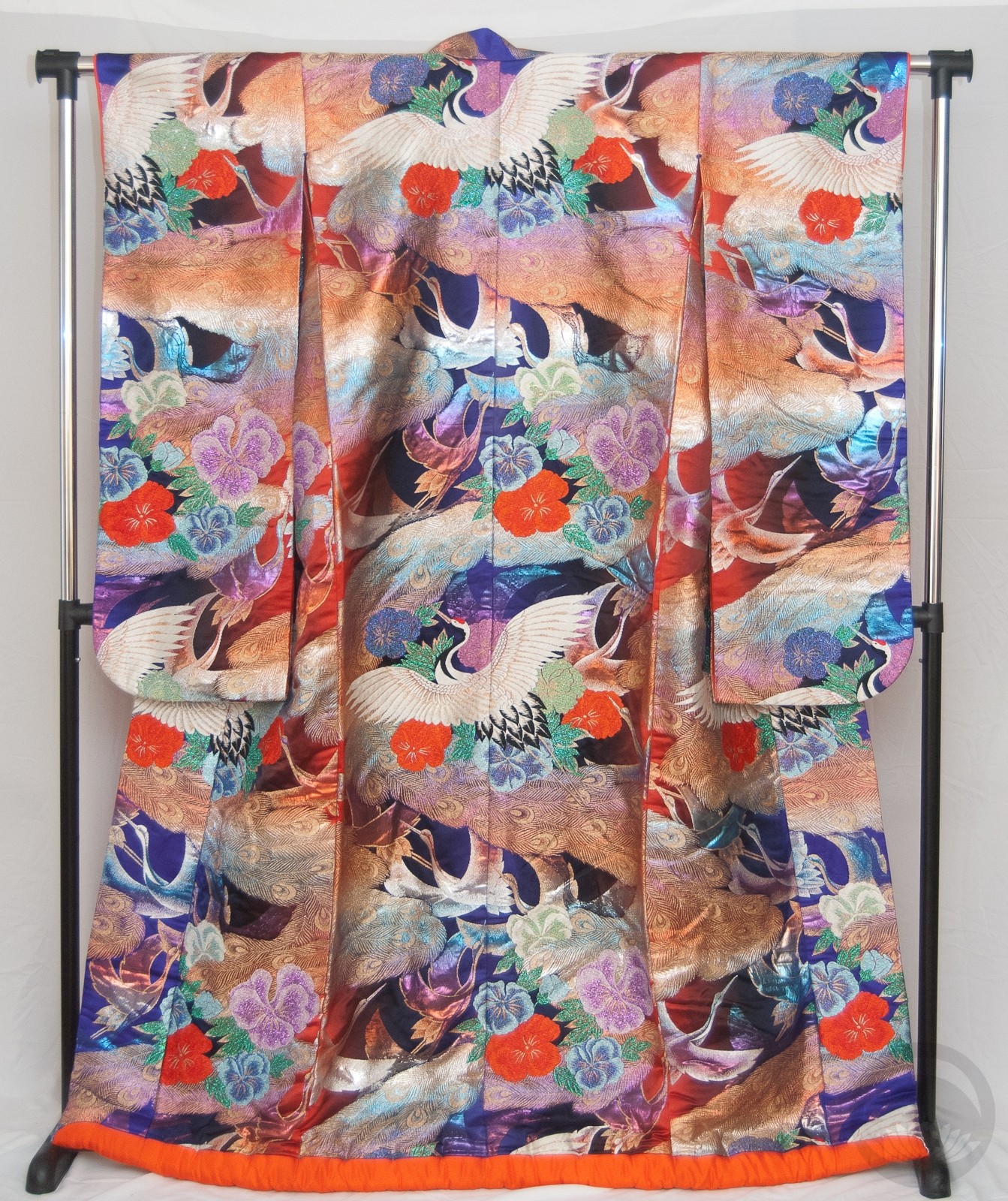
I found this beautiful vintage uchikake on a local classified listings site, and contacted the seller right away. We managed to arrange a meeting, and I’m very glad. The gentleman selling it was lovely, very friendly. The uchikake was passed down in his family, originally belonging to his step-mother’s mother, and he seemed very keen to make sure it would go to someone who would really appreciate it for what it is. I hope I’m giving it a good home!

It’s a bit hard to age, but based on how it looks and feels in person combined with what he told me of its history, I’d put it somewhere in early Showa. The metallic bits are synthetic, but the lining and base fabric look and behave like silk. It’s a really interesting combination.

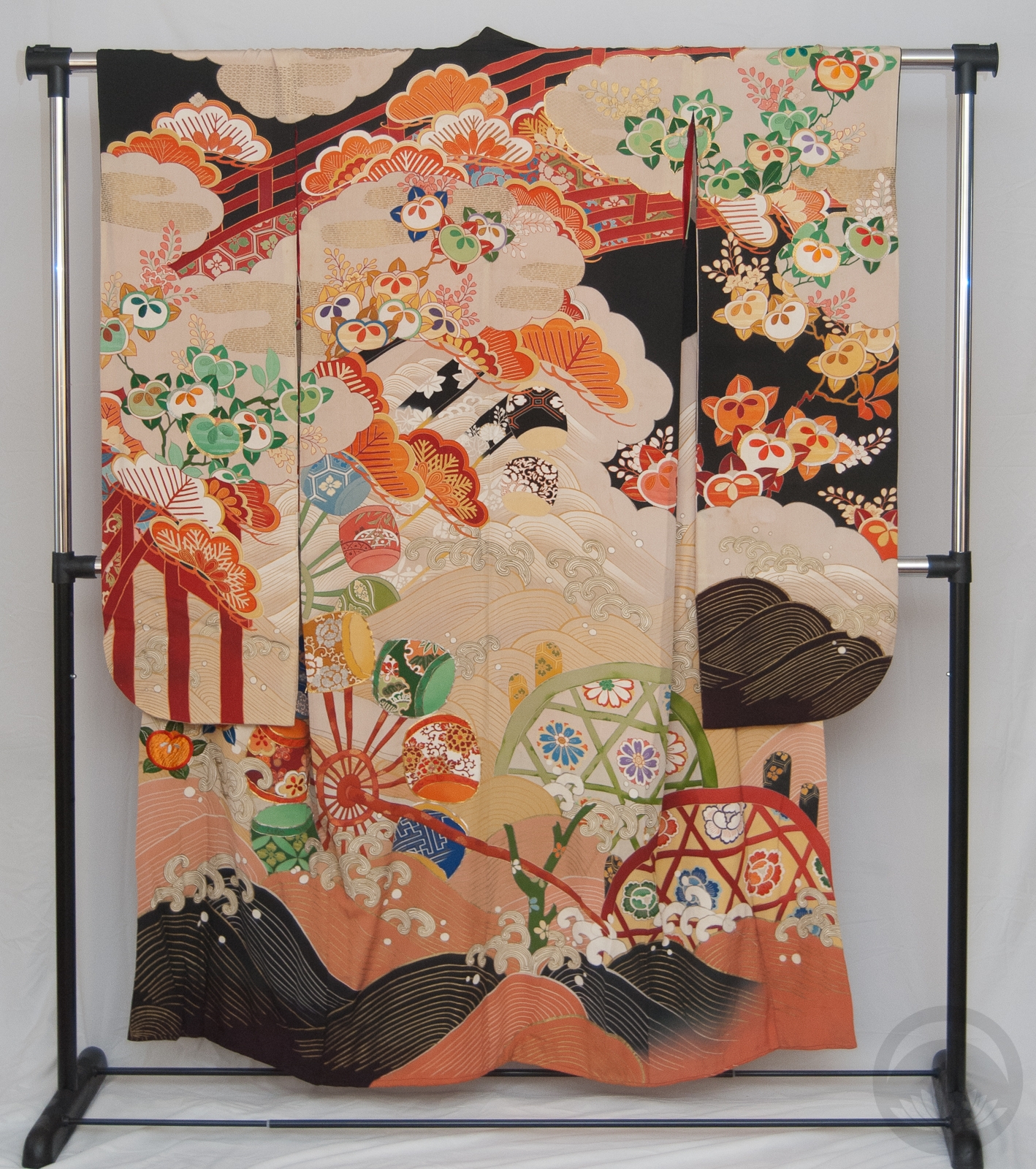
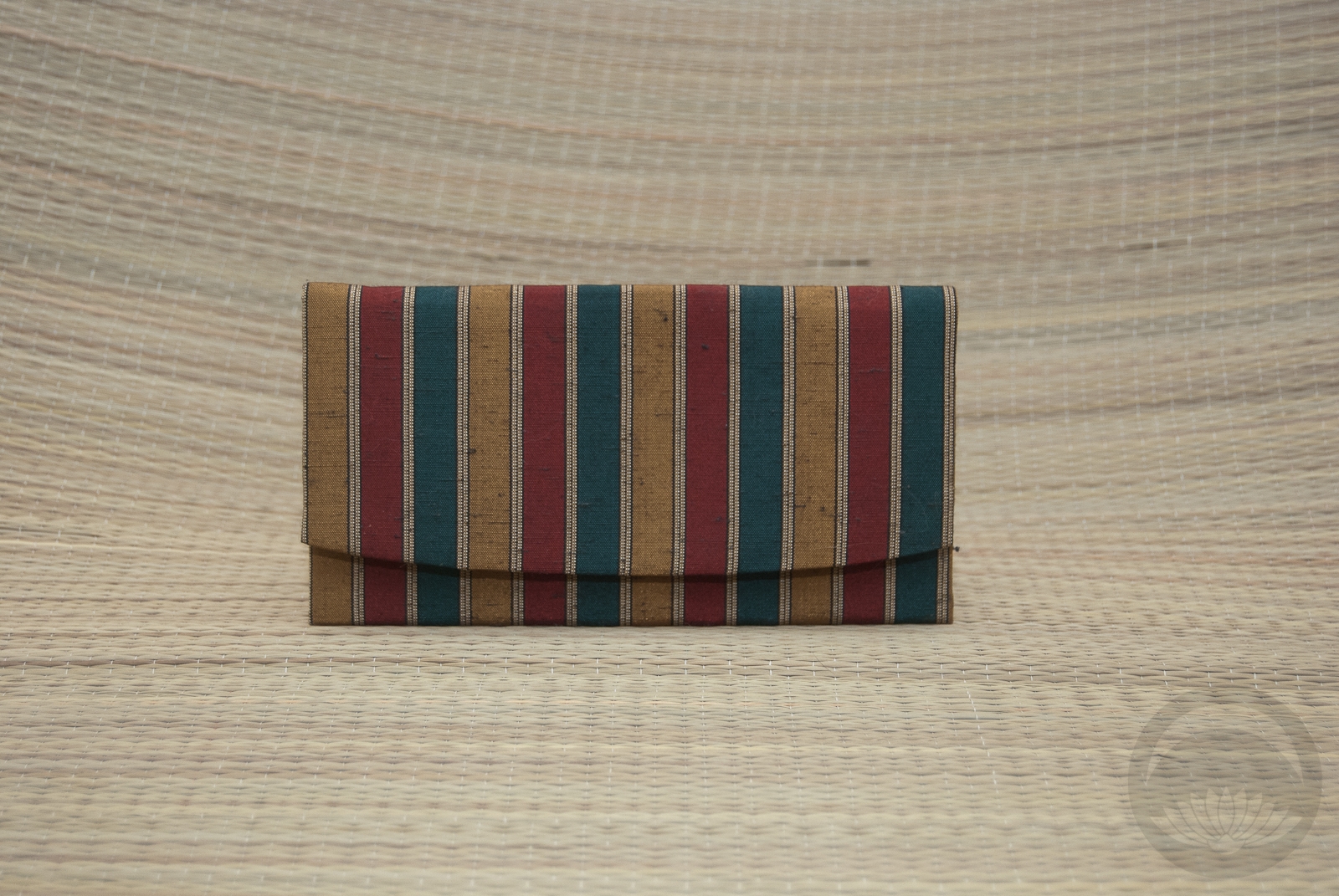
I knew I wanted to do a bridal-style kitsuke with it, and my Taisho-era kakeshita seemed like a good place to start. Even if they’re not the same era, they really work together. Unfortunately, I don’t have a proper set of bridal kitsuke accessories yet, so I had to make do using a normal furisode obiage and obijime, and a shigoki obi beneath the obi, along with a normal kimono wallet in lieu of the traditional decorative wallet known as hakoseko. Overall, though, I think it looks beautiful. Obviously, this is not something I’m ever going to wear personally (except for a lecture or display at some point, I suppose), but it’s so beautiful I have a feeling I’m going to be leaving it on the mannequin for longer than usual.

Items used in this coordination

Oh, Canada!

Today is Canada Day! It is the anniversary of the first unifications of British colonies into the country we now call home. Since then, though, it has become much more. To me, it’s a celebration of all things Canadian, of our heritage, our cultures, the beautiful tapestry that makes us who we are, our country as a whole.

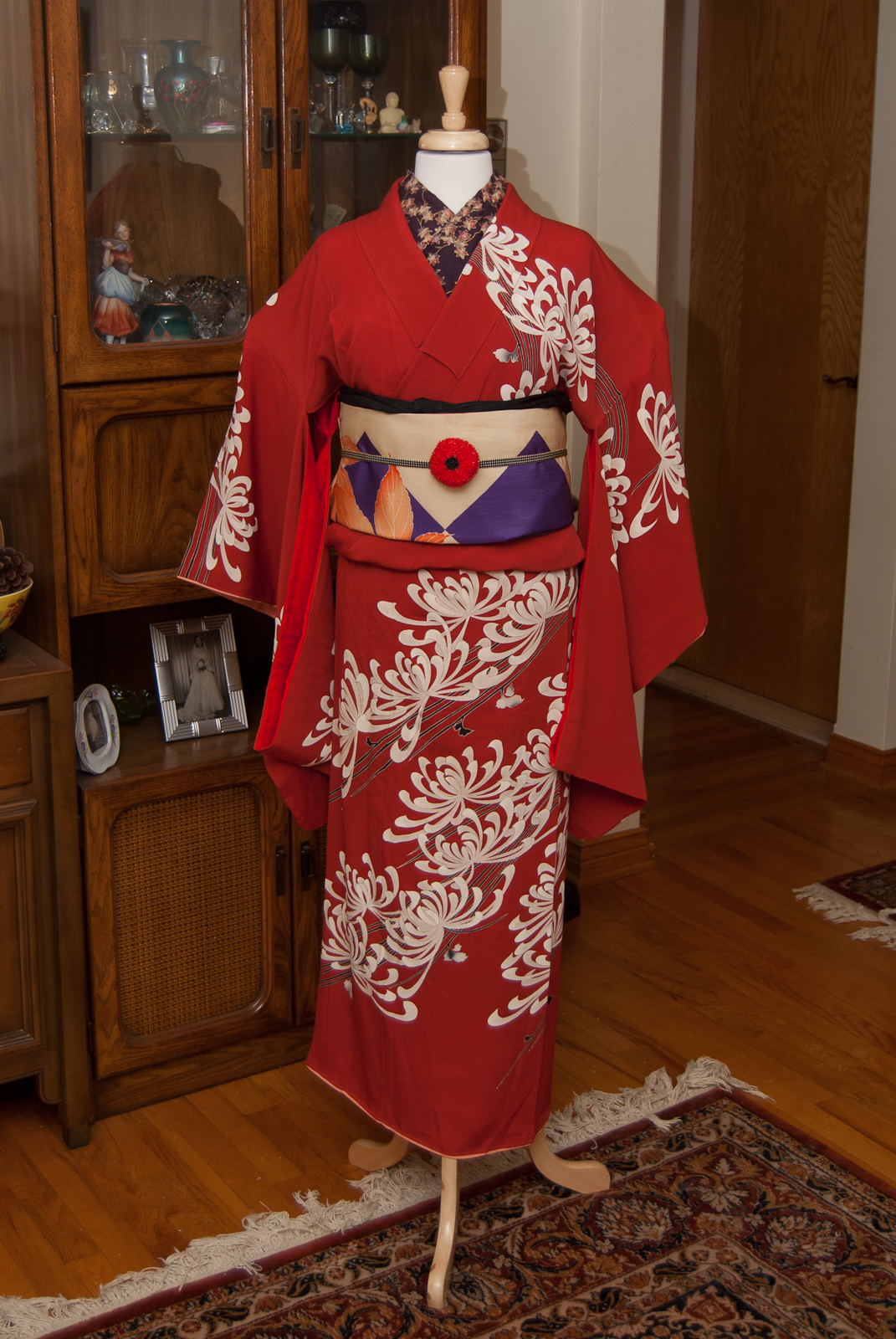
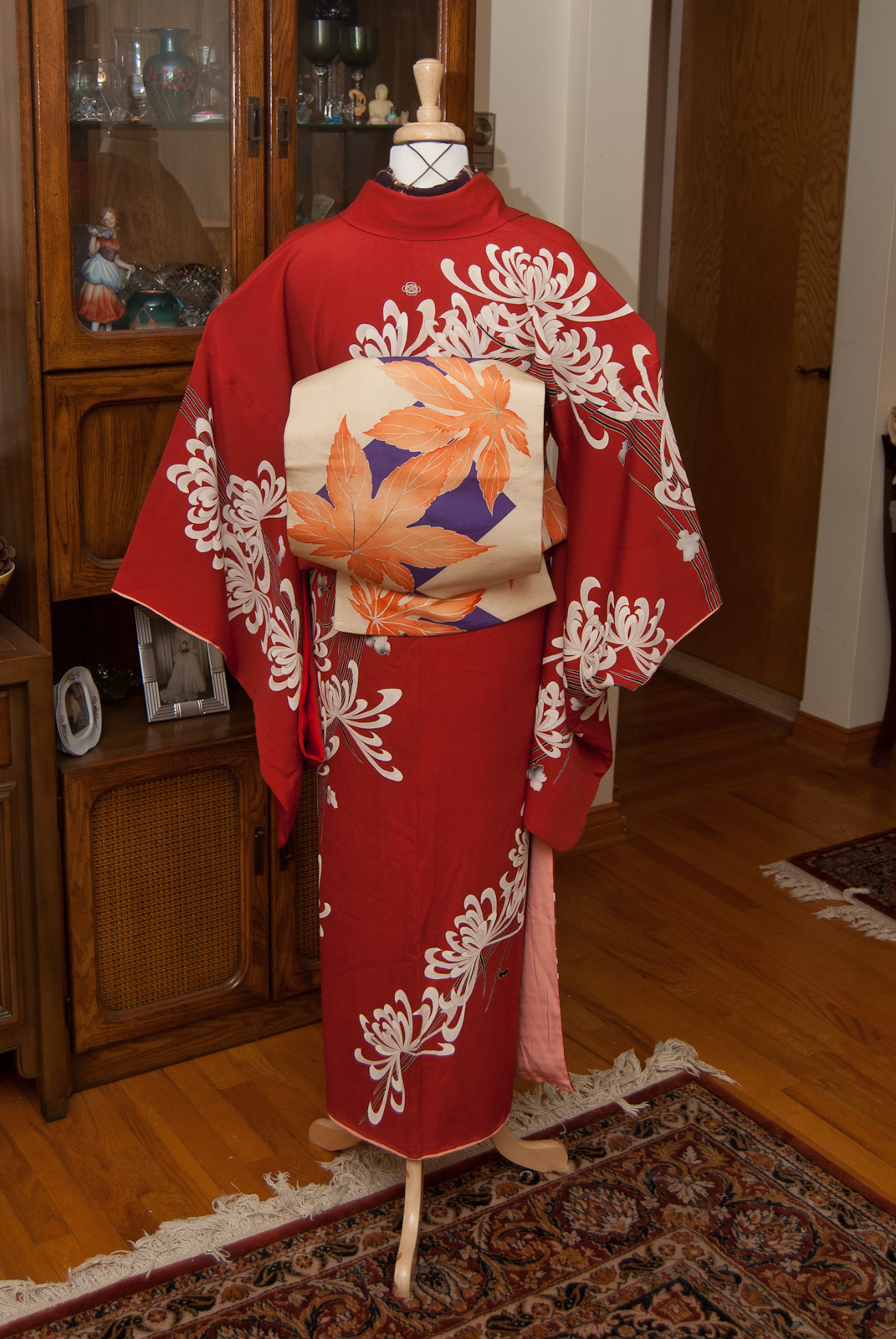
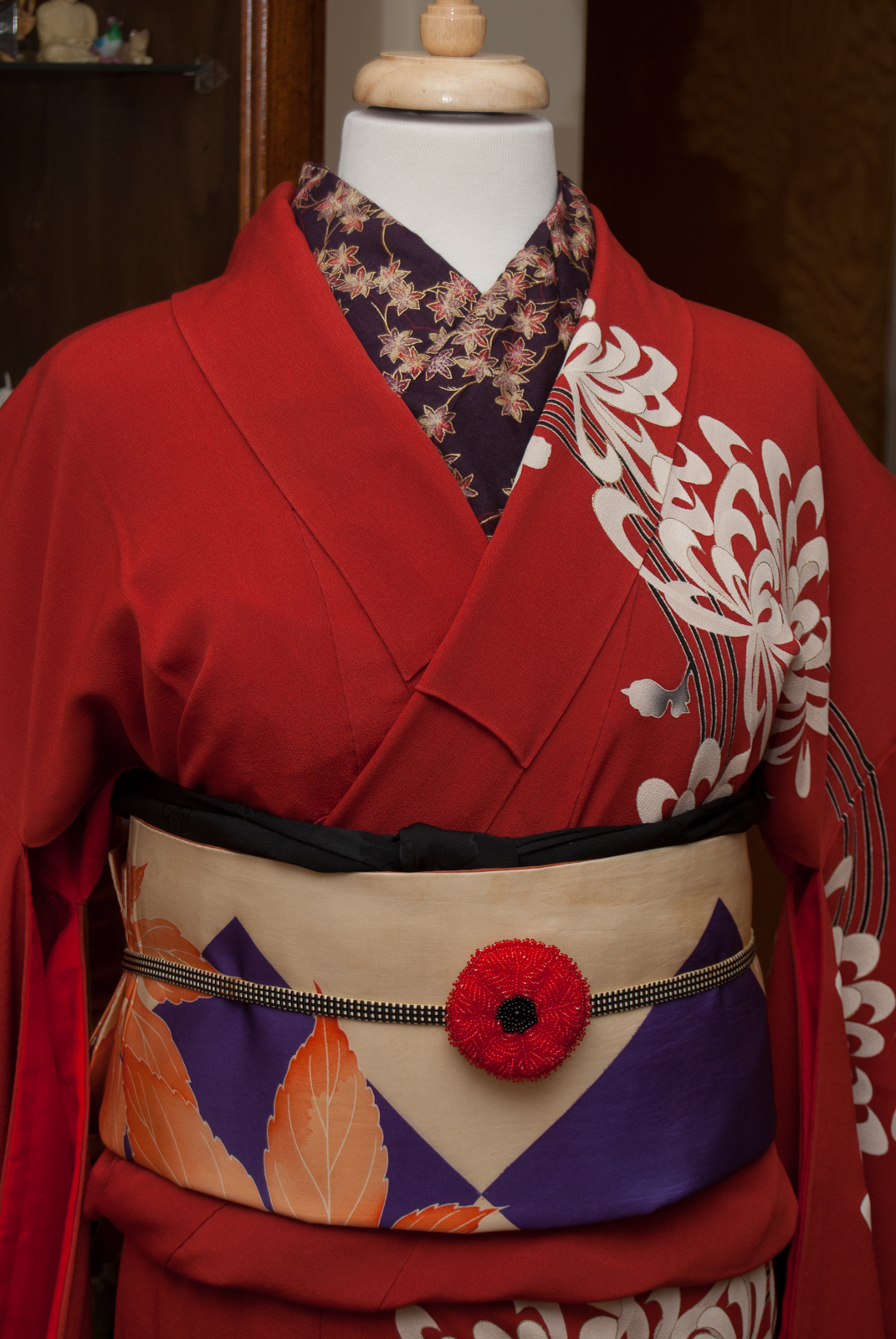
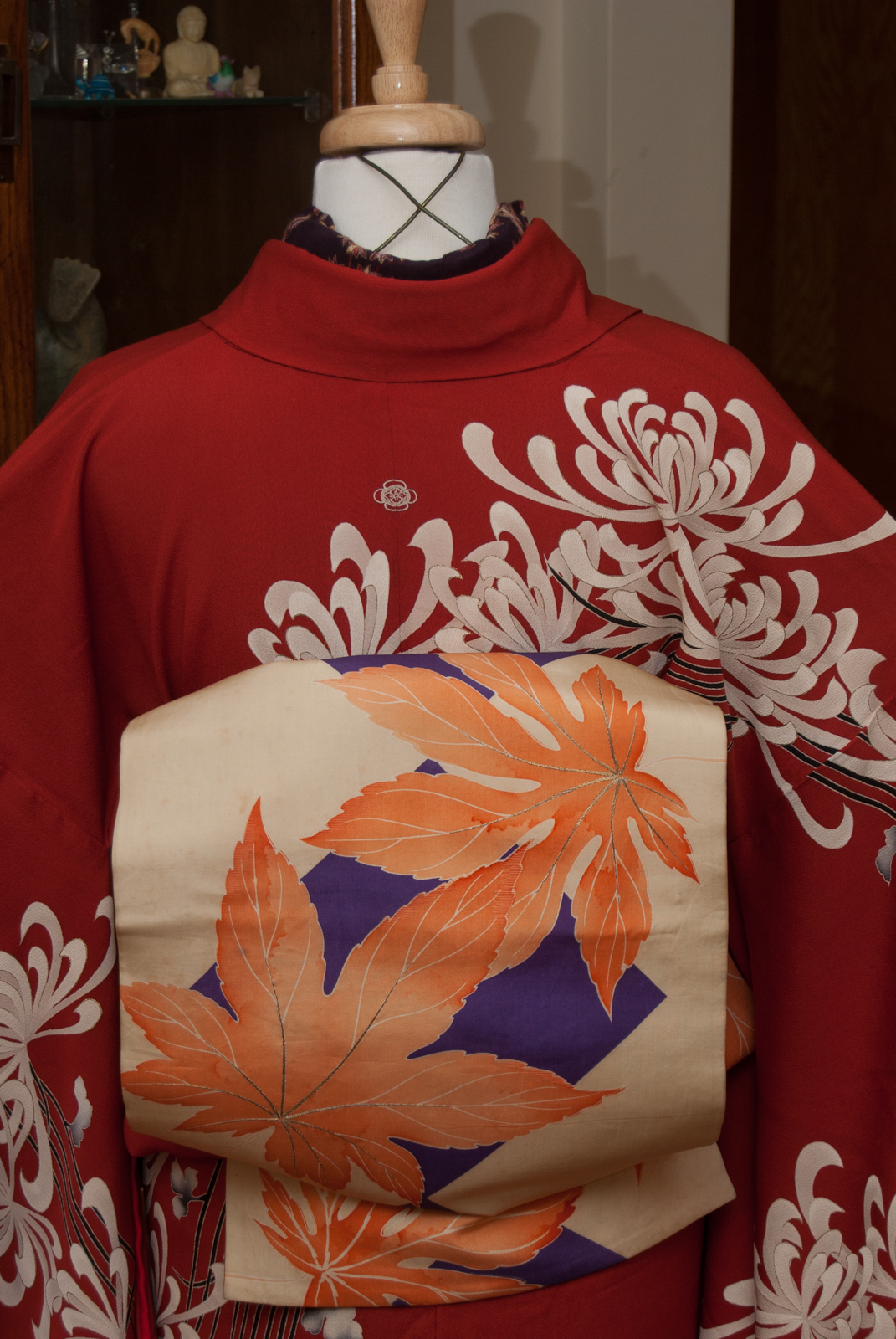
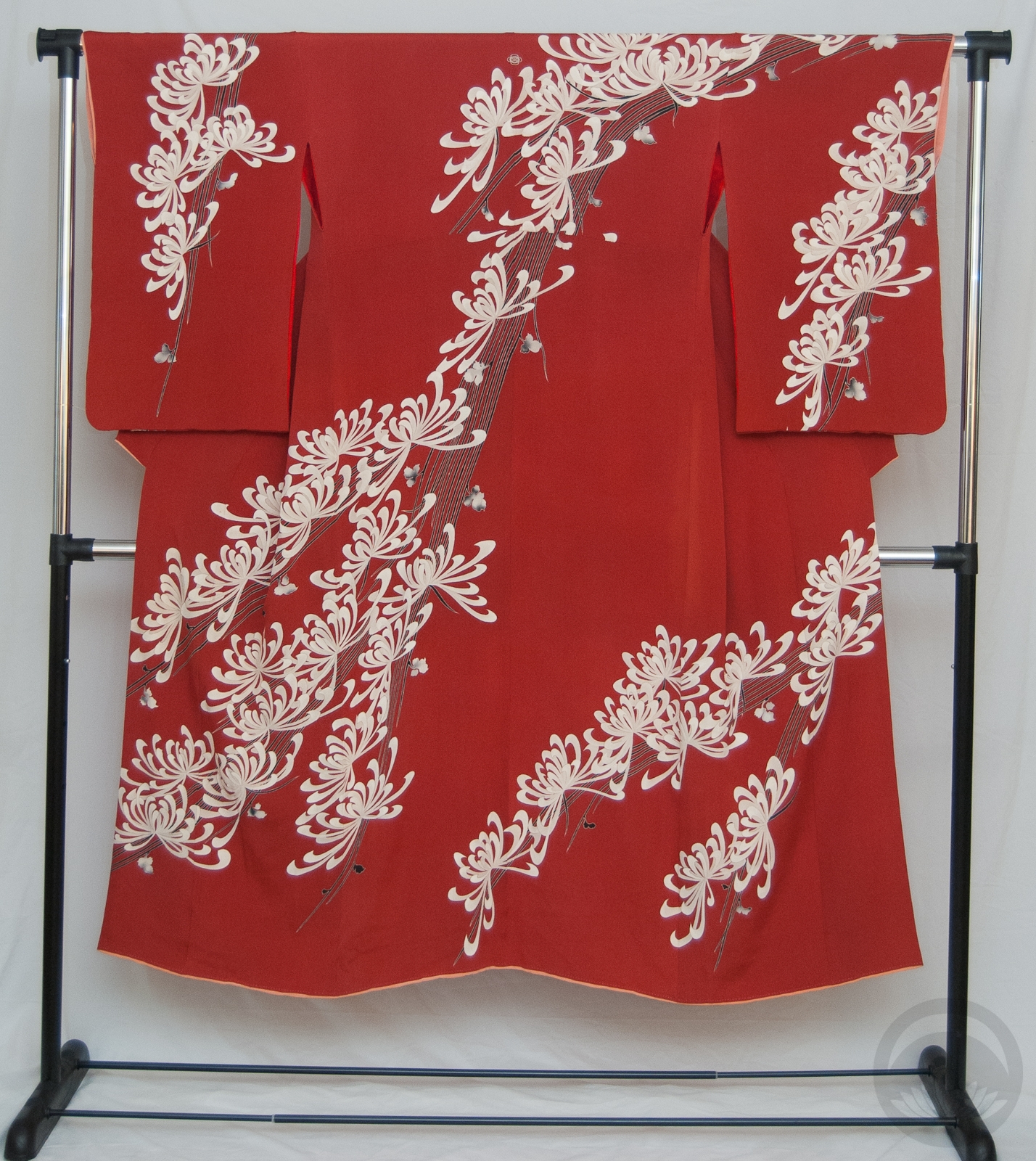
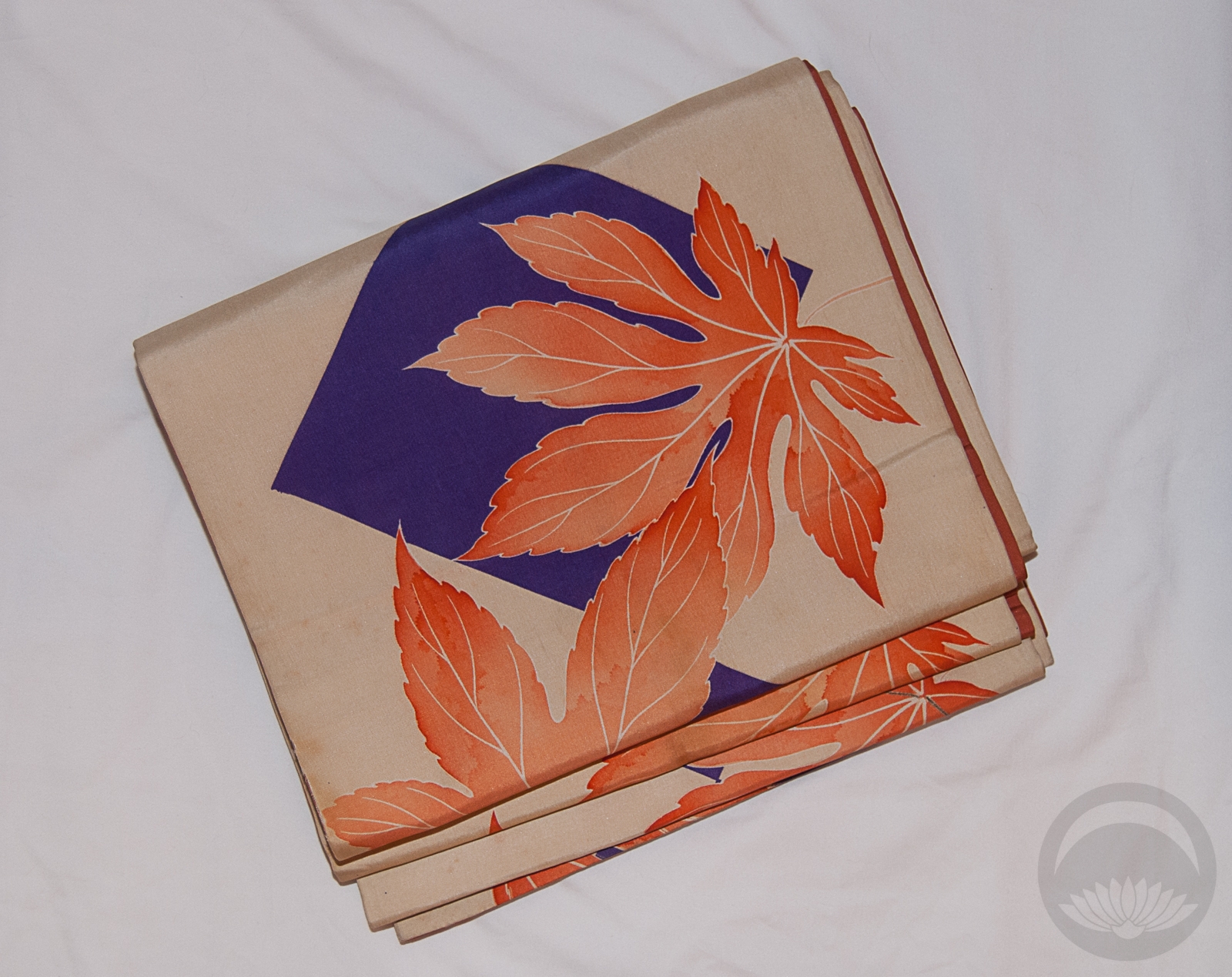
I knew I wanted to do a Canadian-themed kitsuke, but at first I wasn’t sure where to start. All I knew is that it had to include red, white, and maple leaves! My kiku houmongi, with its gorgeous red background and bold white flowers, seemed like a logical jumping-off point. I pulled out a vintage obi with maple leaves and a maple haneri. The obidome is a poppy, hand-beaded by a friend of a friend in a nearby Mohawk community. To me, it represents remembrance and appreciation of the First Nations people who were here first.

I wasn’t sure how this would look all together, I was worried the orange of the obi would clash with the kimono, but I was really happy seeing it all come together. I even like how the orange of the obi picks up on the salmon lining of the kimono, and the purple in the obi is echoed subtly in the haneri. The outfit is entirely inappropriate, seasonally, but thematically I think I’m spot-on.

Items used in this coordination

こどもの日 – Kodomo no Hi – Children’s Day

In Japan, May 5th is こどもの日, Kodomo no Hi, or Children’s Day. It’s a day to celebrate and appreciate children, to pray for their health and prosperity in the coming year. It was originally a day to celebrate boys and fathers, while Hina-matsuri was a day to celebrate girls, but in the late 40s, it shifted to a day to appreciate all children and their accomplishments!

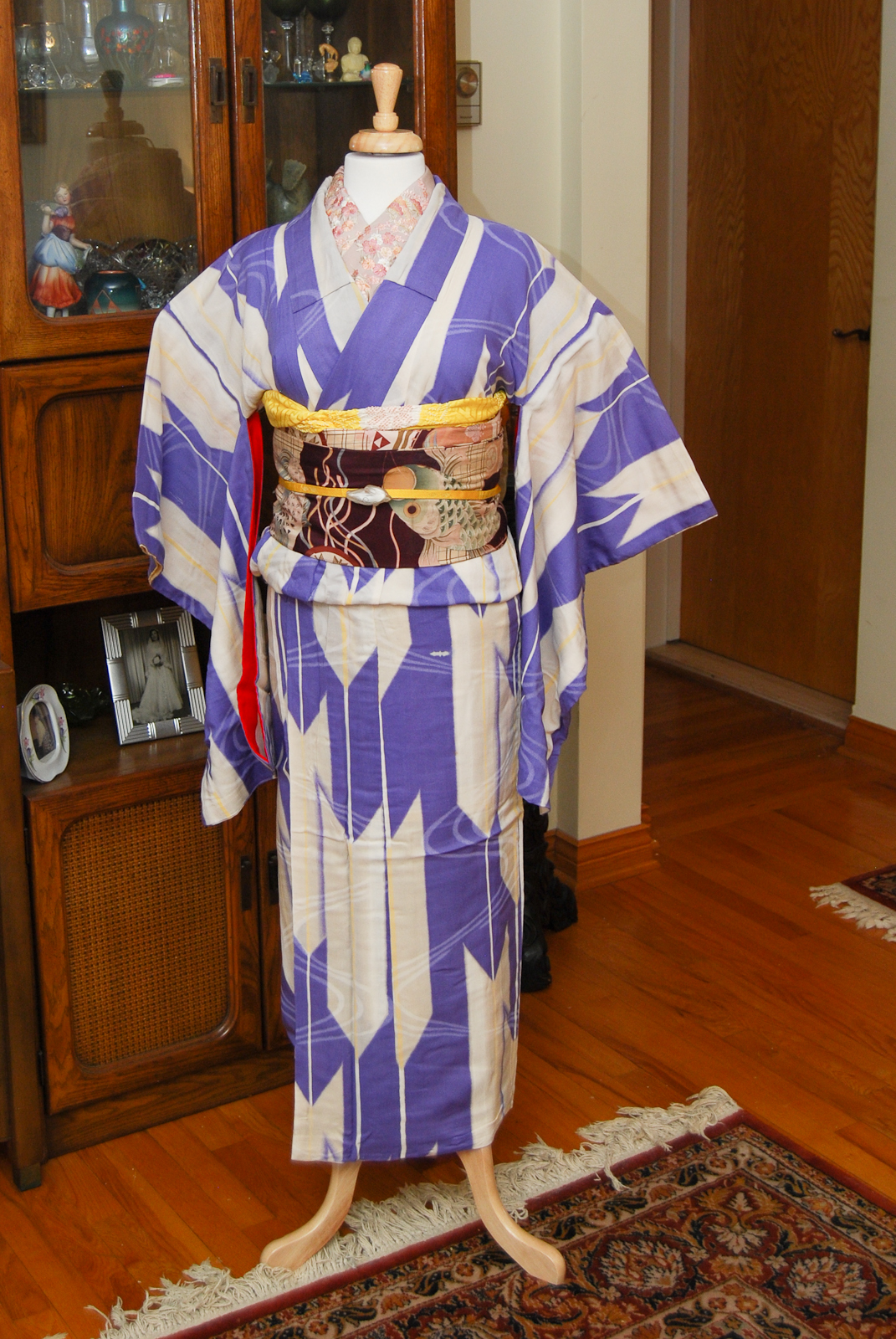
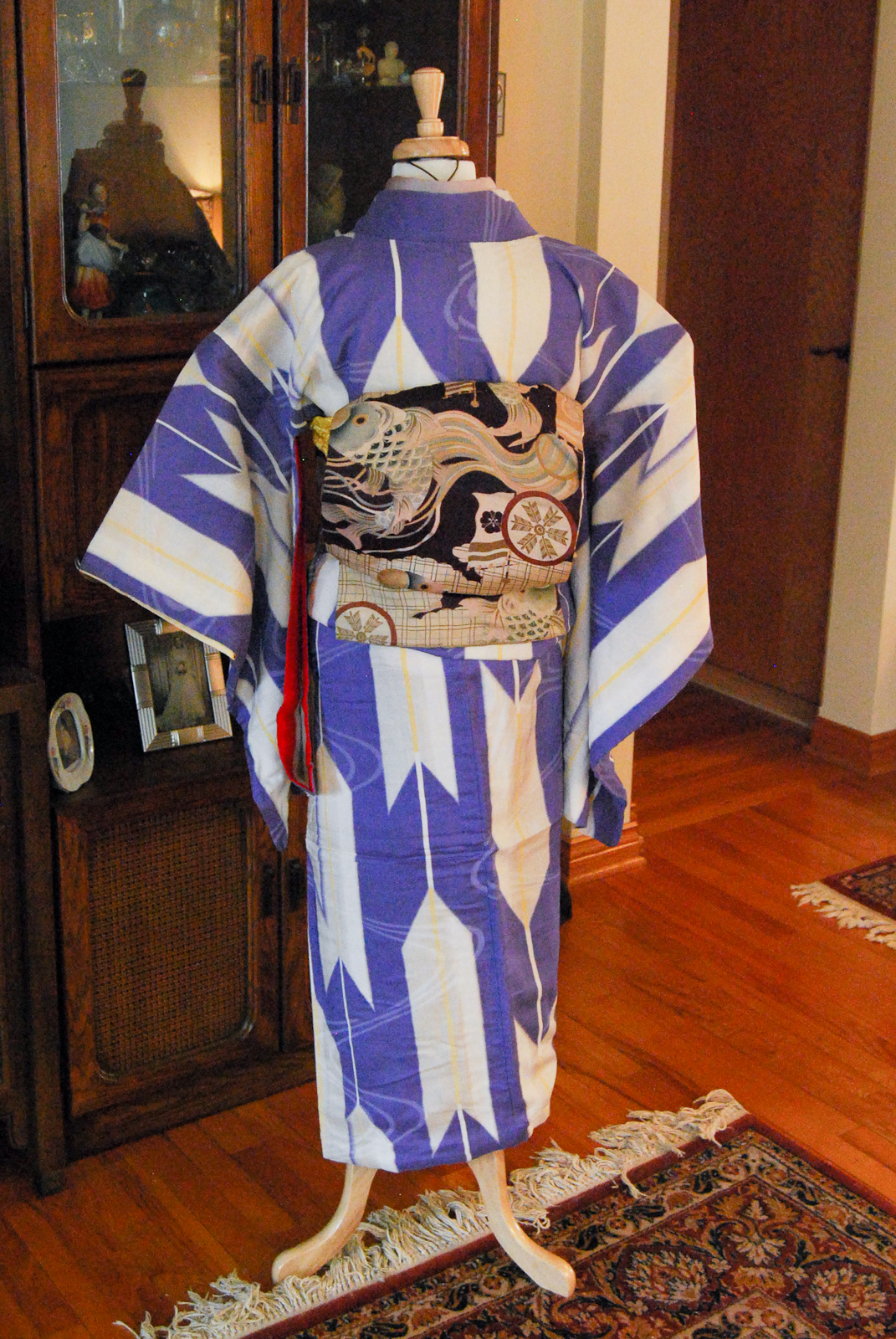
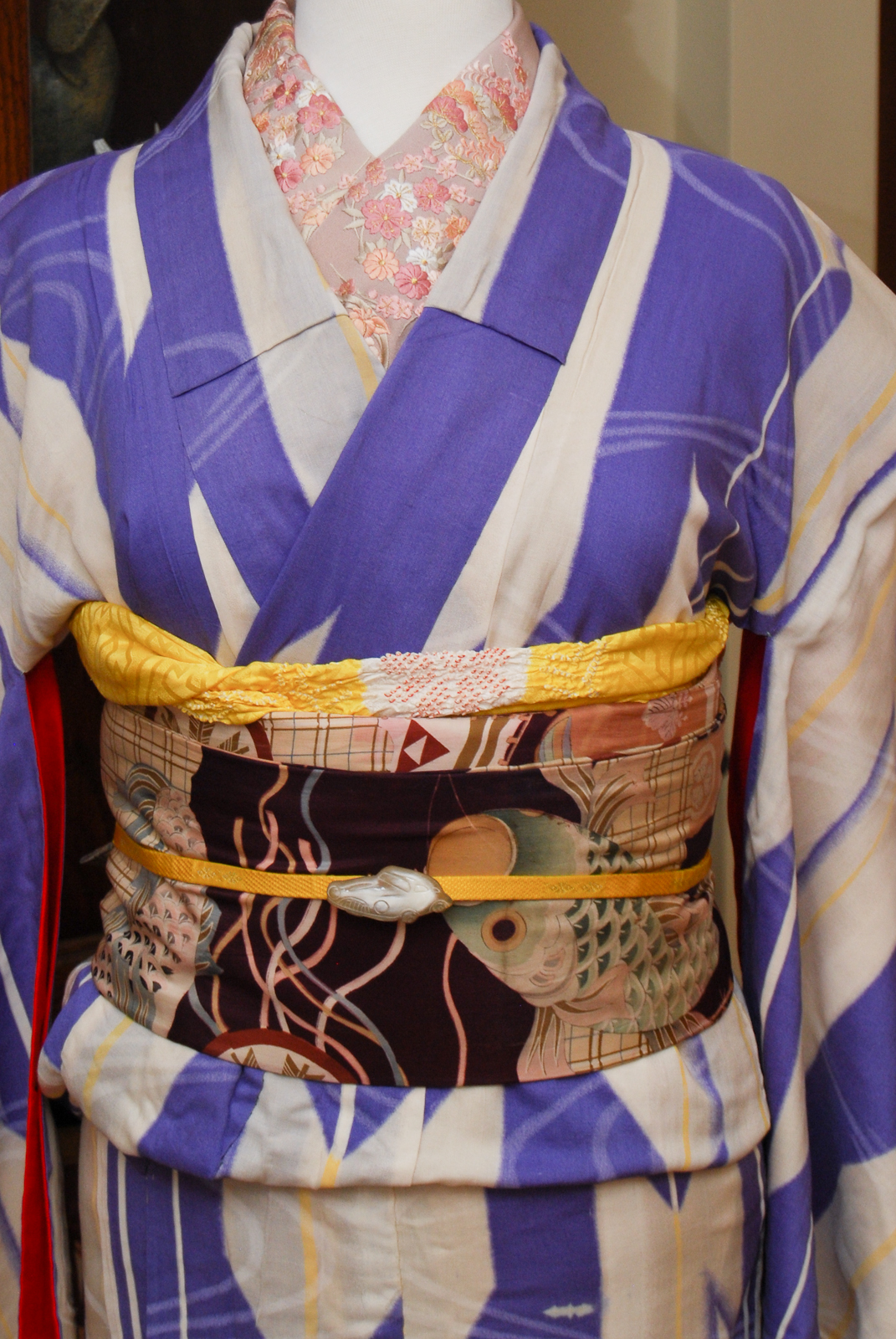
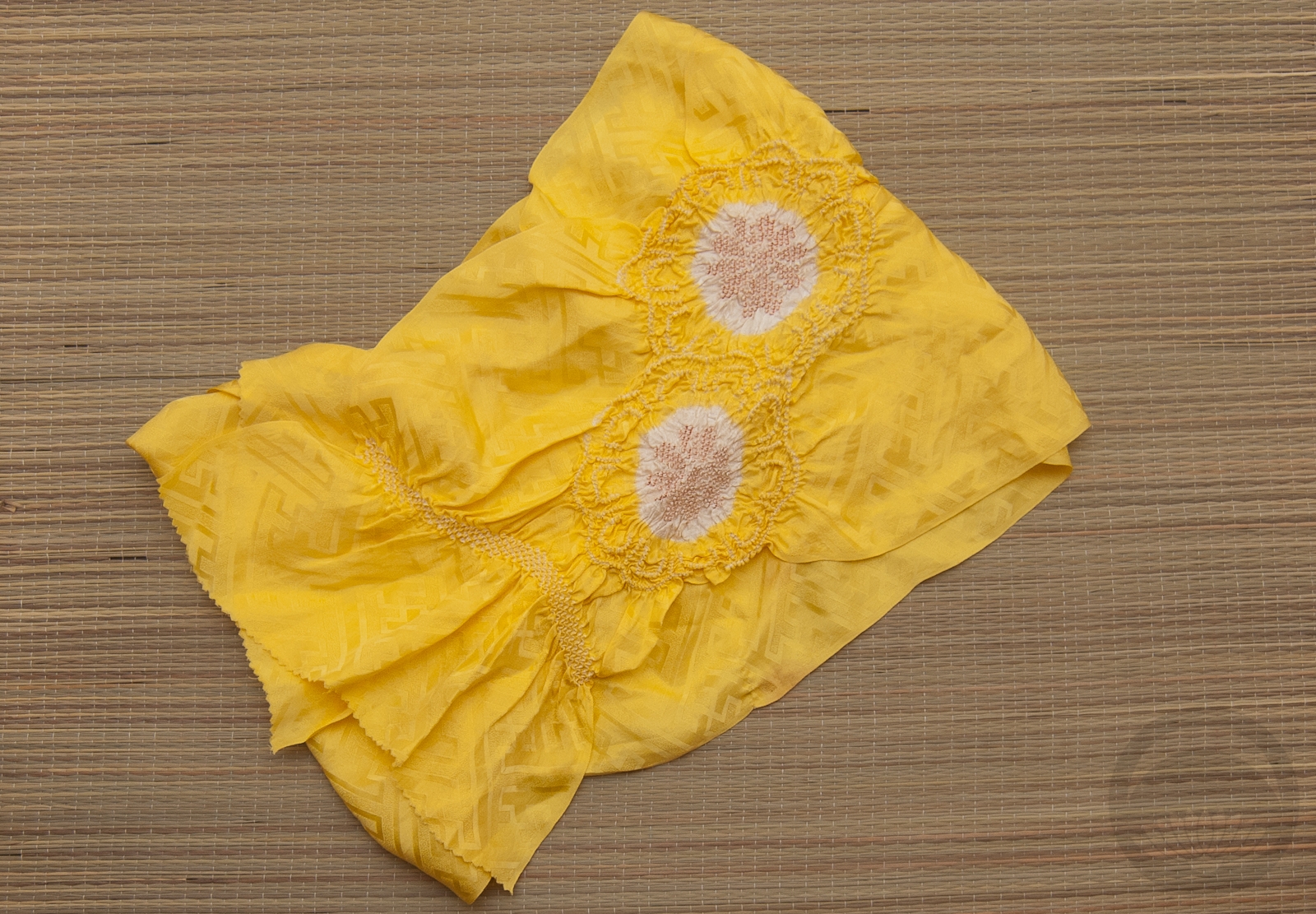
Koi-shaped streamer kites, known as koinobori, are tradtional decorations for this holiday. There are typically two large koi depicting the parents, and then one smaller one for each child in the family. I found this obi with koinobori on it on eBay eons ago, and it remains one of my all-time favourite pieces. It’s a strange duck, softer silk than obi typically are, and full of awkward seams on the back side. I suspect it started life as either a kimono or some sort of decorative piece, but someone decided it would make a lovely obi and I’m so glad they did!

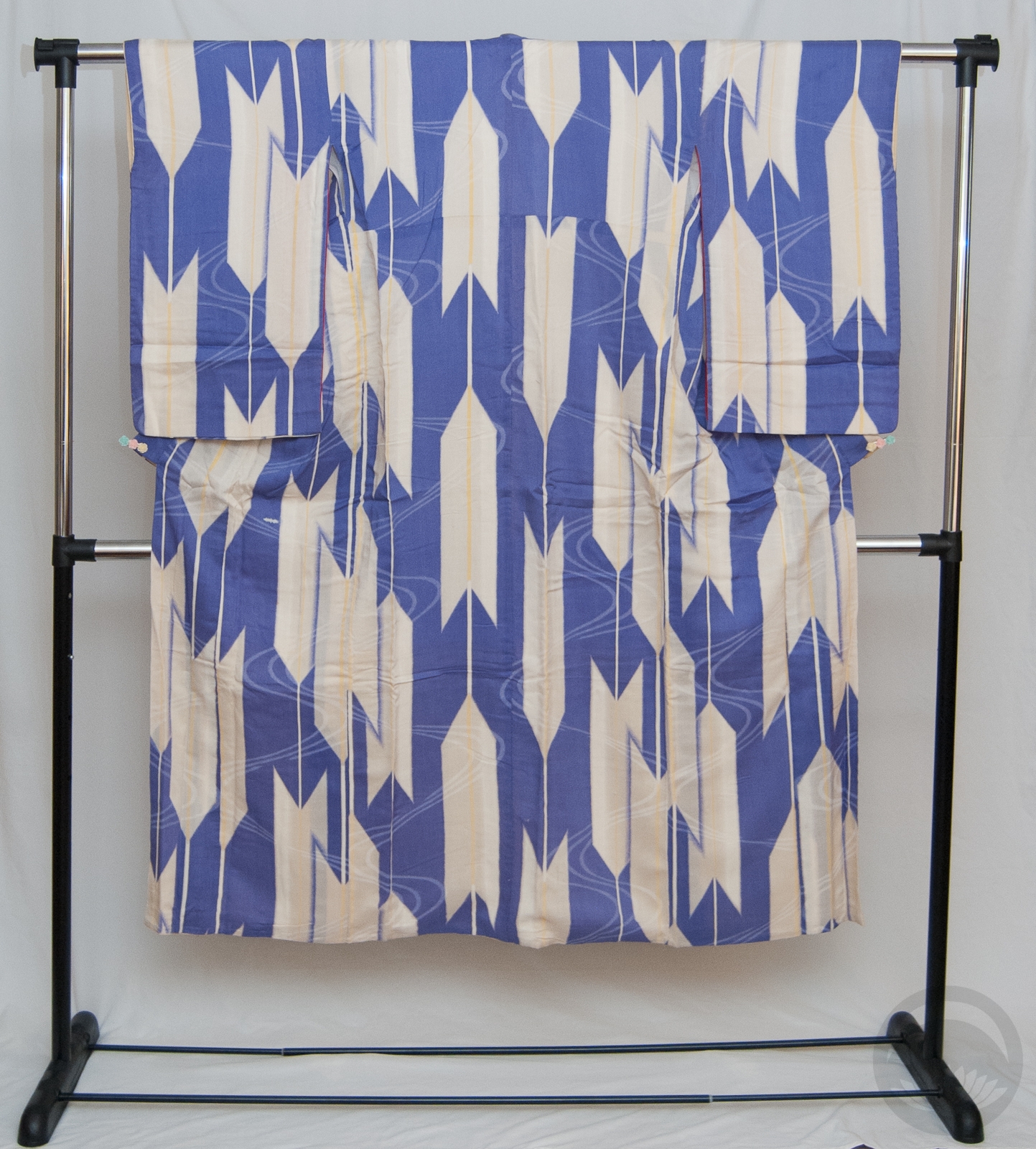
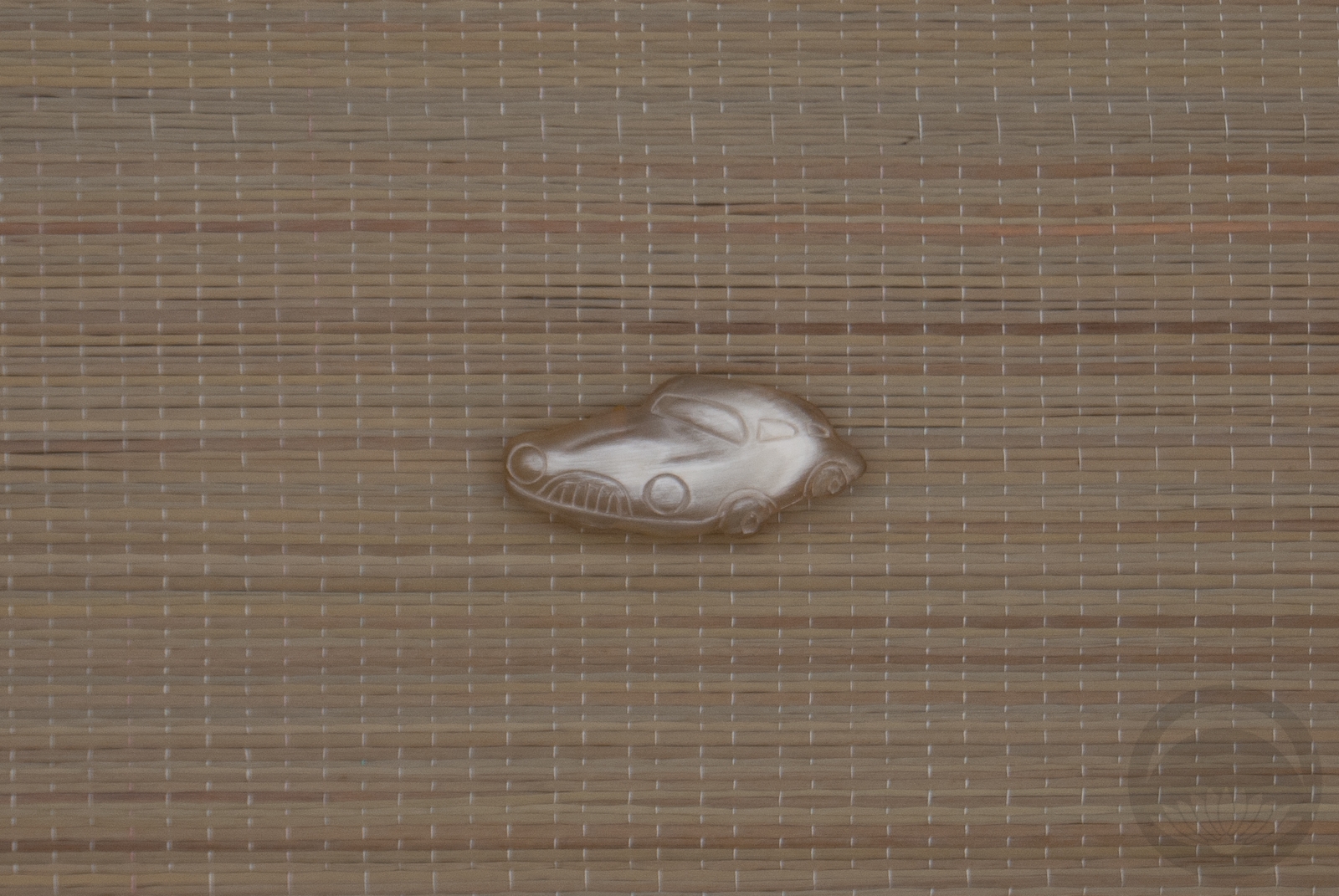
Arrows are also a fairly typical motif for the holiday, so I paired the obi up with this bold Taisho-era yabane komon, and I’ve always thought this adorable car obidome Kansai_gal got for me looks like a little toy car, so it felt like the perfect finishing touch for the outfit.

Items used in this coordination

Happy St. Patrick’s Day

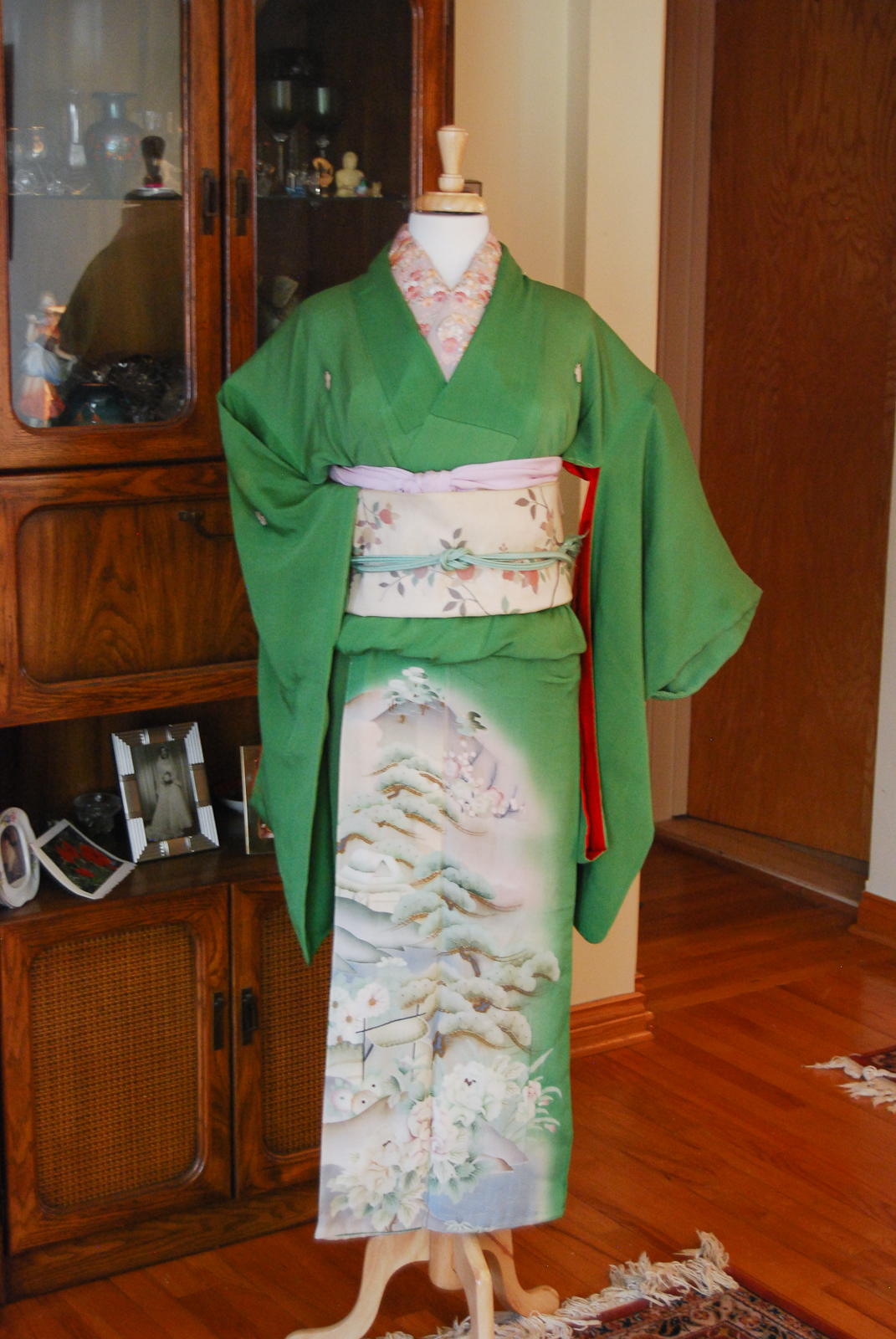
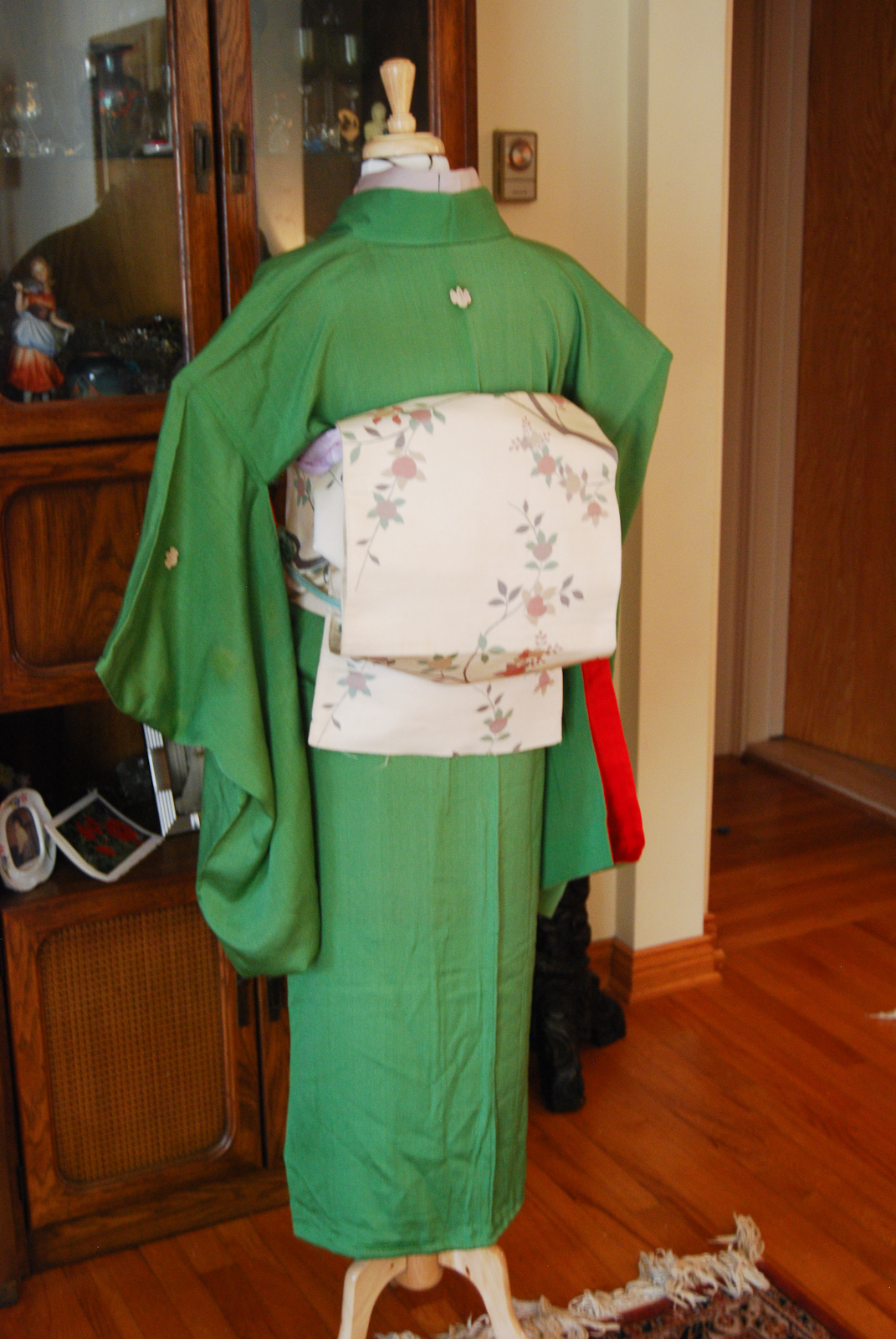
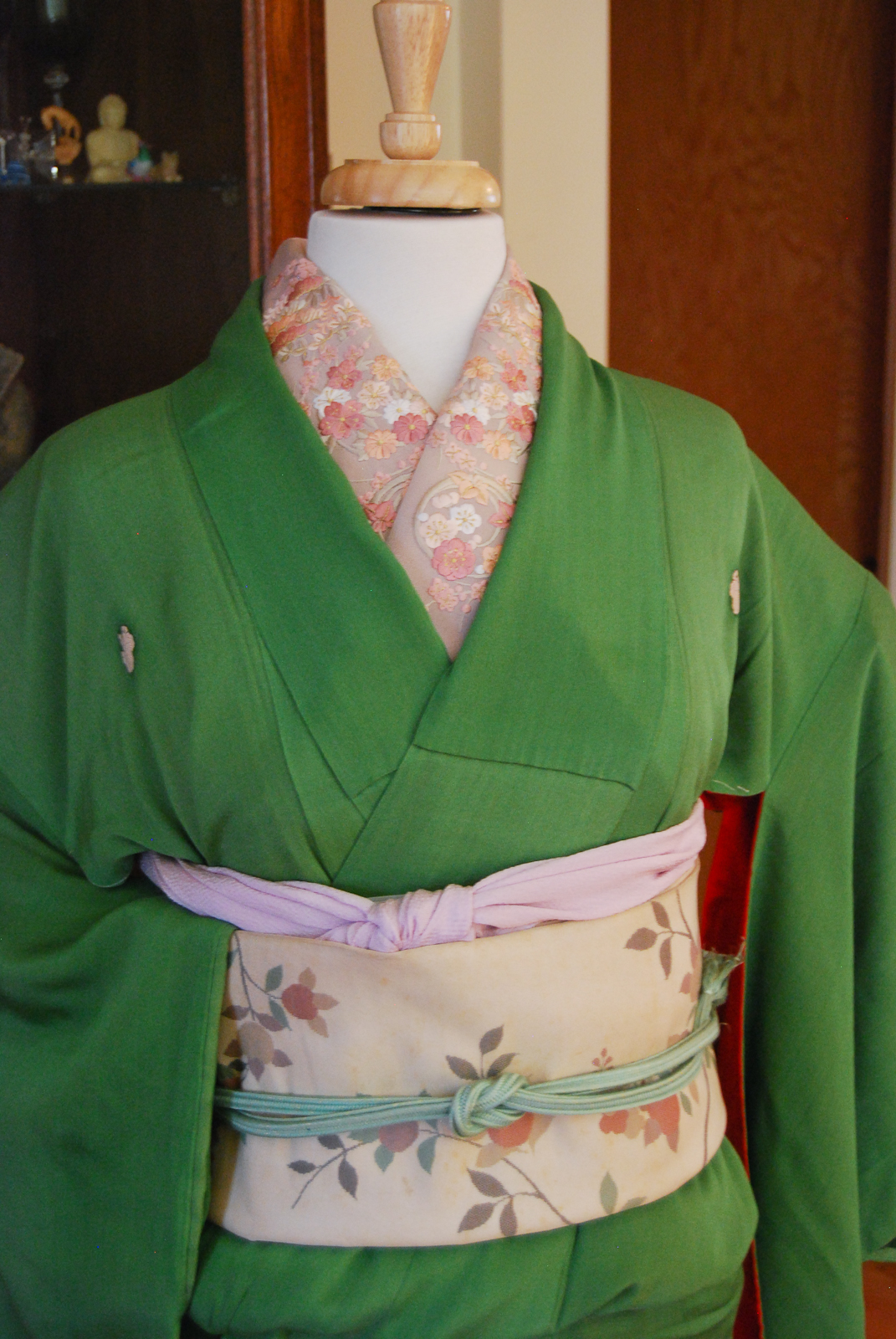
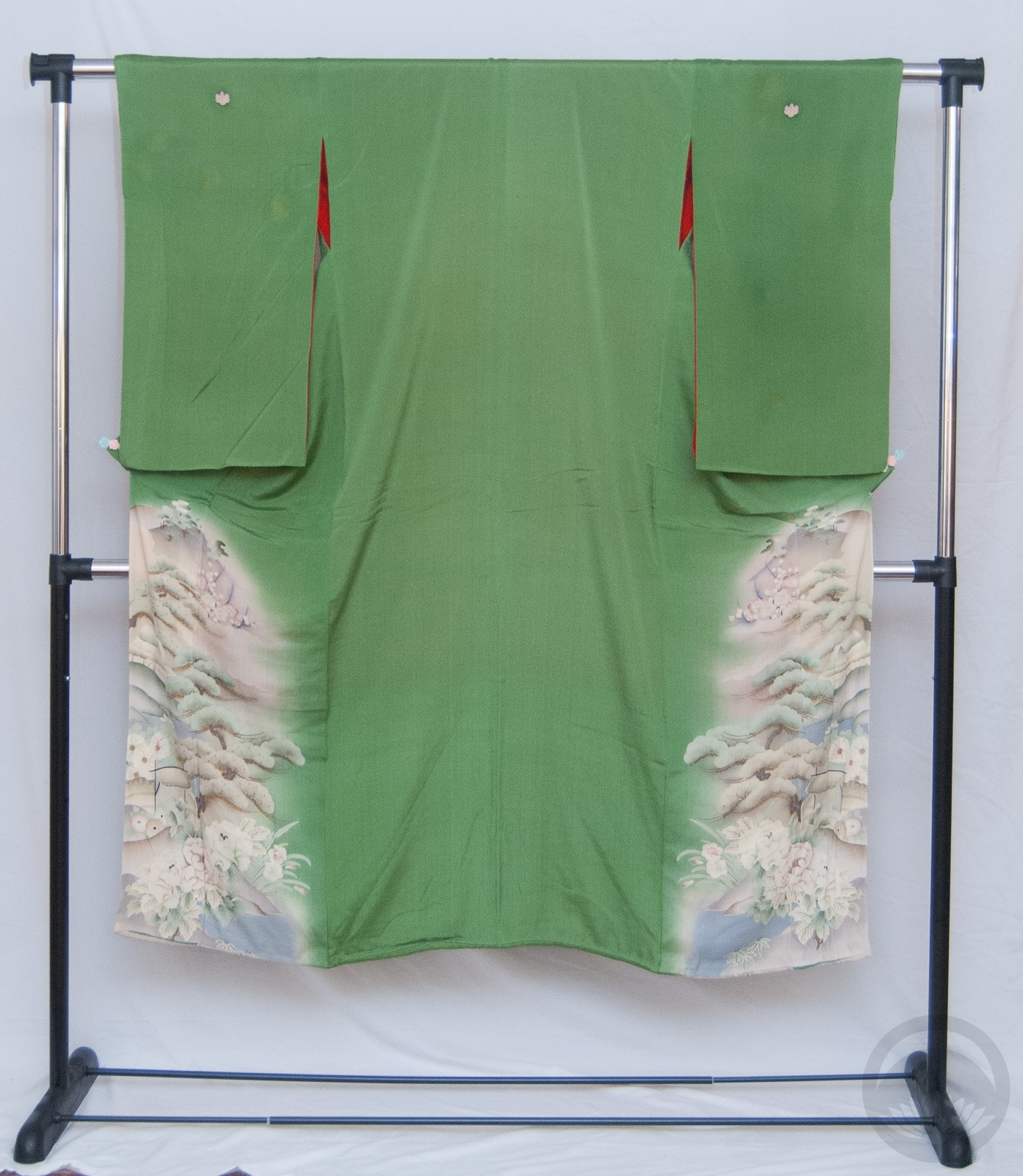
I won this gorgeous green irotomesode on eBay a few weeks back. It’s so lush and gorgeous; soft old silk with a vivid red lining and a mirrored hem design that puts it in the late Meiji or early Taisho era. I knew it would be too small for me to ever wear, even if I manage to lose weight, but I had to have it!

It arrived in the mail on Tuesday, along with a cute little coordinating obijime. Unfortunately, the flu from hell also arrived on Tuesday. I barely made it through the day at work, went to bed less than an hour after getting home, and promptly spent nearly 22 hours asleep. I’m still not feeling well, but I figured since it was St. Patrick’s Day and the kimono is such a beautiful and vibrant kelly green that I had to muddle through and make an outfit with it.

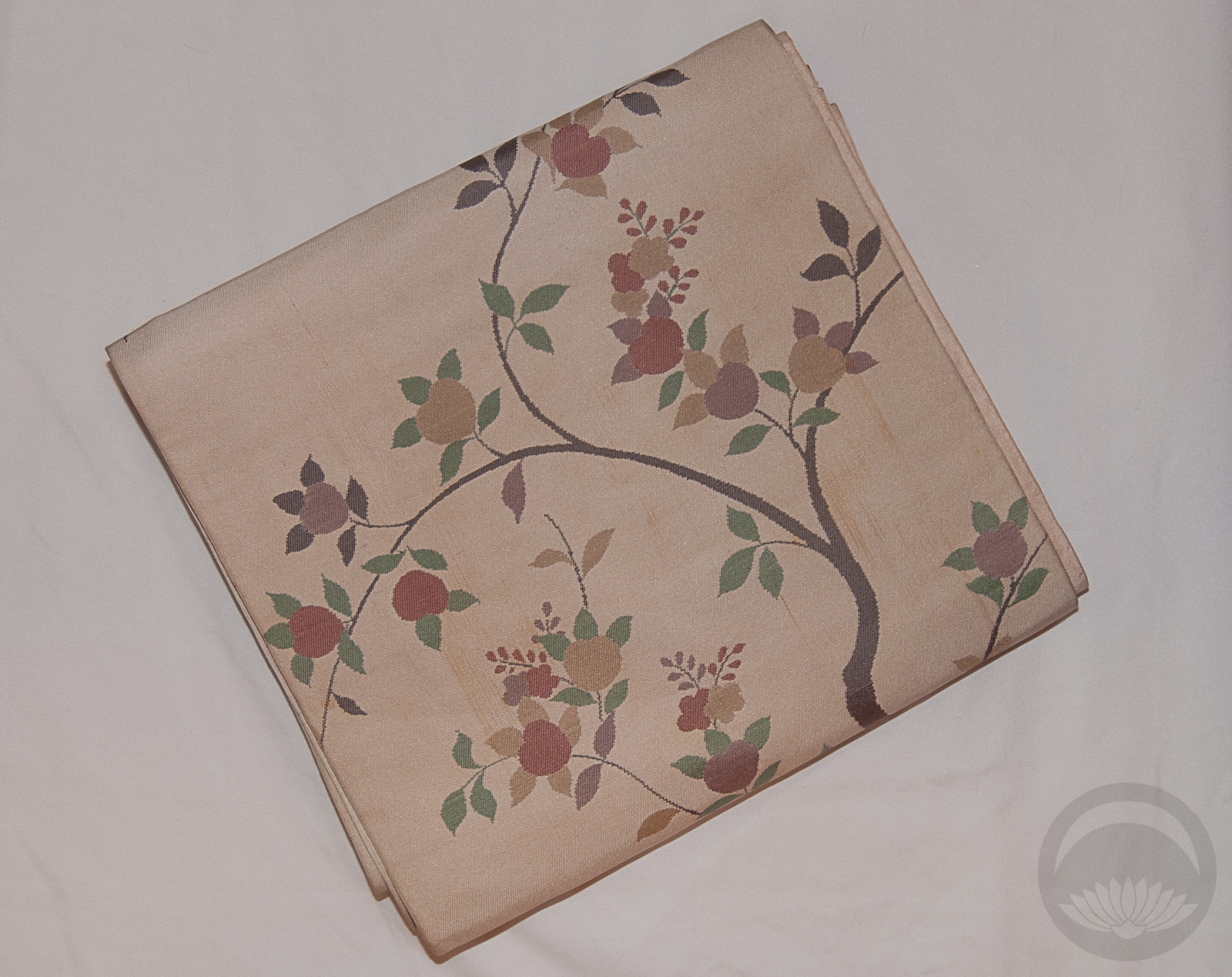
I chose to emphasize the fresh spring feel of the green with pastel accessories and this lovely tachibana fukuro obi from the obi bundle a few of us splurged on years ago. The obi is adorable but badly stained, so not particularly ideal for wearing out, but I was able to put it on Tsukiko in a way that hides the worst of the discolourations. I really love how this outfit looks together.

Items used in this coordination