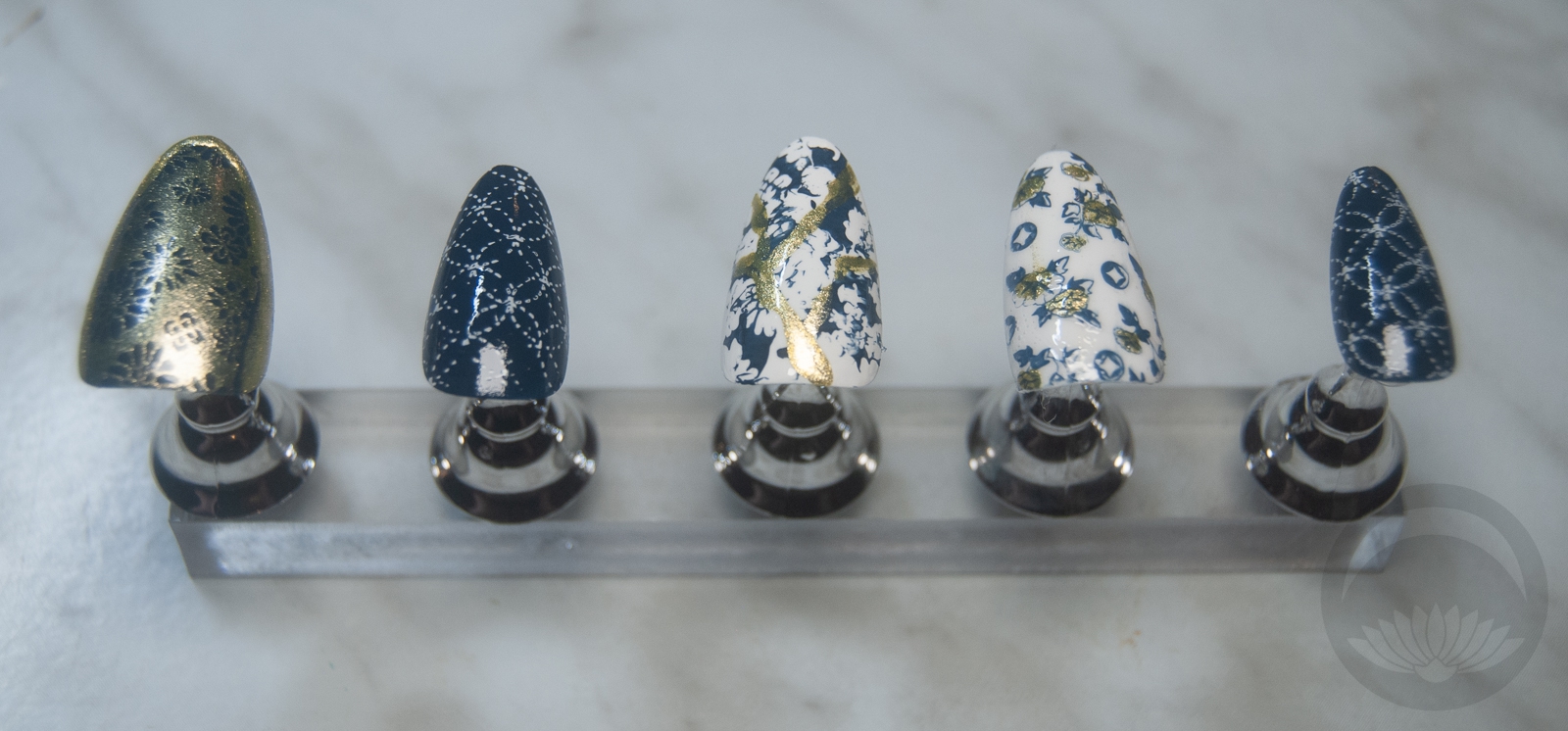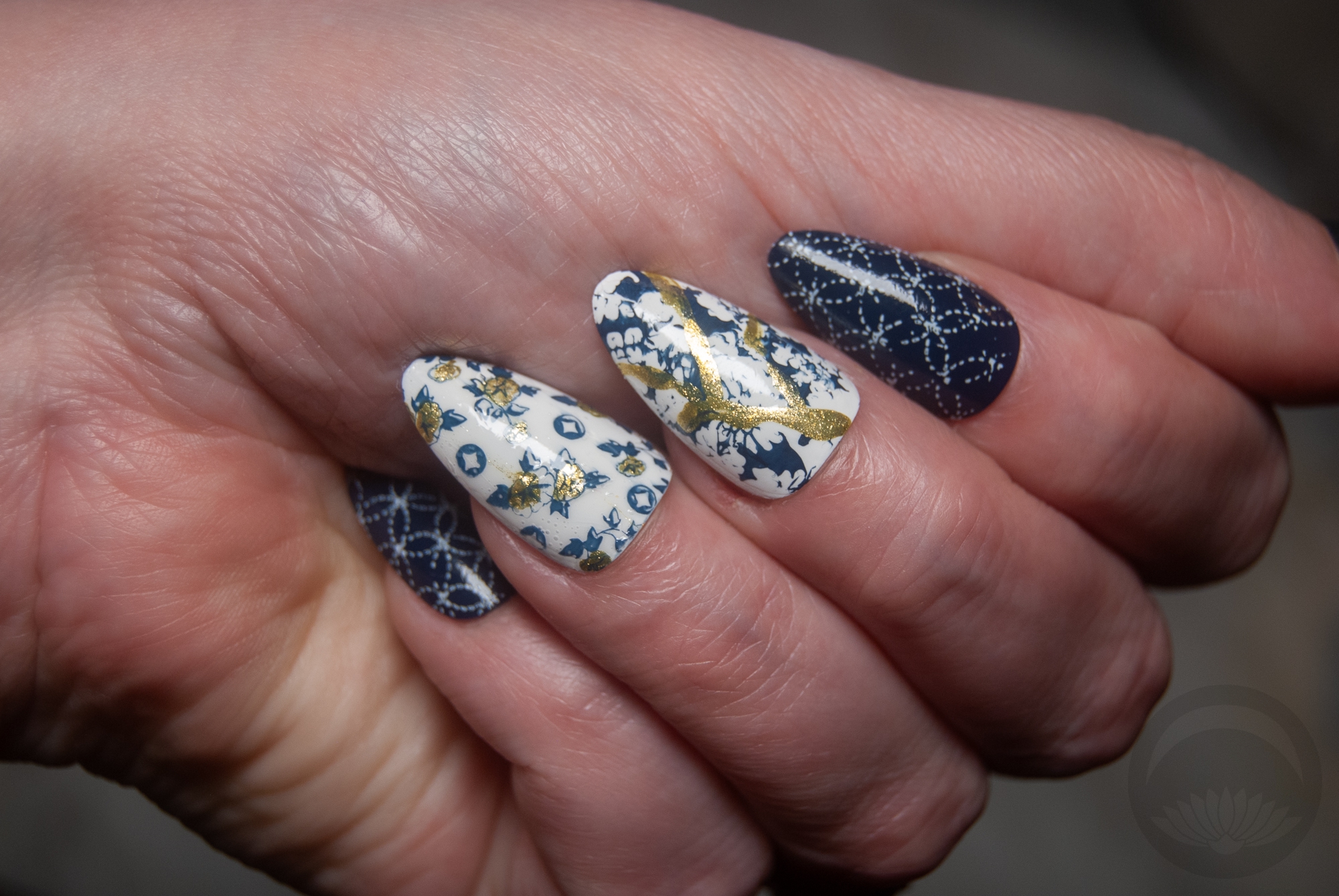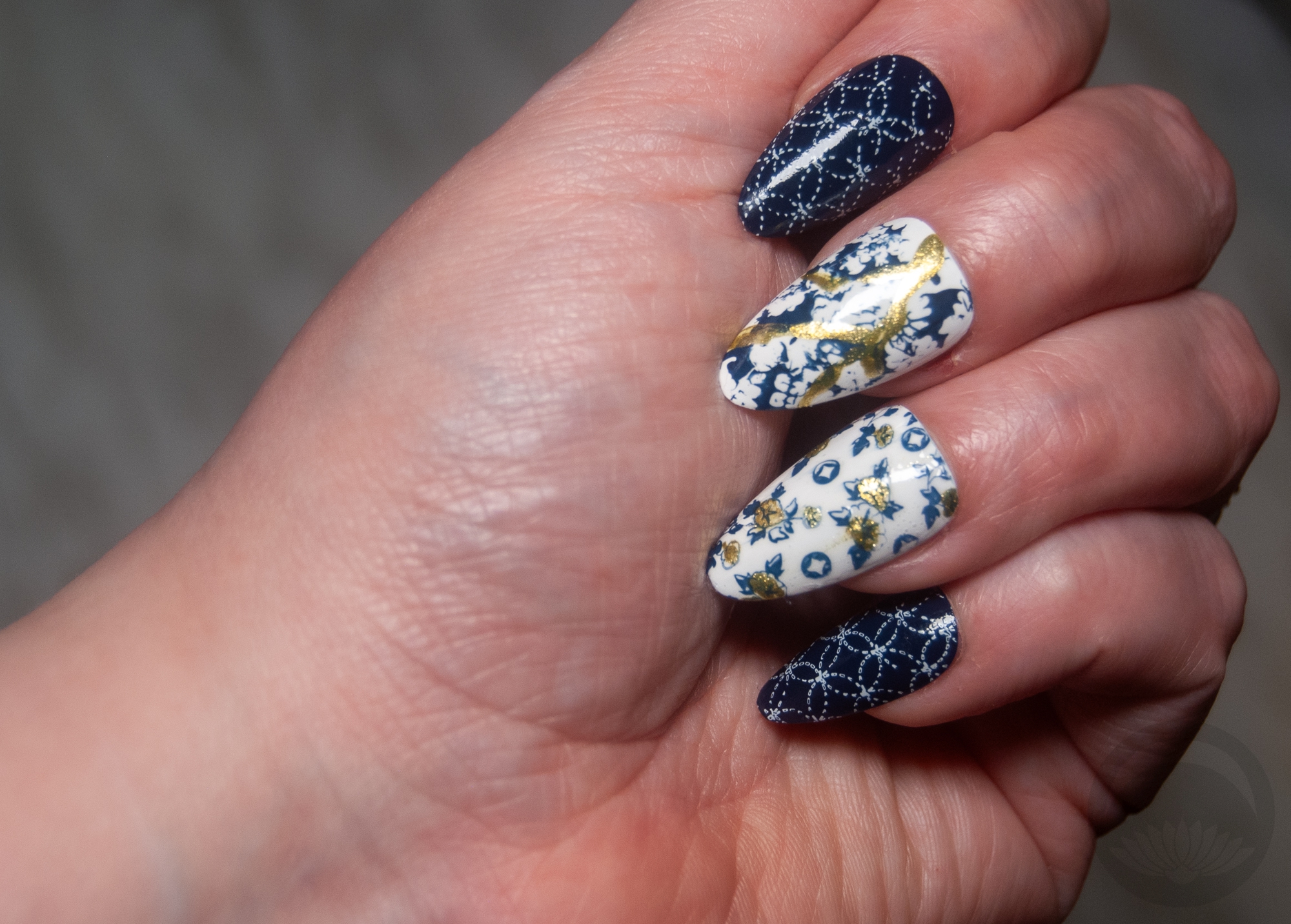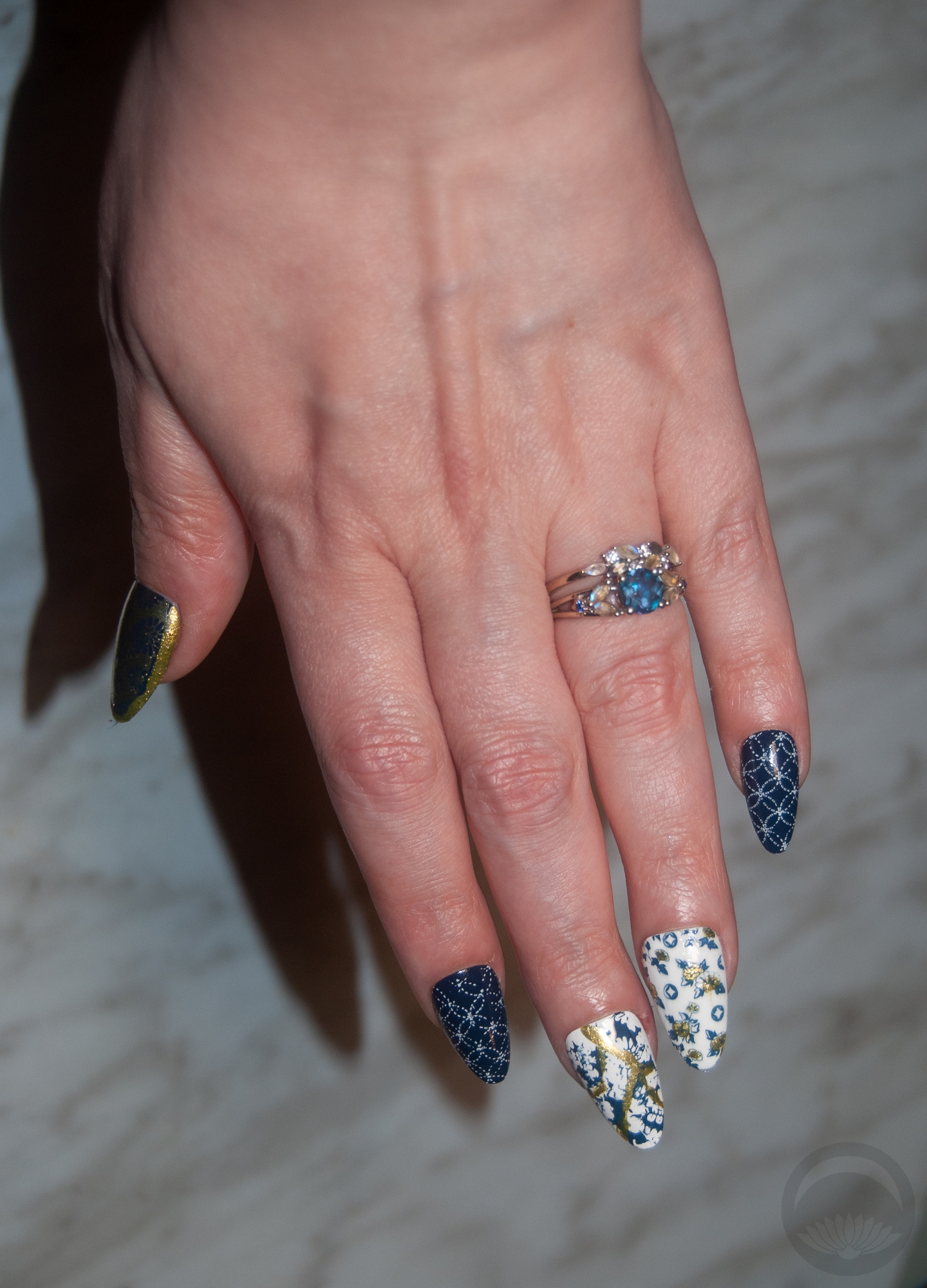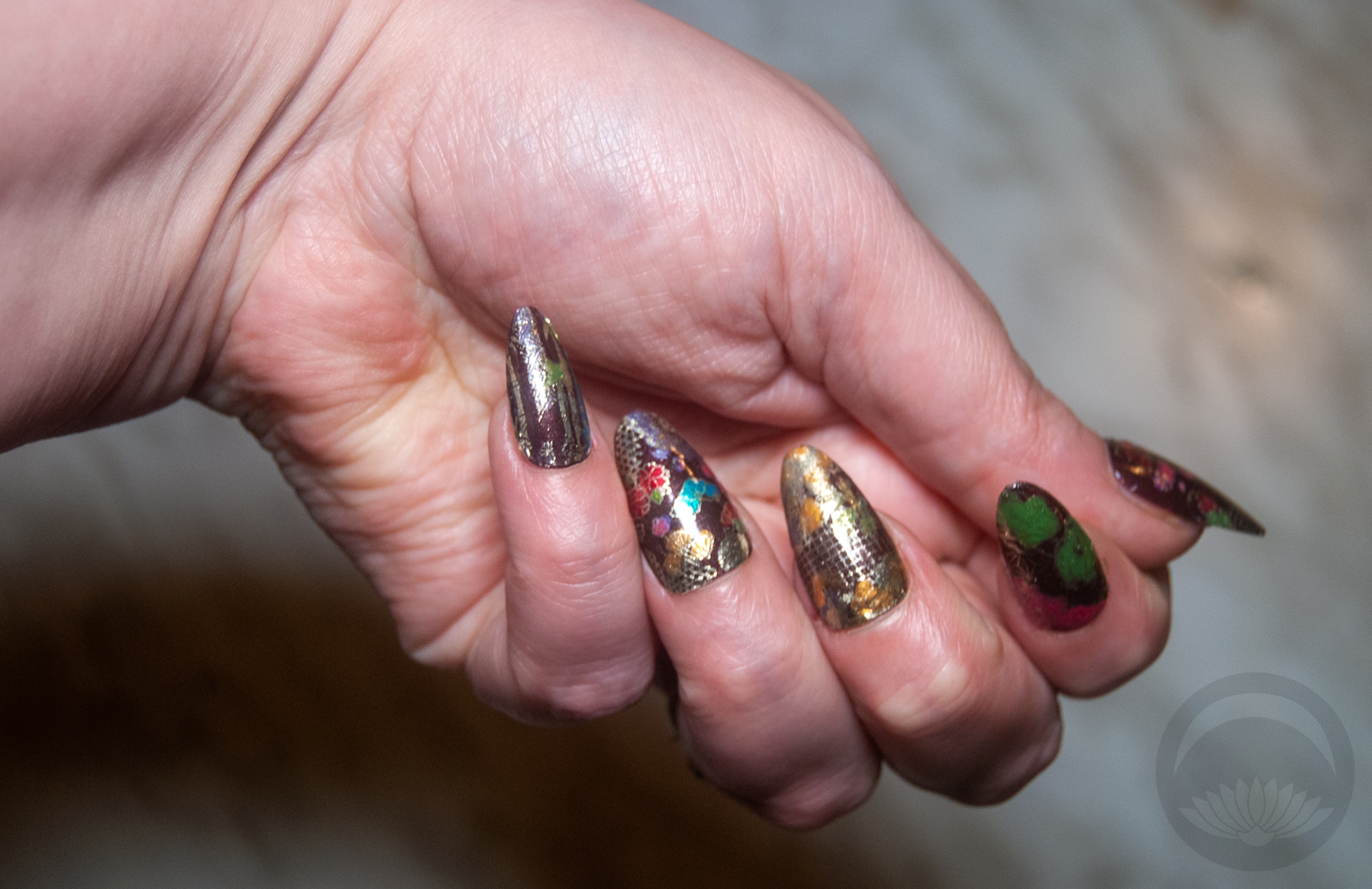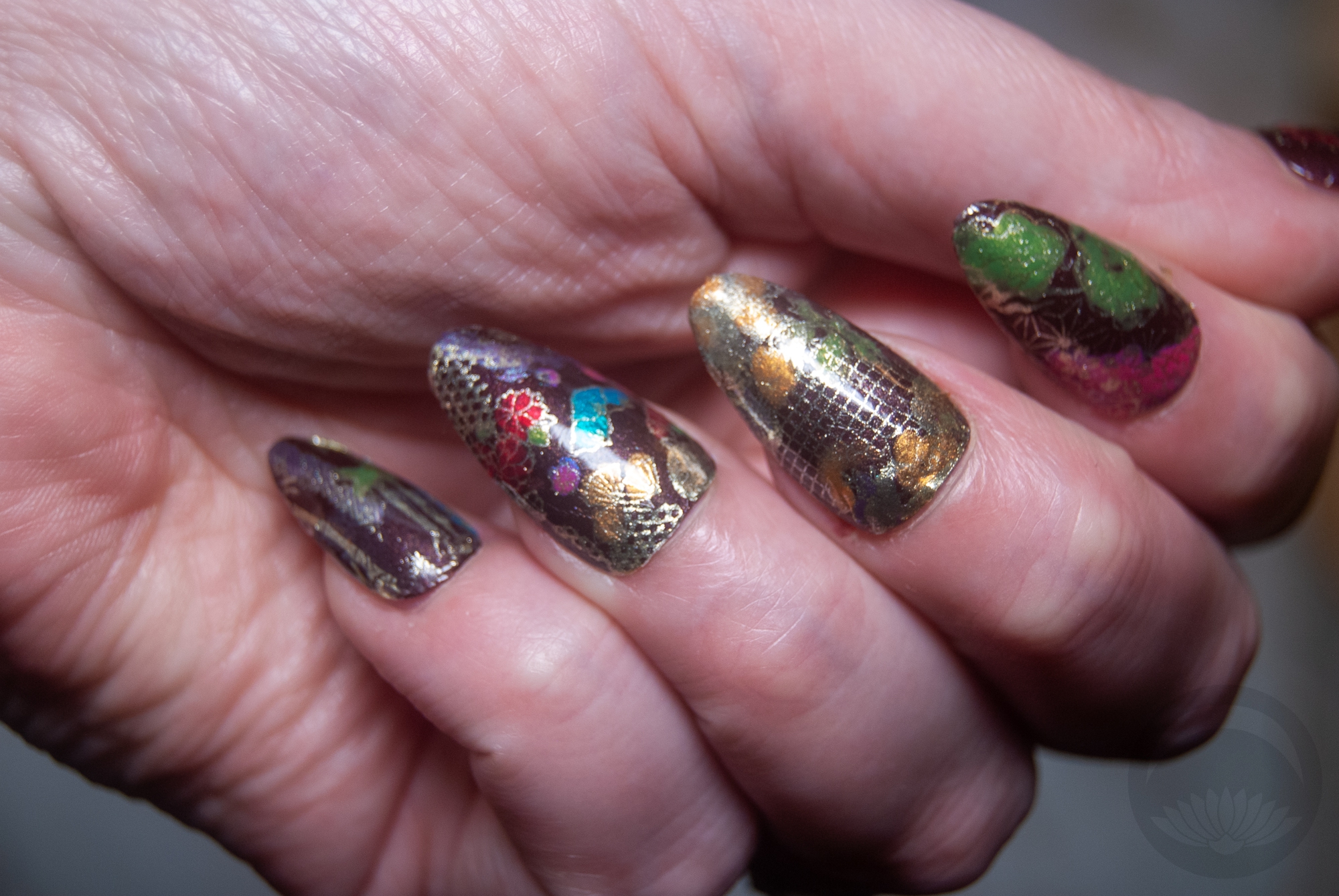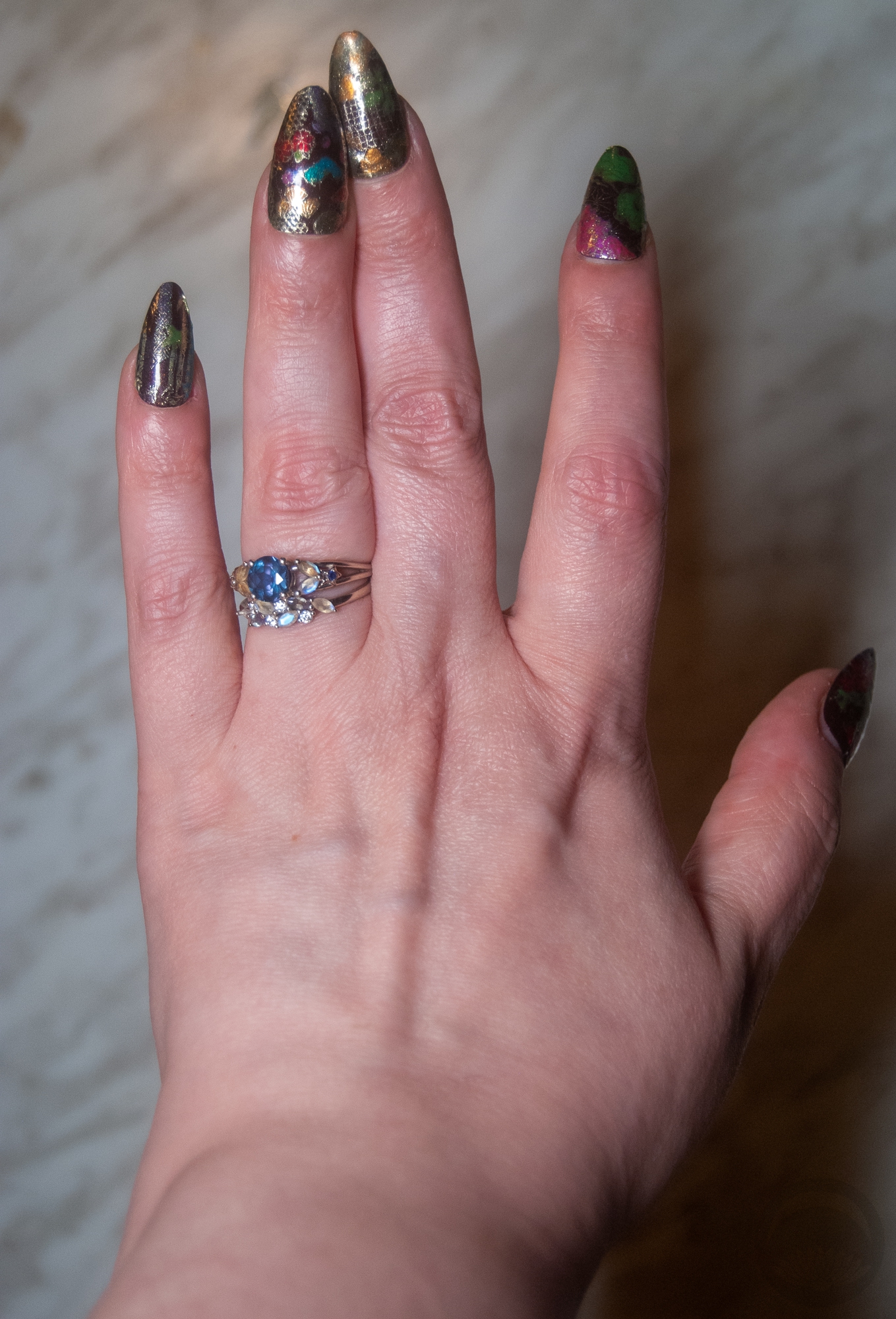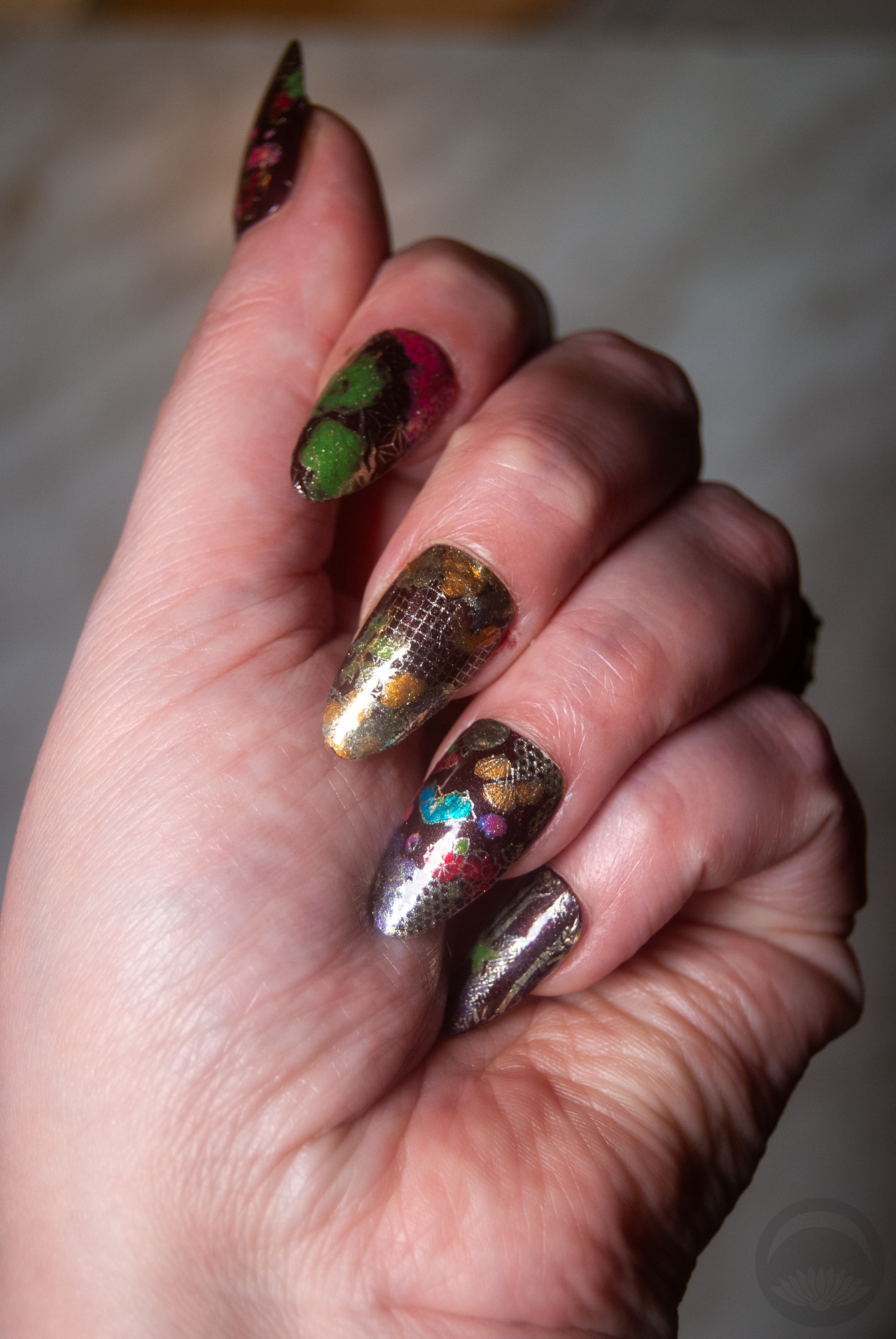
Kimono-inspired Nails with Maniology Stamping Plates

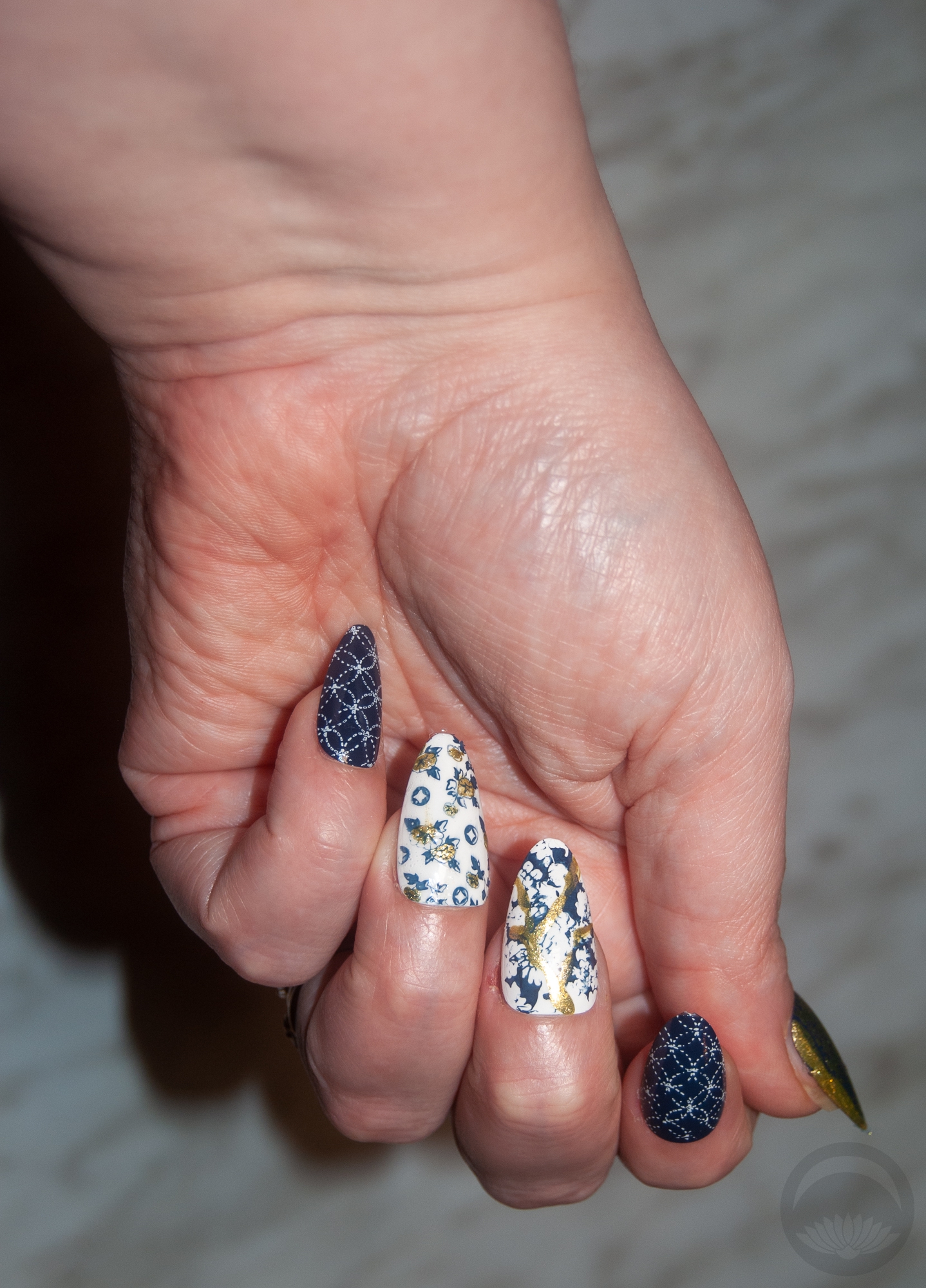
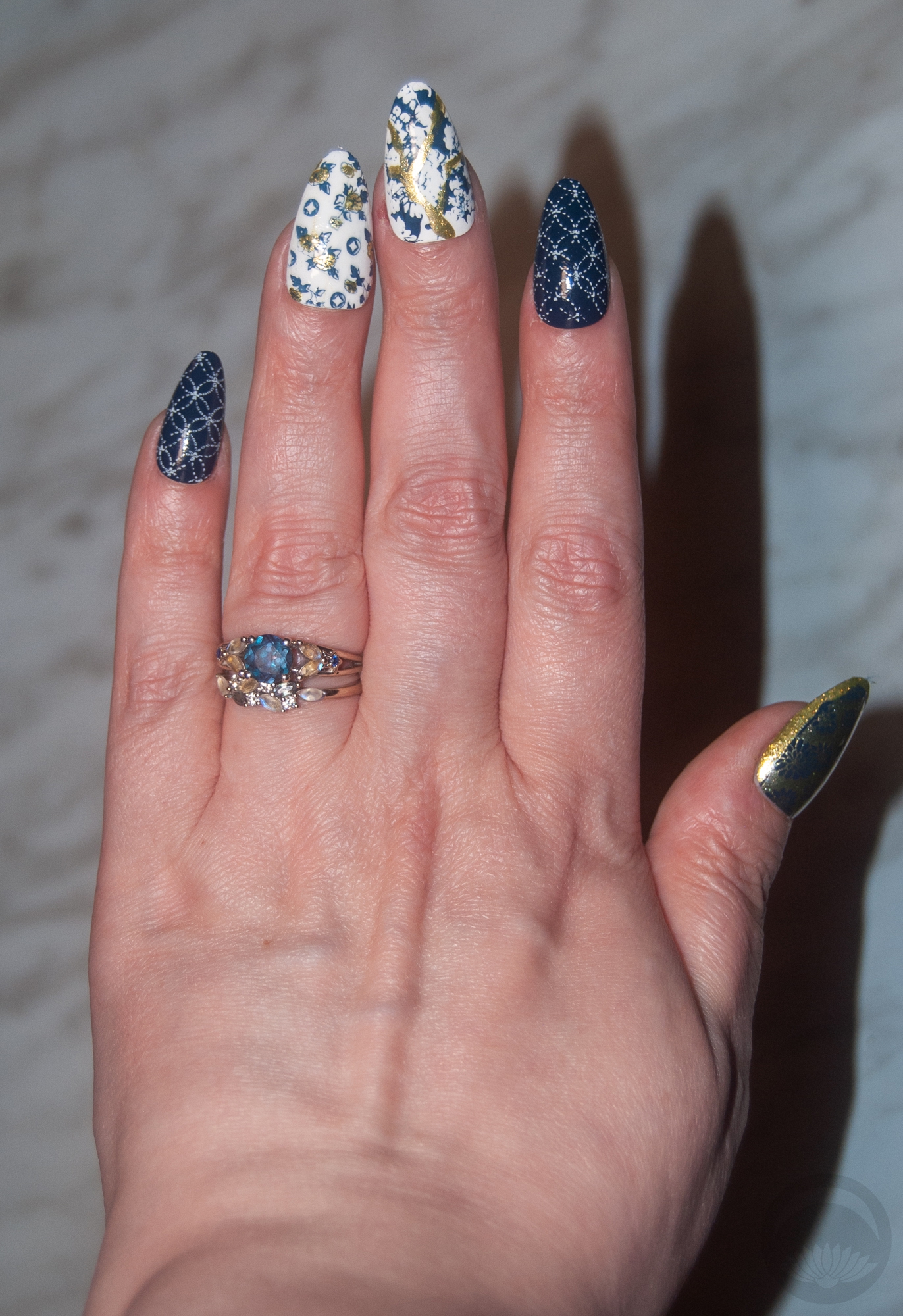
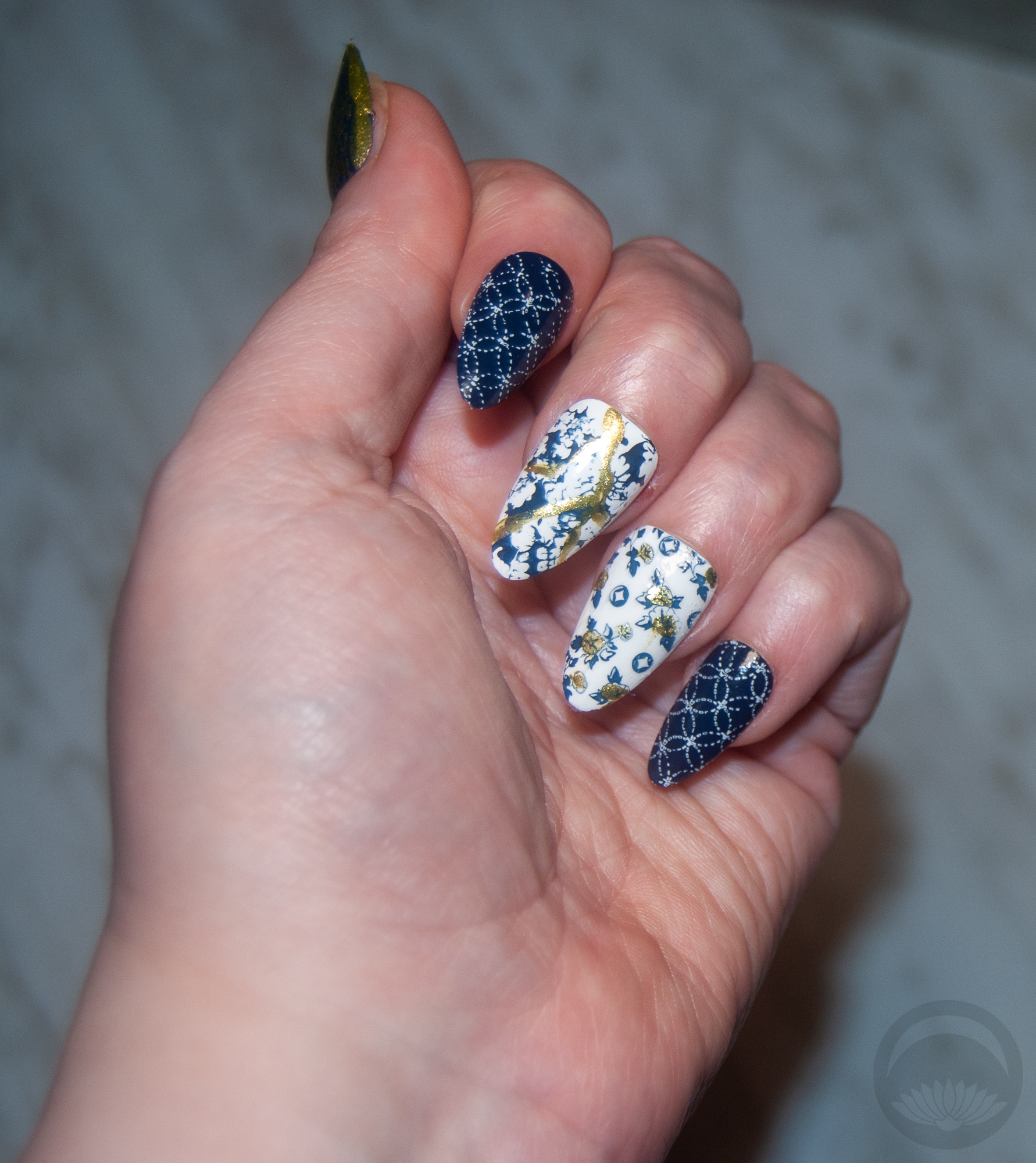
Back when I wore kimono regularly, I used to love matching my nails to my outfits. Obviously in recent years that’s gone out the window, but when Maniology released a set of very clearly kimono-inspired stamping plates I knew I had to give them a shot. Nothing wrong with having a fresh set even if they don’t match your outfit, right?

I knew I wanted to make a set that match this blog, so of course I grabbed the Sashiko Stitch plate. I also fell in love with the Draped in Elegance plate that featured a variety of kimono design motifs.

Where possible, I have linked to the polishes I used. However, I’ve been hoarding collecting nail polish nearly as long as I’ve been hoarding collecting kimono so many of these colours are no longer available. In one case the brand doesn’t even exist anymore! I do recommend getting a good white polish if you plan to use it for stamping, especially over dark colours, but the selection for the yuzen-style manicure has a ton of room for interpretation.


Sashiko & Kintsugi Blog Manicure
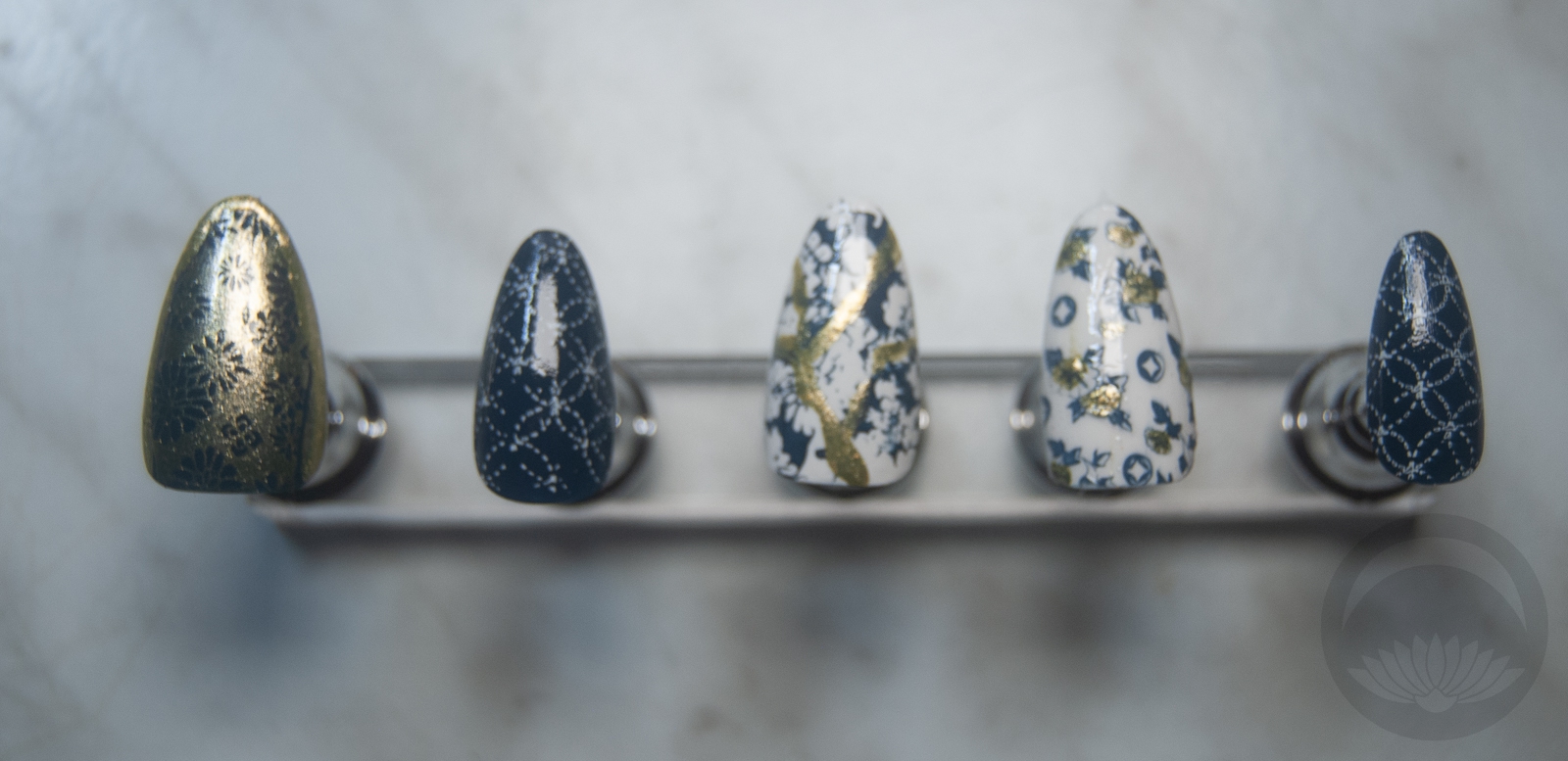
Plate used:
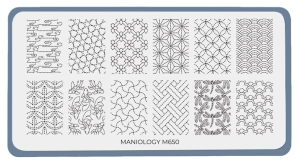
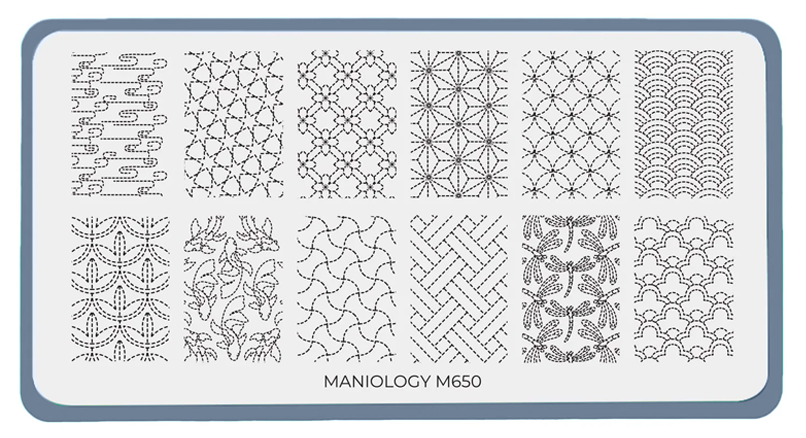
Maniology M650 – Sashiko Stitch
(plus the asagao from the plate below)

Polishes used:

Navy – Expressie Feel The Hype
White – Maniology Bam! (B170)
Gold – Maniology It’s Lit (B262)

fkjjdslkfsjhdljfsdlf


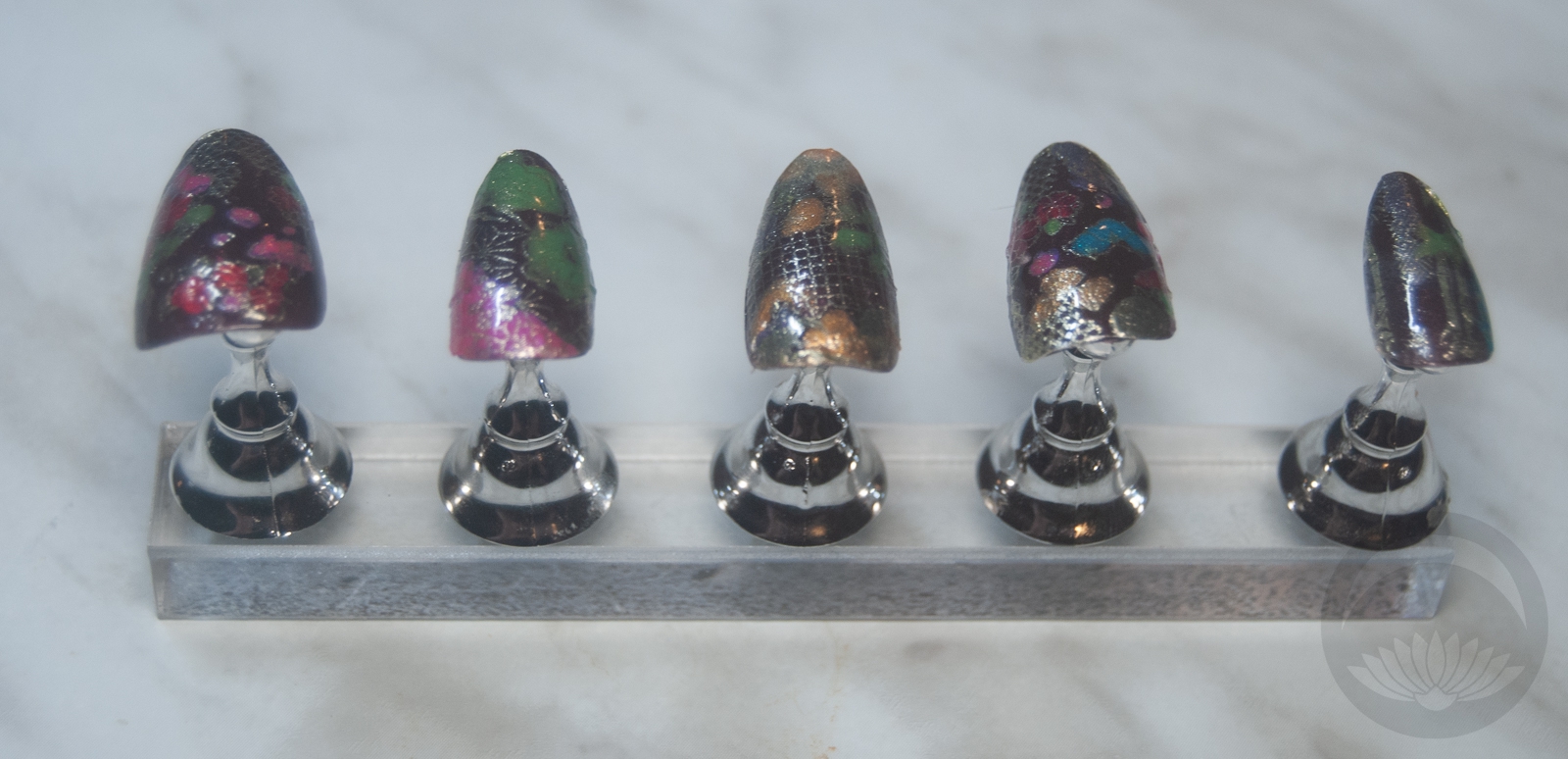
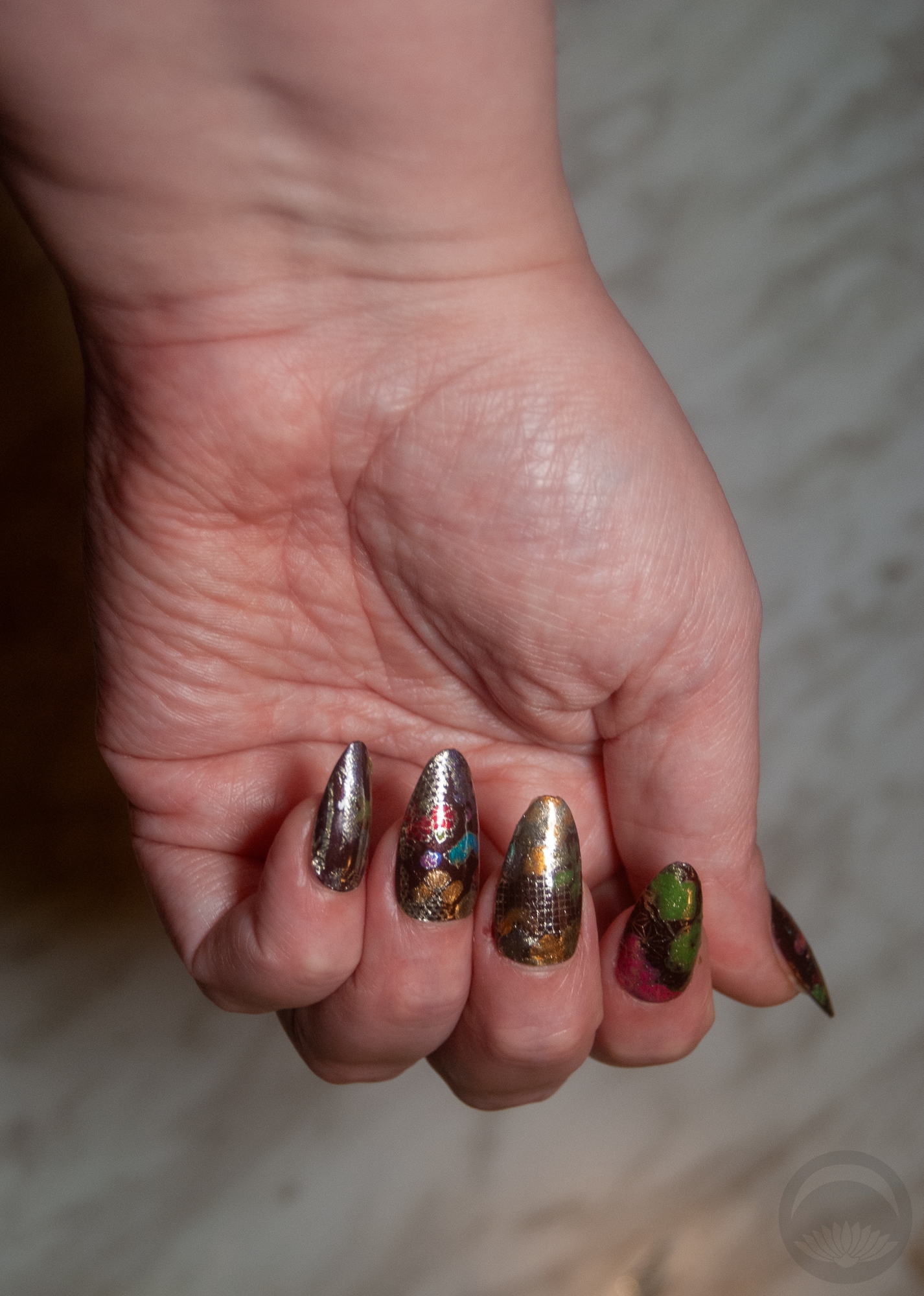
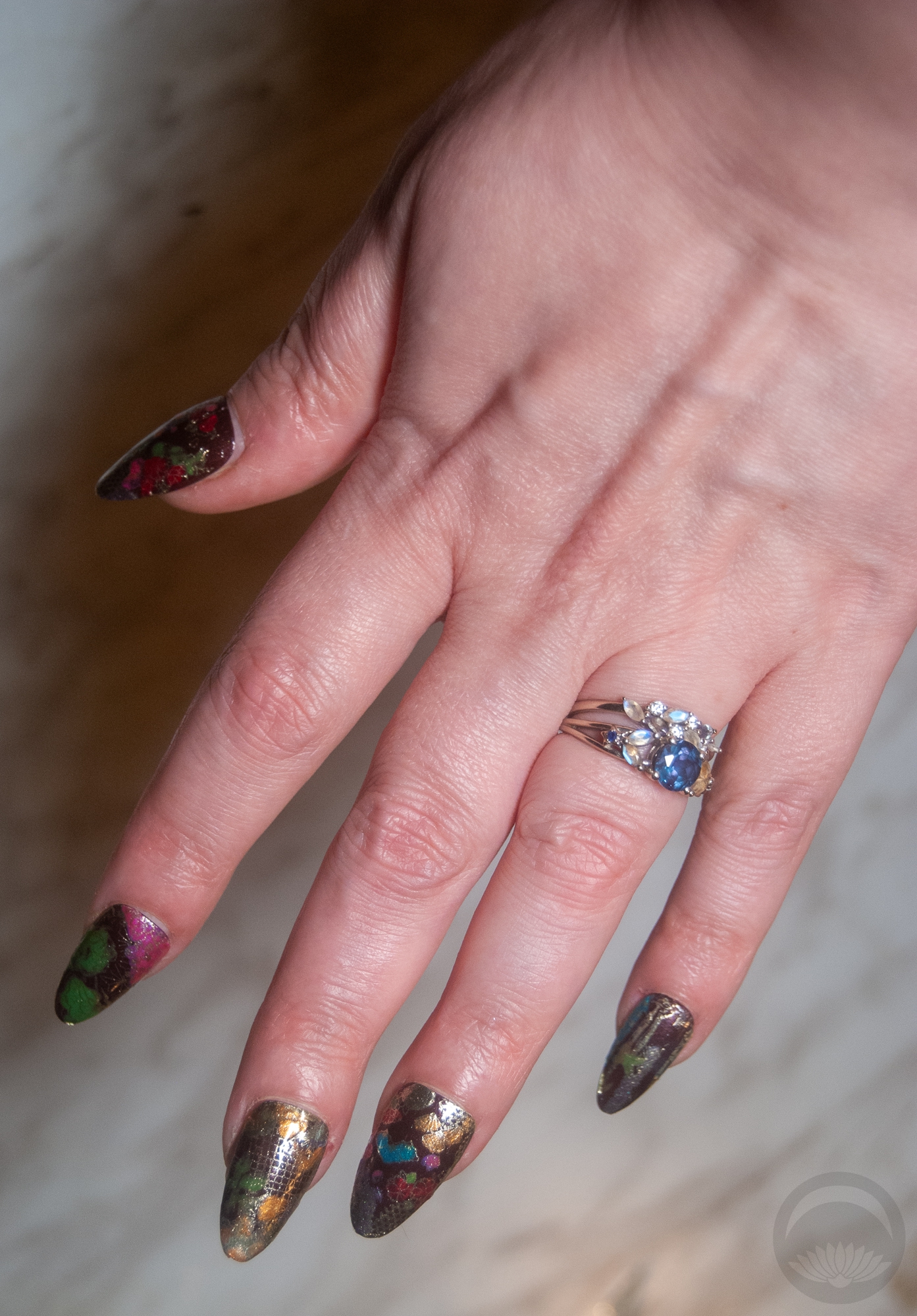
Golden Yuzen Manicure
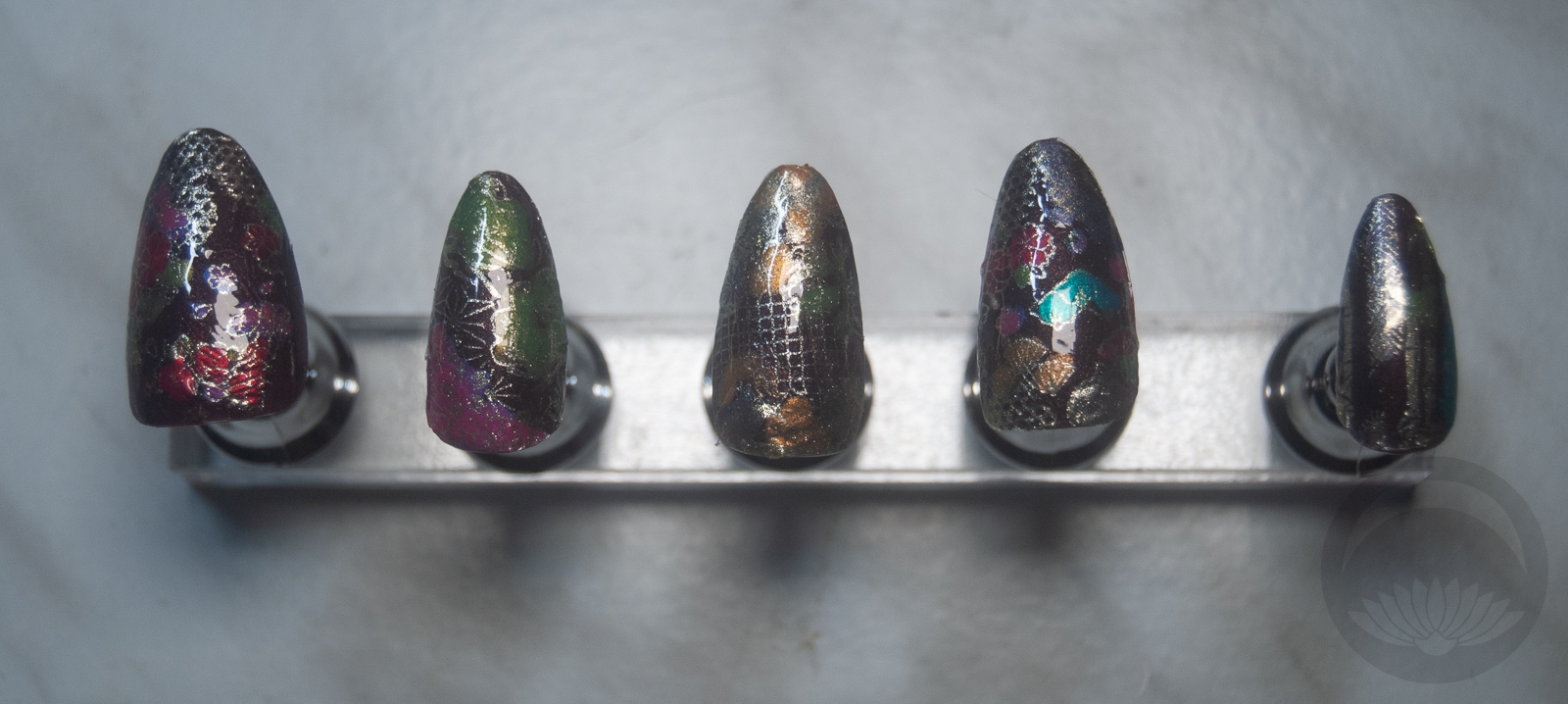
Plate used:
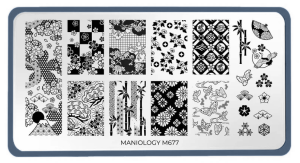
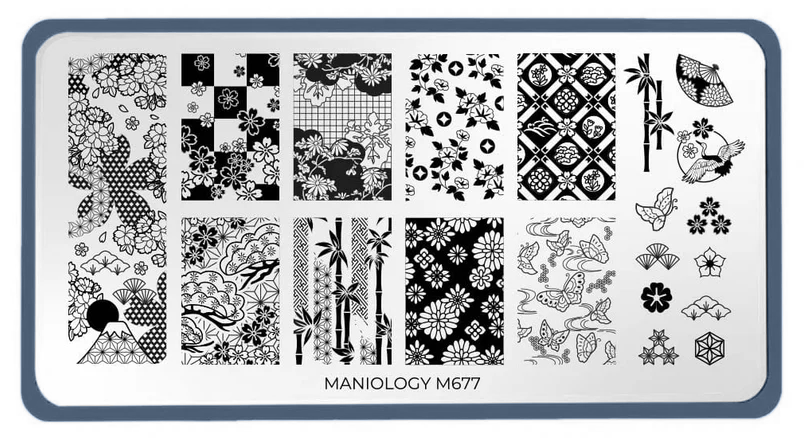
Maniology M677 – Draped in Elegance

Polishes used:

Plum base – NARS Tokaido Express
Gold stamping – Maniology It’s Lit (B262)
Red – Nubar Sultry Red
Orange – OPI Totally Tangerine
Green –  Zoya Midori
Blue –  Revlon Blue Siren
Purple – Revel Nails Whirled View
Pink – CND Tutti Frutti

@kimono_tsuki

Kimono nails featuring @hellomaniology stamping plates マニキュア #着物

♬ original sound – Kimono Tsuki 着物月 – Kimono Tsuki 着物月


Other tools & products used:

Medium almond nail tips
Polish stamper and scraper
Nail art liner brushes
Nail stand
Silicone mat


I did standard straight-to-nail stamping for the sashiko manicure, and made my own transfers for the yuzen-style one. If you’re curious I did make a little video of the process for the transfers, but there are plenty of incredible videos out there that explain how to use stamping plates far better than I could. I would suggest starting with Maniology’s own YouTube page, they have tons of clear and helpful videos.

These plates were a dream to use and the stamping polish made things so smooth and intuitive. I’ve tried some very basic stamping in the past and didn’t have nearly as much luck, and this was my first time doing anything layered or complicated, and I can’t get over how well they turned out. If you want to give yourself a manicure to match your favourite kimono, or just bring a little bit of Japan to your fingertips, I highly recommend these! My only regret is that I didn’t buy more of them. I’ll have to snag some other ones from this collection in the future.

If you buy anything from Maniology, you can use my code TSUKI for 10% off!

 I purchased this item myself and chose to review it.This post contains affiliate link(s). If you choose to purchase, I receive a small rebate or commission which goes to the continued maintenance of this site. 

What’s Old is New Again

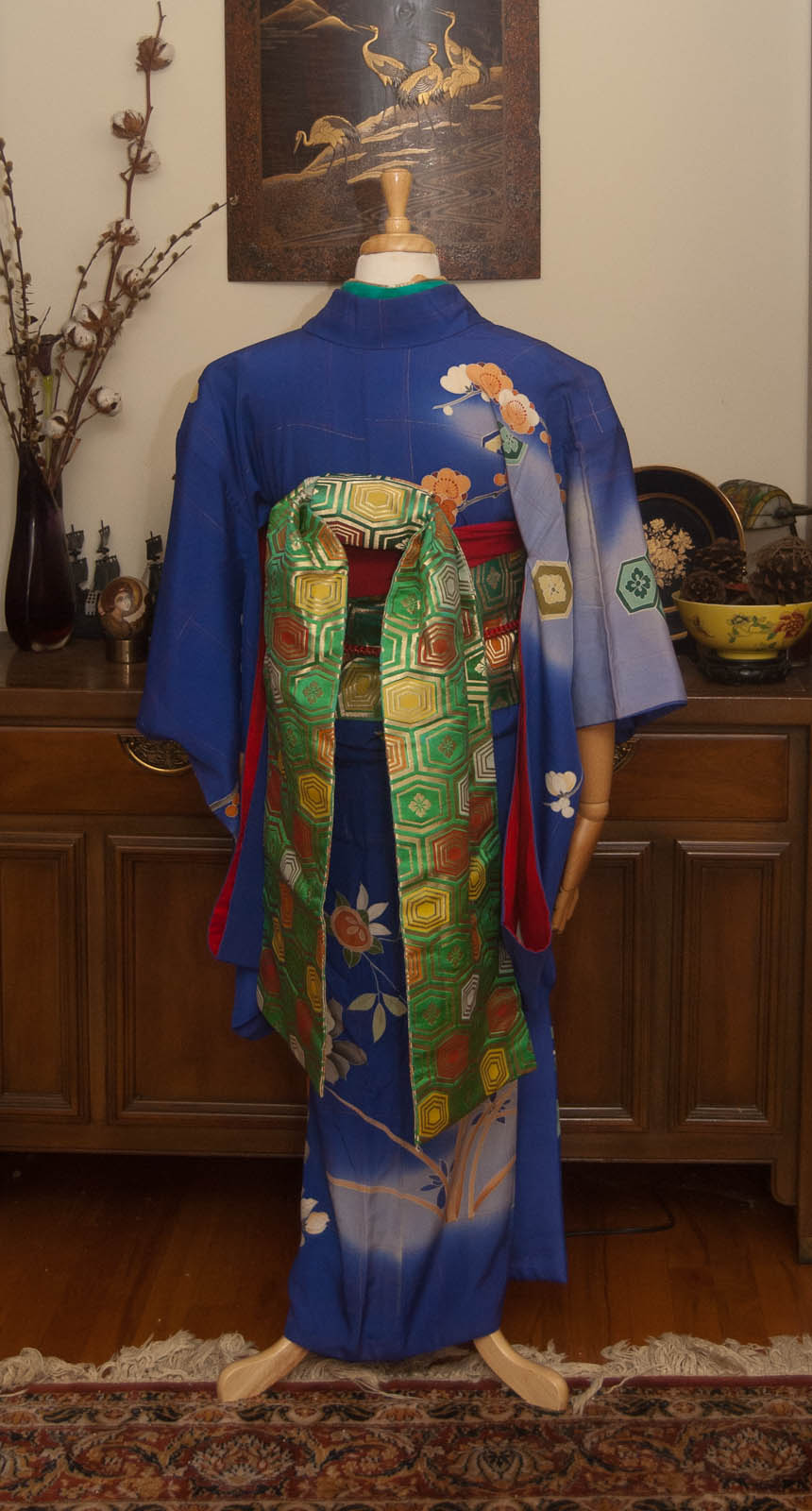
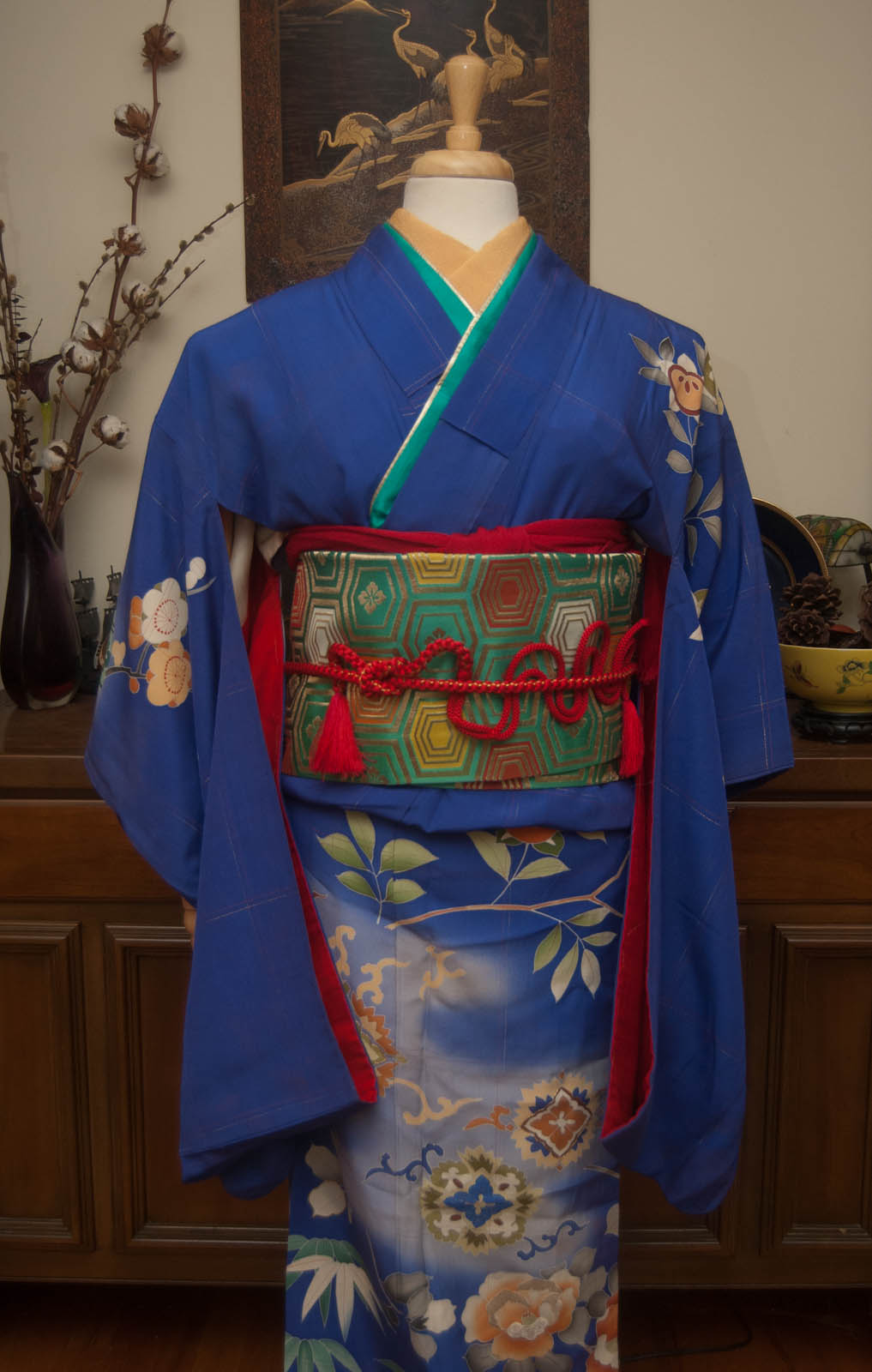
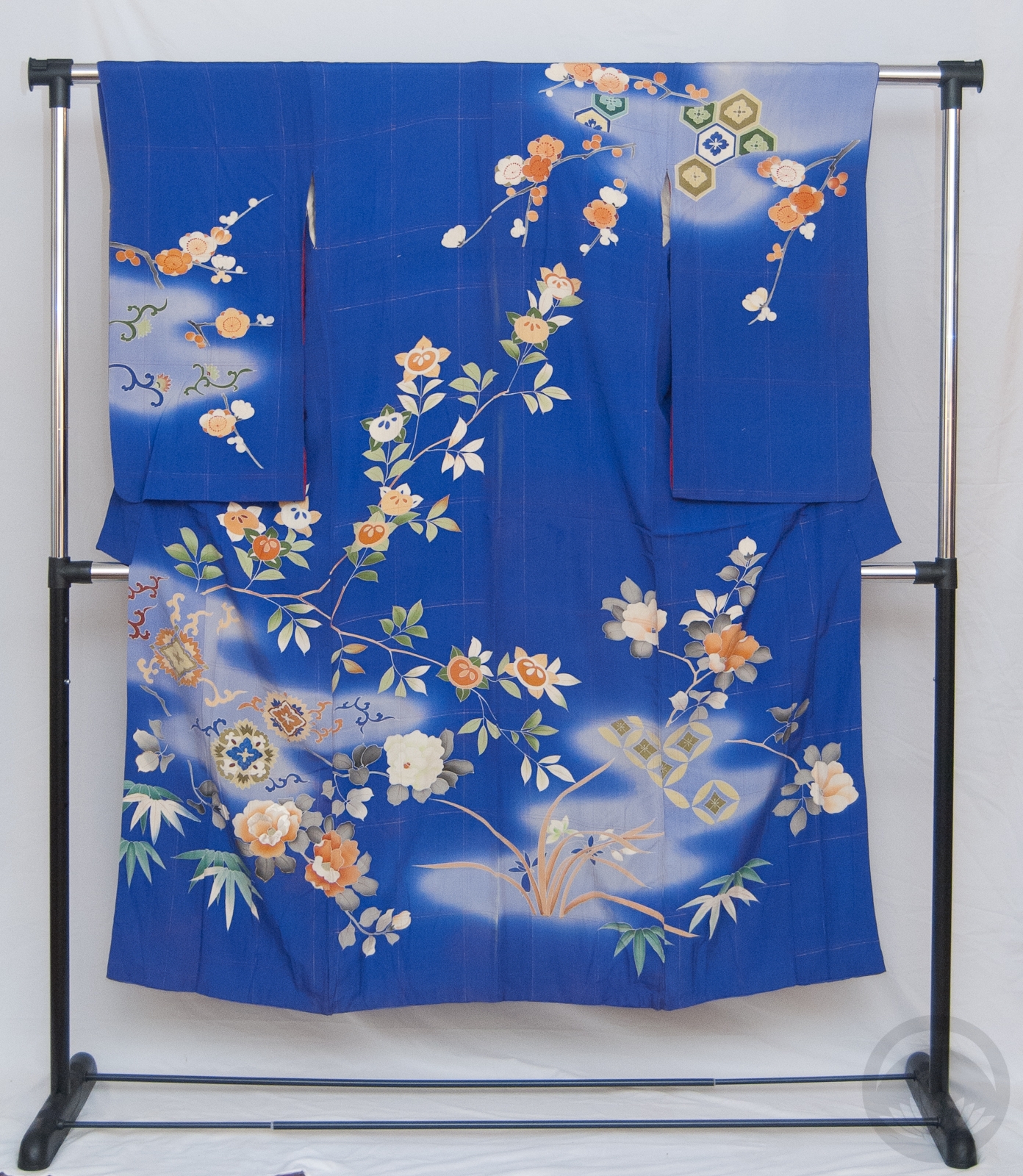
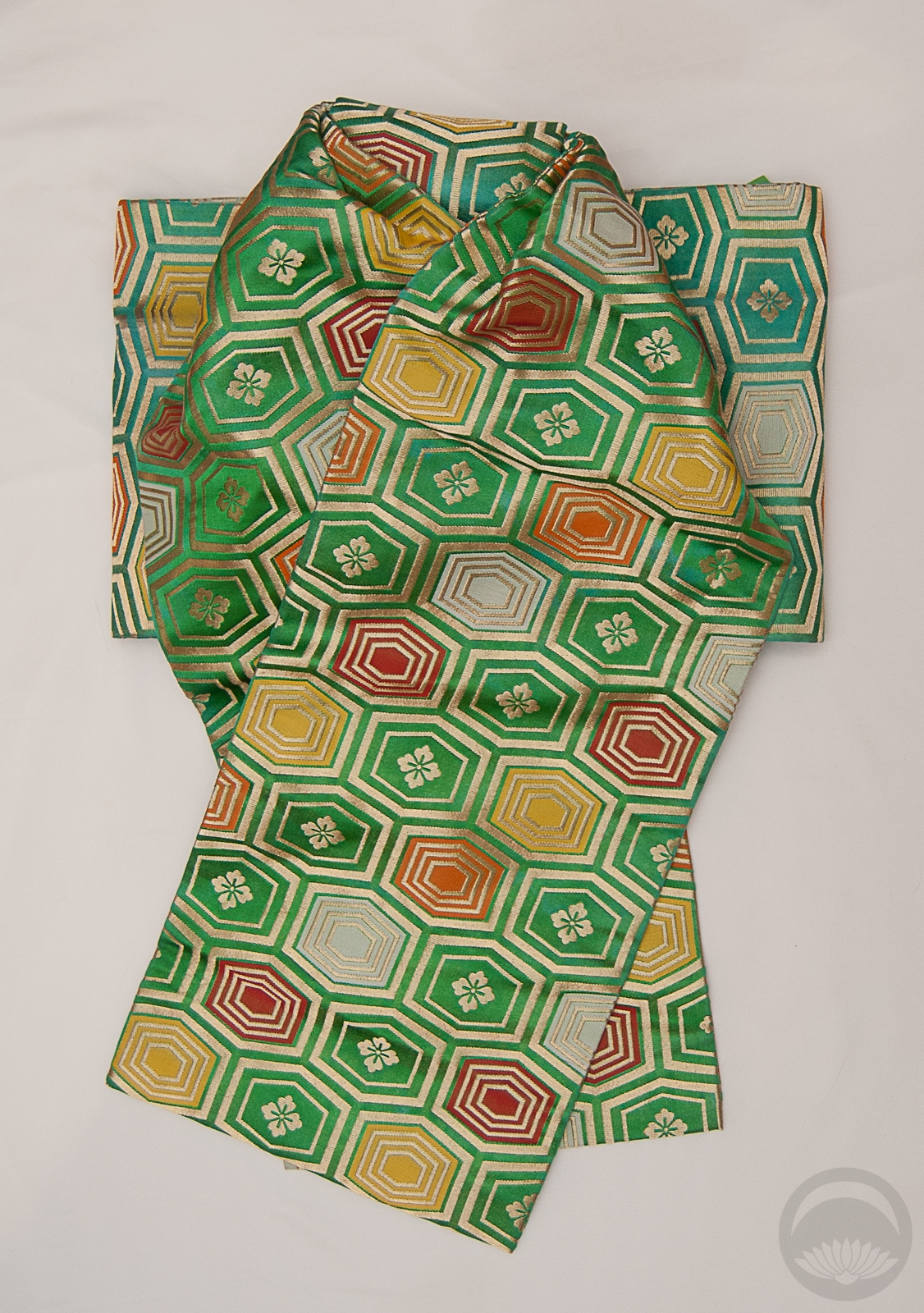
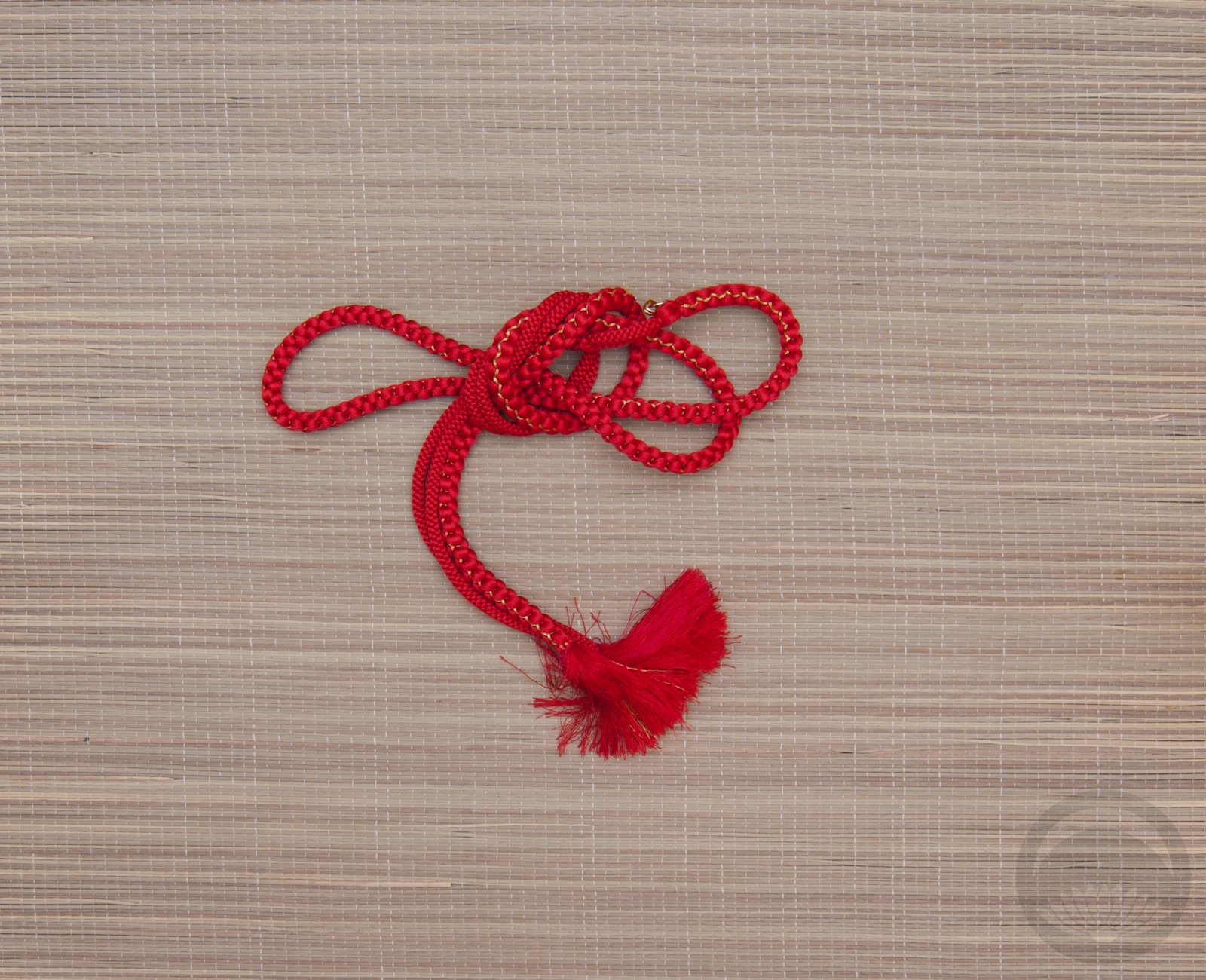
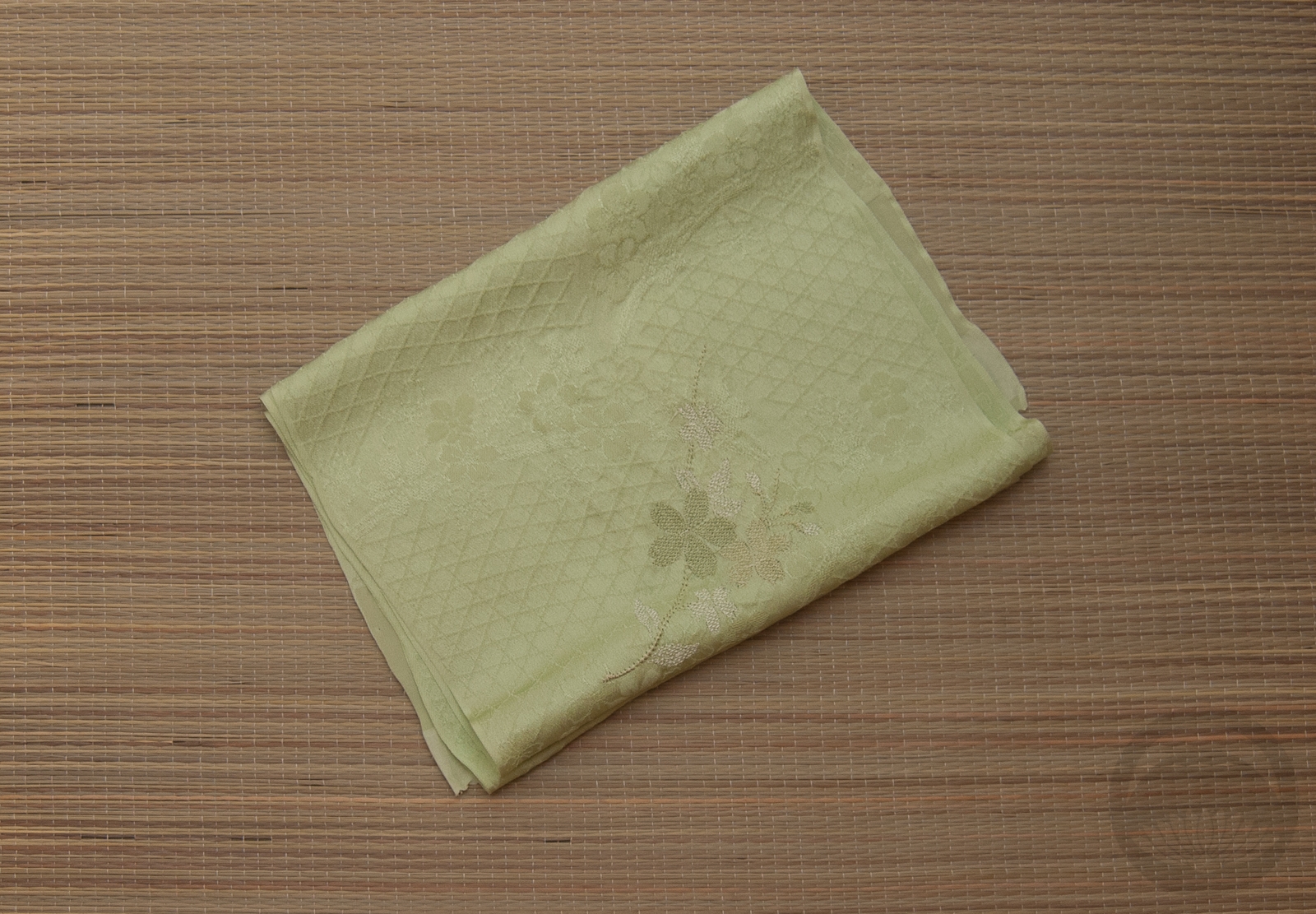
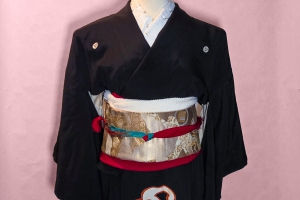
This kimono has always been one of my favourites, but for some reason I’ve never paired it with anything other than an orange obi. Don’t get me wrong, it looks great with orange, but I wanted to diversify a bit. I realised it had the same kikkou pattern on the shoulder as my green darari-style tsuke-obi and I knew exactly where this coordination was heading.

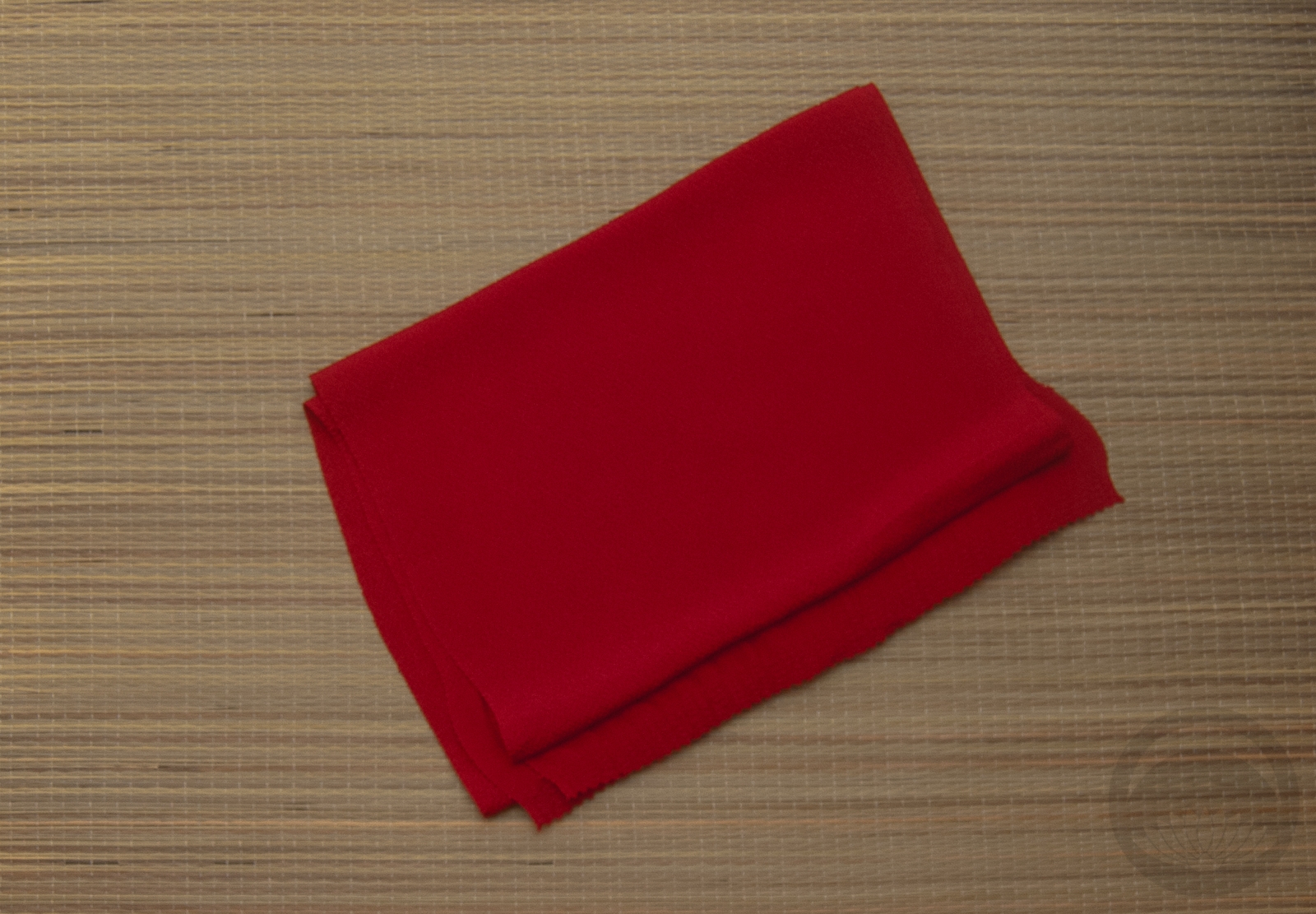
Red accessories because there’s a bit of red in the obi and it helps make the lining pop, and red accents always make an outfit feel a bit more vintage to me! I debated using a dark red haneri shigoki obi as well but it ended up feeling more balanced without it. Even if you’ve planned an outfit entirely in your head, it’s always good to be flexible when you finally get things laid out together. Never feel like you have to stick entirely to your original plans, and that doesn’t only go for kimono coordinating.

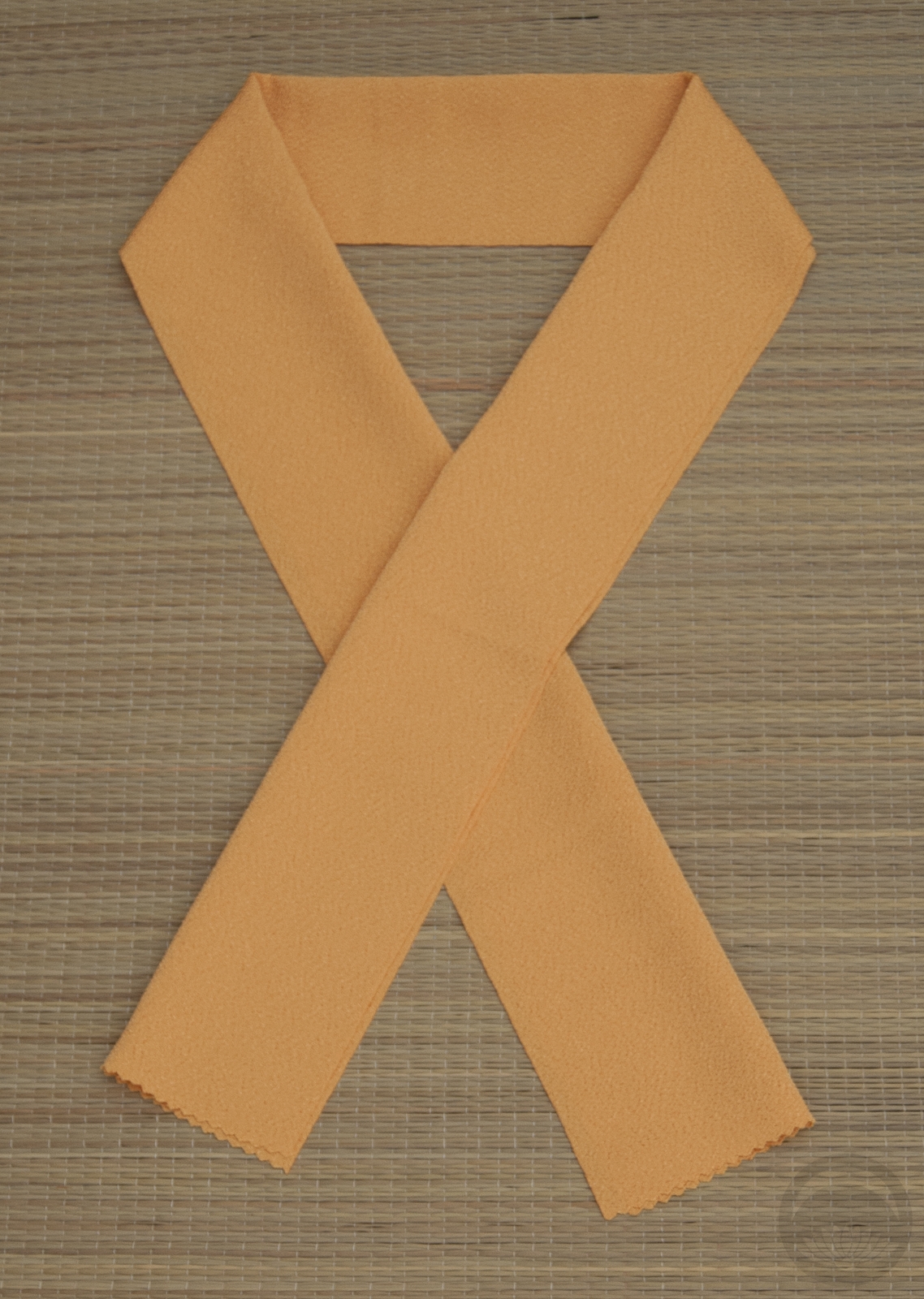
Items used in this coordination

Q is for Quilting

Quilting, the process of sewing two or more layers of fabric together to make a thicker padded material


Q, much like last week’s letter L, is a letter that has no equivalent kana or phoneme in Japanese. Typically, Q-words that are transliterated from other language end up being written with a K-based kana. For example – my last name, Quintal, would become クインタル, or Ku-in-ta-ru. I don’t mind it!

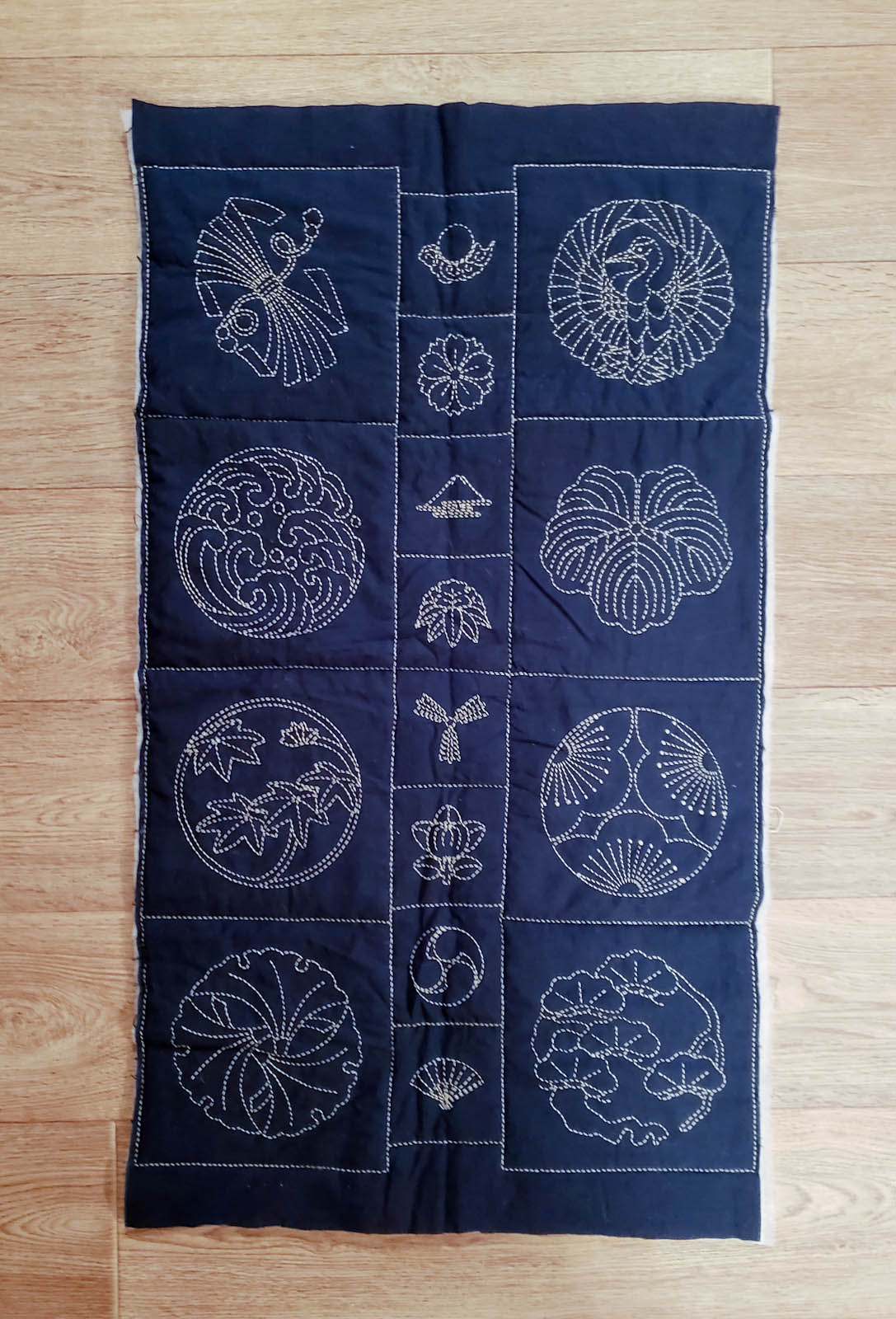
However, it did make finding a topic for today’s entry a little difficult. It took me a while but then it hit me; sashiko is a form of quilting. I thought I’d share a larger project I finished a while back. It’s a beautiful pattern, a collage of kamon, or family crests, designed by Susan Briscoe.

I haven’t gotten around to edging it yet but it will eventually be a wall-hanging, possibly double-sided. I haven’t figured out the details yet. I love sashiko stitching because it’s technically such a simple thing, but the results are so striking, especially when it’s done with white thread on dark indigo fabric like this. I love that it’s often used as a very practical, utilitarian handicraft, reinforcing fabric and adding weight and heft for warmth. And yet, it’s so beautifully decorative!

If you’re interested in doing this panel yourself, it’s available directly from the artist who designed it, Susan Briscoe.

Taisho Blues

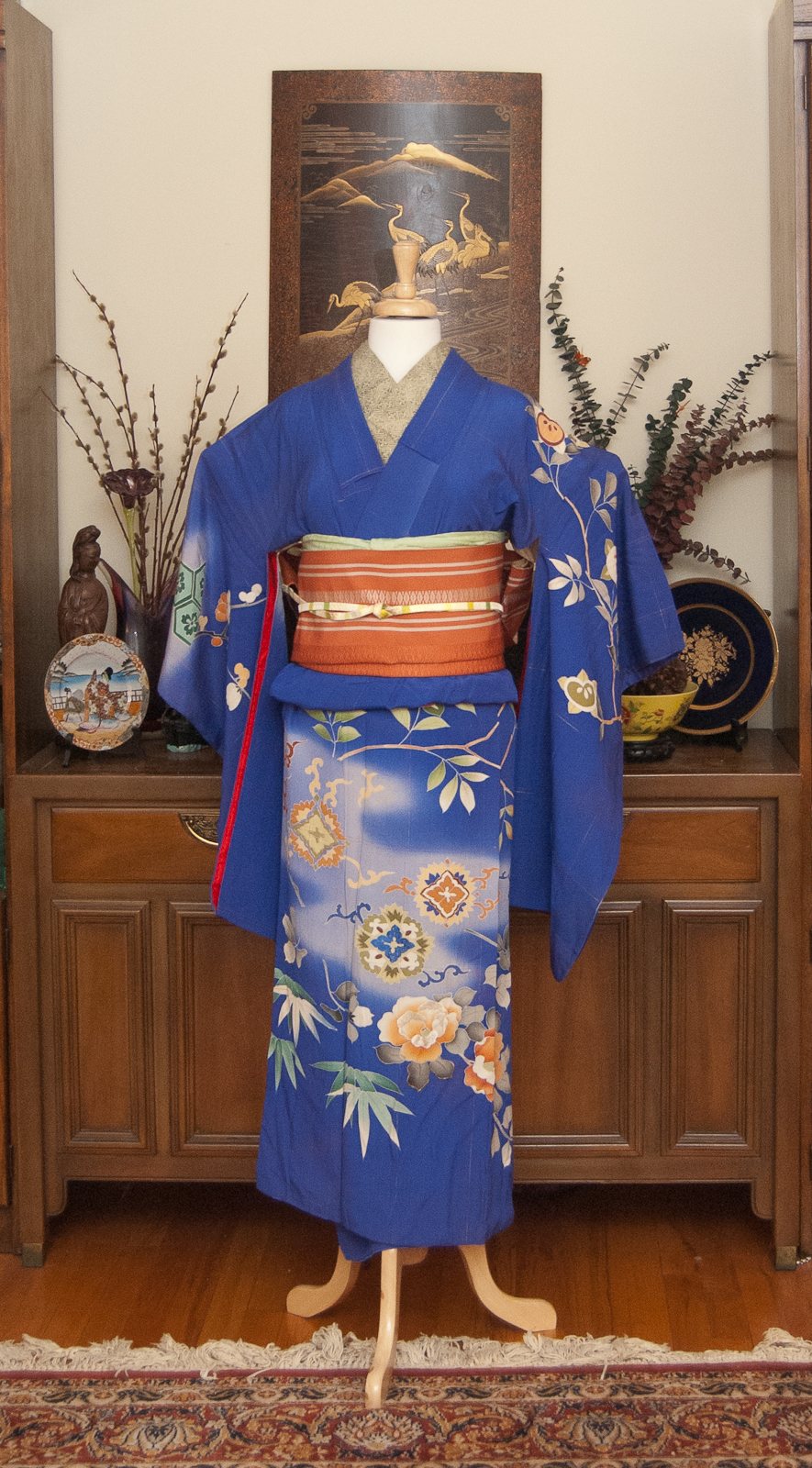
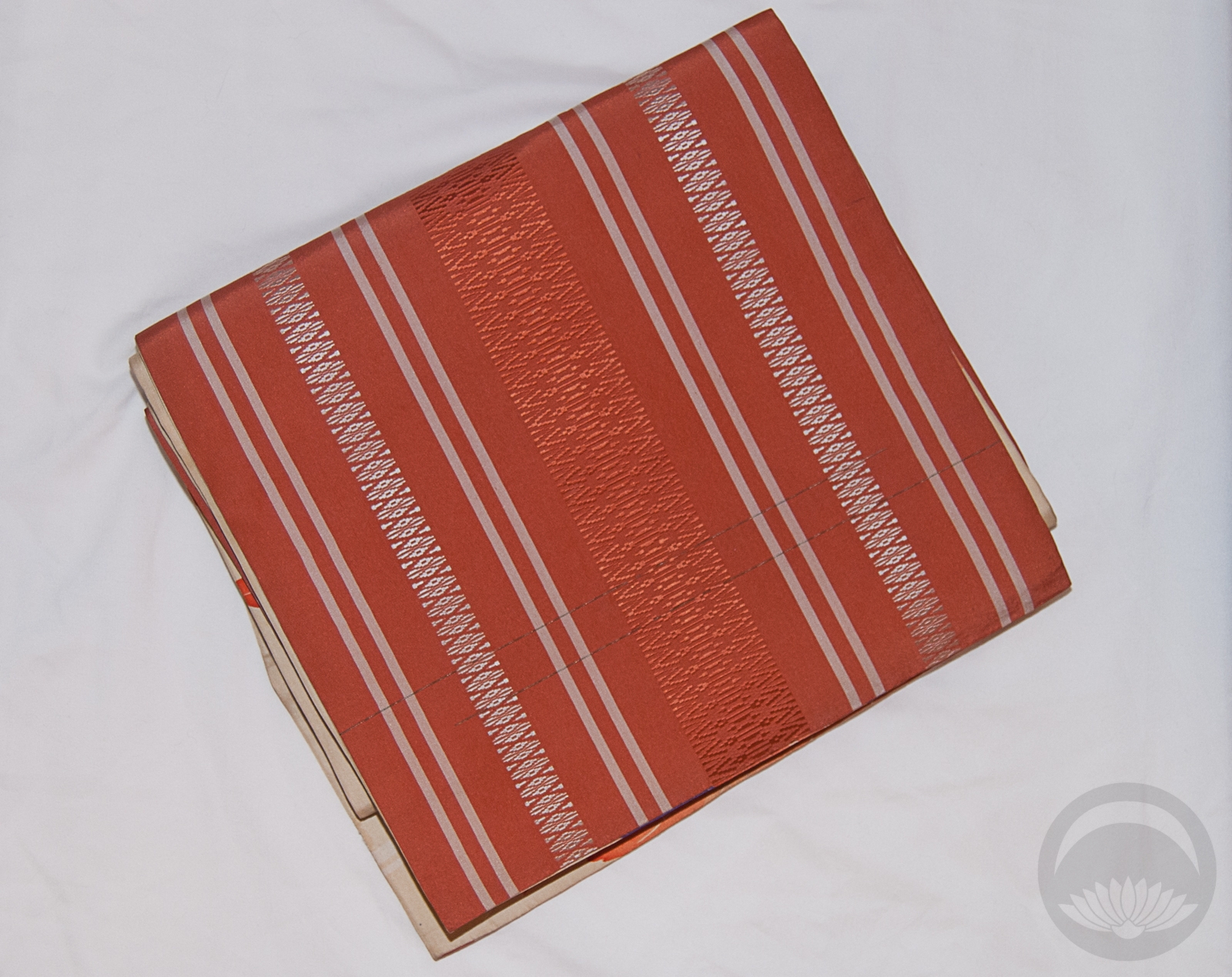
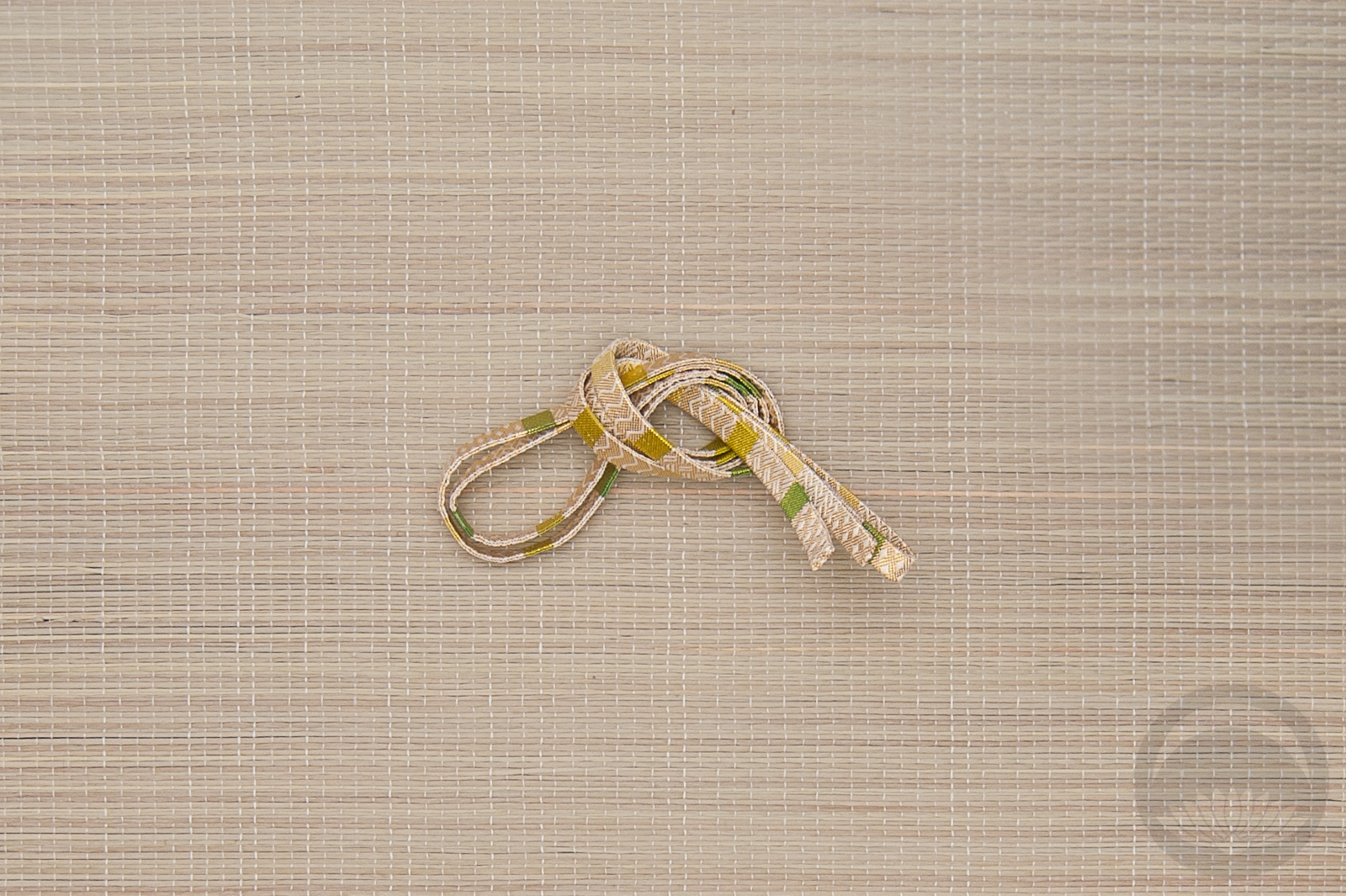
I know, I know, I said the last outfit I posted would be around for a while. Work continues apace on updating and redoing my visual catalogue, and when I took out this Taisho-era beauty I love so much, I realised I’d never coordinated her with this vintage orange hakata obi and that seemed like a crime. They feel like they were made for each other. But then again, I think hakata goes with everything. When I first got it, I paired it with an orange obi and while I loved the colour contrast, the obi was a metallic, Showa-era blingfest that felt incongruous with the soft vintage feel of the kimono. Springy green accessories were the perfect finishing touch, including a brand new obiage I’ve never used before.

If you’re a regular reader, you know that for whatever reason I’ve always had bad luck with tying obi in tsunodashi musubi but I was really in the groove after putting this outfit together and I figured I’d give it another shot. I’m really glad I did, because it worked out perfectly. The ohashori is quite puffy-looking, which is unfortunate, but sometimes it’s inevitable due to the shape of the mannequin.

Now this is definitely an outfit I’m happy to leave on the mannequin until I’m finished everything else I have in the works.

Items used in this coordination

Art Gallery – Vintage kimono artwork

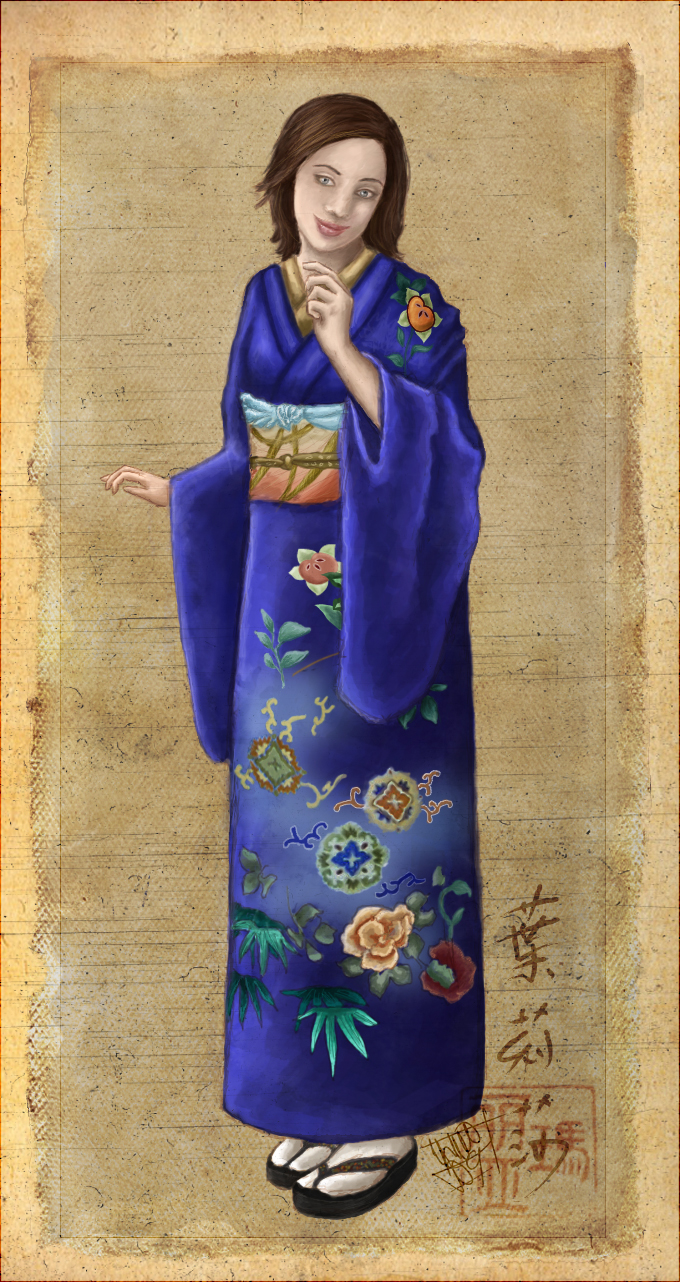
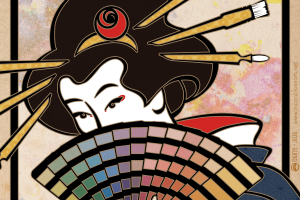
Tiranaki (Naki for short) is someone I met on Gaia quite a while ago while we were both moderators. Naki is a lovely, talented lady. Aside from her awesome artwork, she makes beautiful handcrafted jewelry and hair ornaments and designs funky clothing and accessories, under the banner of Koana Designs. She makes some great origami-paper kanzashi that would look absolutely love with kimono, so definitely give the site a look.

The kimono she drew is quite ornate and doesn’t fit me ideally so it was fairly rumpled in the pictures I provided for her so the amount of detail she put into it is a testament to her skill. I love how both the background and the painting style have a wonderful vintage feel to them, it suits the age of the kimono, I think. To view the larger version, see iton her DeviantArt or click the one in this post, as always.