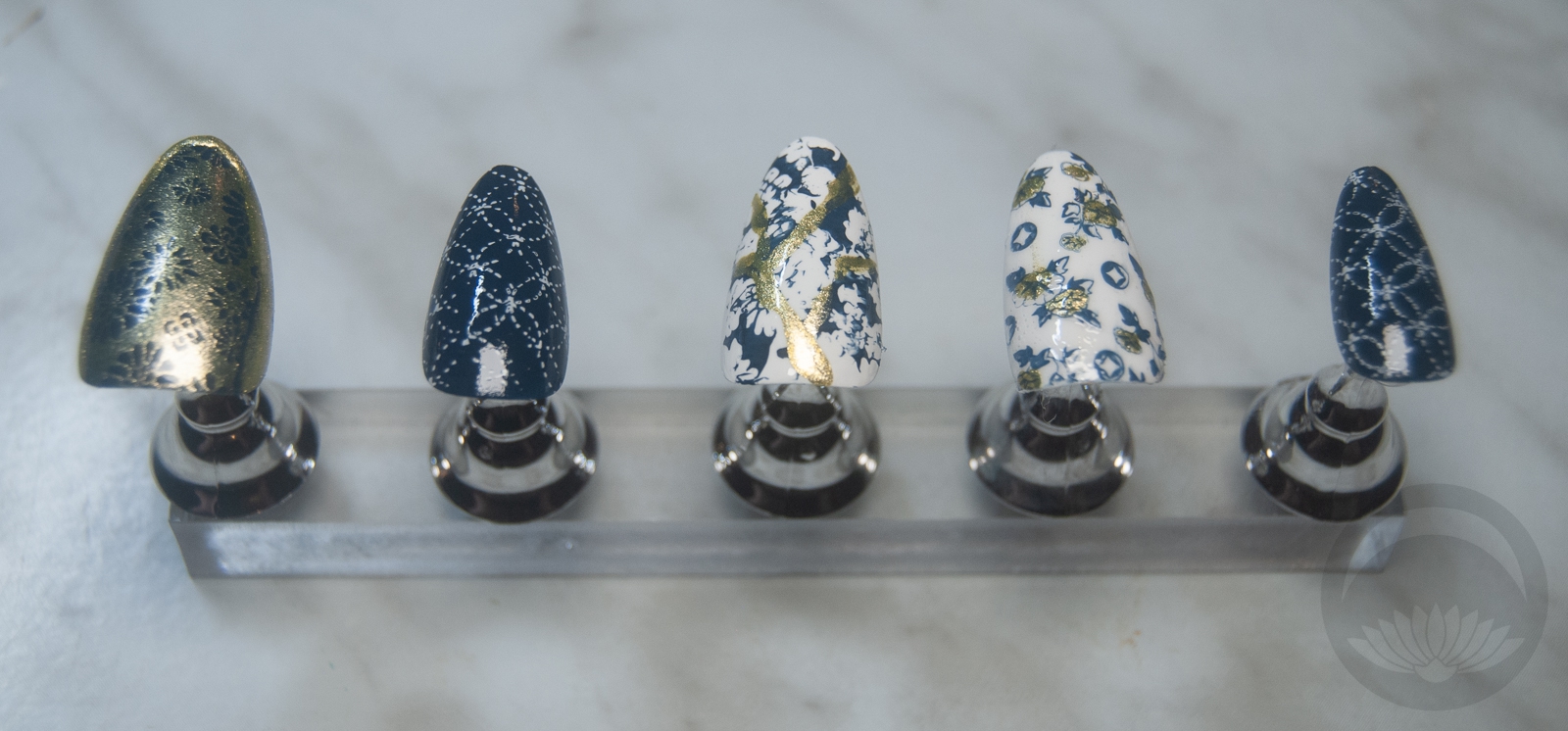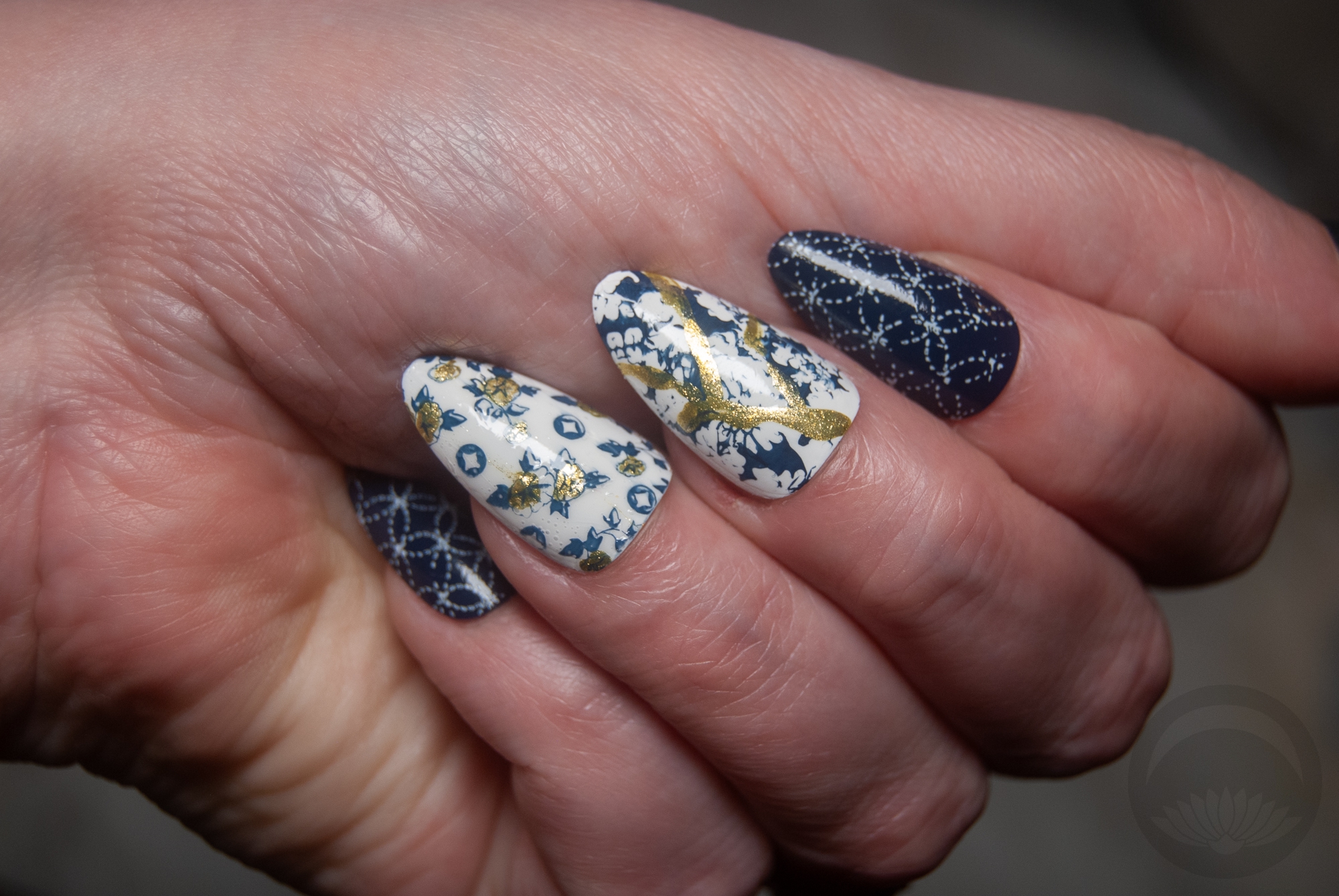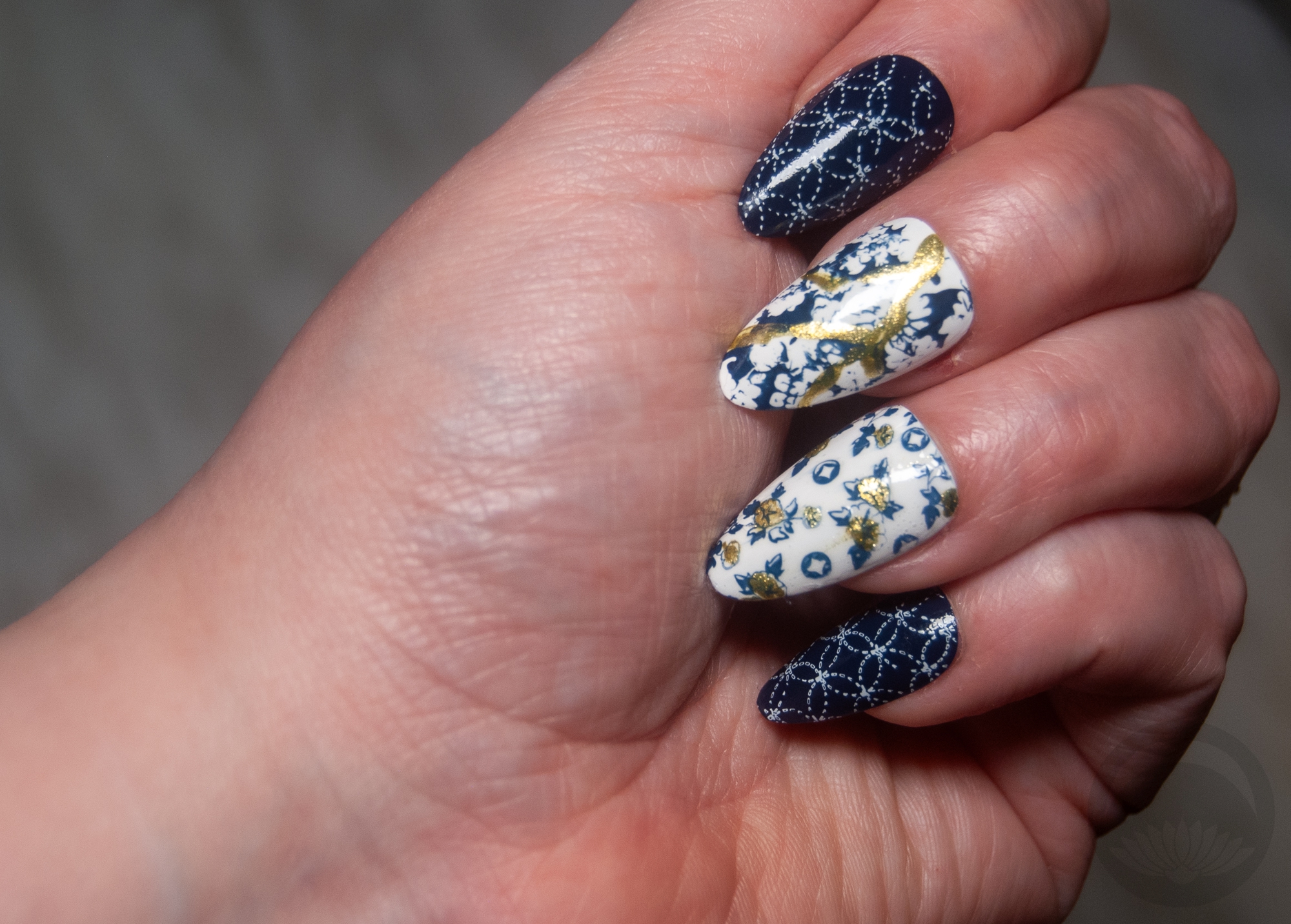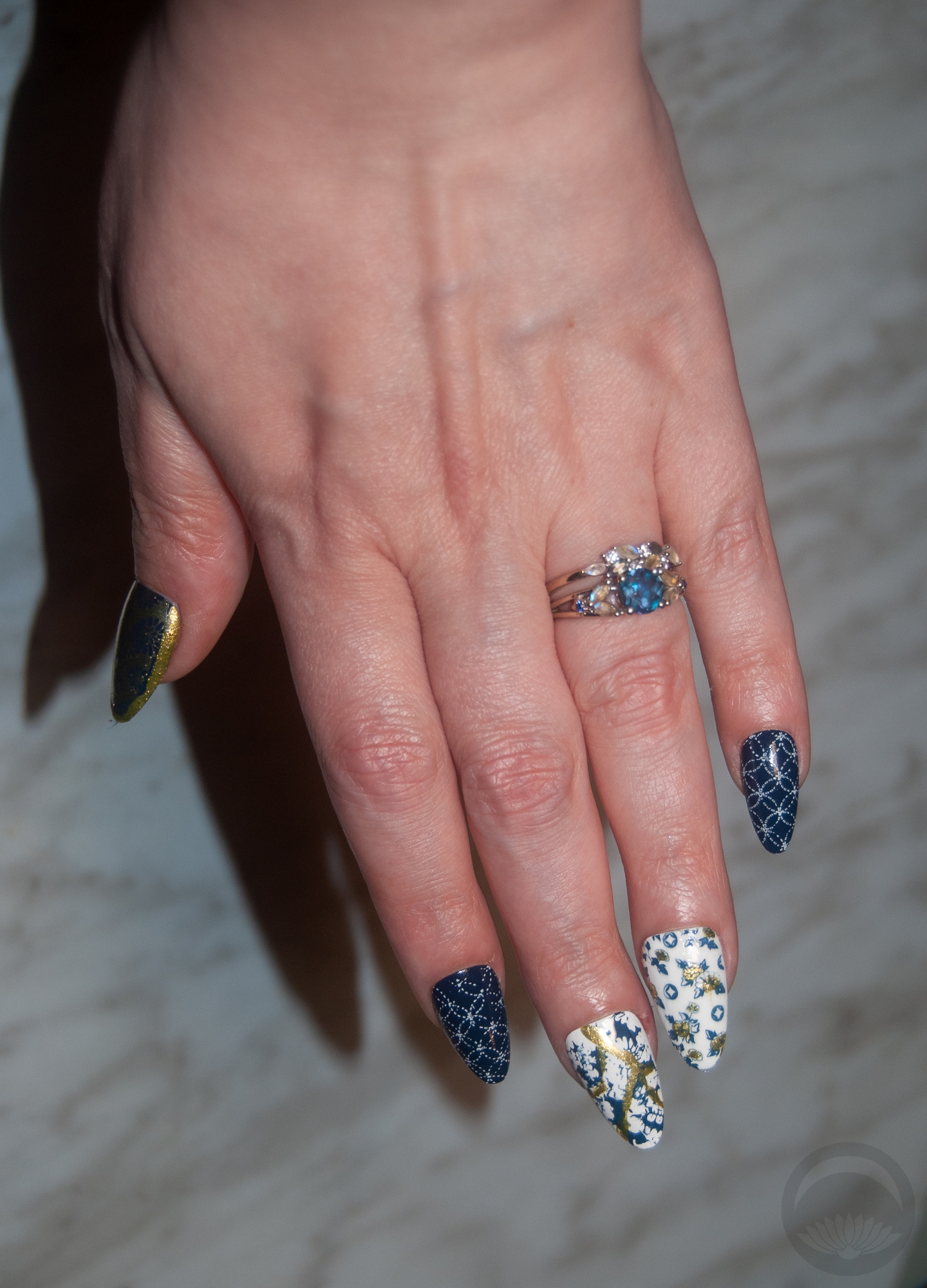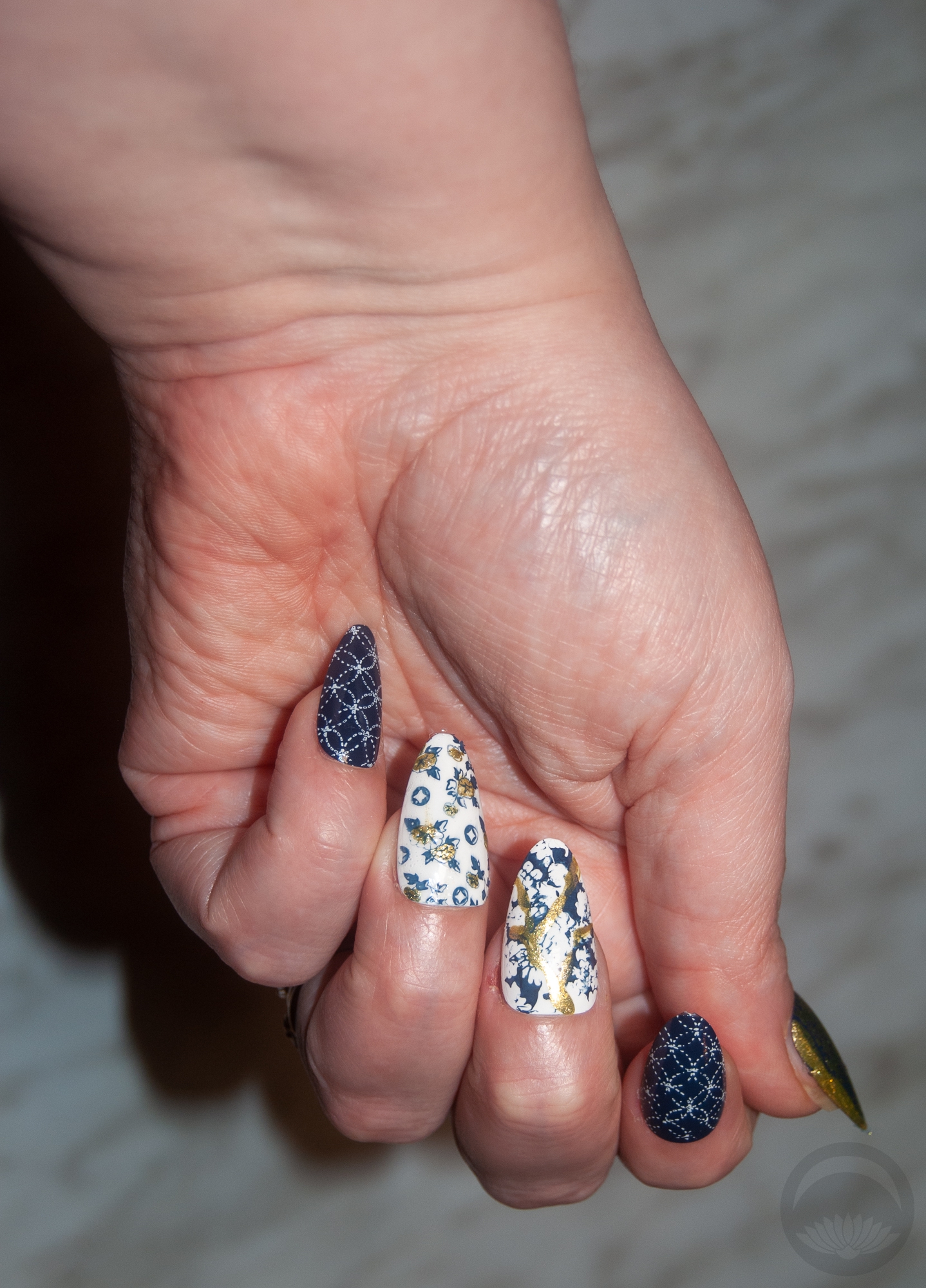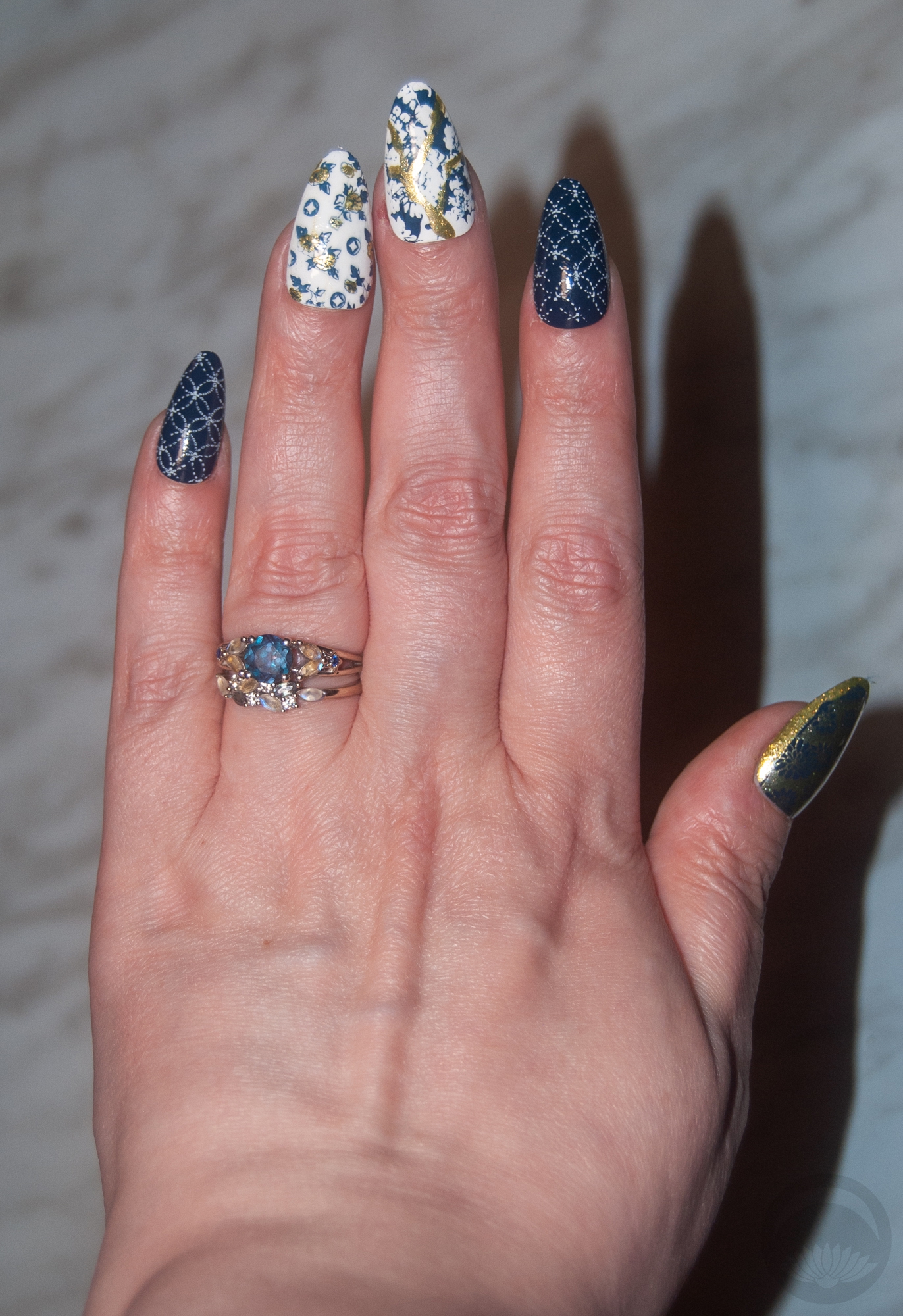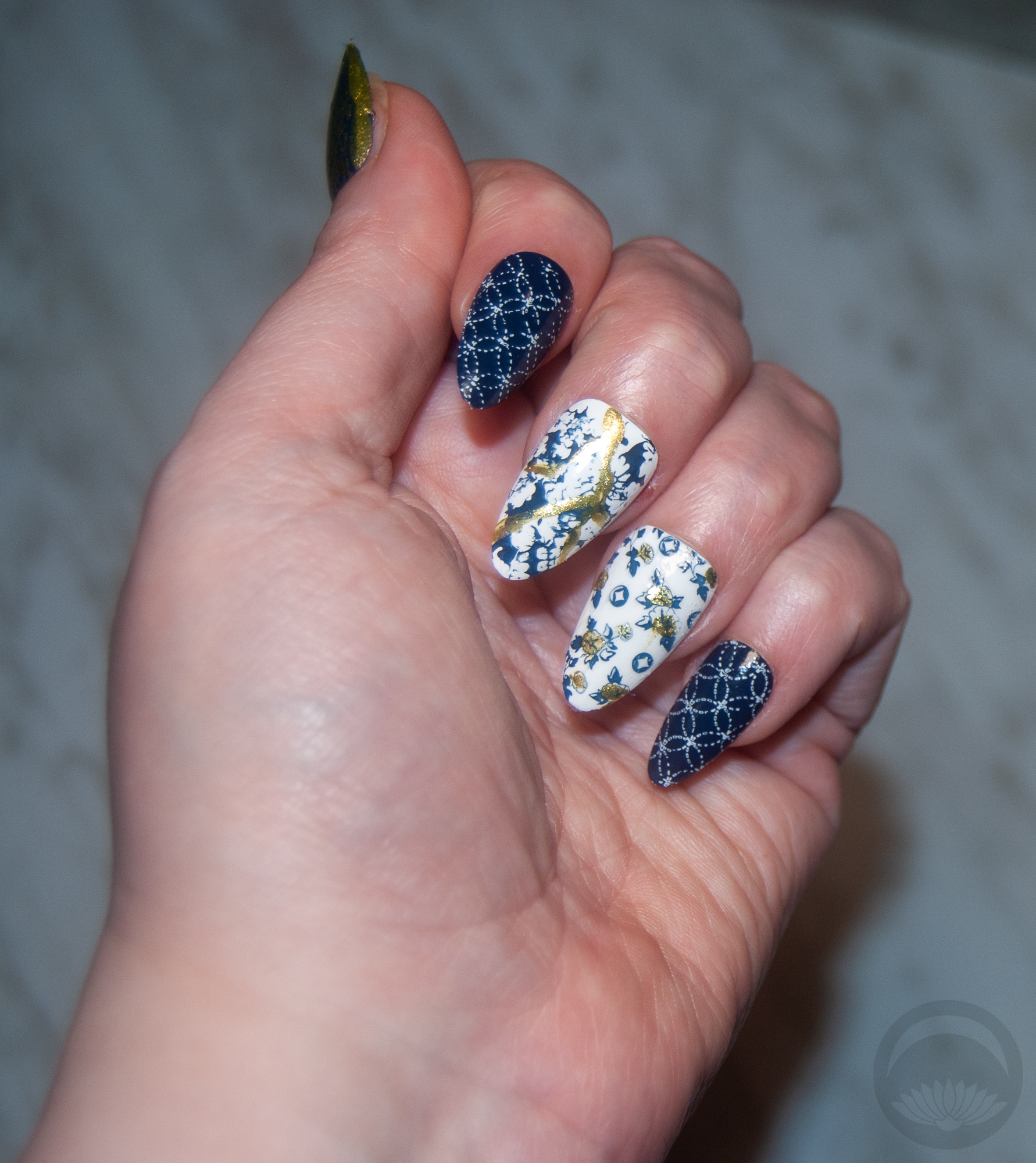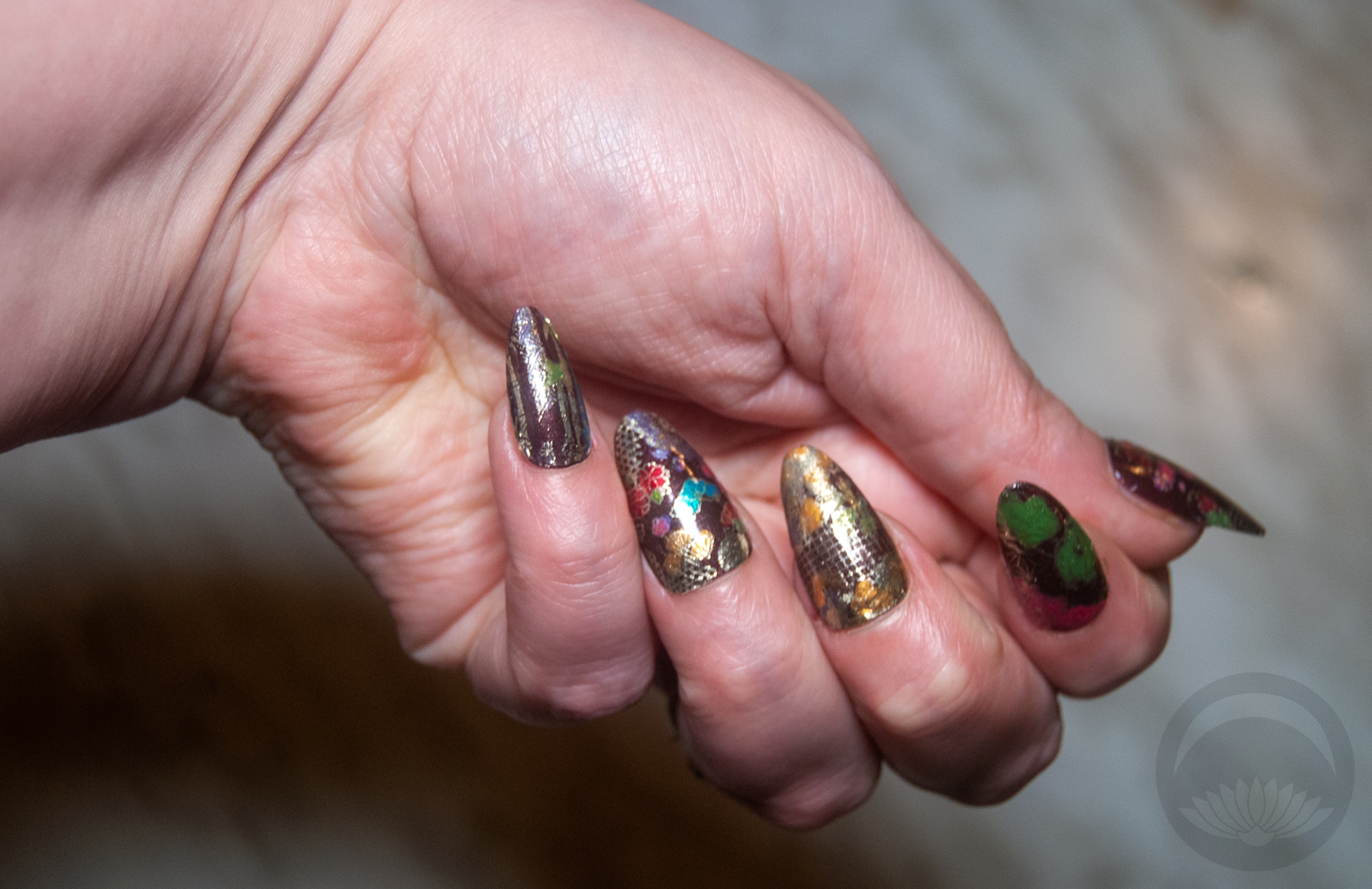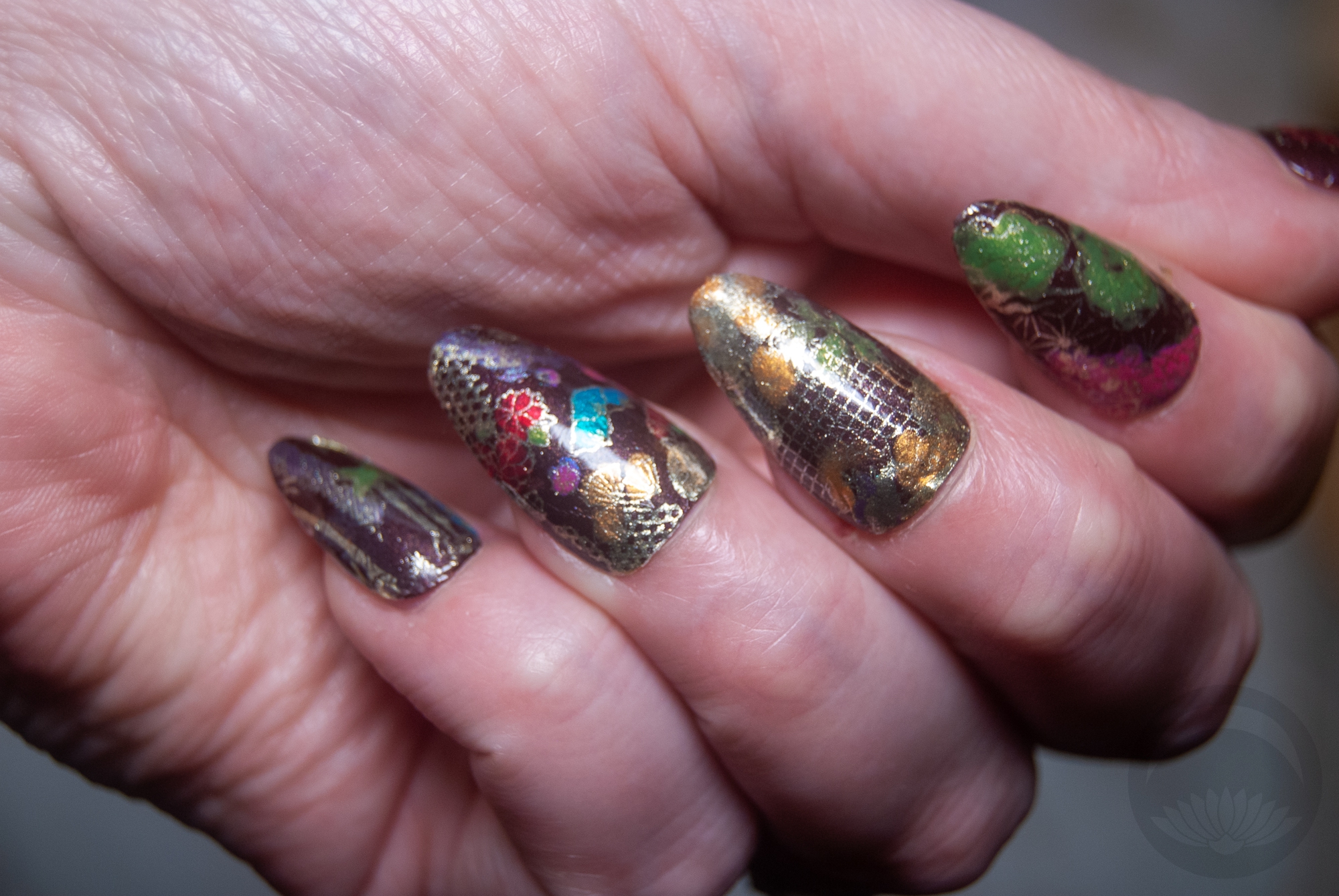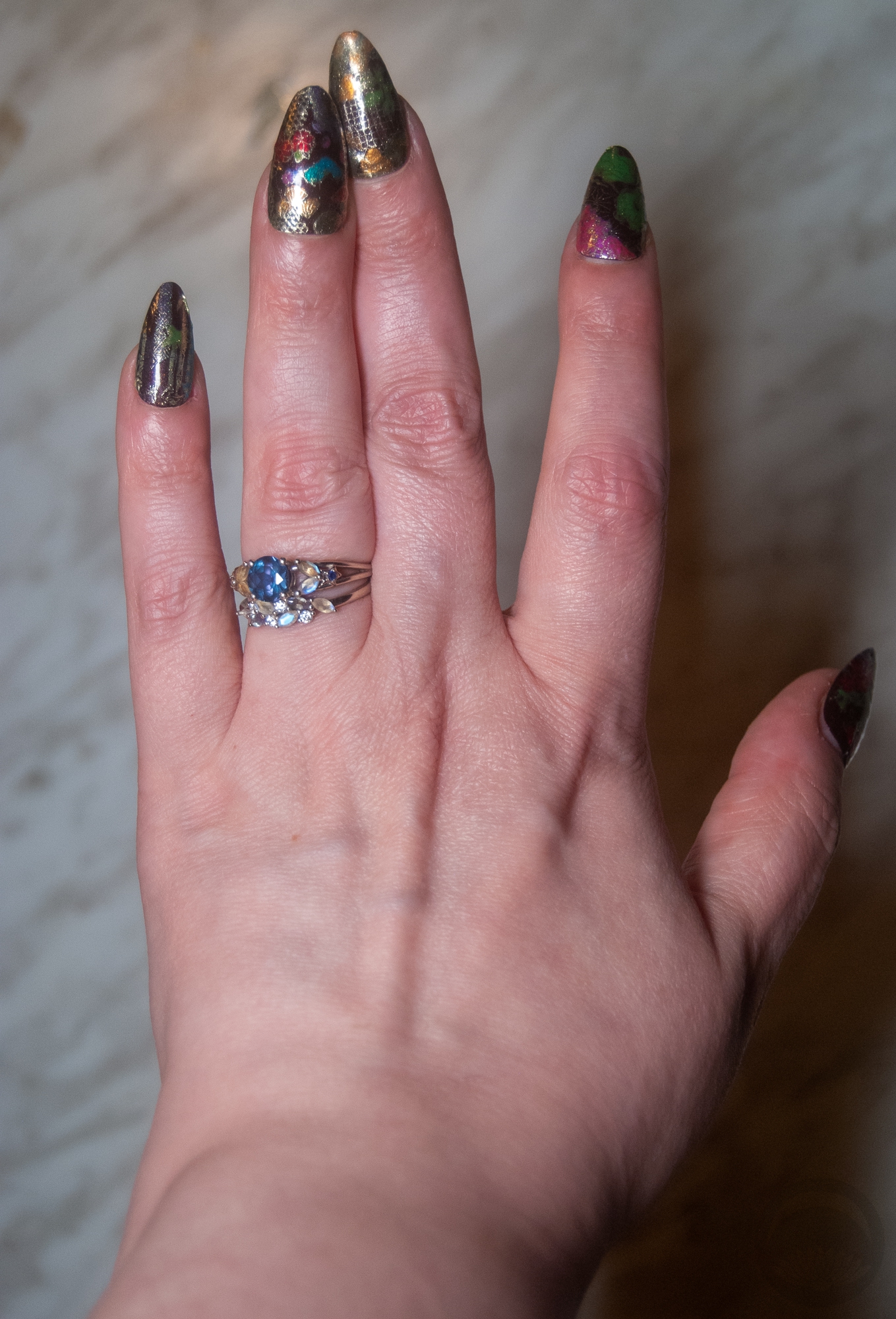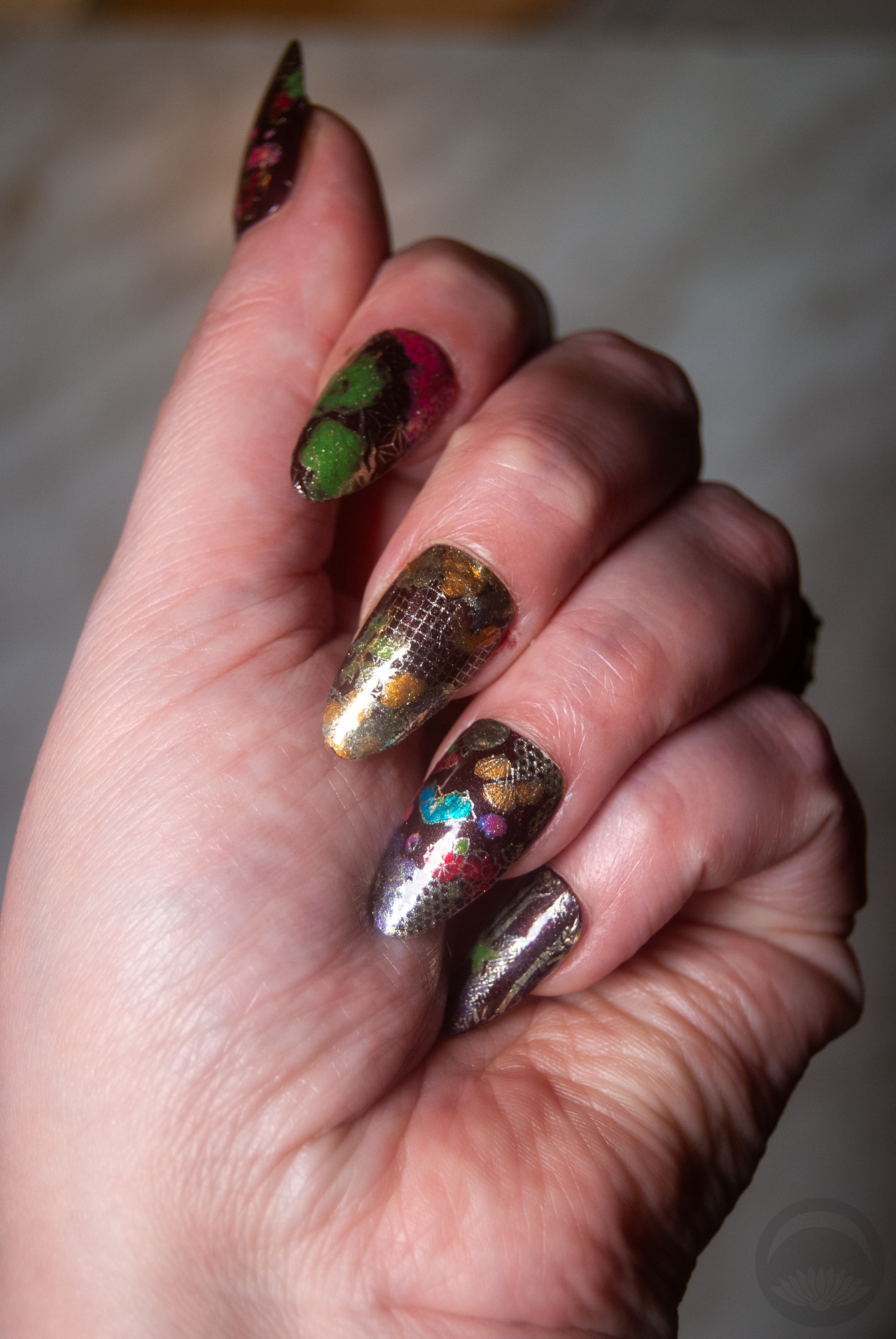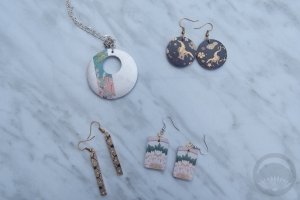
Kimono-inspired Nails with Maniology Stamping Plates

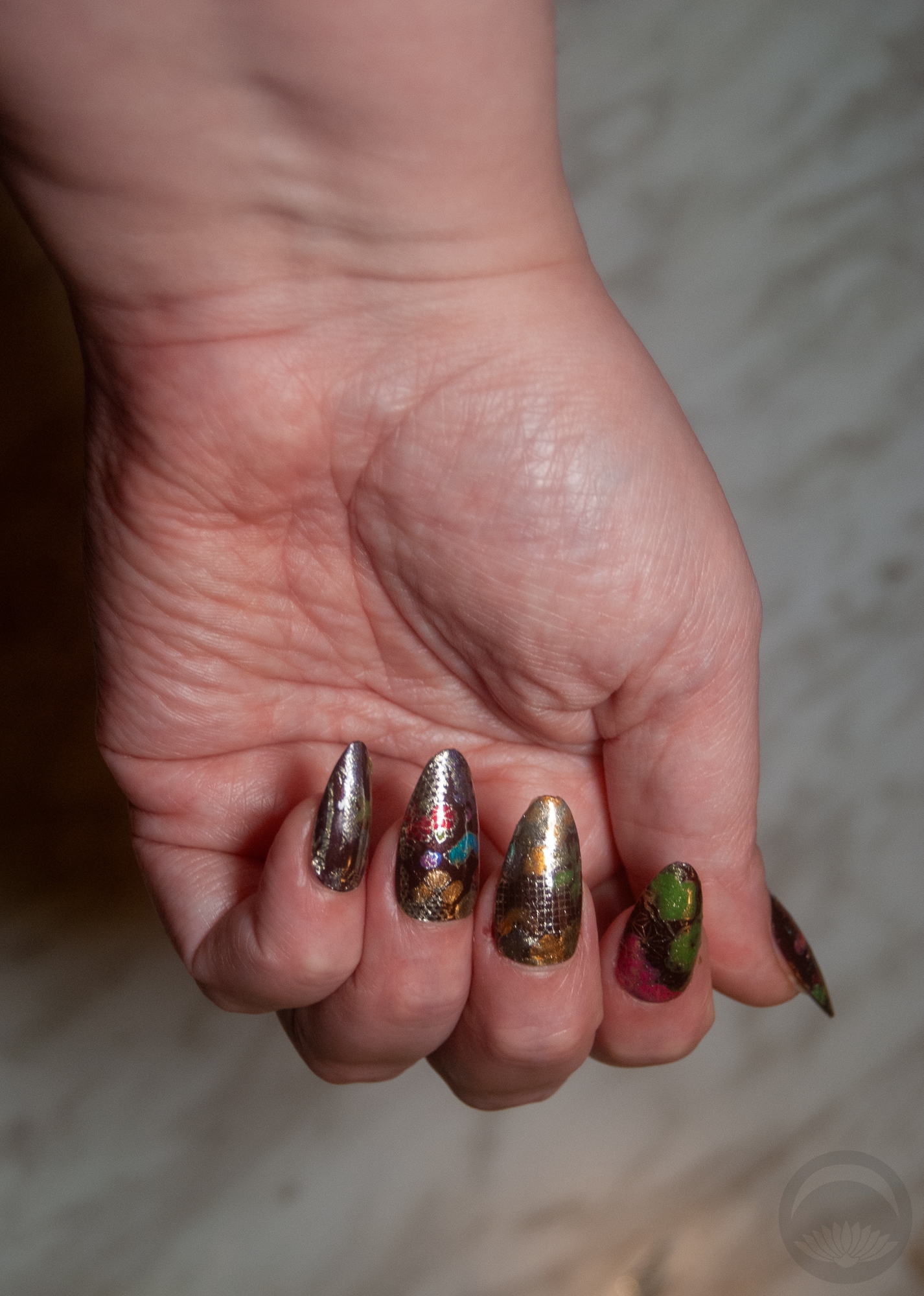
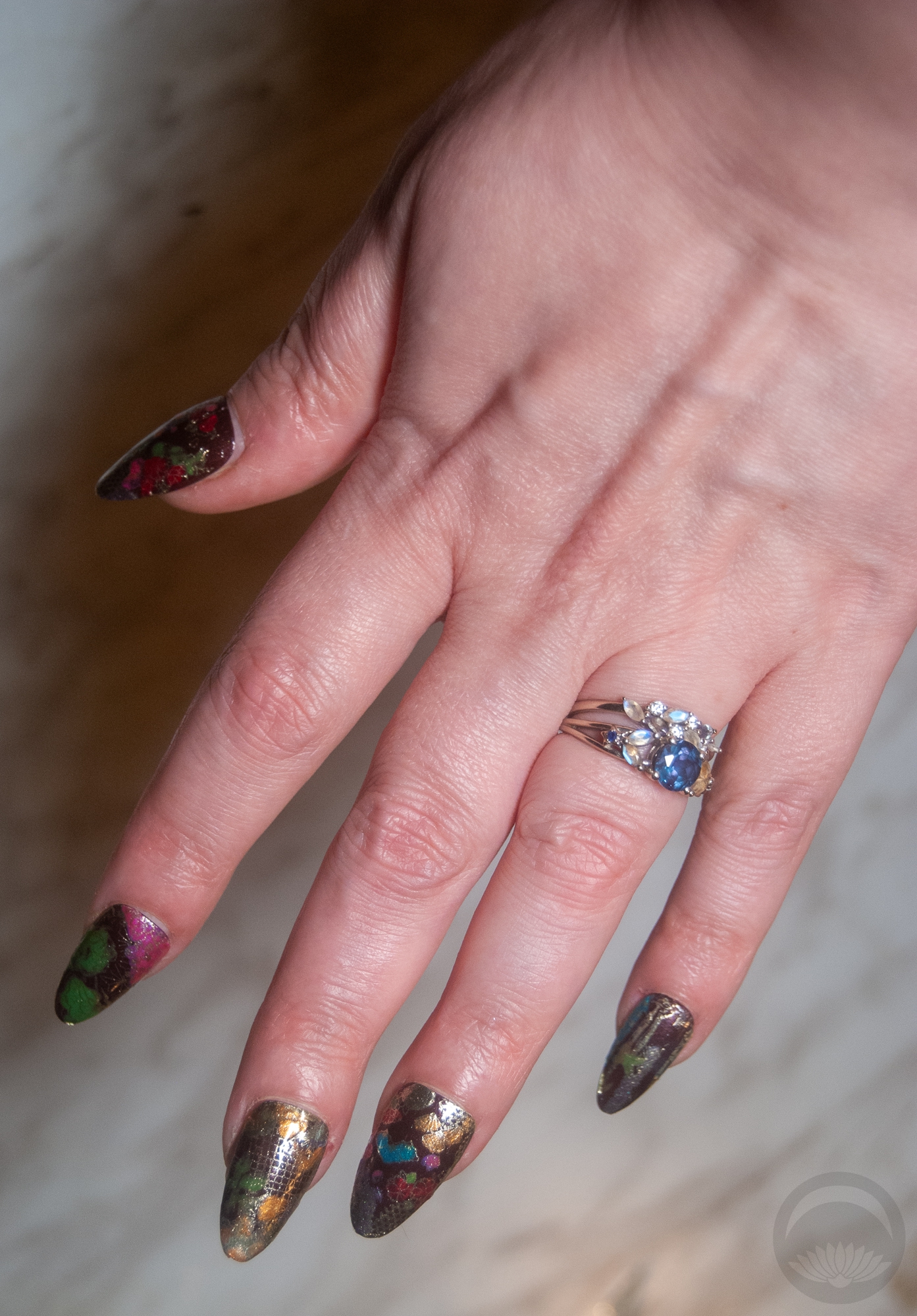
Back when I wore kimono regularly, I used to love matching my nails to my outfits. Obviously in recent years that’s gone out the window, but when Maniology released a set of very clearly kimono-inspired stamping plates I knew I had to give them a shot. Nothing wrong with having a fresh set even if they don’t match your outfit, right?

I knew I wanted to make a set that match this blog, so of course I grabbed the Sashiko Stitch plate. I also fell in love with the Draped in Elegance plate that featured a variety of kimono design motifs.

Where possible, I have linked to the polishes I used. However, I’ve been hoarding collecting nail polish nearly as long as I’ve been hoarding collecting kimono so many of these colours are no longer available. In one case the brand doesn’t even exist anymore! I do recommend getting a good white polish if you plan to use it for stamping, especially over dark colours, but the selection for the yuzen-style manicure has a ton of room for interpretation.


Sashiko & Kintsugi Blog Manicure
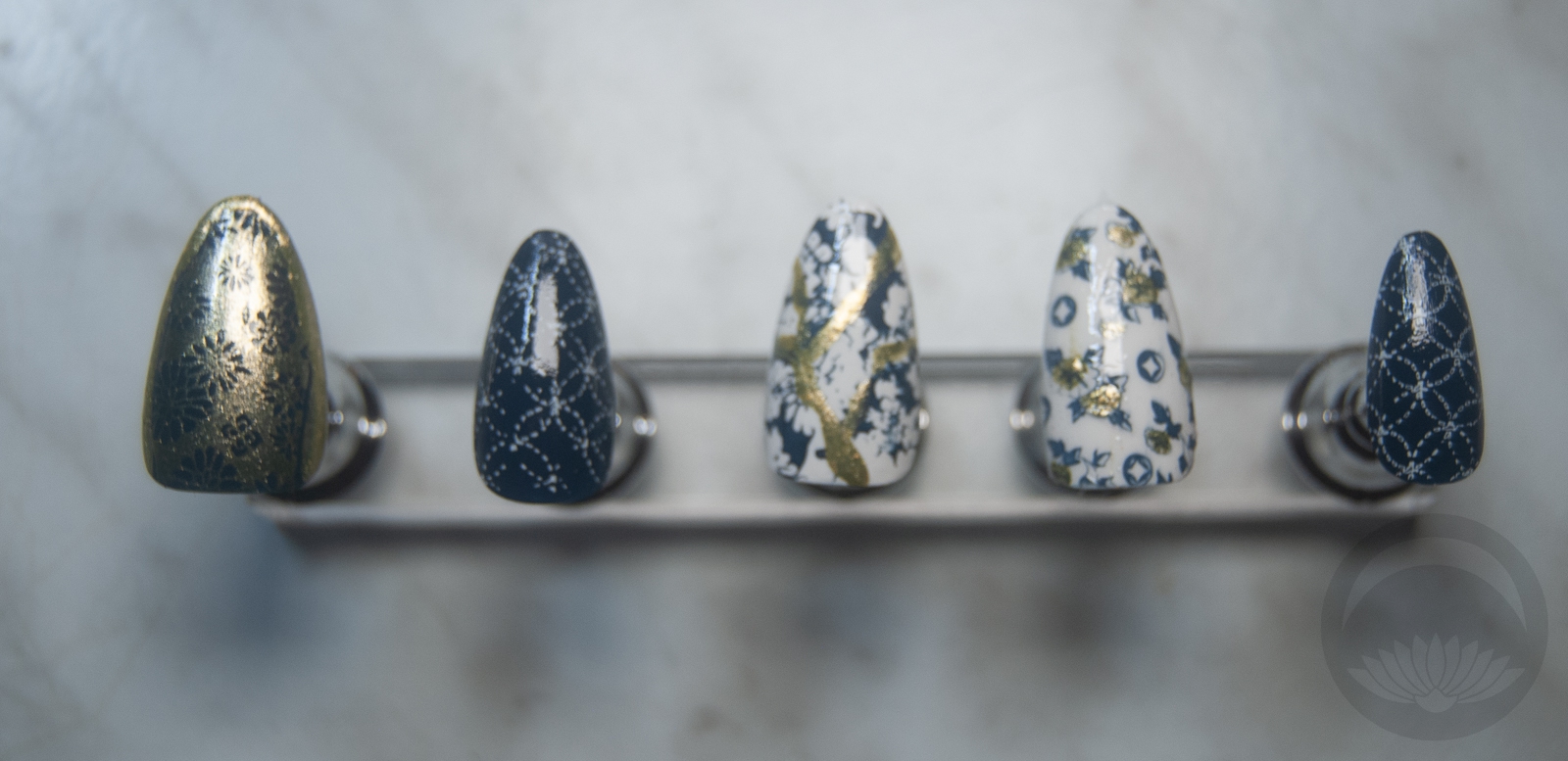
Plate used:
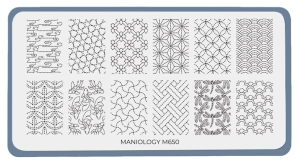
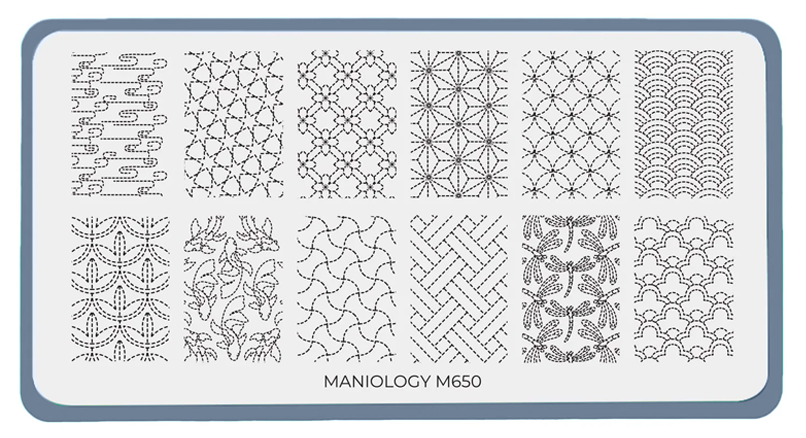
Maniology M650 – Sashiko Stitch
(plus the asagao from the plate below)

Polishes used:

Navy – Expressie Feel The Hype
White – Maniology Bam! (B170)
Gold – Maniology It’s Lit (B262)

fkjjdslkfsjhdljfsdlf


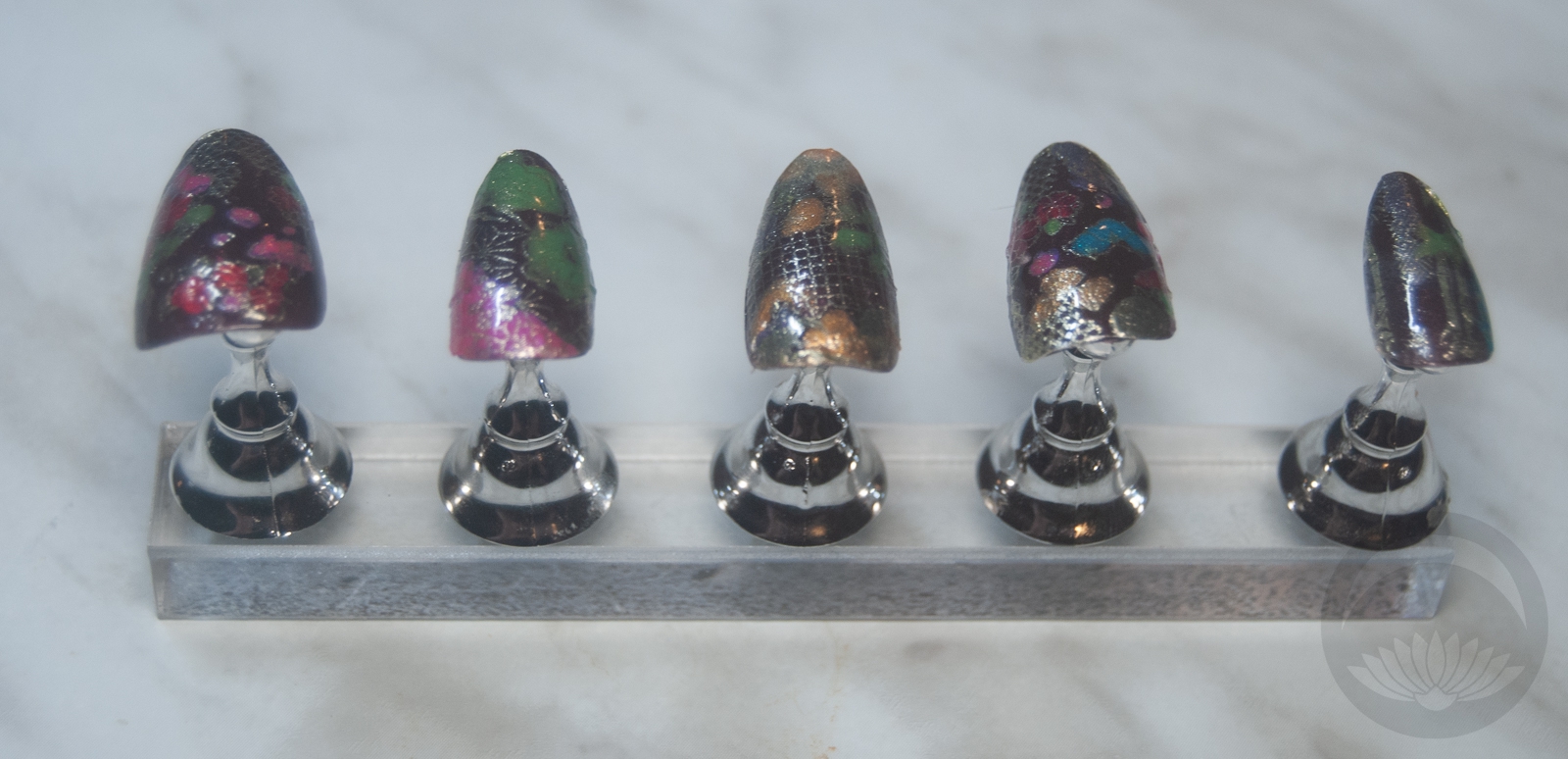
Golden Yuzen Manicure
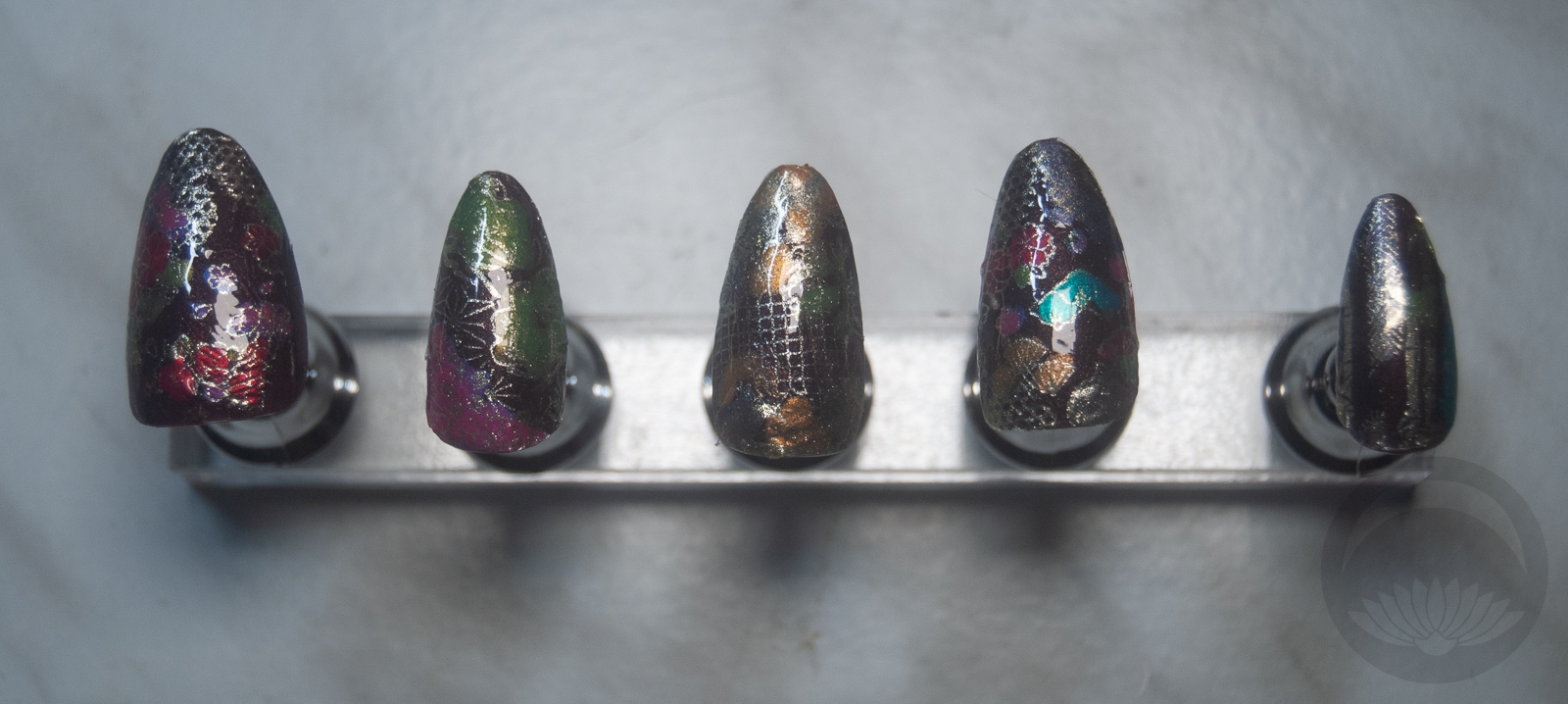
Plate used:
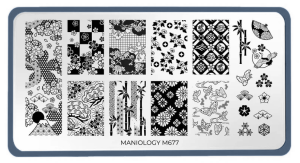
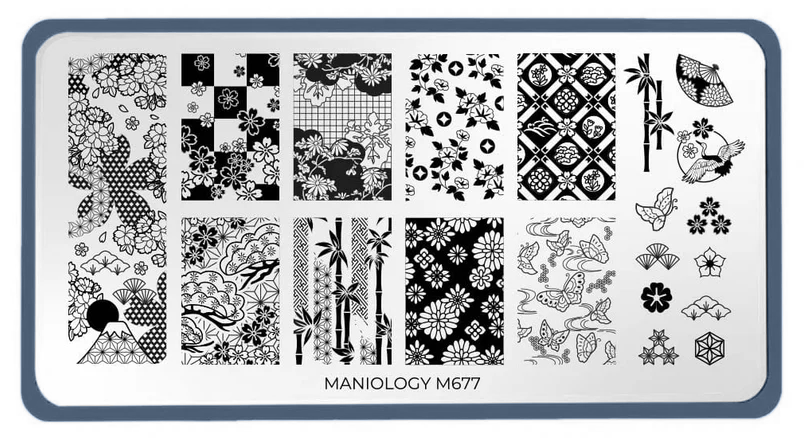
Maniology M677 – Draped in Elegance

Polishes used:

Plum base – NARS Tokaido Express
Gold stamping – Maniology It’s Lit (B262)
Red – Nubar Sultry Red
Orange – OPI Totally Tangerine
Green –  Zoya Midori
Blue –  Revlon Blue Siren
Purple – Revel Nails Whirled View
Pink – CND Tutti Frutti

@kimono_tsuki

Kimono nails featuring @hellomaniology stamping plates マニキュア #着物

♬ original sound – Kimono Tsuki 着物月 – Kimono Tsuki 着物月


Other tools & products used:

Medium almond nail tips
Polish stamper and scraper
Nail art liner brushes
Nail stand
Silicone mat


I did standard straight-to-nail stamping for the sashiko manicure, and made my own transfers for the yuzen-style one. If you’re curious I did make a little video of the process for the transfers, but there are plenty of incredible videos out there that explain how to use stamping plates far better than I could. I would suggest starting with Maniology’s own YouTube page, they have tons of clear and helpful videos.

These plates were a dream to use and the stamping polish made things so smooth and intuitive. I’ve tried some very basic stamping in the past and didn’t have nearly as much luck, and this was my first time doing anything layered or complicated, and I can’t get over how well they turned out. If you want to give yourself a manicure to match your favourite kimono, or just bring a little bit of Japan to your fingertips, I highly recommend these! My only regret is that I didn’t buy more of them. I’ll have to snag some other ones from this collection in the future.

If you buy anything from Maniology, you can use my code TSUKI for 10% off!

 I purchased this item myself and chose to review it.This post contains affiliate link(s). If you choose to purchase, I receive a small rebate or commission which goes to the continued maintenance of this site. 
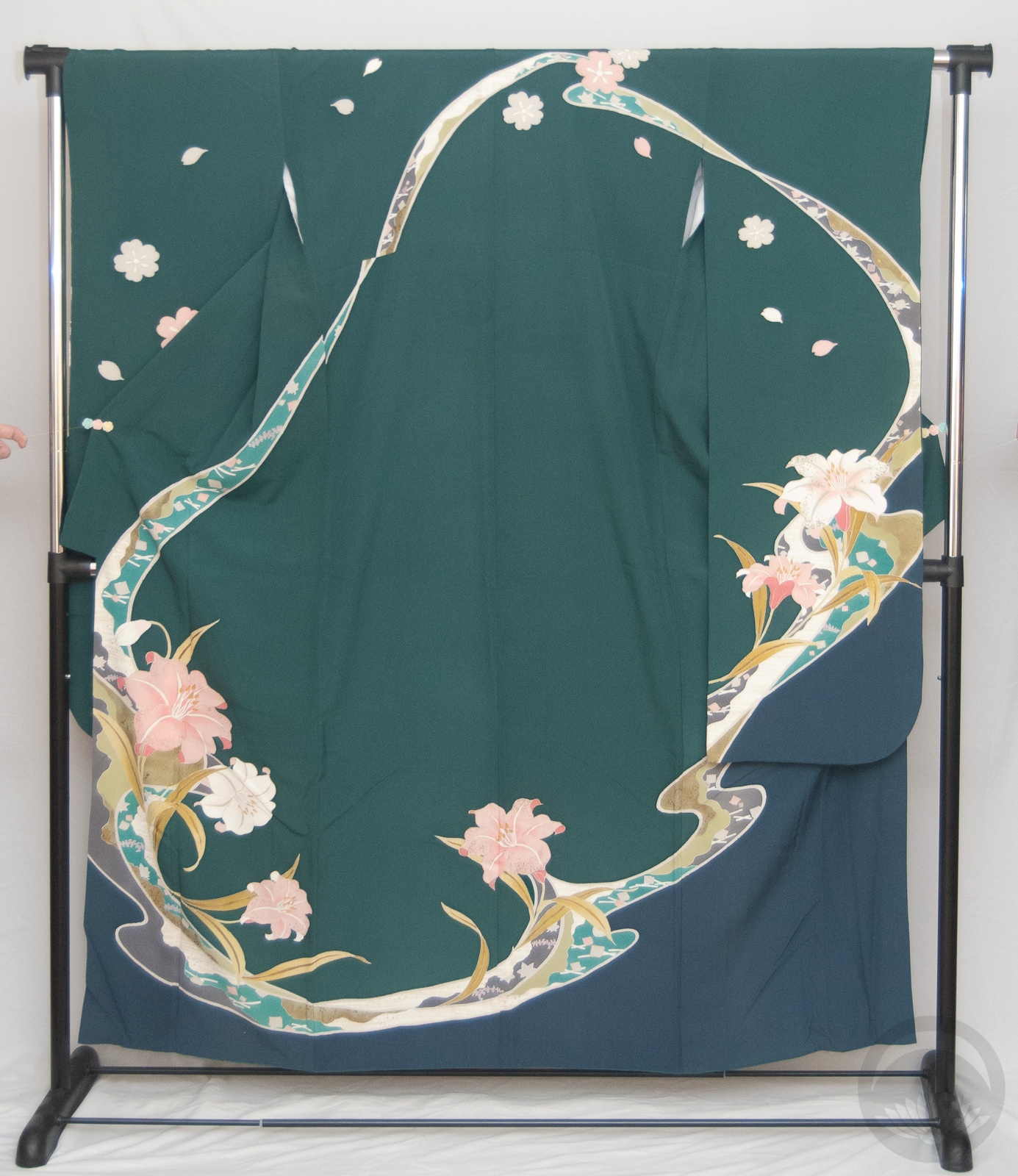
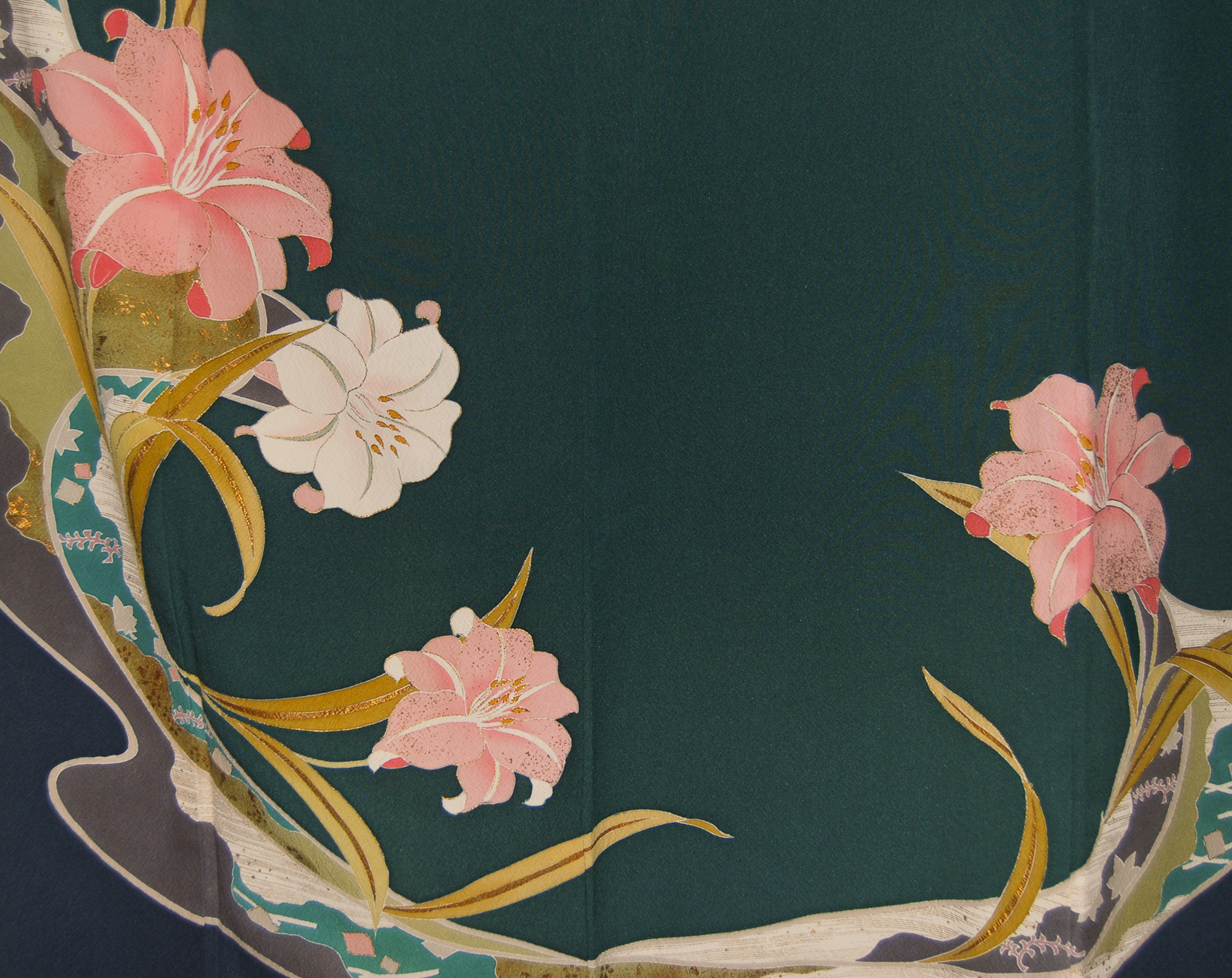
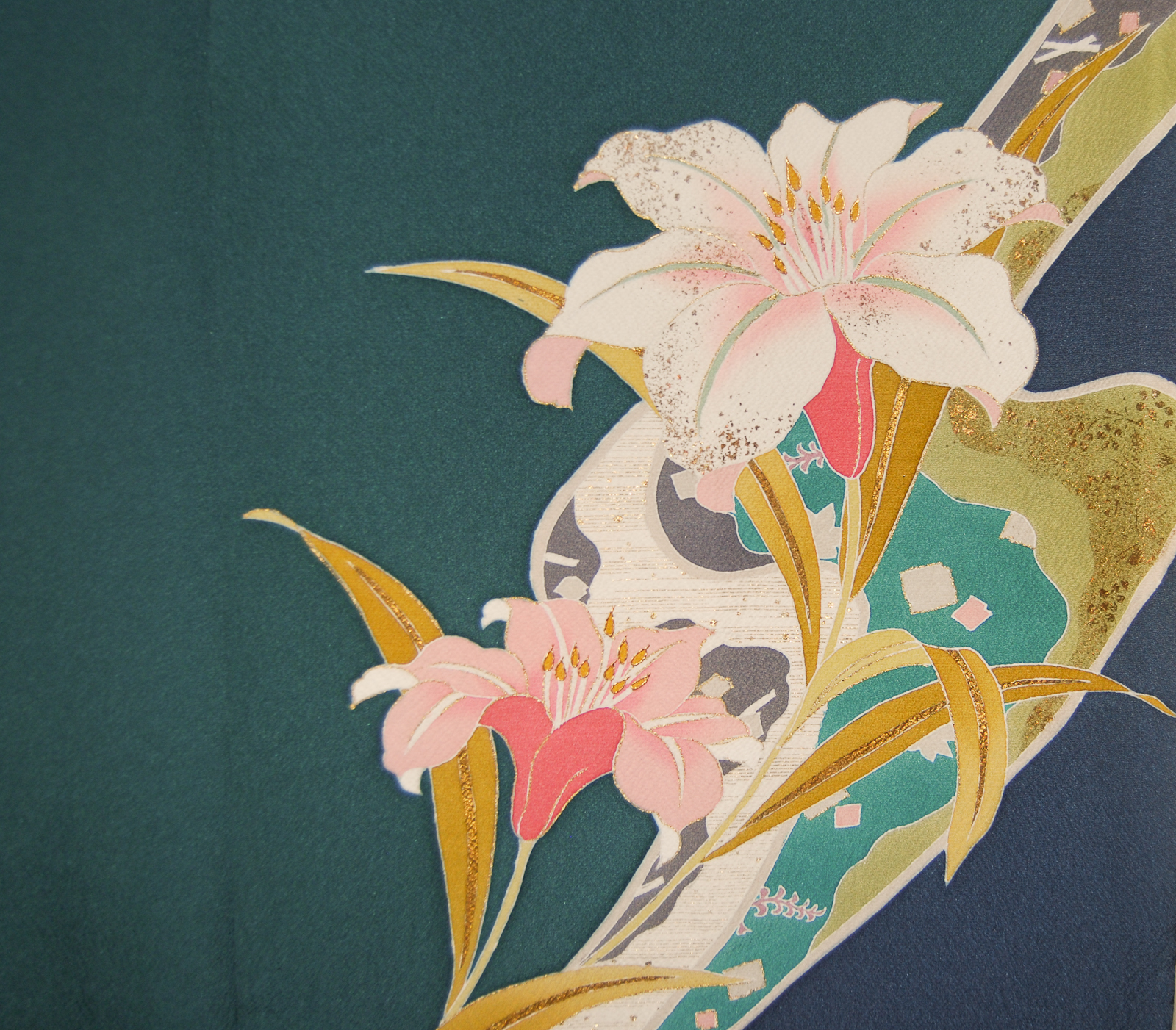
Lily Furisode

It’s been literally several years since I bought a kimono. I still have ones I haven’t worn, ones that don’t fit, ones that I am too old for. I’d promised myself no more buying kimono.

And then Jess went and put this one up on the market. I have coveted this kimono for as long as she’s had it. I love the rich, dark green colour and the beautiful, delicate lilies. She needed money, I needed this kimono. Clearly, it was meant to be.

It arrived today, and it’s everything I’d been hoping for and more. I can’t wait to dress Tsukiko in it!

The body is a gorgeous rich deep green, intersected with a sort of ribbon-like fluid design and lilies. The hem is navy blue, which I did not realise in the photos!

New haori from Naomi

Along with all the haneri I got, as well as the geisha hikizuri (which is going to get a proper entry soon, I promise), I ended up with a few unexpected haori and another kimono from Naomi, they came in a bundle of items she purchased and they were not to her tastes. Once again, someone else’s loss is my gain, because I absolutely love them both.

Purple meisen haori with mysterious flowers
Purple Meisen Haori

Purple Meisen Haori

Purple Meisen Haori

This is a gorgeous vivid purple Meisen. I’ve mentioned my love/hate affair with Meisen before – I think the technique is amazing but I have never come across a kimono long enough to fit me. I’ve come to terms with this, I think, and will stick to gorgeous, flamboyant haori. I honestly have no idea what the flowers on here are supposed to be, but they appear to be losing their petals so I assume it’s for autumn. If anyone has suggestions, please let me know!

Delicate kiku yuzen haori
Kiku haori

Kiku haori

Yuzen has long been one of my favourite techniques – it’s relatively common but when it’s done right it has a charming delicacy. My first kimono was yuzen-dyed spider kiku, and it’s still one of my most cherished pieces. When I saw this piece in the bundle she got, I admit I really wanted it. So you can imagine how happy I am to have it in my grubby little paws. I can’t wait until the autumn so I can wear it. Age-wise, this piece is a little odd. It’s got the longer sleeves of a vintage piece, but the short body and simple white lining of a more modern one, so it’s probably from the transitional post-war era.

Shah Mosque Houmongi

I don’t know if anyone remembers that I made a resolution only to buy really special pieces. Unfortunately, my complete and utter lack of dedication has pretty much thrown that to the wayside, but I am trying to keep an eye out for particularly spectacular items. I blame BikaBika for this, she posted the link to the auction on the Immortal Geisha forums and I knew then and there that I needed to have this item. Thankfully Naomi was there to help me get it through YJA. It finally arrived in the box of stuff I mentioned last Friday, and I was so excited to finally get it so I could see it in person and write about it.

I’ve always been fascinated by architectural motifs on kimono, but I’d never seen one with a mosque on it. In particular, the blue dome and heavy Moorish ornamentation would suggest that this is the Shah Mosque in Iran. The yuzen dye work is absolutely stunning, the whole piece looks like a soft painting but the details up close are breathtaking. The silk is incredibly lush as well, it’s got an interesting nubby texture, almost like shibori but it’s woven into wave-like stripes and not part of the actual visual pattern.

Shah Mosque Kimono

Shah Mosque Kimono

I have several coordinations in mind for this particular kimono, including one using the gorgeous Moorish Arches obi I received as a mystery gift, but also a more subdued modern look. Hopefully I will find the time for one or both of them in the near future.

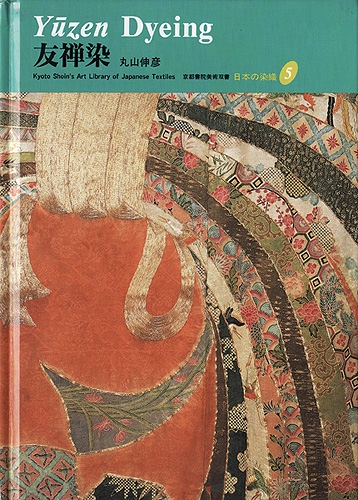
Book Review – Kyoto Shoin, Yuzen edition

Yuzen Dyeing
by Nobuhiko Maruyama
Language: Japanese and English
ISBN-10: 4763670409
Amazon.com listing

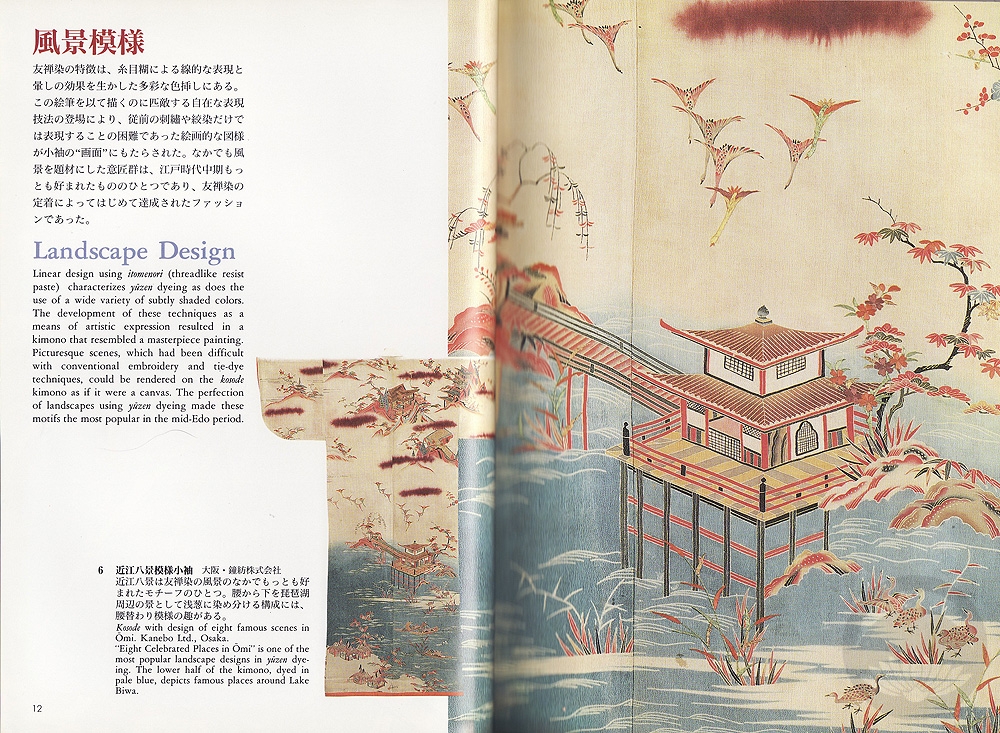
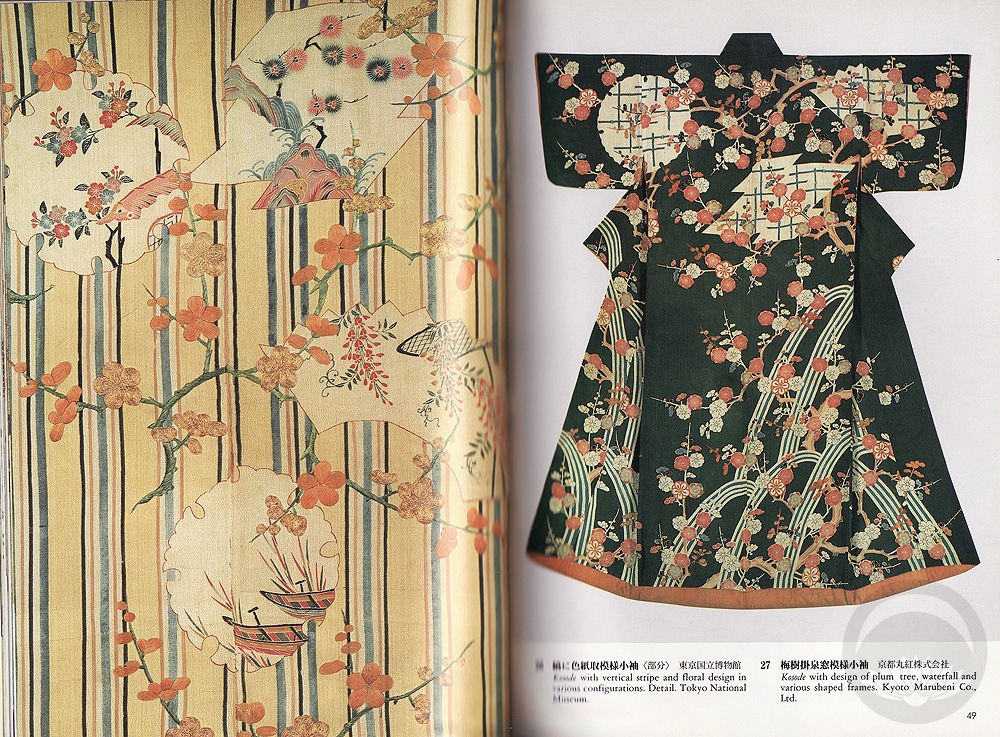
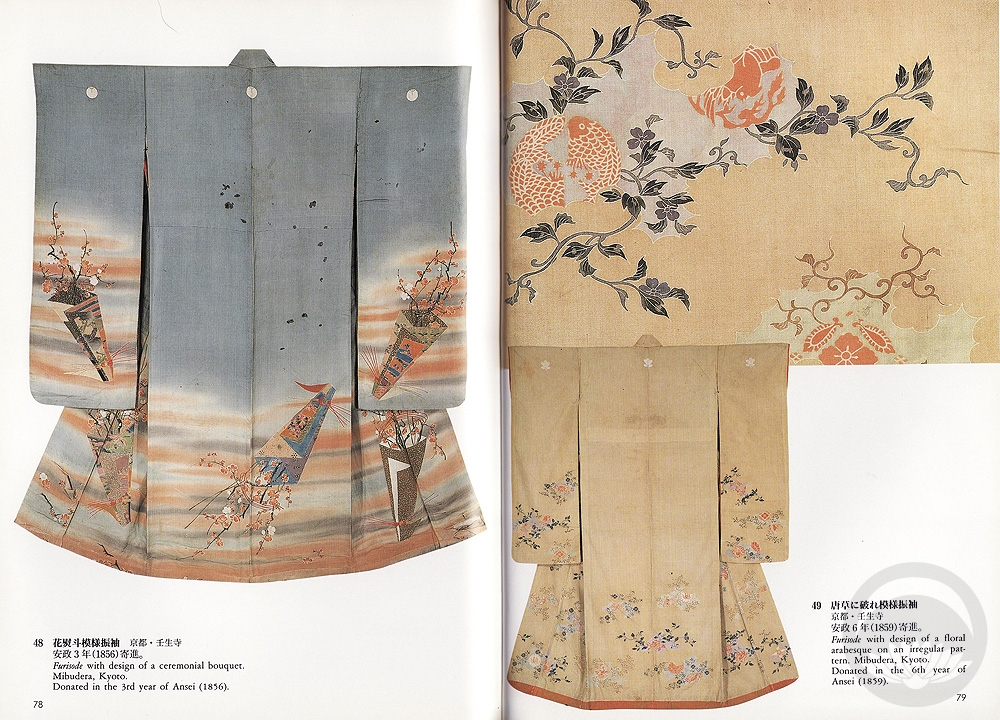
This was a risky impulse purchase off eBay. The listing did not give the title, did not give dimensions, and only had a few murky photos of the interior. However, it was a very good price so I figured I’d throw caution to the wind and go for it. I’m very glad I did, because when it arrived in the mail I was shocked to find one of the out-of-print and generally very pricey Kyoto Shoin ‘s Art Library of Japanese Textiles books, specifically the one about yuzen which is one of my favourite techniques.

The book is one of a series, and my only regret about buying it is that now I very much want more of the books out of the series. I’d heard that they were great resources, but never having seen one for myself  I didn’t really know what I was missing.

The book is filled with gorgeous full-colour plates of vintage kimono, often pairing up a full garment shot with a detail. The text is sparse, but concise. It doesn’t go into huge amounts of depth, but does not leave me desperate for more information. The majority of the book is devoted to photos, but there is also a basic explanation of the techniques involved in yuzen dyeing in the back. It is by no means a full tutorial, but it helps the reader to understand the process and effort involved in making these beautiful garments.

I would recommend this book for:


-People interested in traditional dyeing techniques.
-People looking for pictures of beautiful vintage kimono.

I would not recommend this book for:


-People looking for in-depth tutorials or lessons on yuzen dyeing.


This post contains affiliate link(s). If you choose to purchase, I receive a small rebate or commission which goes to the continued maintenance of this site.