
Pink, orange, and black may not be the most expected Valentine’s Day combination, but this is what happens when I’m thousands of miles away from my husband on a day to celebrate love, I guess. No, I kid! I was actually inspired by the incredible modern styling of aedam_furisode on Instagram to pull out a ruffled juban and a big loud furisode. Since the only ruffled juban I own is black, the rest of the outfit had to be built around that. I brought out this bright salmon-pink gosho-guruma (royal cart) furisode, since I knew it had some stark black outlines on it, and then grabbed my trusty orange hakata chuuya obi because it matches the peonies on this kimono so well. If I’m being honest, any excuse to use this obi is a good one.
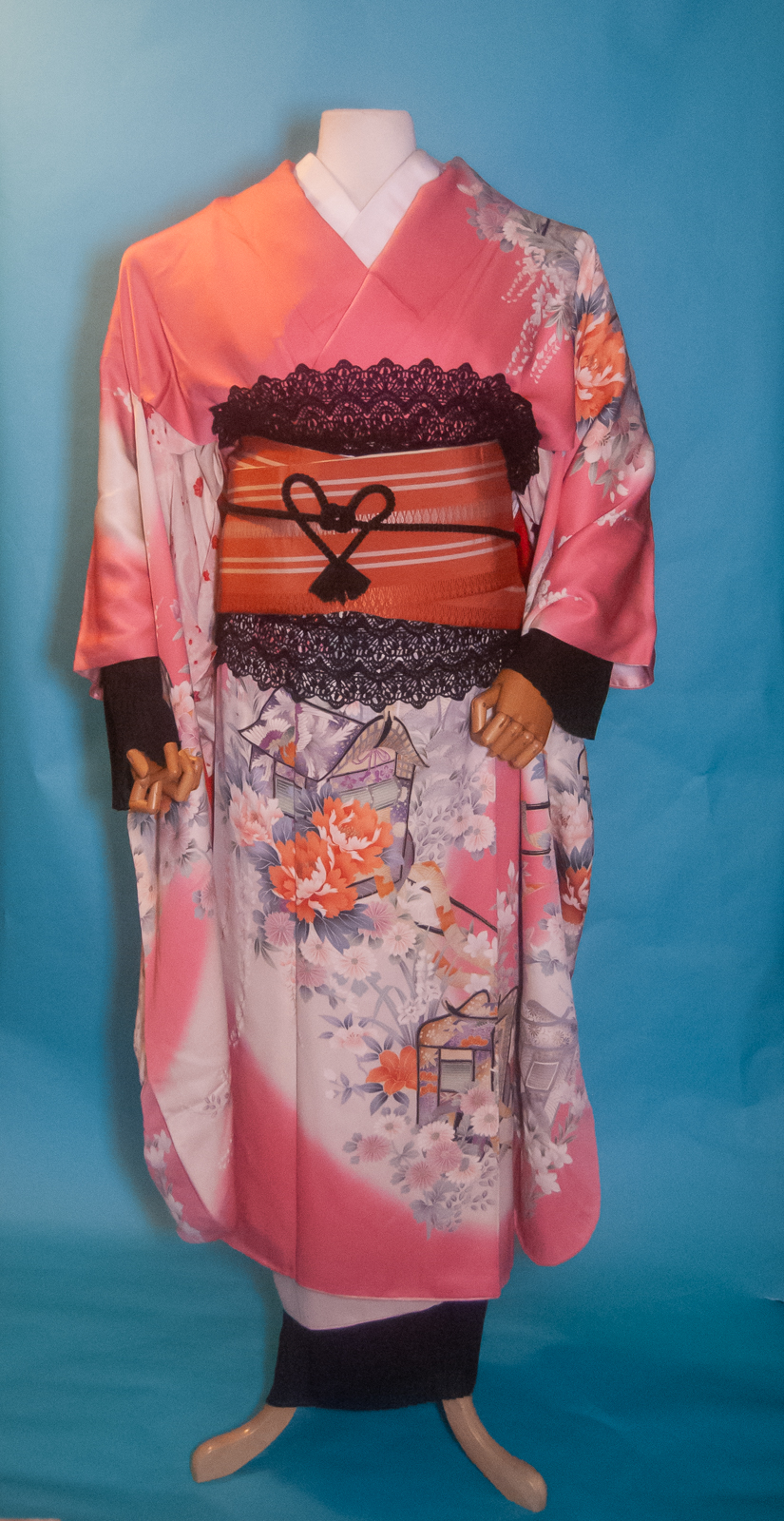
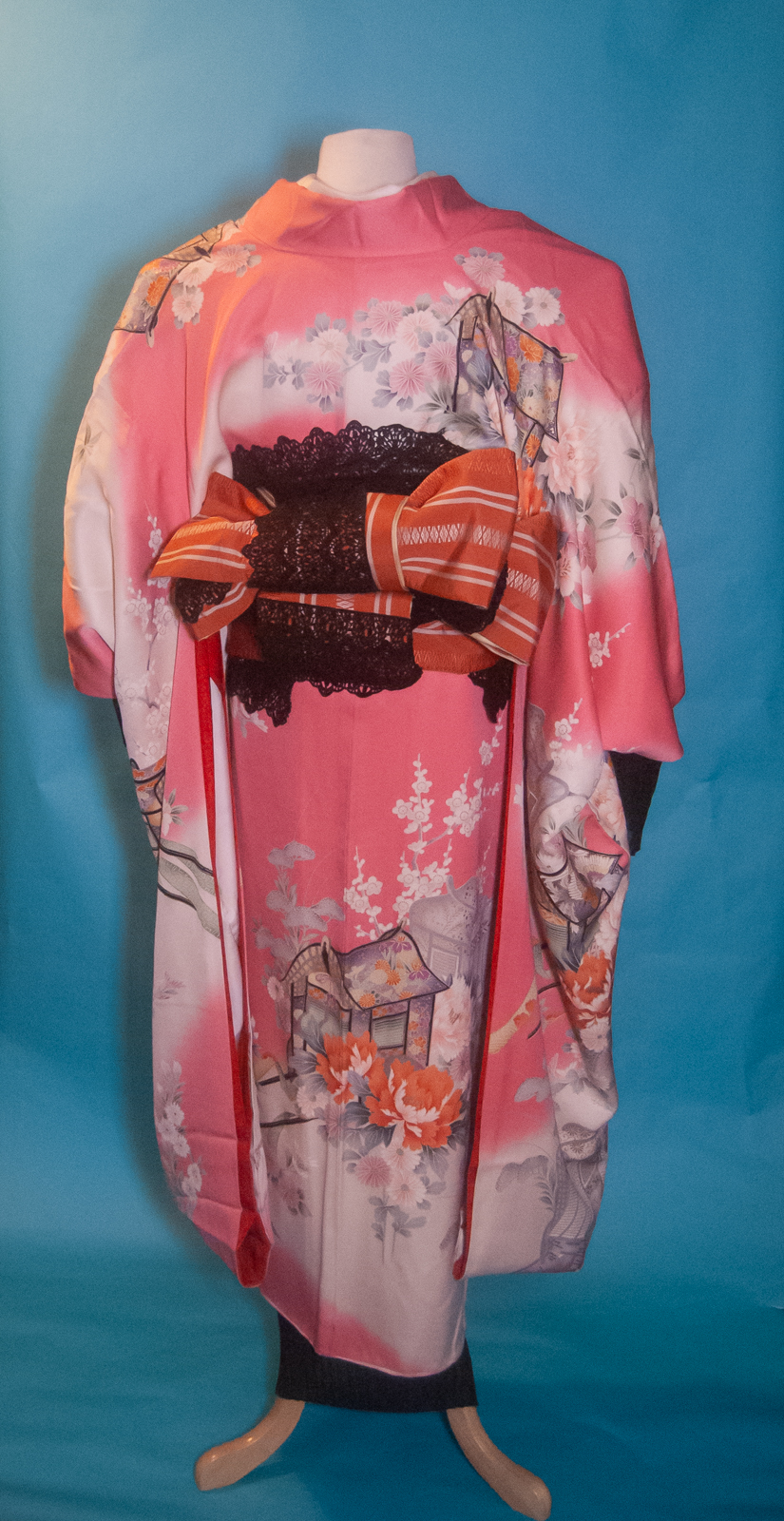
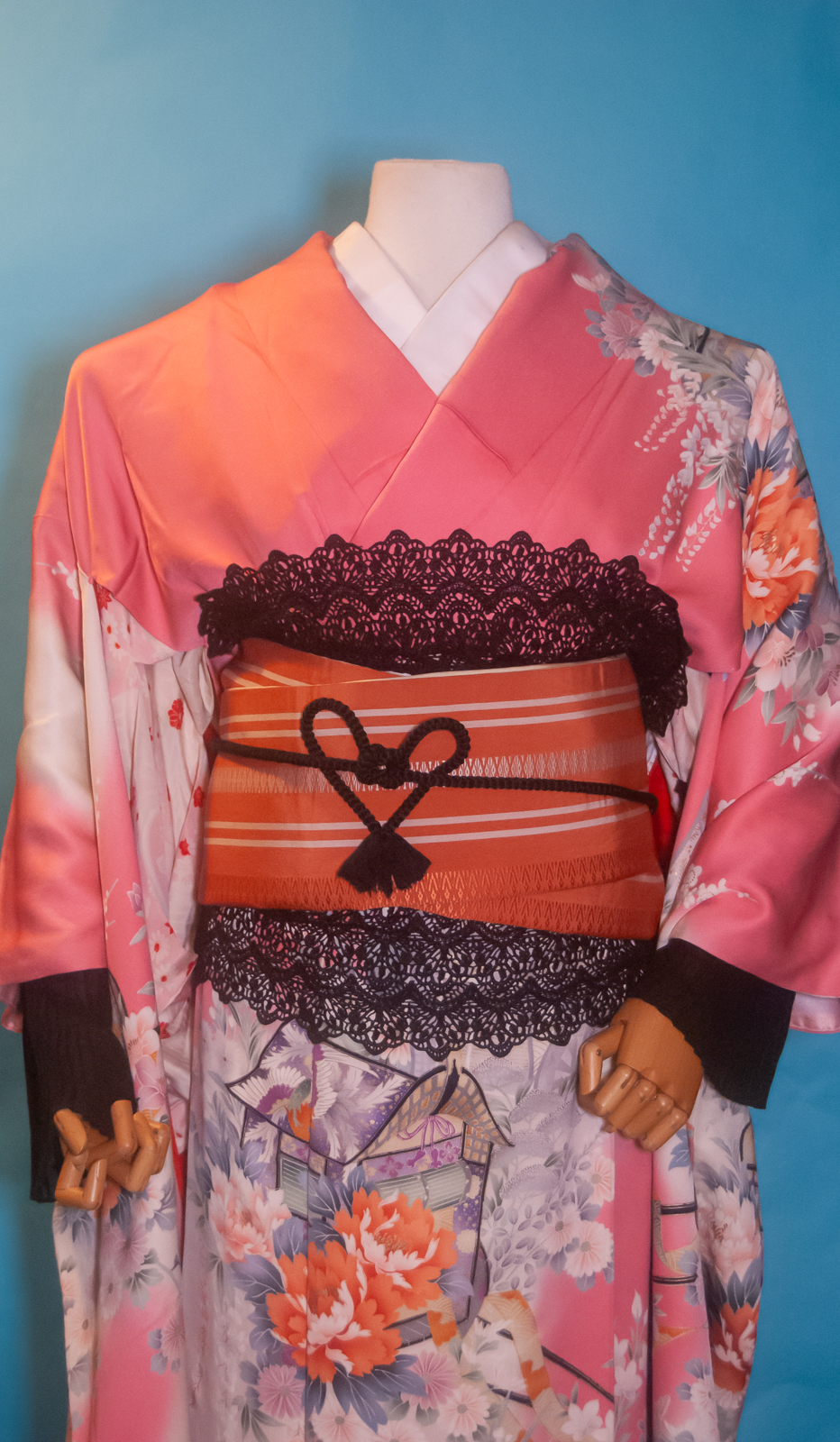
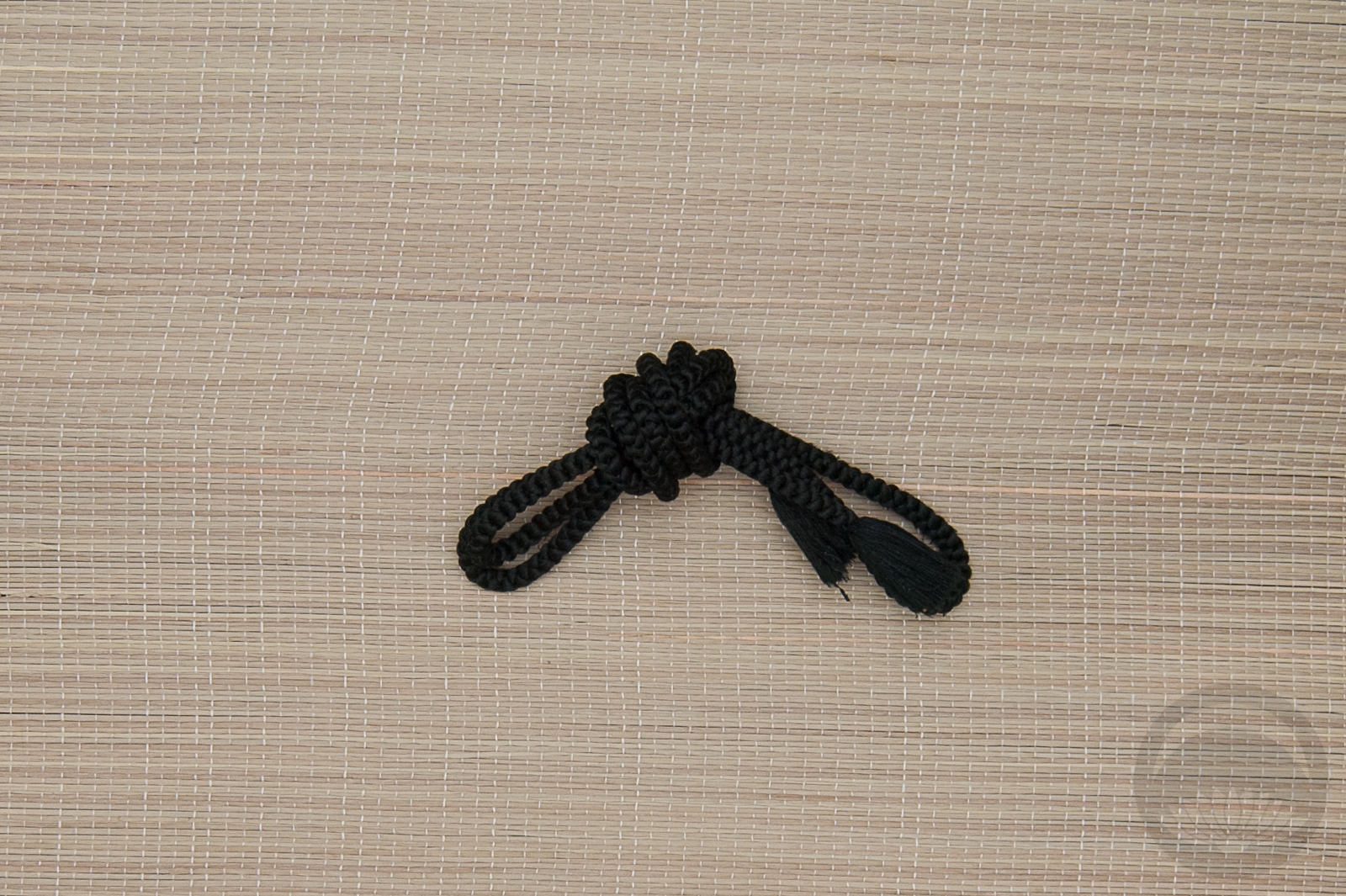
To break up the tonal similarities of the salmon kimono and orange obi, as well as reinforce the non-traditional vibe and aedam style, I used black cotton lace as a sort of obiage and shigoki-obi, as well as running it through the obi-musubi. It also makes the black ruffles feel more cohesive I think, and brings more attention to the stark black outline of the gosho-guruma motif on the kimono. Without the lace I think this would have just felt confusing and the exposed juban more like an afterthought or an accident, but with the punches of black accessories it pulls everything together. A black obijime tied in a modified kokoro-musubi was the final touch. It’s too short to do a normal one, but if you’re looking for instructions I made a tutorial years ago which you can find here.
Are you doing anything special for valentine’s day? Since I’m so far from Keith, I’m going out for bbq chicken with my folks later tonight. Ahhh, middle age. So romantic. But hey, at least I don’t have to buy him honmei-choco this year!
-
- Pink Gosho Guruma Furisode

-
- Momiji side 2
-
- Black




 Bebe Taian
 CHOKO Blog
 Gion Kobu