Olfactory Journey Through Japan – Feat. Demeter Fragrance Library

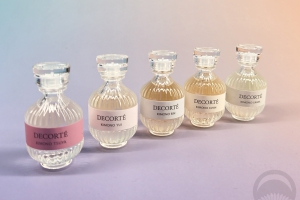
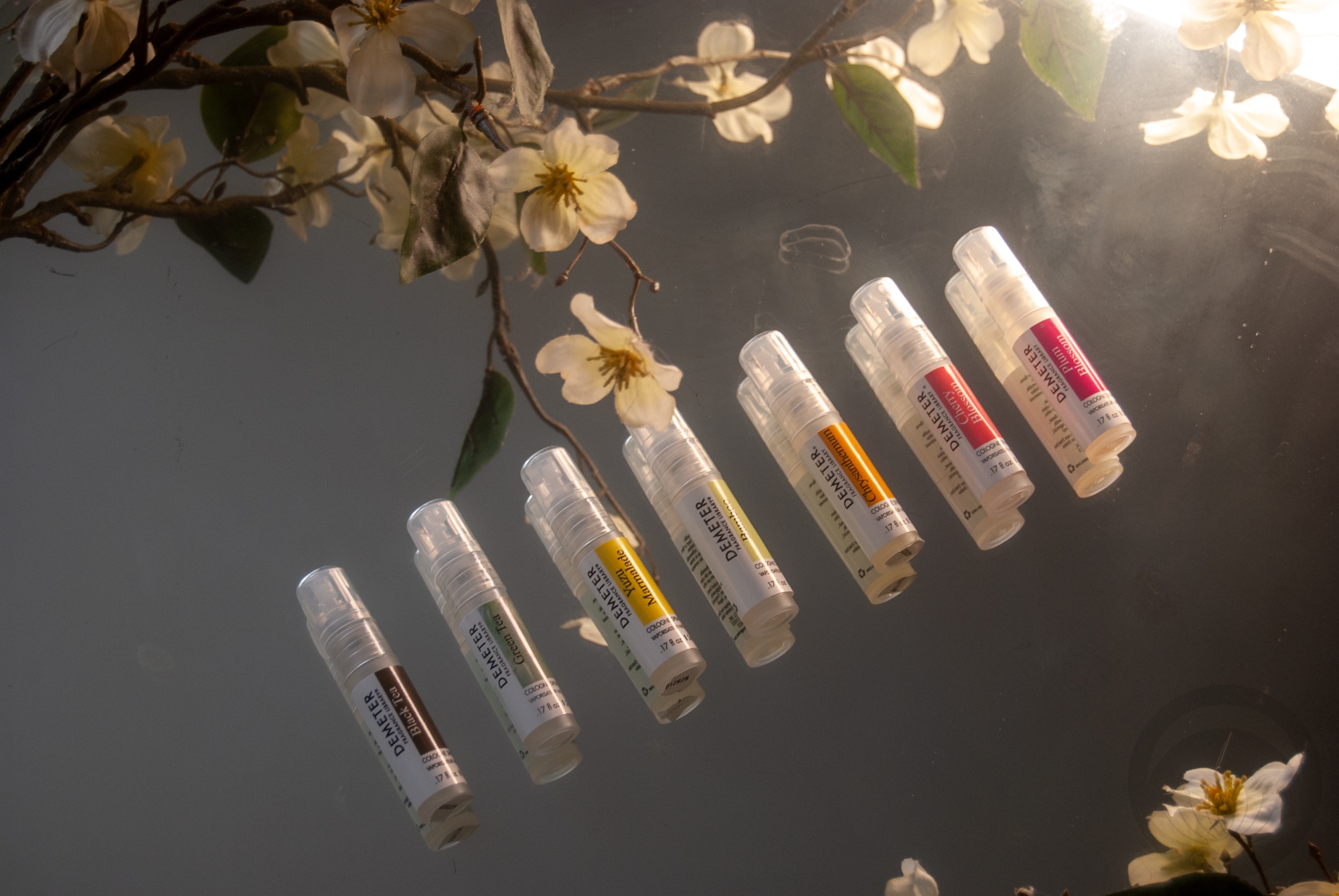
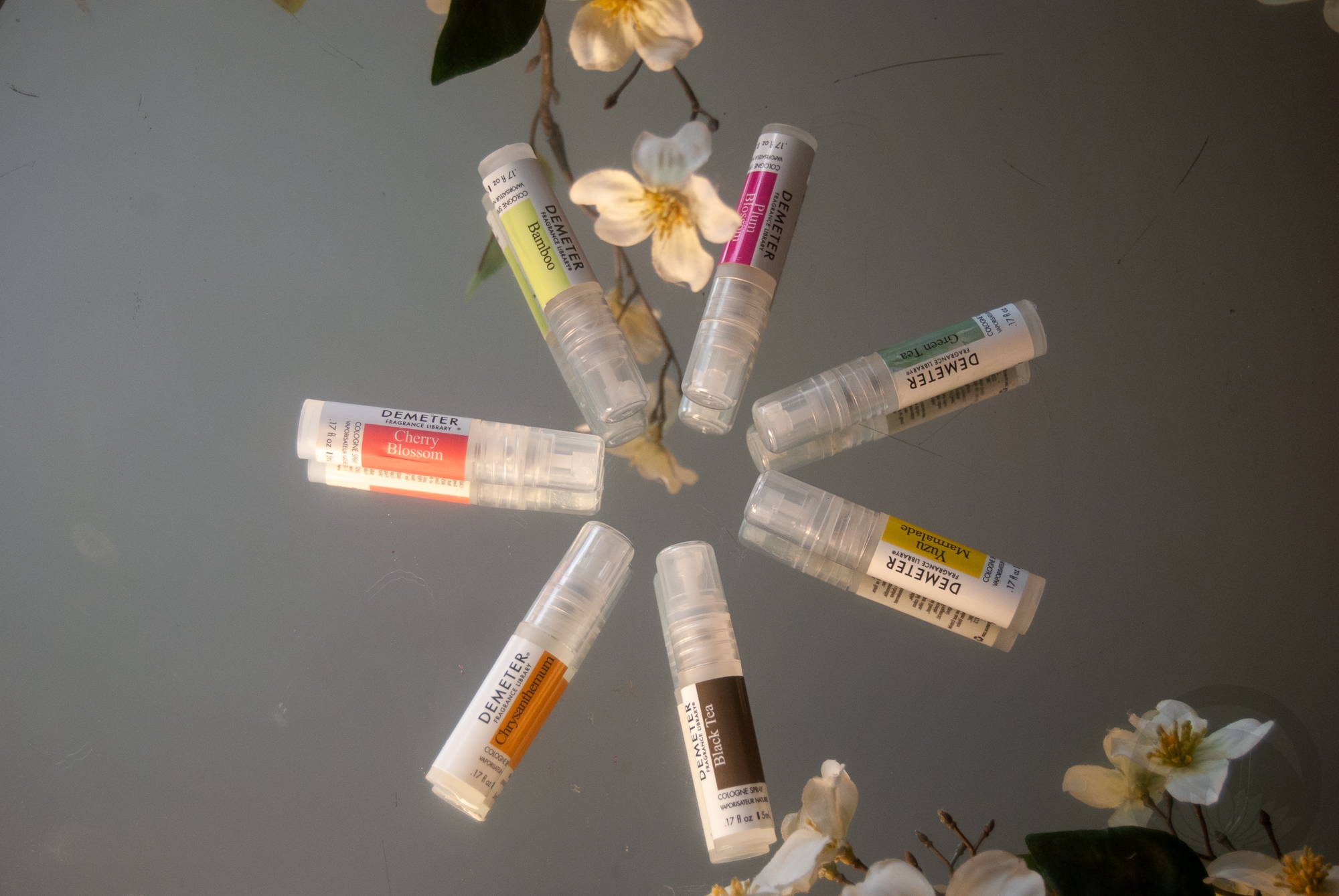
While I was continuing my hunt for a true sakura fragrance, I stumbled across Demeter’s incredibly wide selection of fascinating and unique perfumes. I knew I wanted to try their cherry blossom out, but I was also intrigued by a variety of their other offerings. I suspected that a lot of them would pair elegantly with kimono, and bring a whiff of Japan into your mundane daily life. I reached out, ready to purchase but hoping they could arrange a custom sample pack to save a bit of money. Imagine my pleased surprise when they kindly offered to send me a selection of my choice to review!

Without further ado come join me on a journey through the fragrant air of Japan, courtesy of Demeter Fragrance Library.

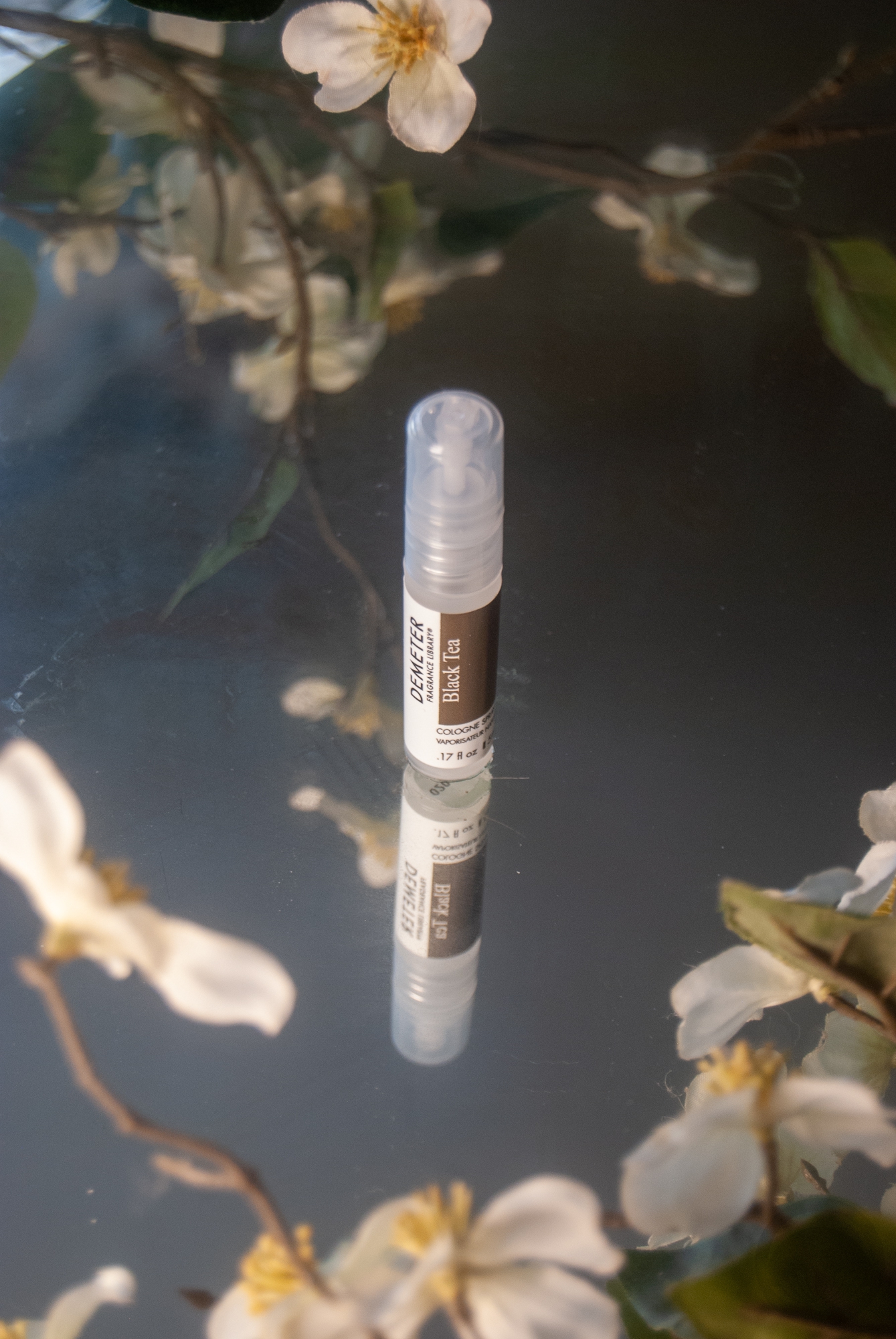
Black Tea

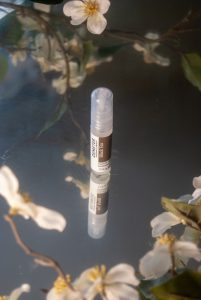
We start our day with a voyage, strong cup of black tea. With notes that balance toasty and floral, this is a comforting and familiar scent that will awaken your senses. Reminiscent of the perfect brew of wakouchathis black tea fragrance is versatile and grounded, making it lovely by itself and an excellent base for layering.
purchase Black Tea here


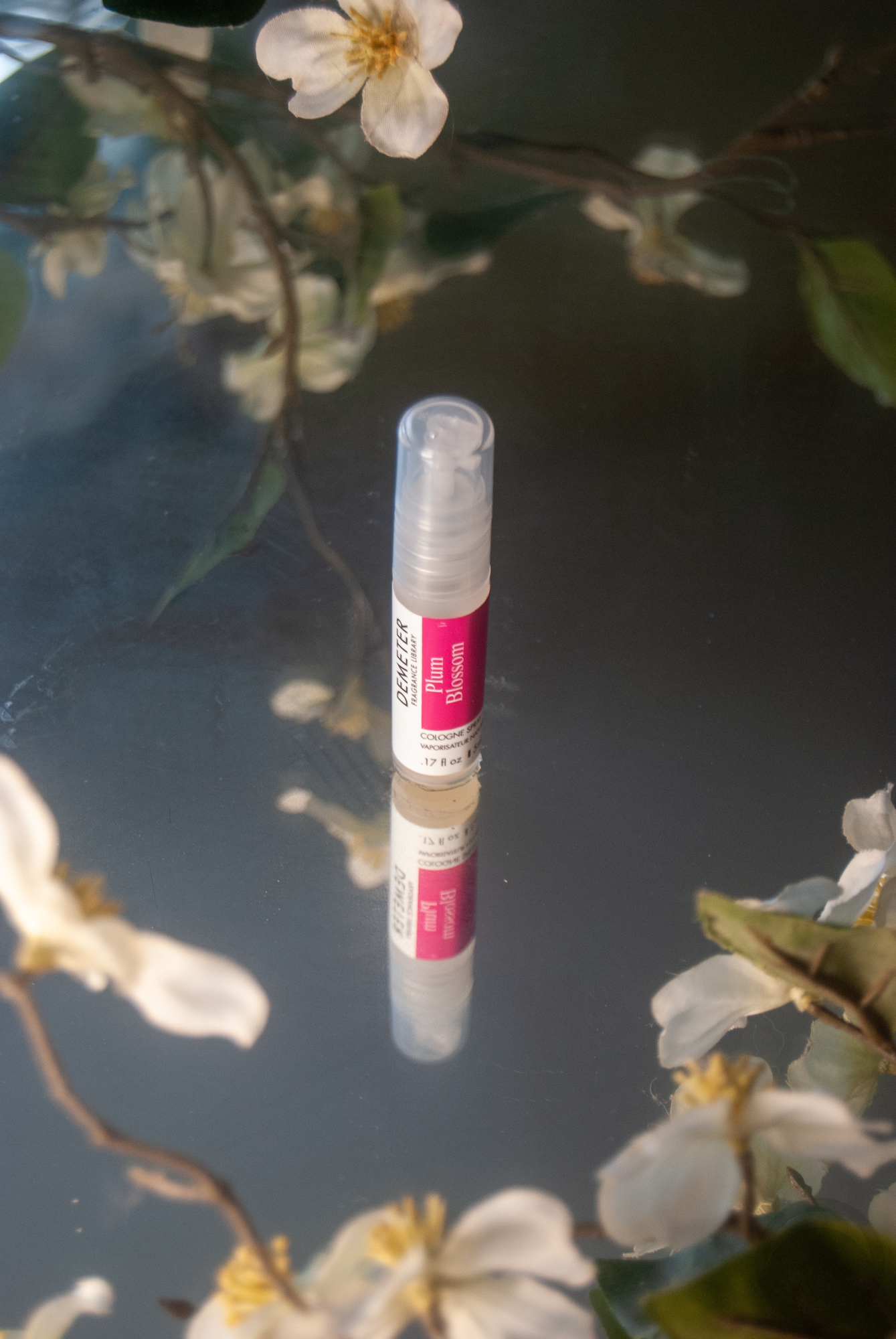
Plum Blossom

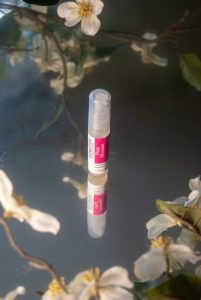
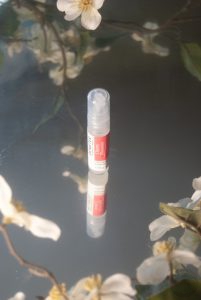
While not as universally-beloved as her spring sister sakura, the ume or plum blossoms exploding across branches is one of the iconic images of late winter and coming spring — especially when paired with the charming bush warbler. Their scent is headier and richer, and a bit more mature, but no less transportive and this perfume captures that note perfectly. Minus the bush warbler, of course. If you’re looking for a deeper, slightly more complex floral then plum blossom might be for you!
purchase Plum Blossom here


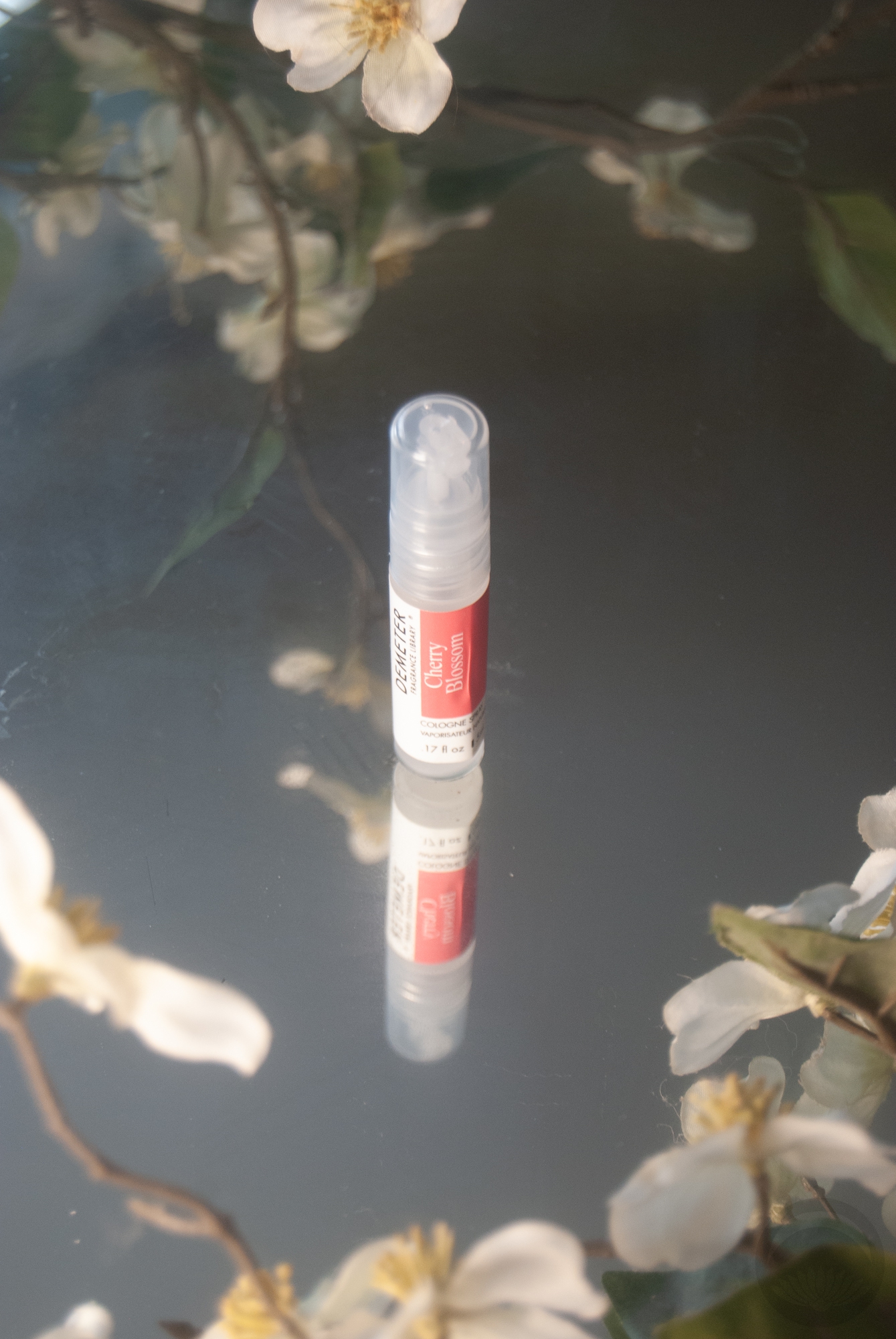
Cherry Blossom

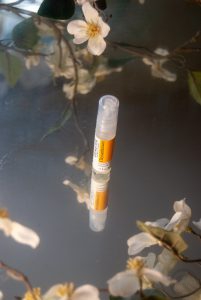
As late winter flows into spring, the sakura on the shores of the Kamo river burst into bloom. Their ephemeral, ethereal beauty is perhaps one of the most emblematic images of Japan. The gentle flush of pink, the flutter of a falling petal, but one thing that pictures can never capture is the clean, delicate, equally airy scent. This fragrance comes close — maybe the closest I’ve come yet. It dries down to a skin-like powdery note, nothing like the soapy chemical cherry blossoms I’ve tried in the past. The only thing preventing it from being the perfect sakura is that it finishes on a delectable rich cherry fruit note. I love it, but it does interrupt the gentleness of the blossom.
purchase Cherry Blossom here


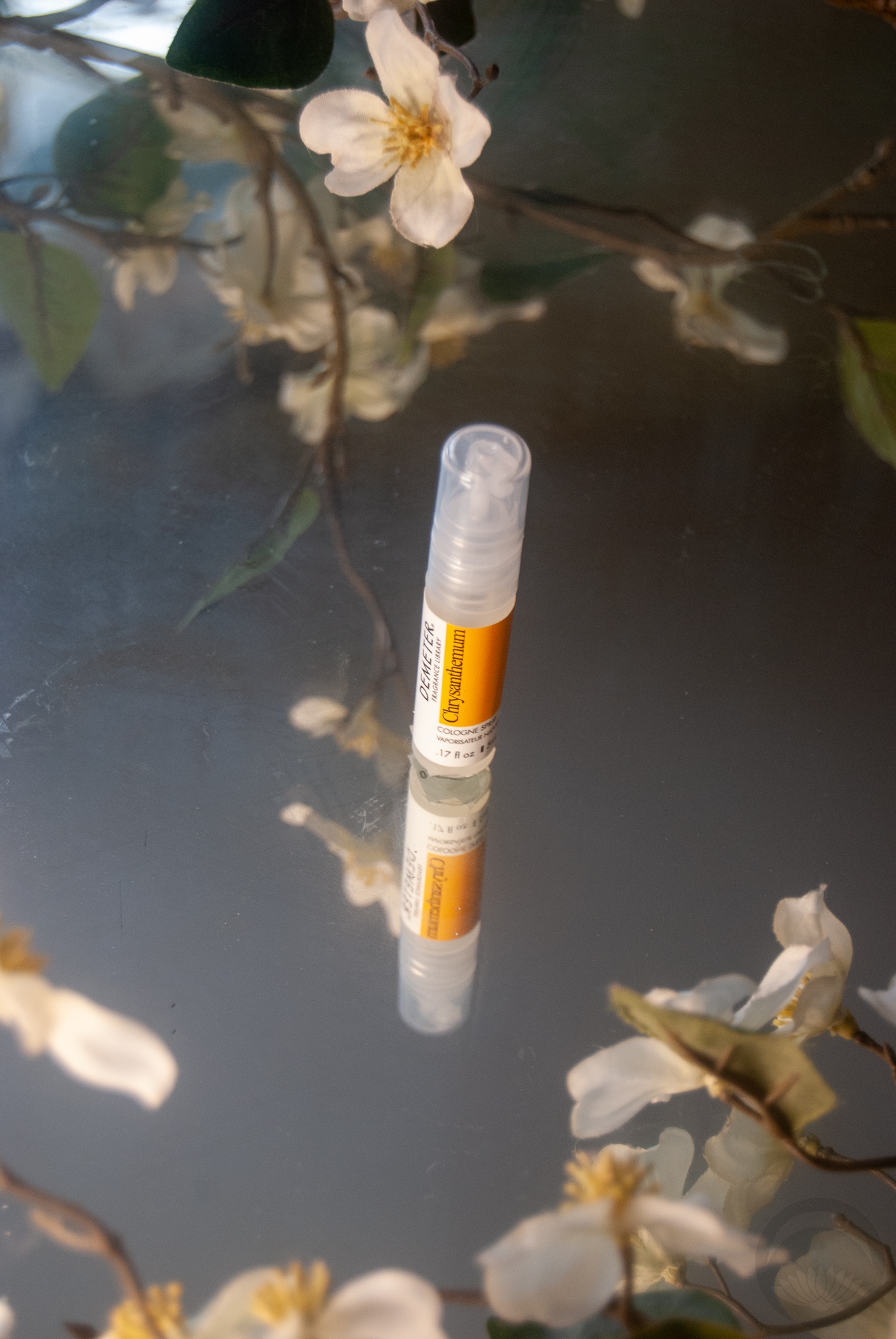
Chrysanthemum

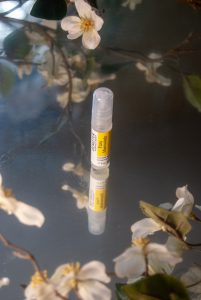
As autumn rolls around, so too does the chrysanthemum, the kiku, the imperial crest of Japan. She’s iconic, she’s timeless, she smells vaguely like a funeral home but in the best possible way. I would normally not feel comfortable making that comparison in a review, but seeing as how Demeter makes a Funeral Home fragrance already, it’s absolutely a compliment in this case. This fragrance captures both the deep spiciness of a pure white chrysanthemum and the bright herbaceous green of the stems and leaves. It’s a bit more unique and interesting than a pure floral would be, and all the better for it.
purchase Chrysanthemum here


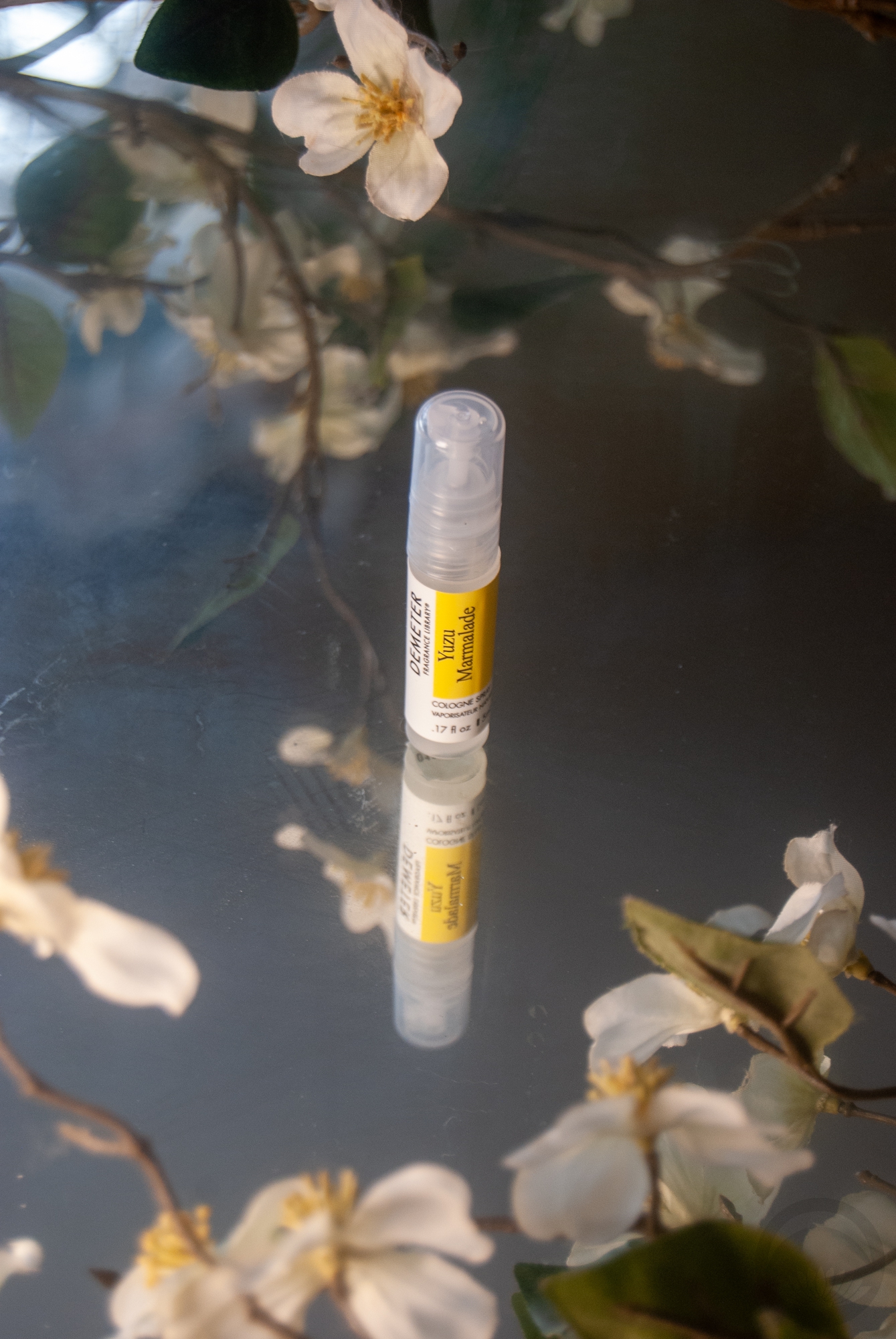
Yuzu Marmalade

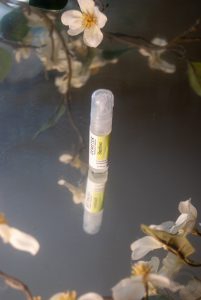
Next, we find ourselves in Kito, Tokushima province, where the climate produces the best yuzu in the world. Yuzu marmalade is a bright, invigorating fragrance, perfect for imbuing your day with happiness and cheer and bringing a smile to everyone around you. The scent is perfectly balanced between tangy citrus and sweet jammy goodness, and I can see myself falling back on this one time and time again when I need a pick-me-up.
purchase Yuzu Marmalade here


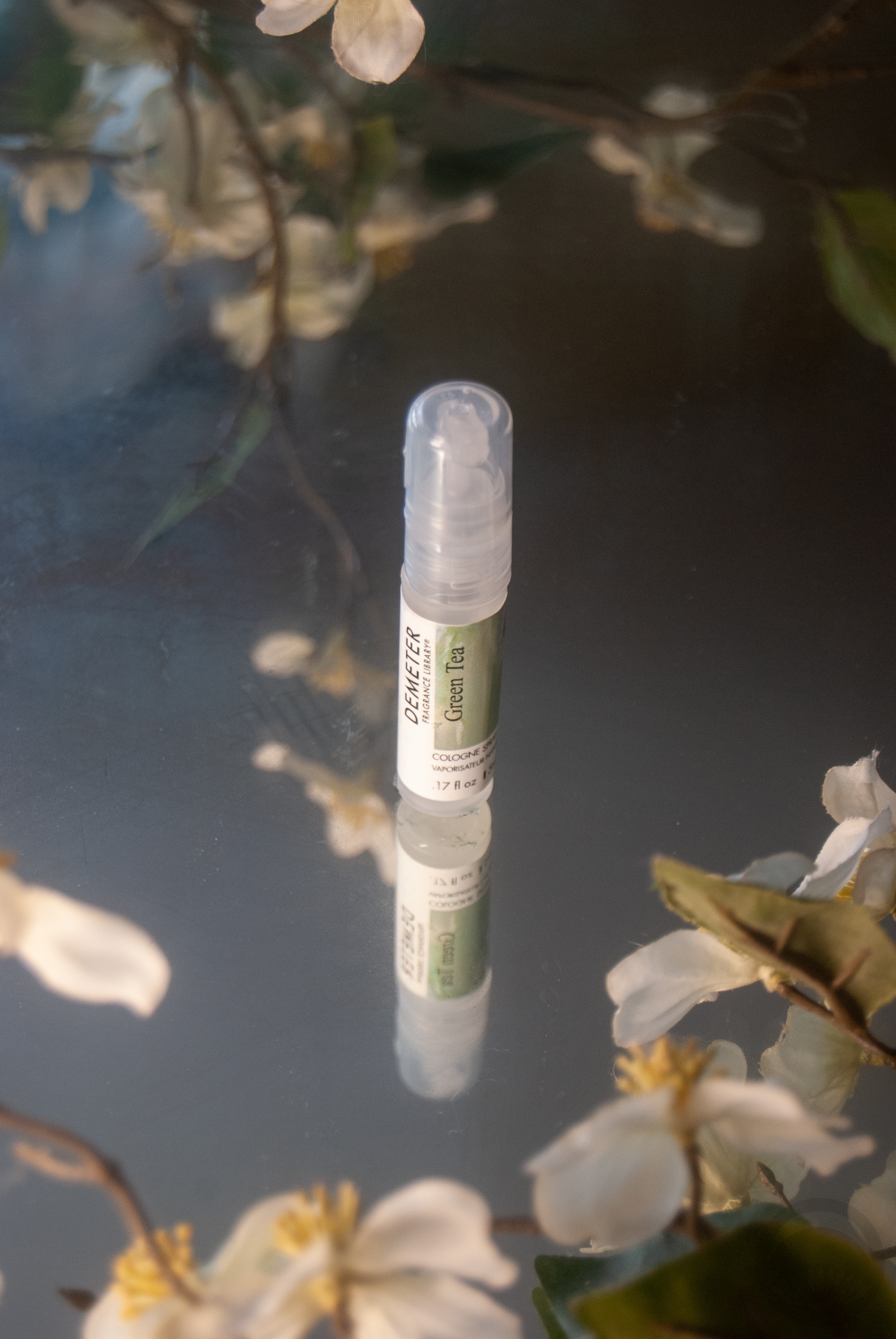
Green Tea

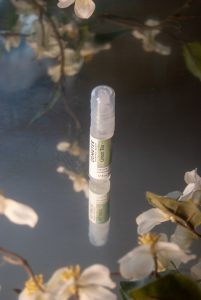
To refresh ourselves, we’ll make a stop at Gion Tsujiri for a cup of sencha. Bright and just a little bit grassy, with a hint of something crisp like pine or citrus? Not quite sharp, but definitely bracing in the best way. It definitely mellows out as you wear it, and envelops you in a gentle green.
purchase Green Tea here


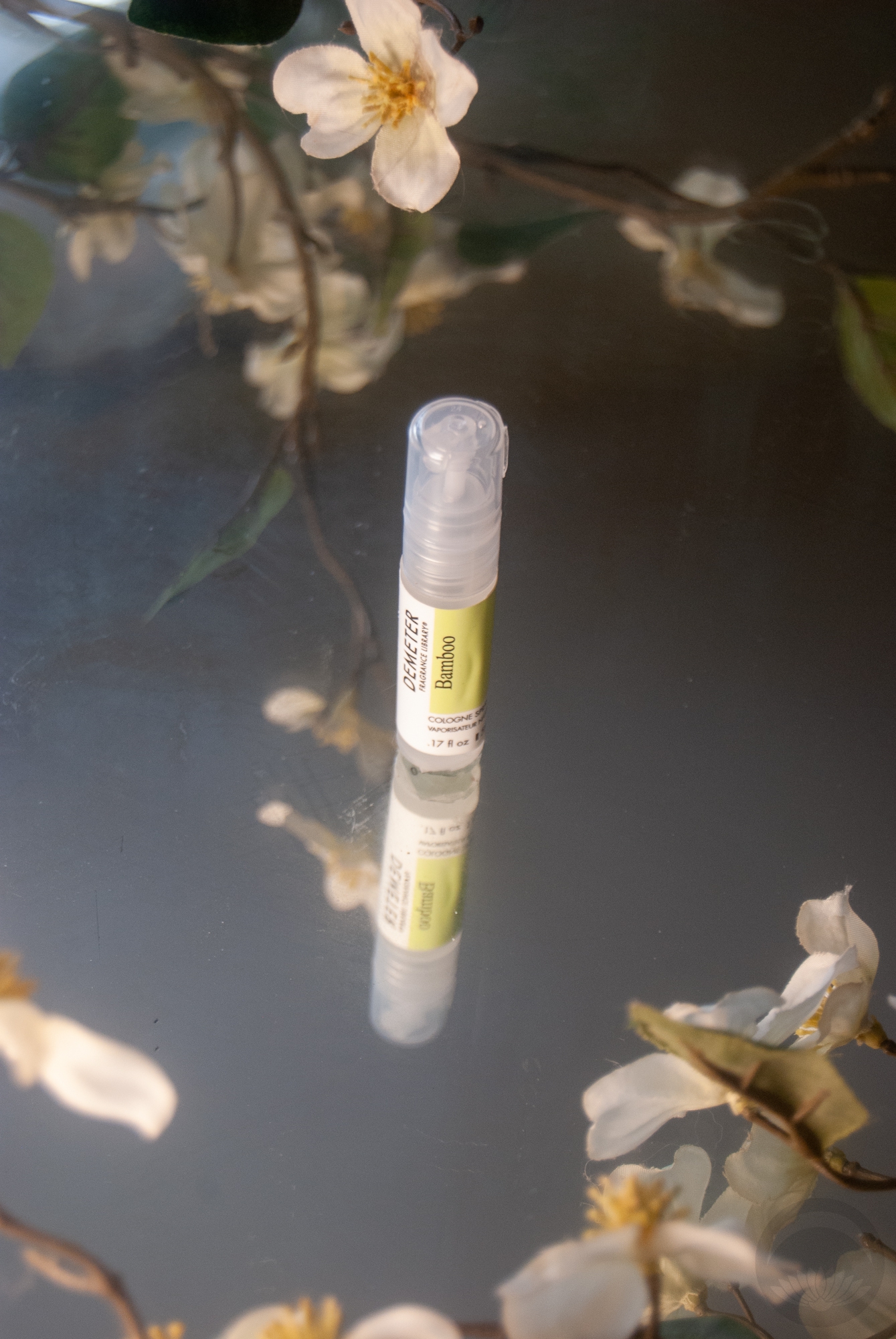
Bamboo

Finally, we find ourselves in the lush bamboo forests of Arashiyama. Unfortunately, with something as personal and preference-based as fragrance, not everything is a winner. I was hoping this would be lush, bright, and verdant. However, on me it just smells oddly like dish soap. However, it smells completely different on my mother so she’s happy to steal it from me! It will not go to waste, but it is something to keep in mind whenever you’re buying perfume online.

purchase Bamboo here


Another great thing about most Demeter fragrances is how well they layer. Because they’re relatively single-note focused, there’s little worry about fragrance notes competing or clashing with each other. The two combos I’ve tried — and loved — were mixing Green Tea & Cherry Blossom, and Black Tea & Yuzu Marmalade. The first is bright, fresh, and perfect for spring whereas the second surrounds you in comforting warmth perfect for autumn. I fully intend to try other combinations as well. I suspect the black tea will also be incredible with the depth of the chrysanthemum and part of me wants to layer all three florals together to see what happens.

These mini sprays are the perfect size to toss in a purse and are very travel-friendly. Just make sure the caps are screwed on very tightly; the green tea one was slightly loose and leaked a bit.

Overall, I’m very pleased with the bulk of these, and the one that isn’t quite meshing with my body chemistry will find a happy home with my mum. Thank you again to Demeter Fragrance Library for making this possible. I encourage you to check them out if you’re a fan of singular and unique perfumes, be they wa or not.
 I received this item from the retailer or manufacturer for honest review purposes.If you have a topically appropriate craft, product, or service you would like me to review, please contact me. 
Kimono-inspired Nails with Maniology Stamping Plates

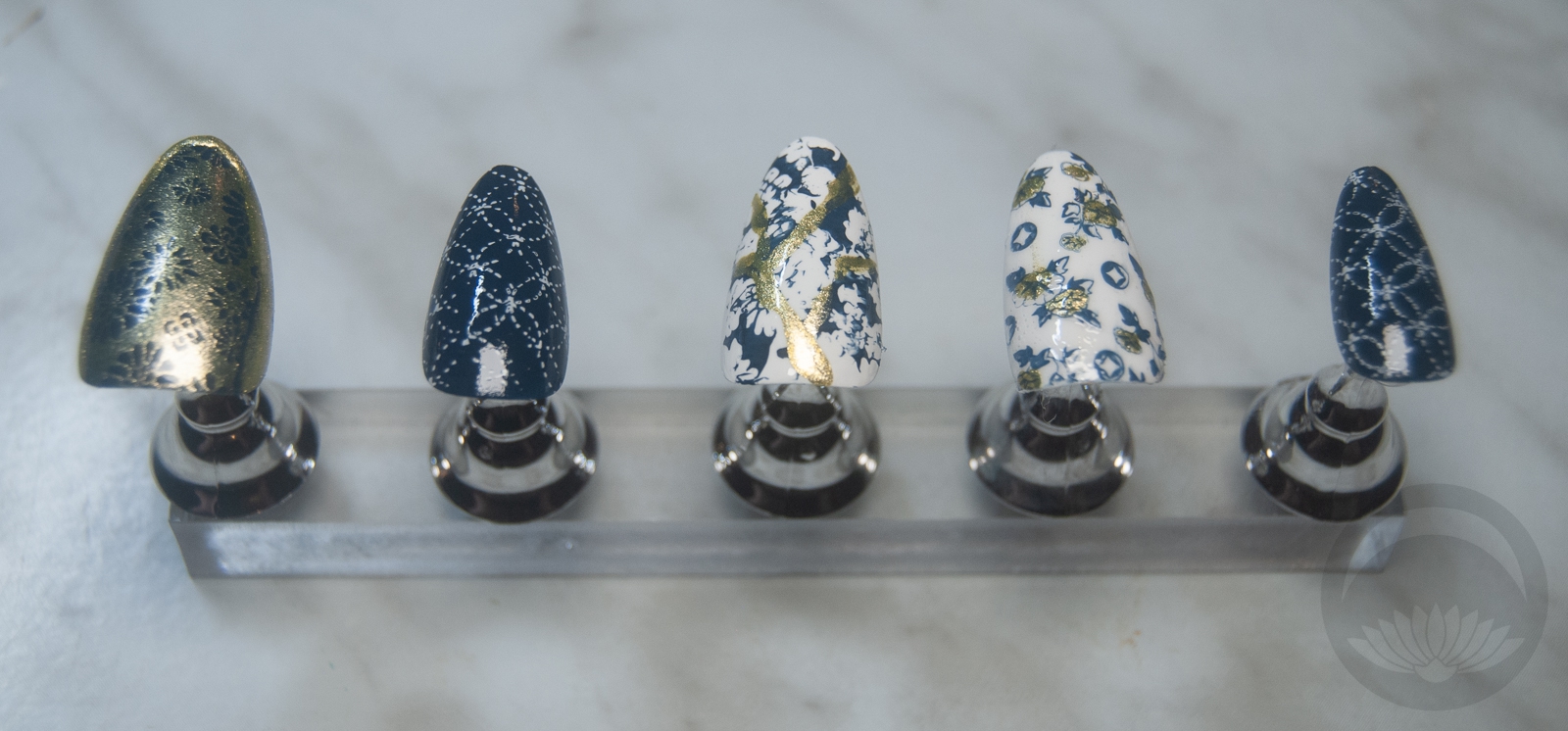
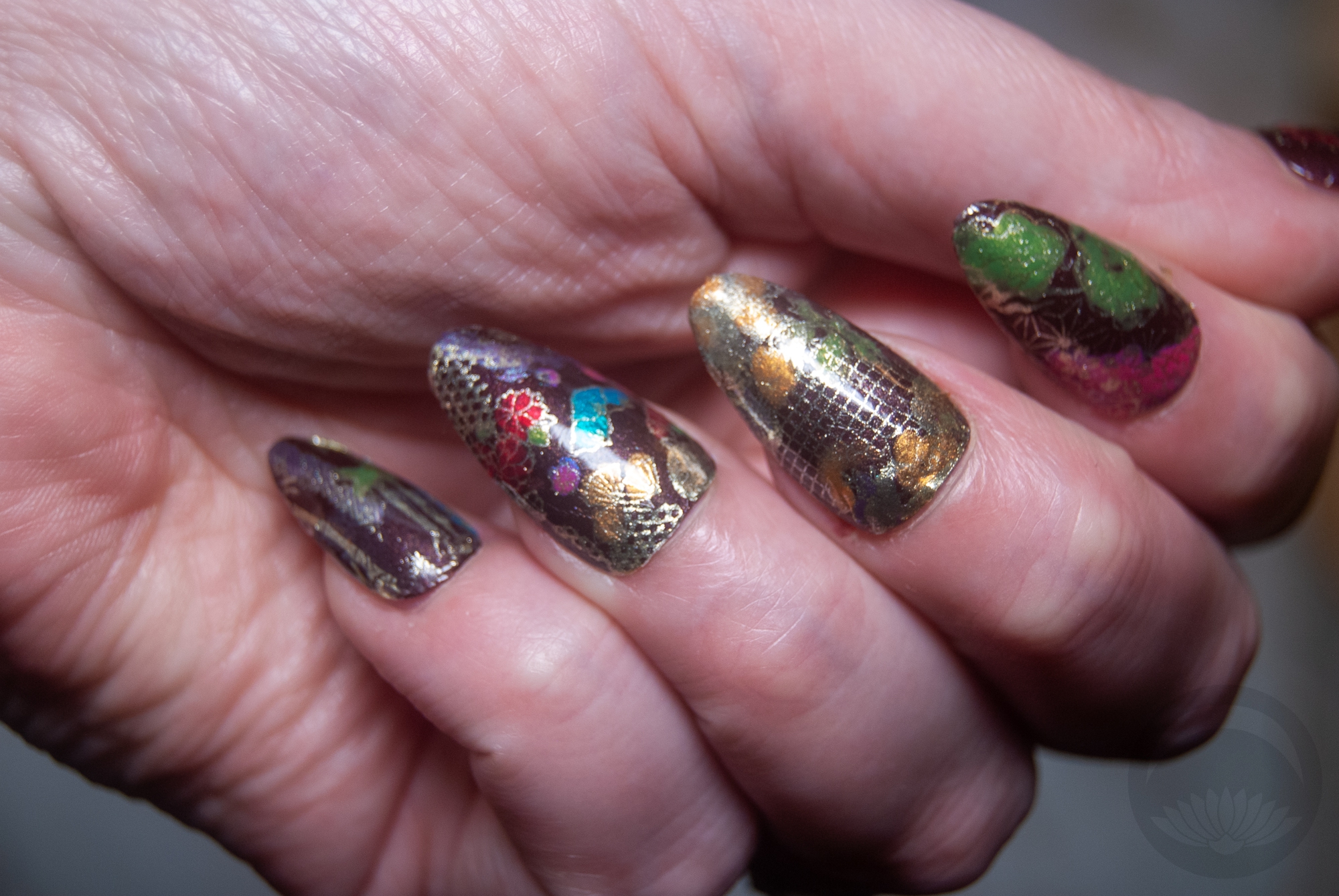
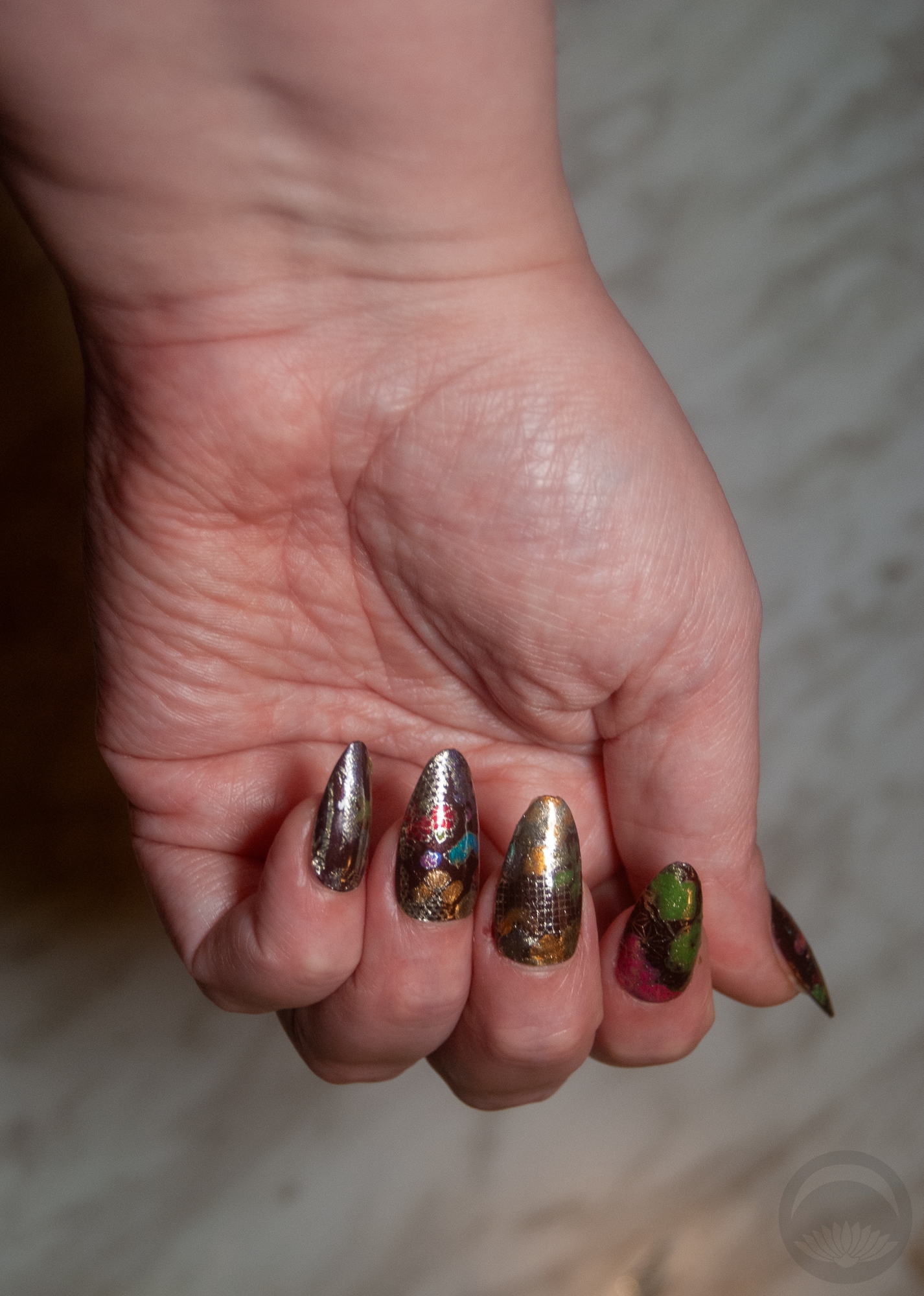
Back when I wore kimono regularly, I used to love matching my nails to my outfits. Obviously in recent years that’s gone out the window, but when Maniology released a set of very clearly kimono-inspired stamping plates I knew I had to give them a shot. Nothing wrong with having a fresh set even if they don’t match your outfit, right?

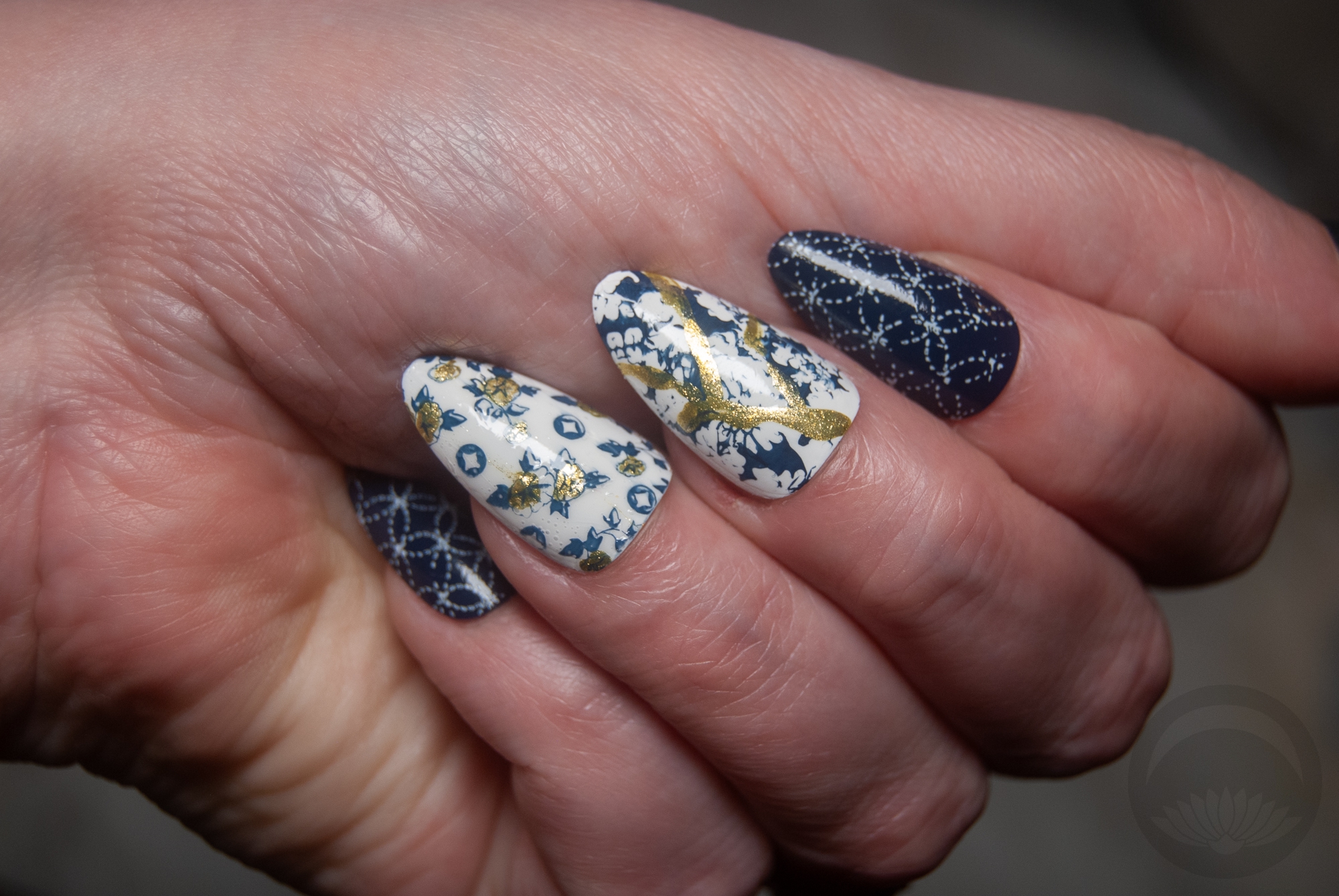
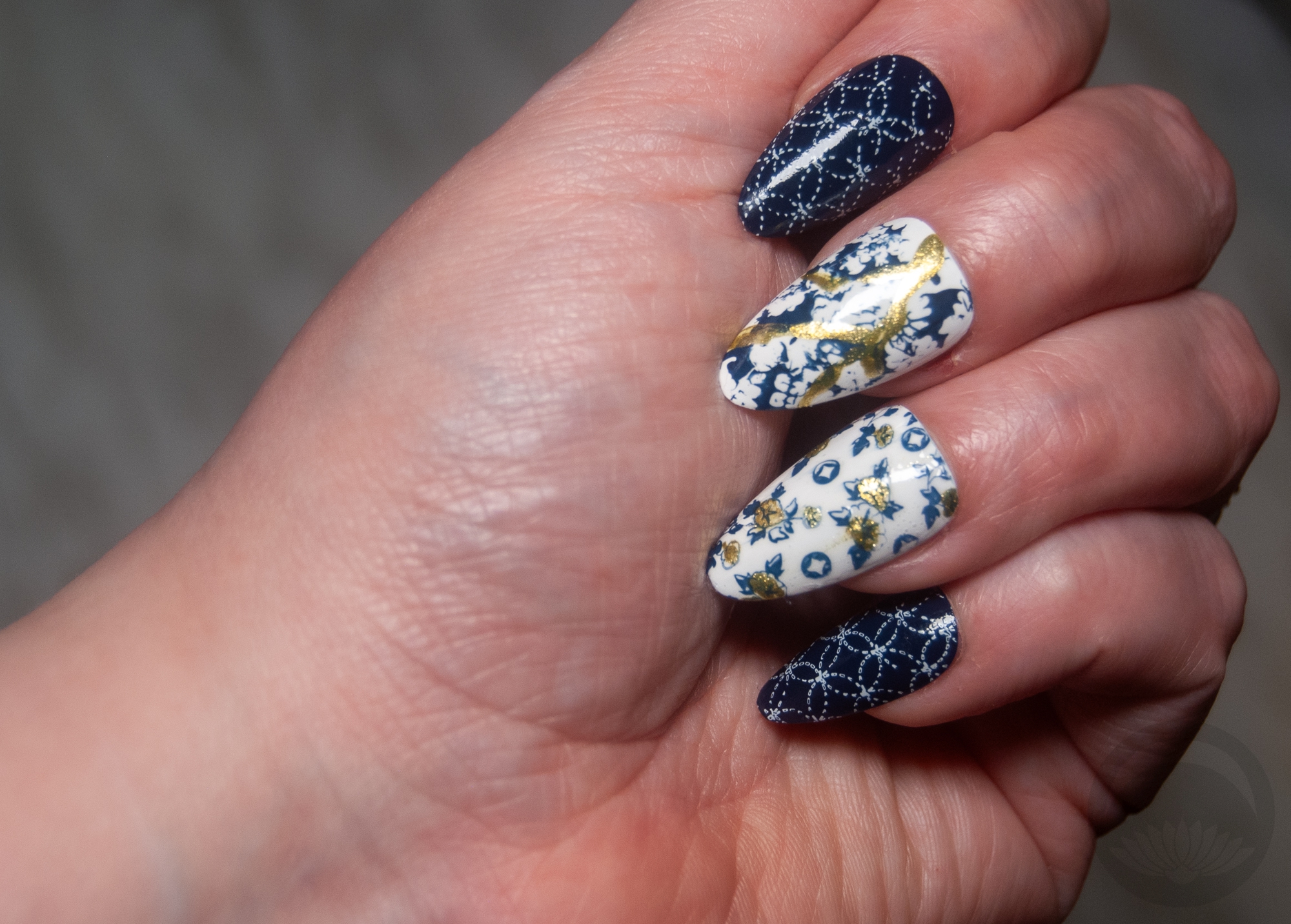
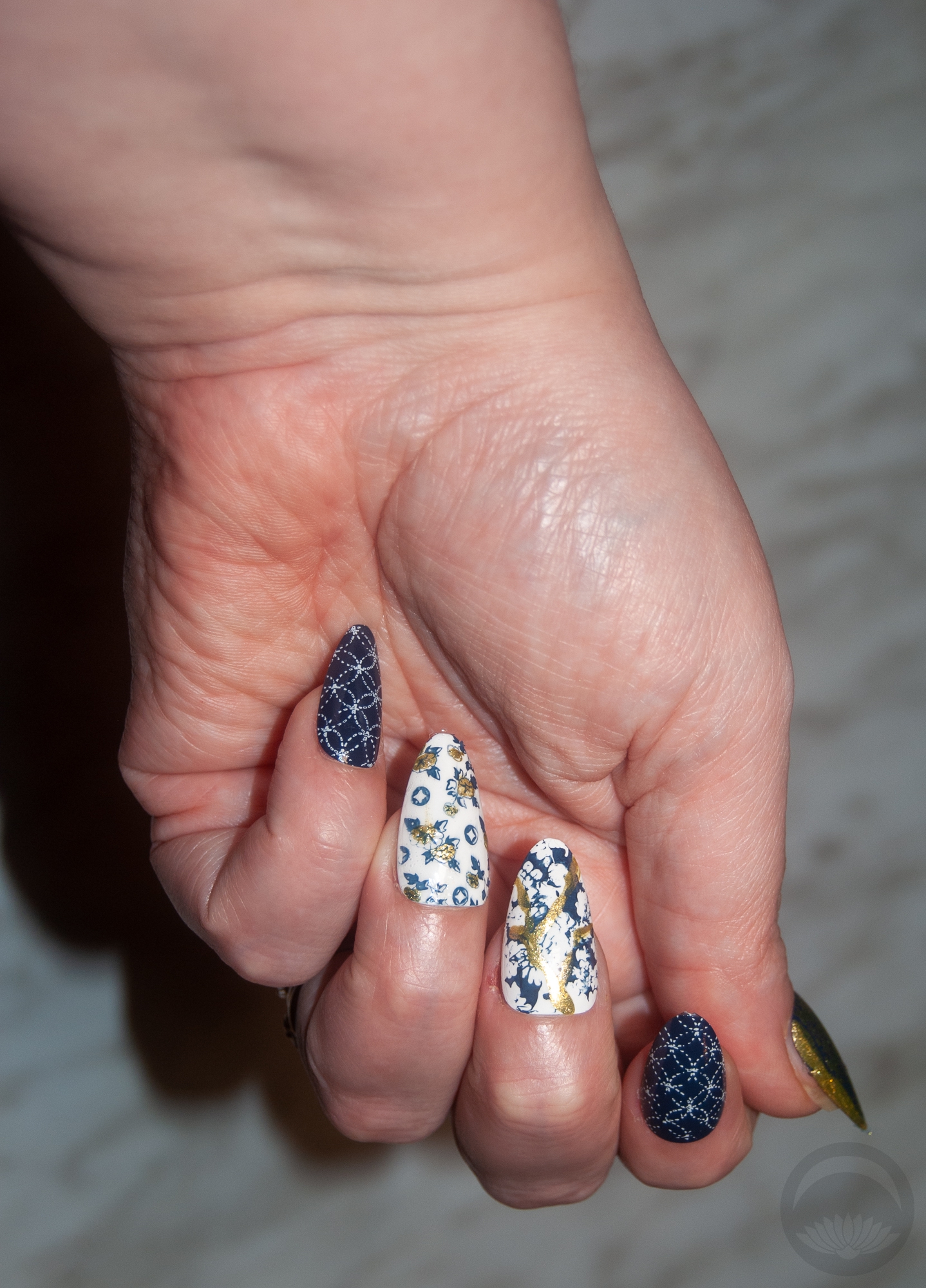
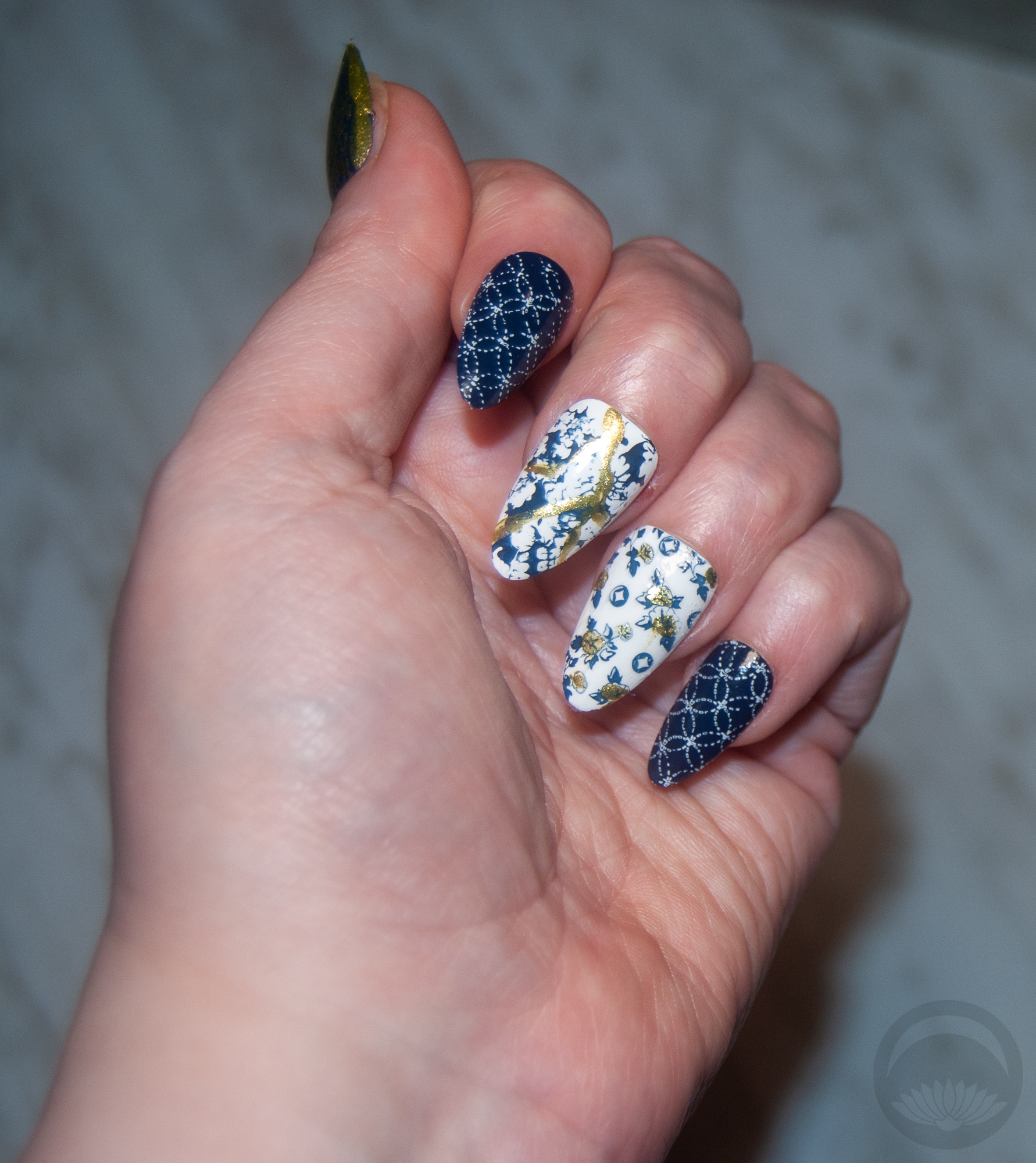
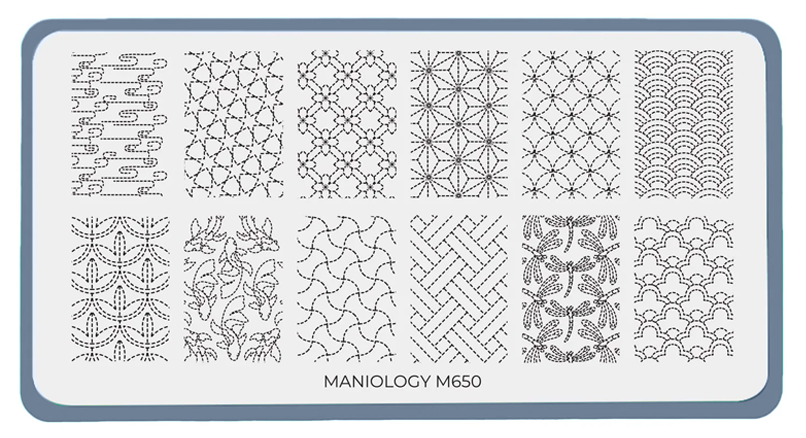
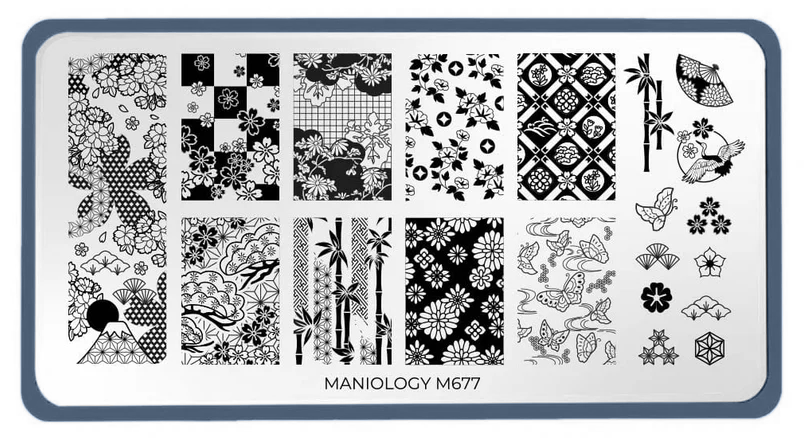
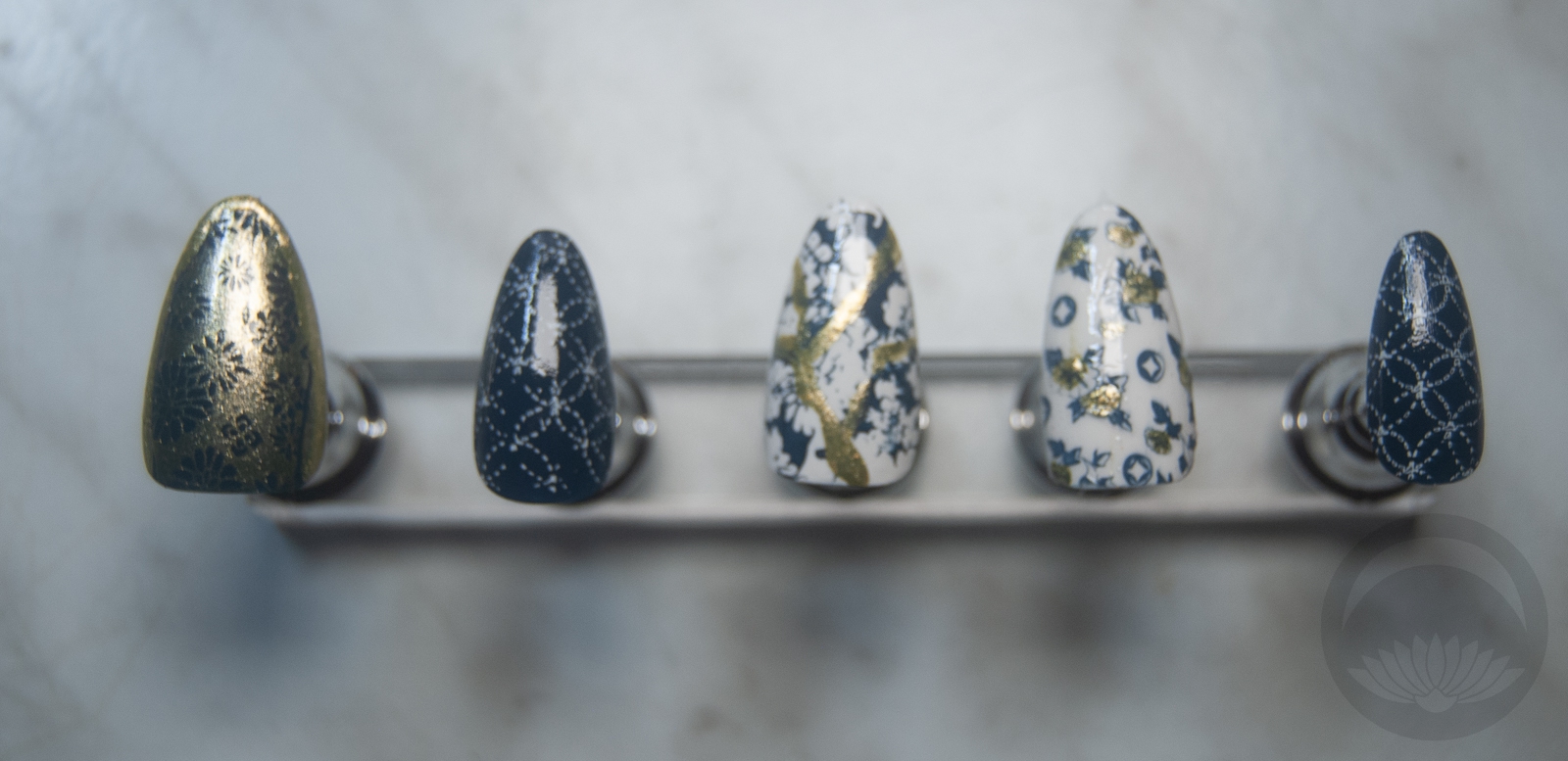
I knew I wanted to make a set that match this blog, so of course I grabbed the Sashiko Stitch plate. I also fell in love with the Draped in Elegance plate that featured a variety of kimono design motifs.

Where possible, I have linked to the polishes I used. However, I’ve been hoarding collecting nail polish nearly as long as I’ve been hoarding collecting kimono so many of these colours are no longer available. In one case the brand doesn’t even exist anymore! I do recommend getting a good white polish if you plan to use it for stamping, especially over dark colours, but the selection for the yuzen-style manicure has a ton of room for interpretation.


Sashiko & Kintsugi Blog Manicure

Plate used:

Maniology M650 – Sashiko Stitch
(plus the asagao from the plate below)

Polishes used:

Navy – Expressie Feel The Hype
White – Maniology Bam! (B170)
Gold – Maniology It’s Lit (B262)

fkjjdslkfsjhdljfsdlf


Golden Yuzen Manicure

Plate used:

Maniology M677 – Draped in Elegance

Polishes used:

Plum base – NARS Tokaido Express
Gold stamping – Maniology It’s Lit (B262)
Red – Nubar Sultry Red
Orange – OPI Totally Tangerine
Green –  Zoya Midori
Blue –  Revlon Blue Siren
Purple – Revel Nails Whirled View
Pink – CND Tutti Frutti

@kimono_tsuki

Kimono nails featuring @hellomaniology stamping plates マニキュア #着物

♬ original sound – Kimono Tsuki 着物月 – Kimono Tsuki 着物月


Other tools & products used:

Medium almond nail tips
Polish stamper and scraper
Nail art liner brushes
Nail stand
Silicone mat


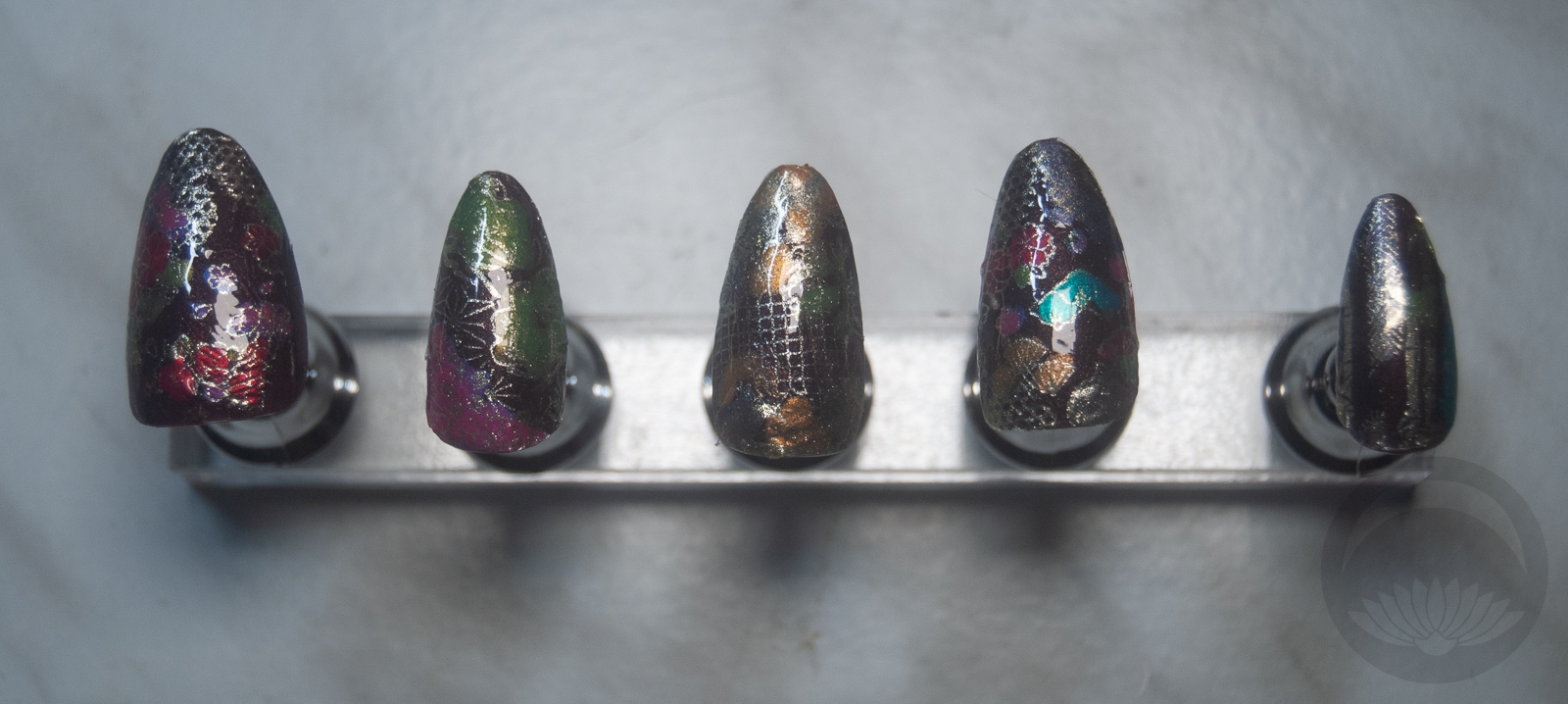
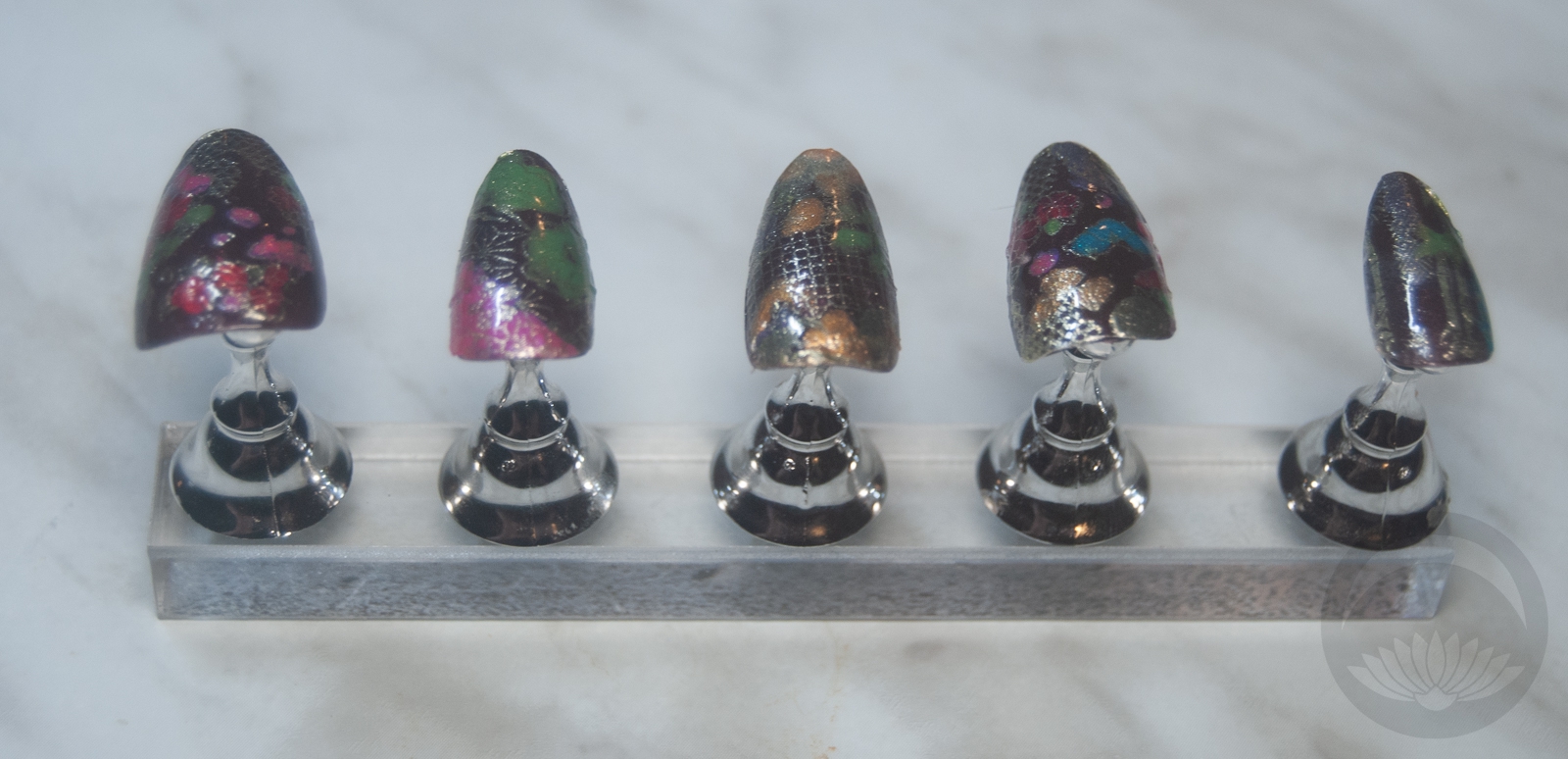
I did standard straight-to-nail stamping for the sashiko manicure, and made my own transfers for the yuzen-style one. If you’re curious I did make a little video of the process for the transfers, but there are plenty of incredible videos out there that explain how to use stamping plates far better than I could. I would suggest starting with Maniology’s own YouTube page, they have tons of clear and helpful videos.

These plates were a dream to use and the stamping polish made things so smooth and intuitive. I’ve tried some very basic stamping in the past and didn’t have nearly as much luck, and this was my first time doing anything layered or complicated, and I can’t get over how well they turned out. If you want to give yourself a manicure to match your favourite kimono, or just bring a little bit of Japan to your fingertips, I highly recommend these! My only regret is that I didn’t buy more of them. I’ll have to snag some other ones from this collection in the future.

If you buy anything from Maniology, you can use my code TSUKI for 10% off!

 I purchased this item myself and chose to review it.This post contains affiliate link(s). If you choose to purchase, I receive a small rebate or commission which goes to the continued maintenance of this site. 

Kokeshi Picrew for Hinamatsuri!

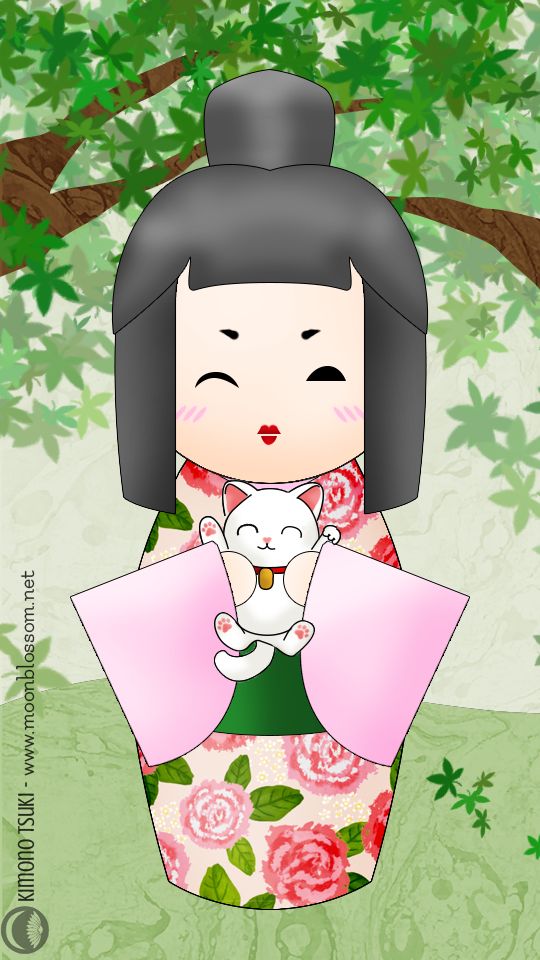
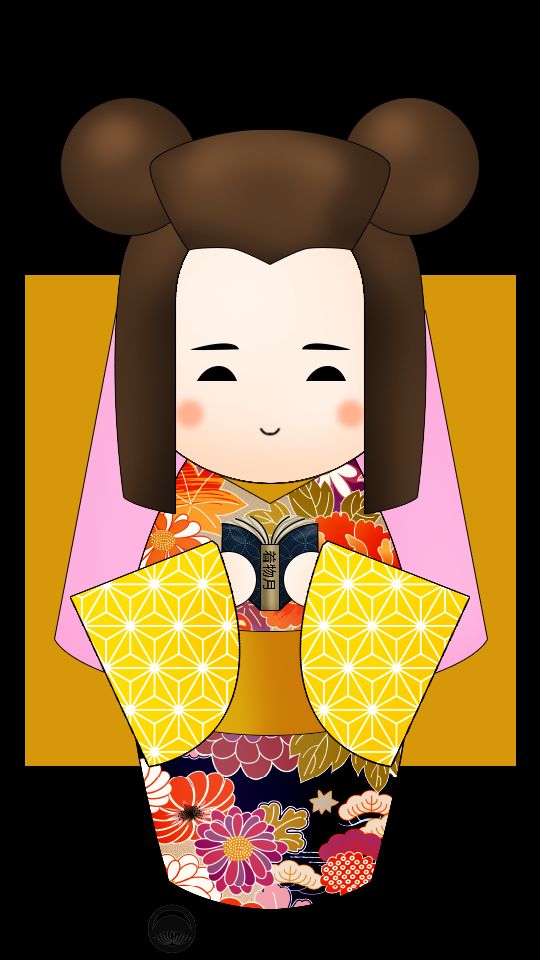
Today is Hinamatsuri! In the past, I’ve usually either done a coordination, displayed dolls I’ve collected, or done some sort of DIY to celebrate. This year, I had bigger plans; Sophie and I were going to attend a gathering at a local tea house over the weekend. Unfortunately, I woke up with the most miserable cold and sore throat I’ve had in eons, to the point where I could barely swallow. I wasn’t up to doing much and did not want to risk spreading the ick. I was at a bit of a loss on what to do for today but then I realised it would be the perfect time to share my newest long-term project!

You all know how much I love finding and reviewing picrew avatar creators, and I figured it was high time I make my own! Presenting the official….

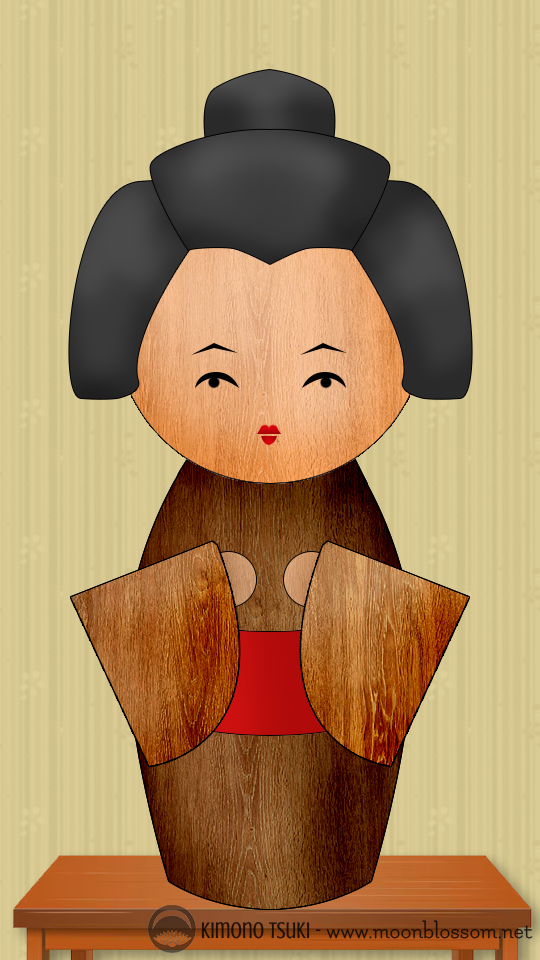
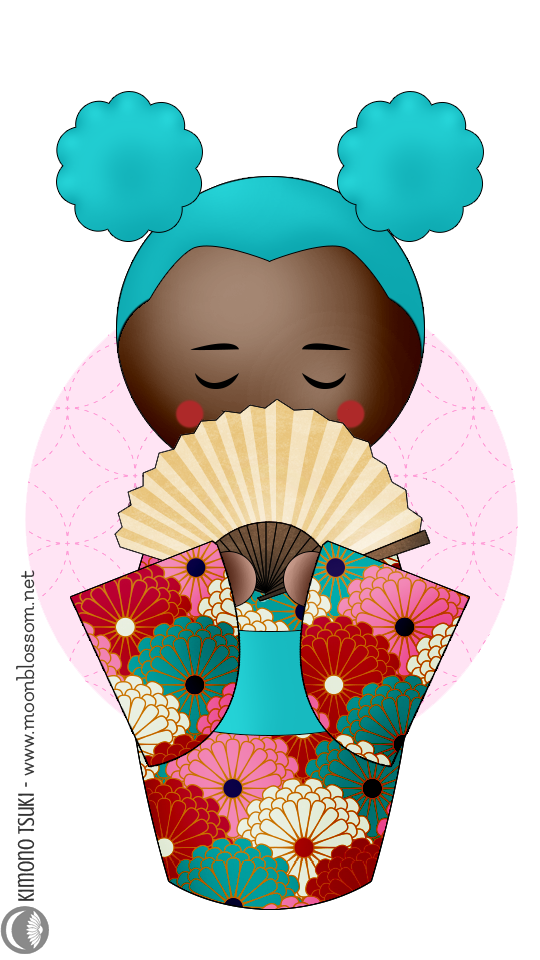
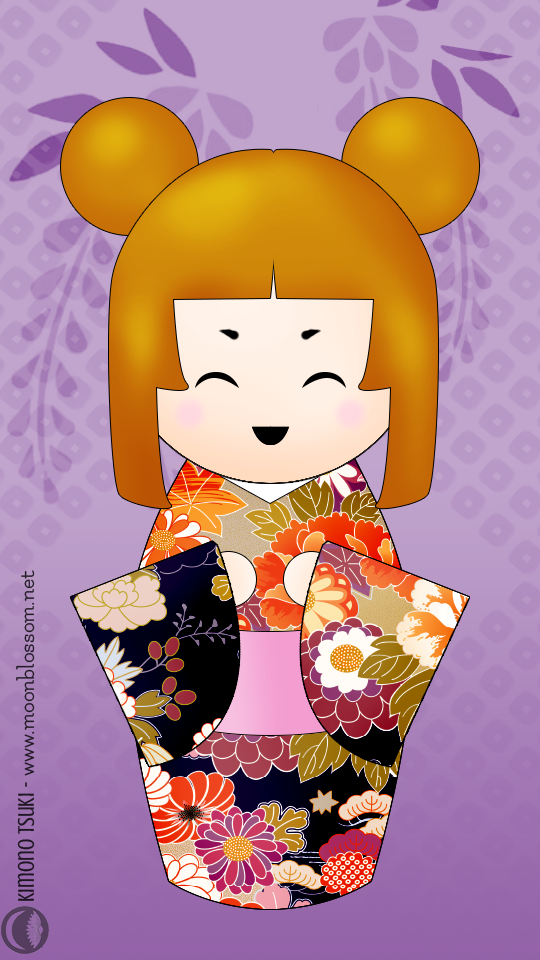
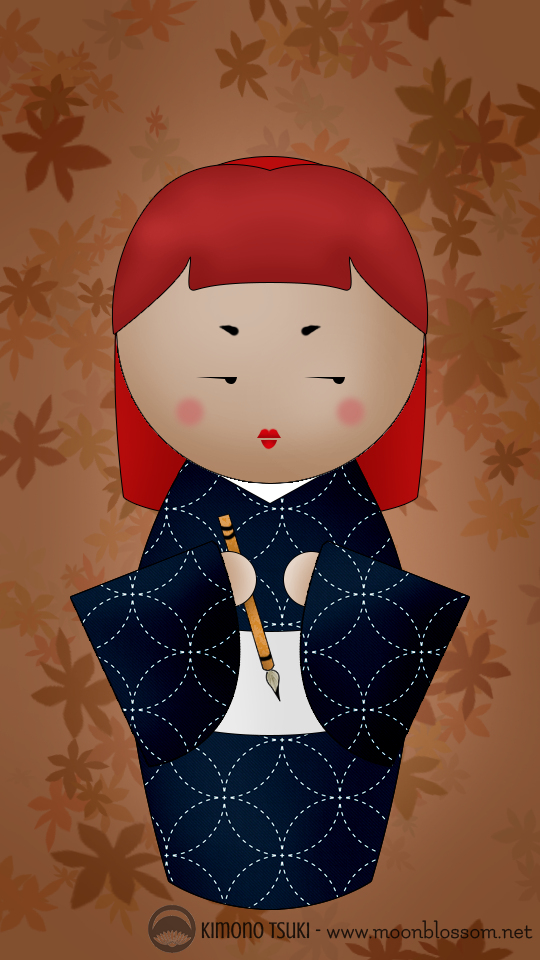
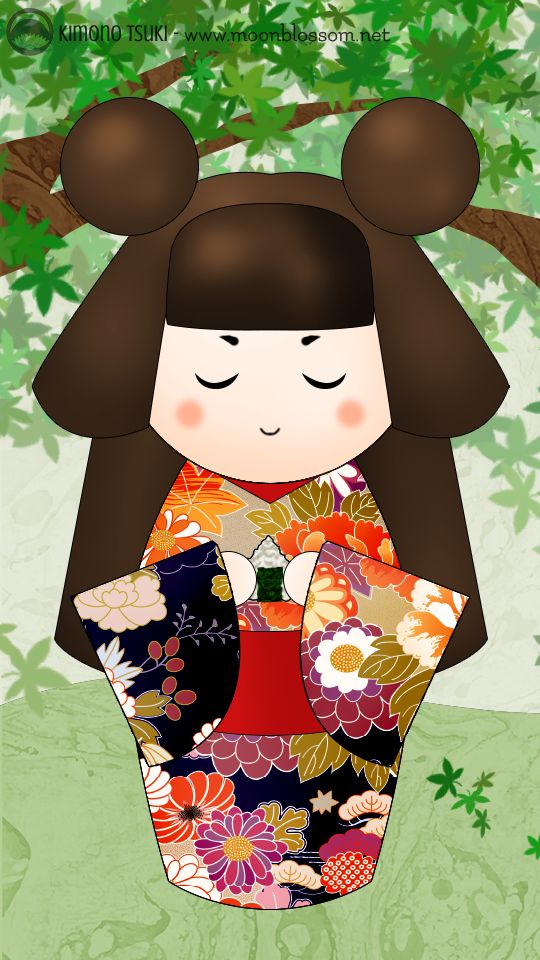
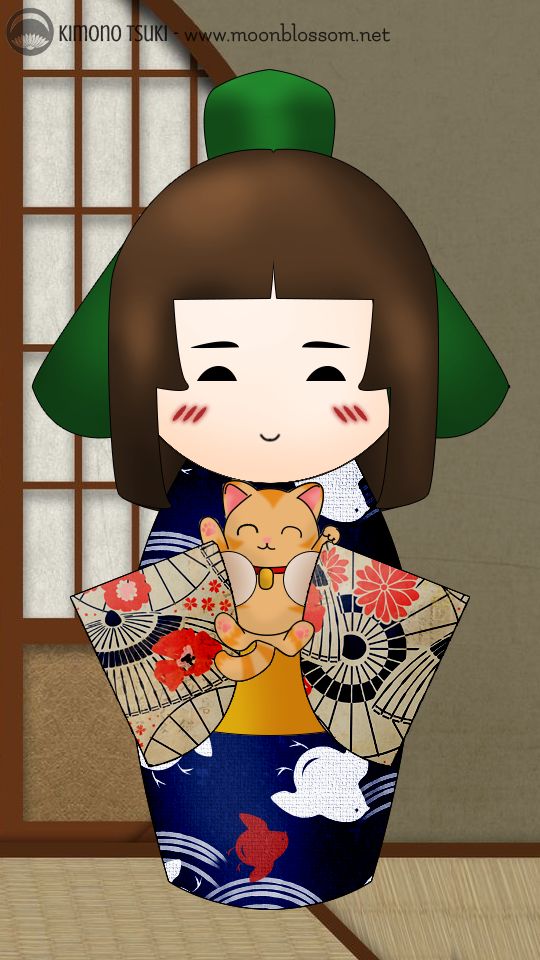
Kimono Tsuki Kokeshi Doll picrew maker!


It’s been a labour of love for the past few months, puttering on weekends and after work. I still have plans to continue updating, adding more hairstyles, more hand-held items, a variety of kanzashi, maybe a haori layer… if you have any other ideas or suggestions please don’t hesitate to let me know! For fun, here’s a variety of dolls that have been made using it, by myself and my friends.


If you need a primer or a refresher on how to use the Picrew.me interface, I broke it down in my first post about the site, which you can read here. I hope you have fun with it, and if you make any cute dolls please show me! I would love to see!

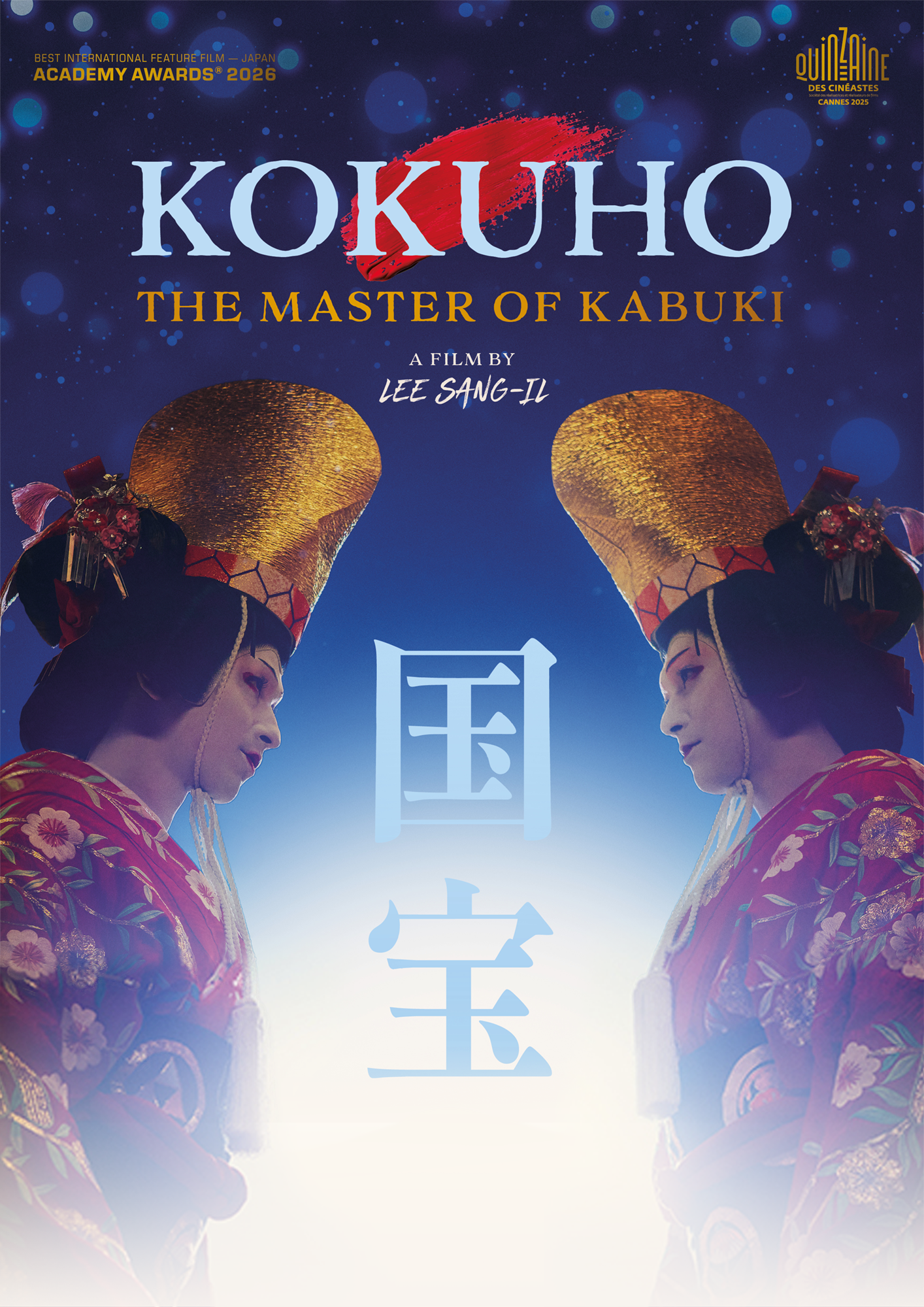
Movie Review – Kokuho

What would you give — or give up — for a chance at true greatness?

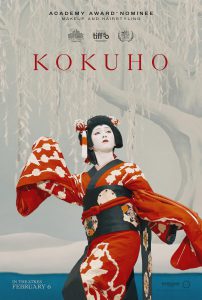
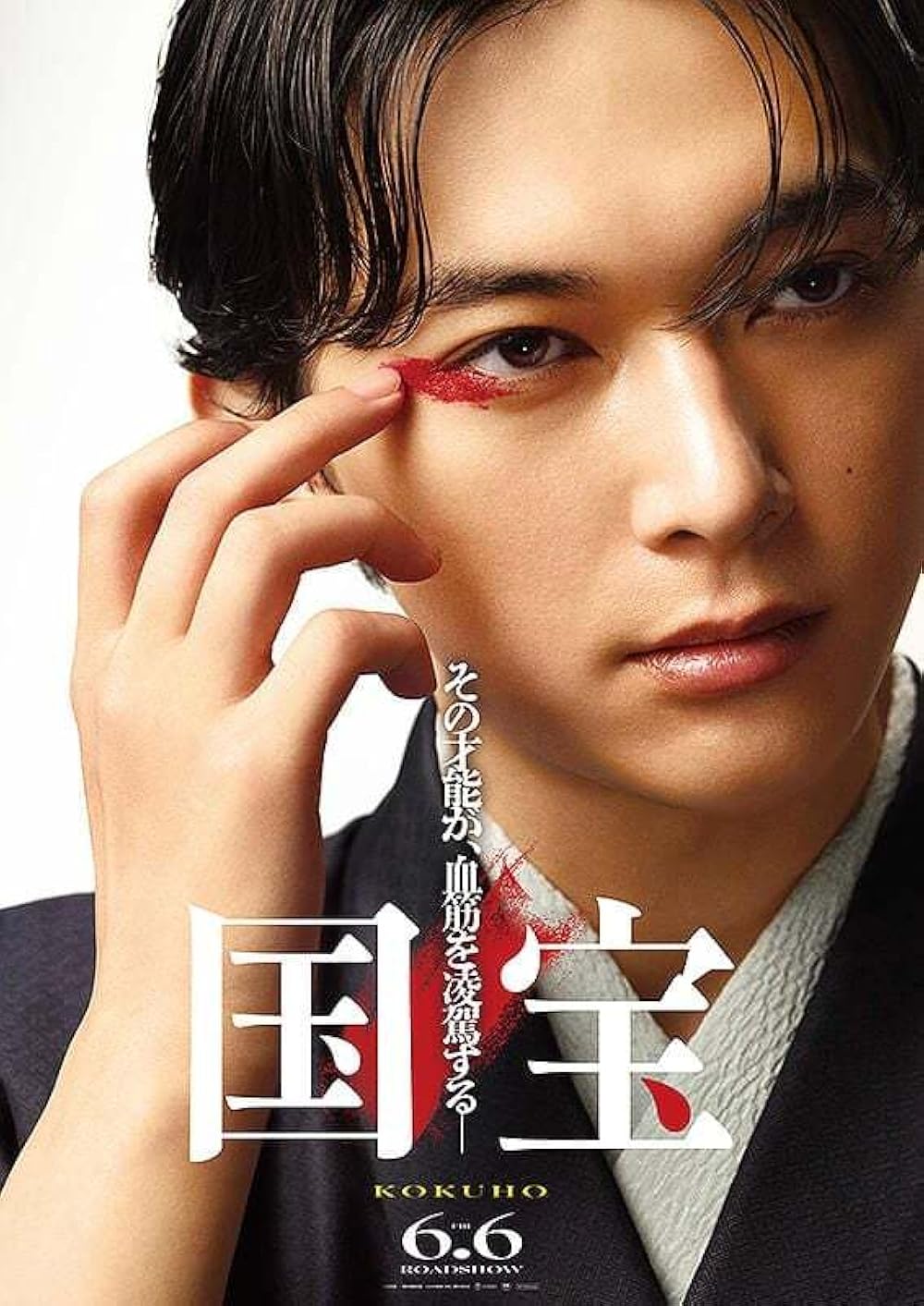
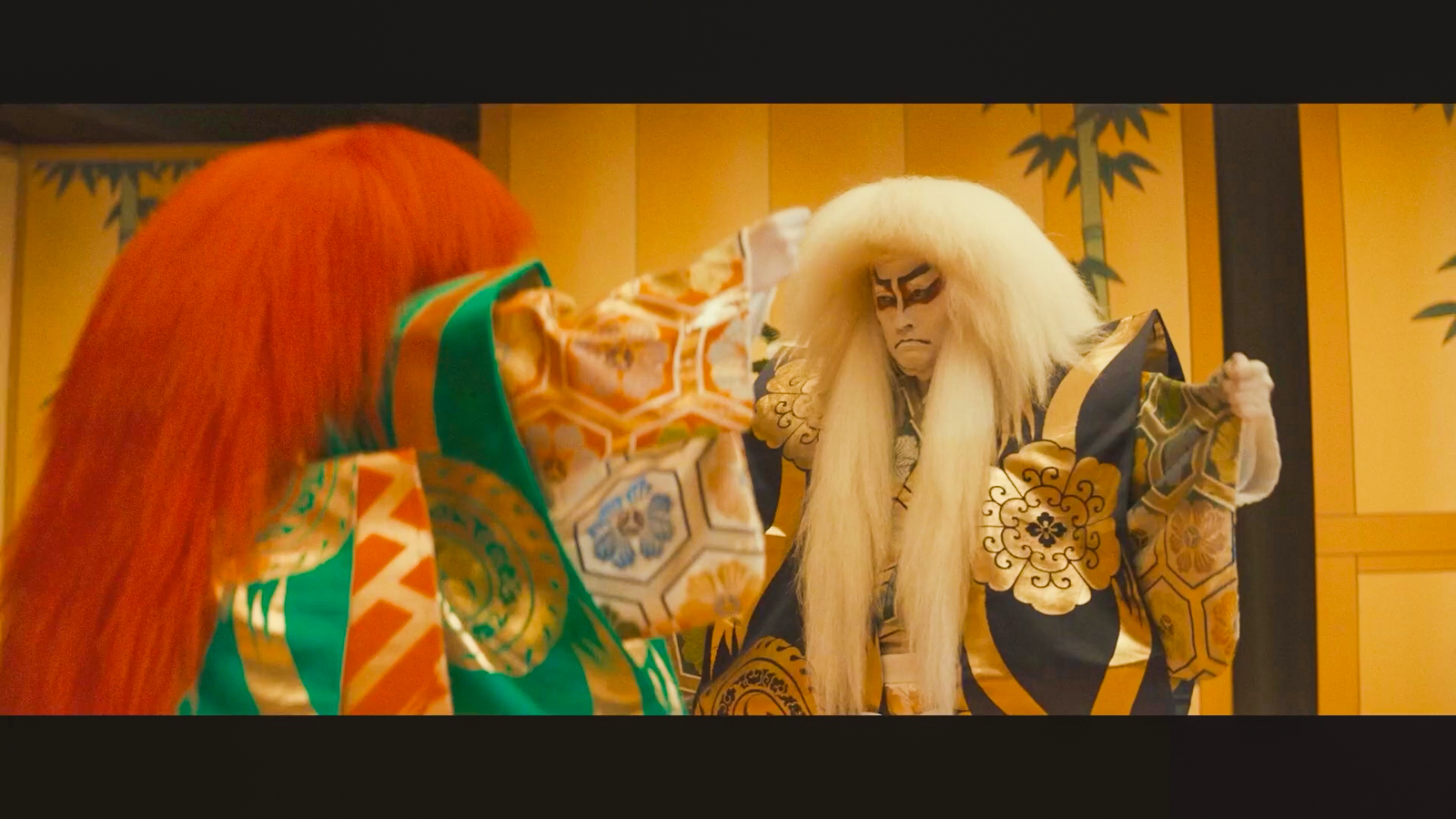
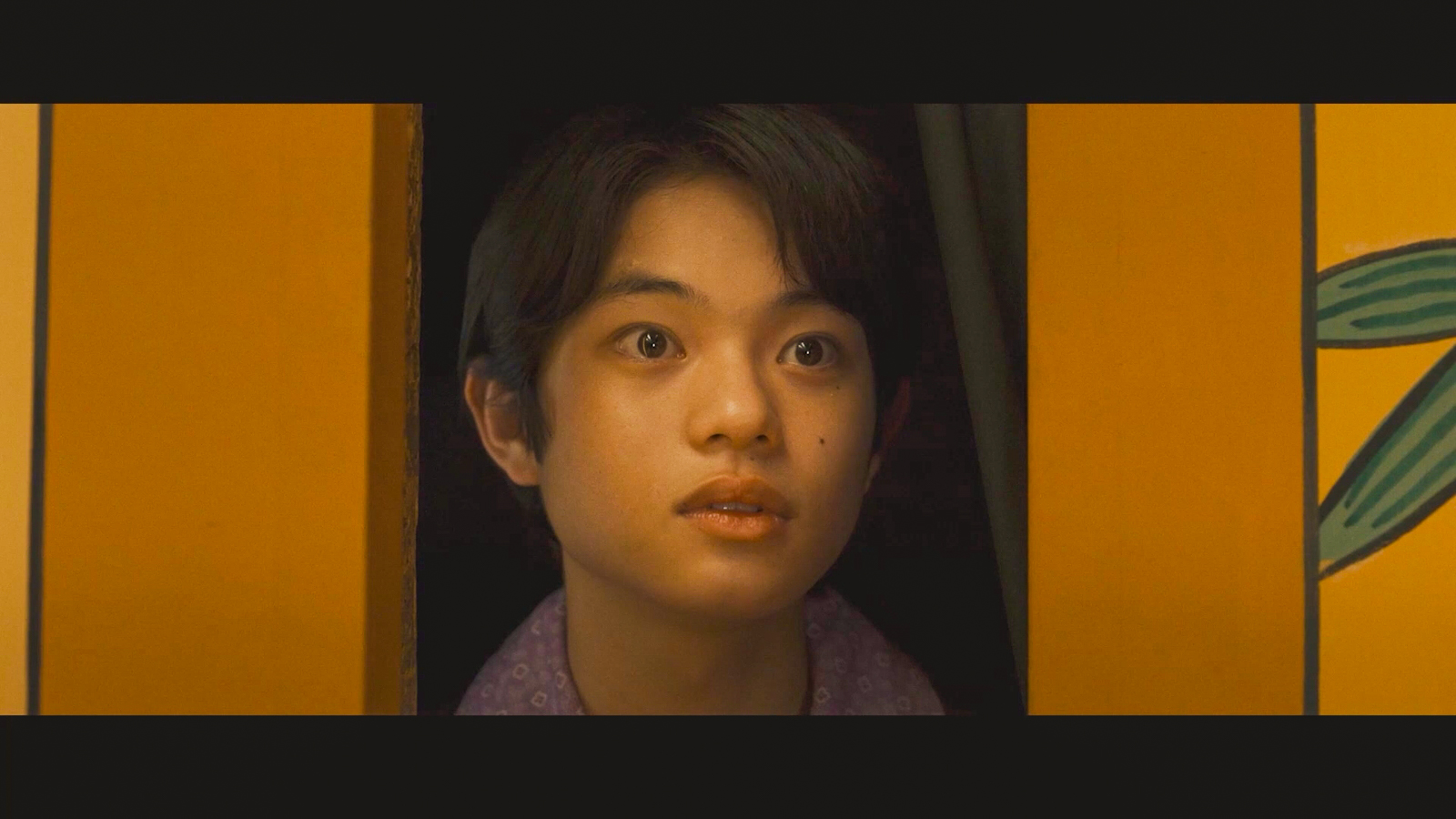
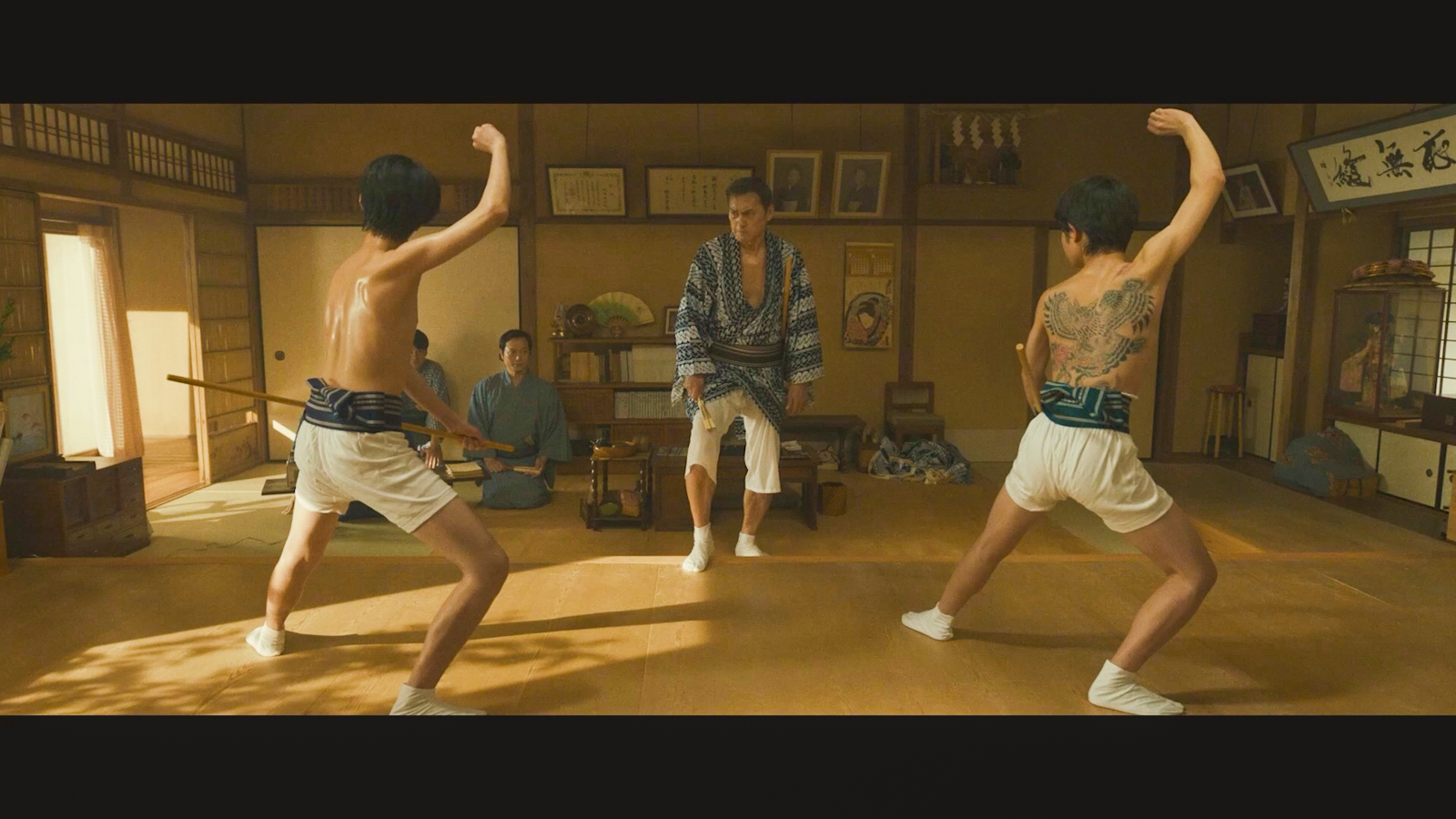
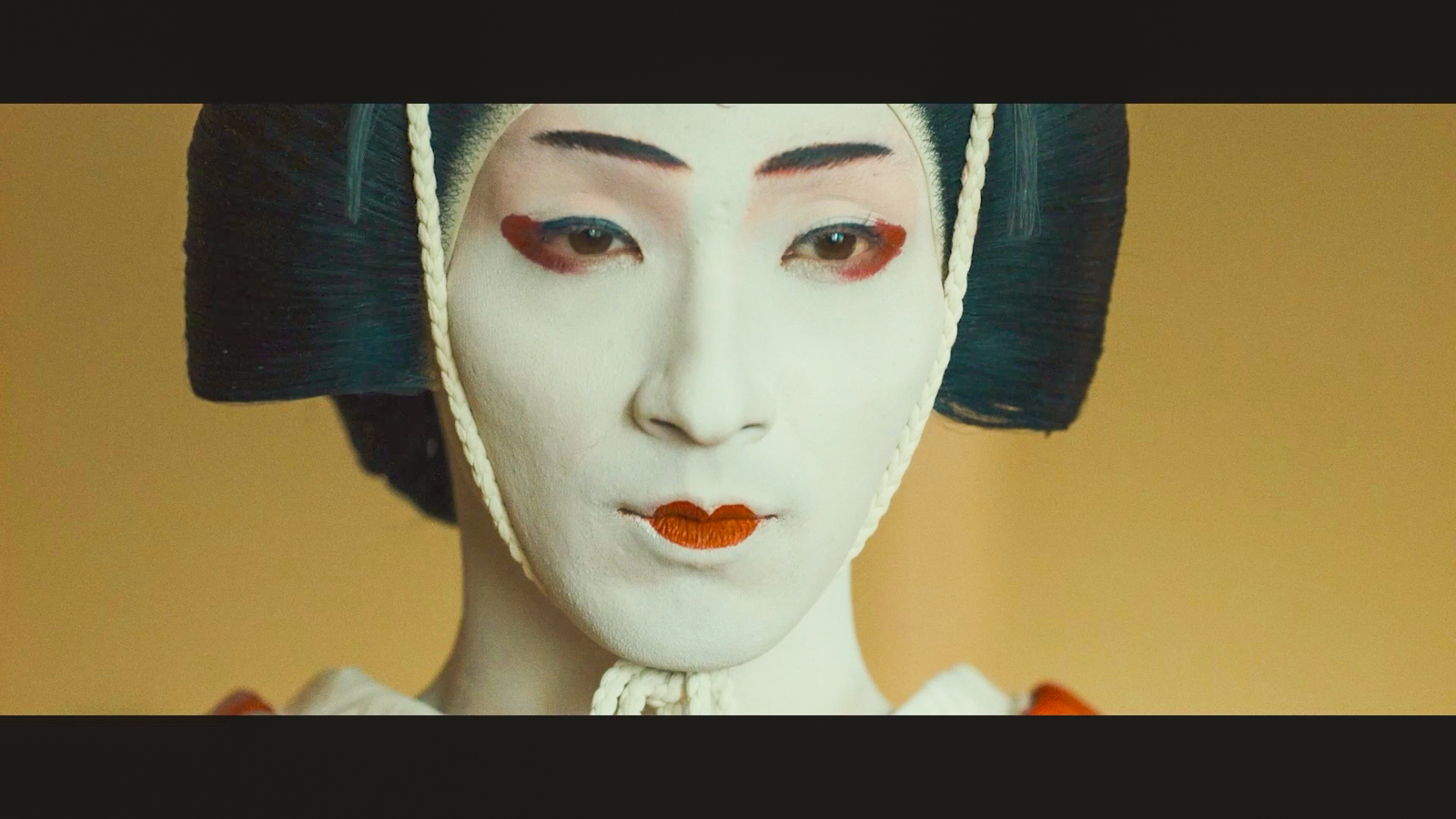
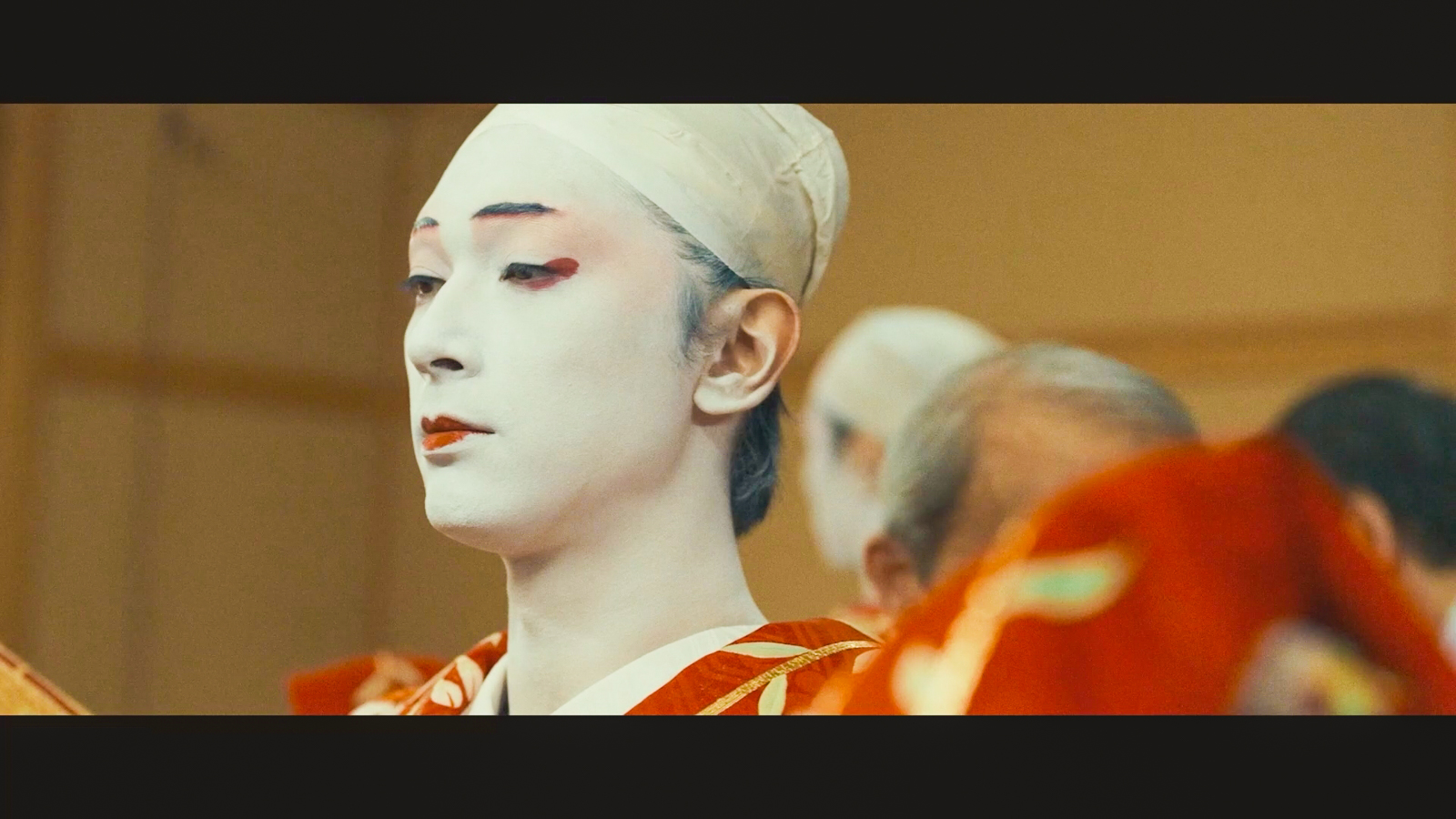
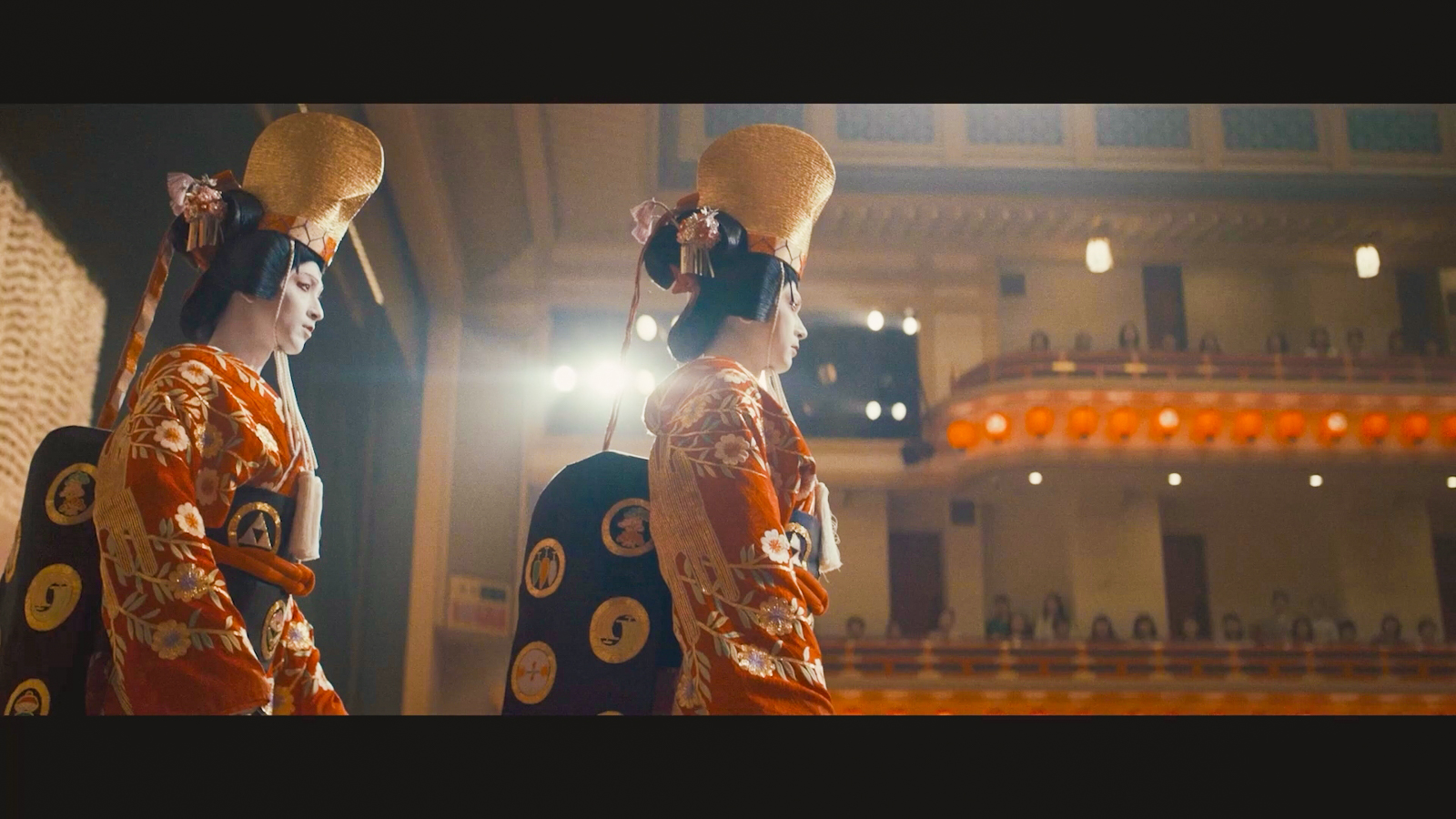
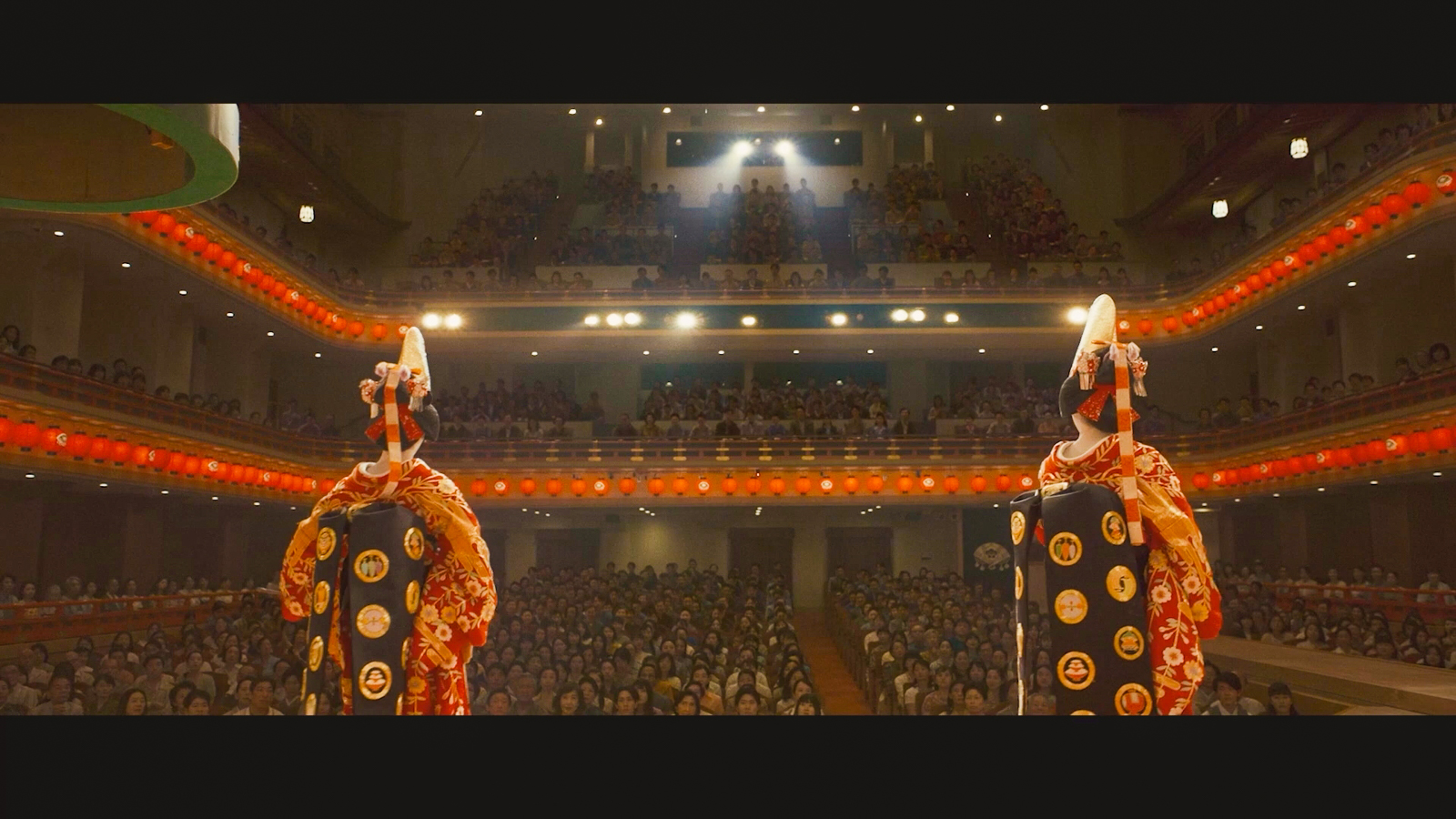
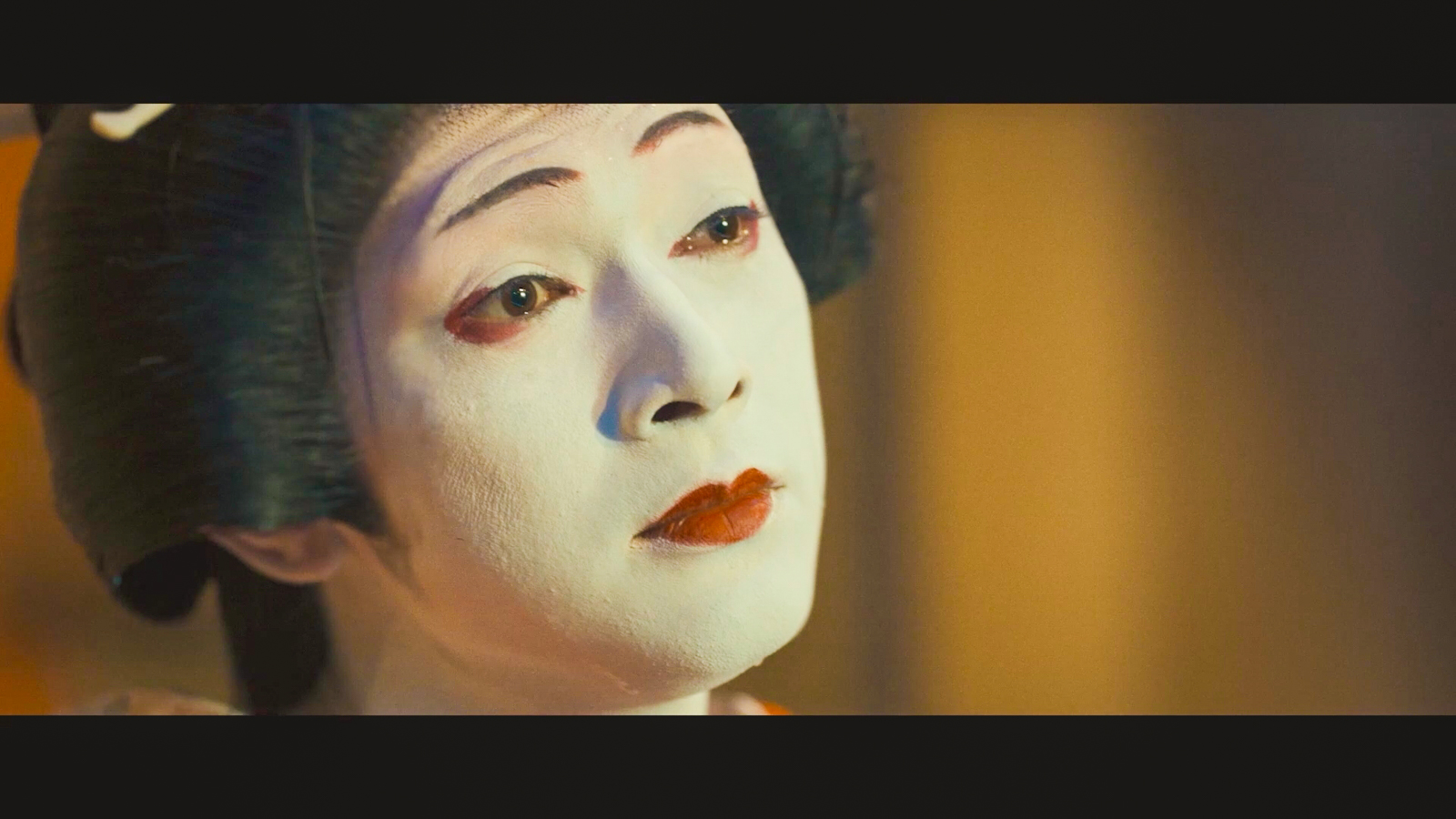
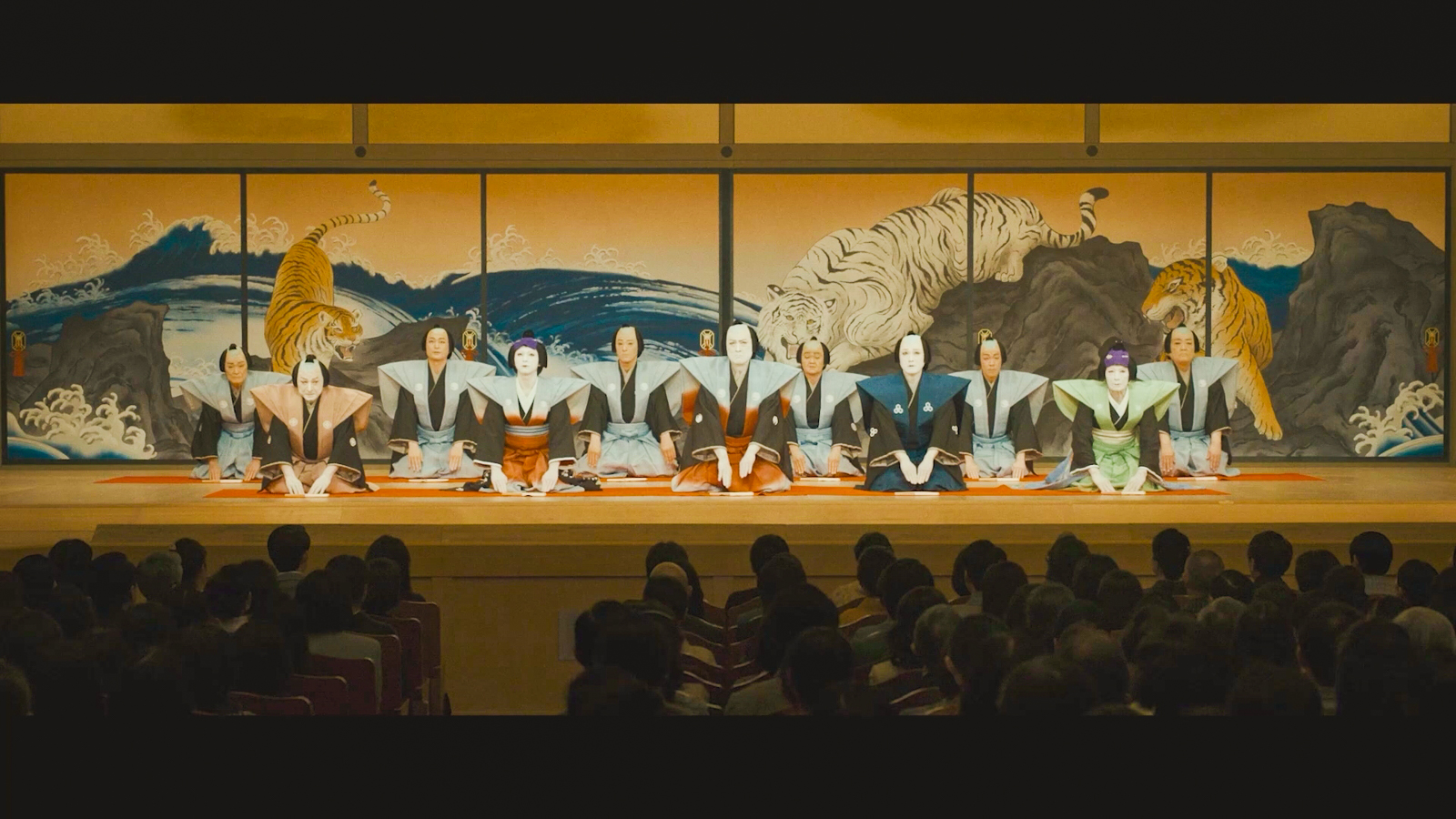
Kokuho (国宝, “National Treasure”) is a stunning glimpse into the heart of kabuki set against the backdrop of post-war economic boom. An epic tale of family, masculinity, craft, and friendship. Without spoiling it, the movie follows Tachibana Kikuo, the orphaned son of a Yakuza boss who is taken into the care of national kabuki treasure Hanjiro Hanai II. Hanjiro is currently raising his own son Shunsuke to become his successor and inherit the title of Hanjiro Hanai III. Both boys come to take on the roles of onnagata, performers who play the female roles in kabuki, which contrasts sharply with the hyper-machismo of the Yakuza world that Kikuo knew beforehand. The boys are trained in unison, leading to a beautiful rivalry full of professional and emotional passion as well as heartbreak, and ultimately, triumph.

The movie spans decades, from the early sixties straight through to a finale in 2014. I am not here to summarise or spoil it, so I am not going to delve into the plot, but that timeframe encompasses so much character development, both positive and negative. We see Kikuo and Shunsuke’s lives interwoven as they train together, rise to stardom together, let bitter rivalries and the public’s fickle attention get the better of them. We see them at their highest, and at their lowest, and at all the poignant messes in between as their careers ebb and flow, and as they drift and out of each others’ lives. Kokuho is not what I would consider an uplifting movie, but it has moments of great optimism and hope, and a pure and devoted heart.

I admit I went into the movie biased for two reasons; first, and most obvious, is the wardrobe and set design. This movie is absolute eye-candy for anyone interested in kimono and traditional Japanese arts. The second — and far more vapid — reason is that Watanabe Ken plays the veteran kabuki star, father, and mentor Hanjiro. I could watch that man read the phone book and be happy with my life choices, if I’m being honest.

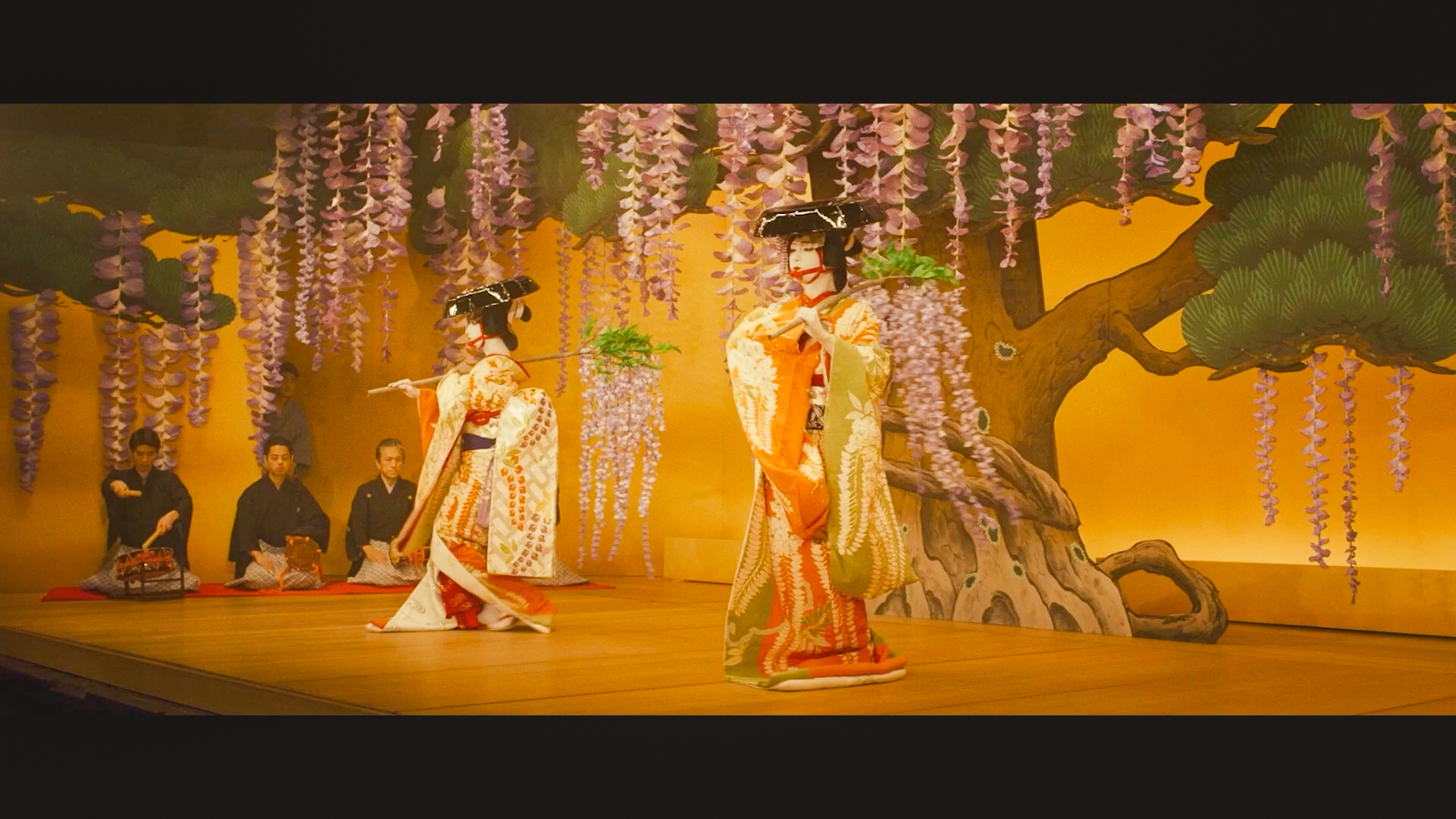
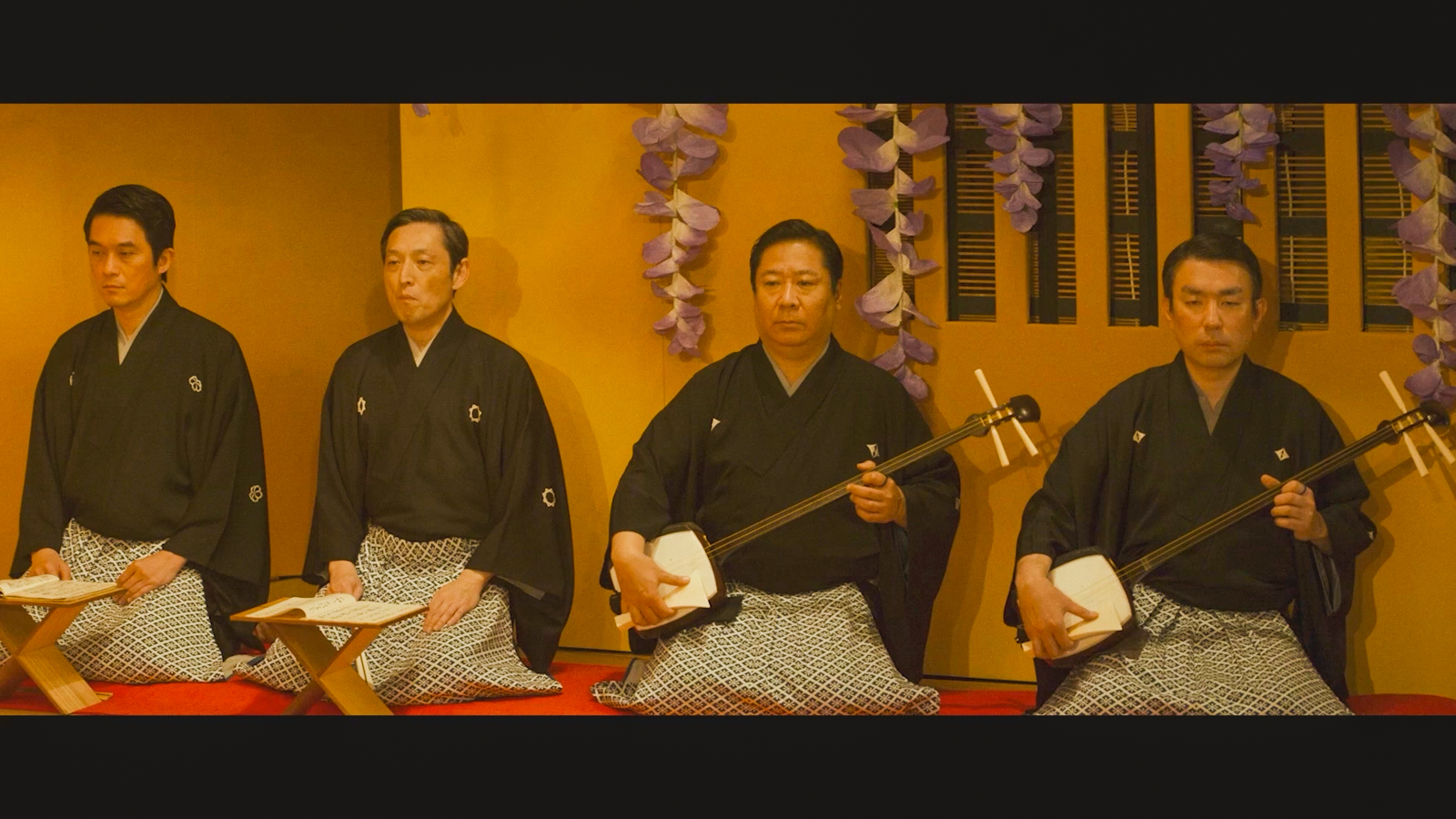
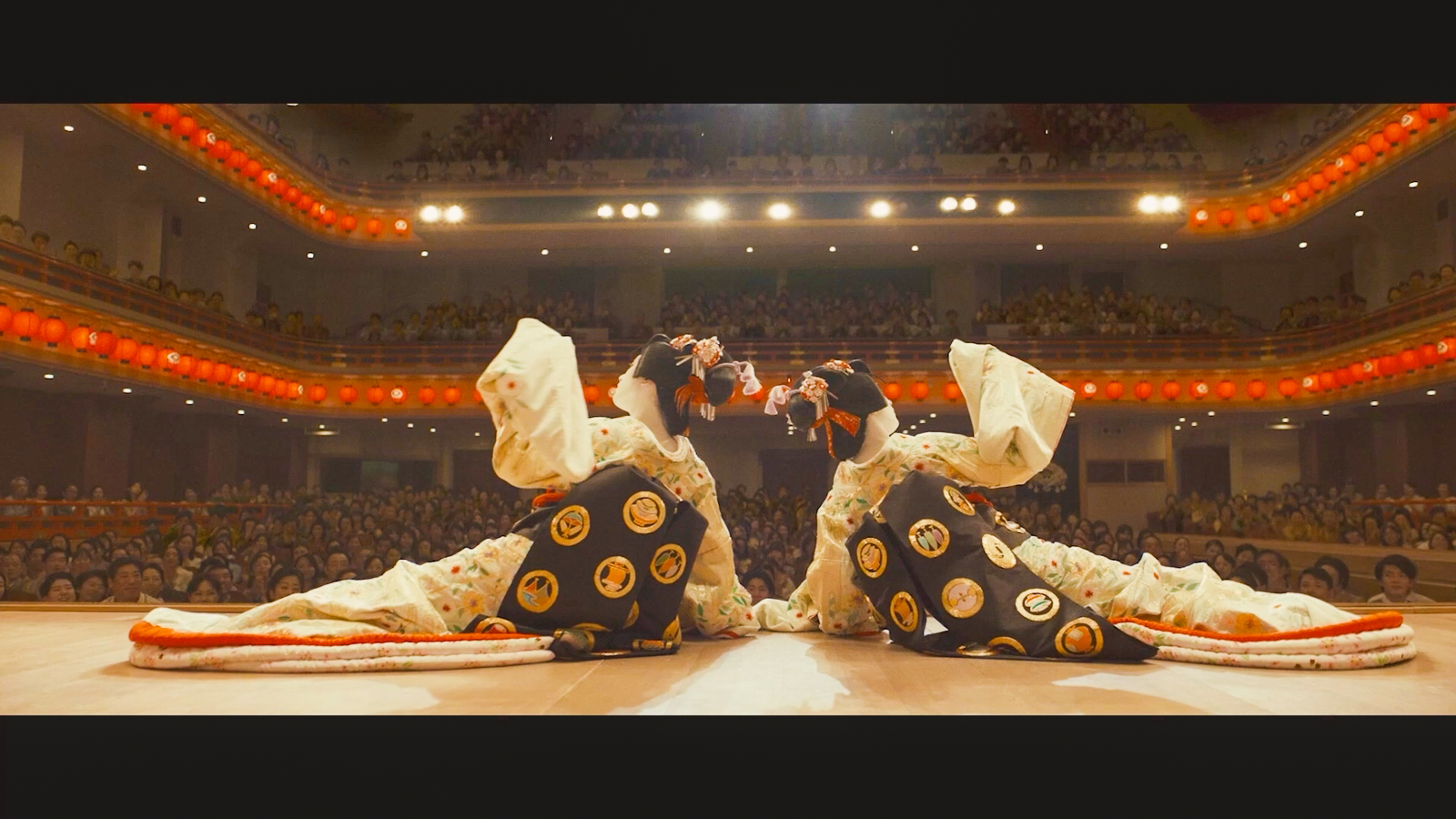
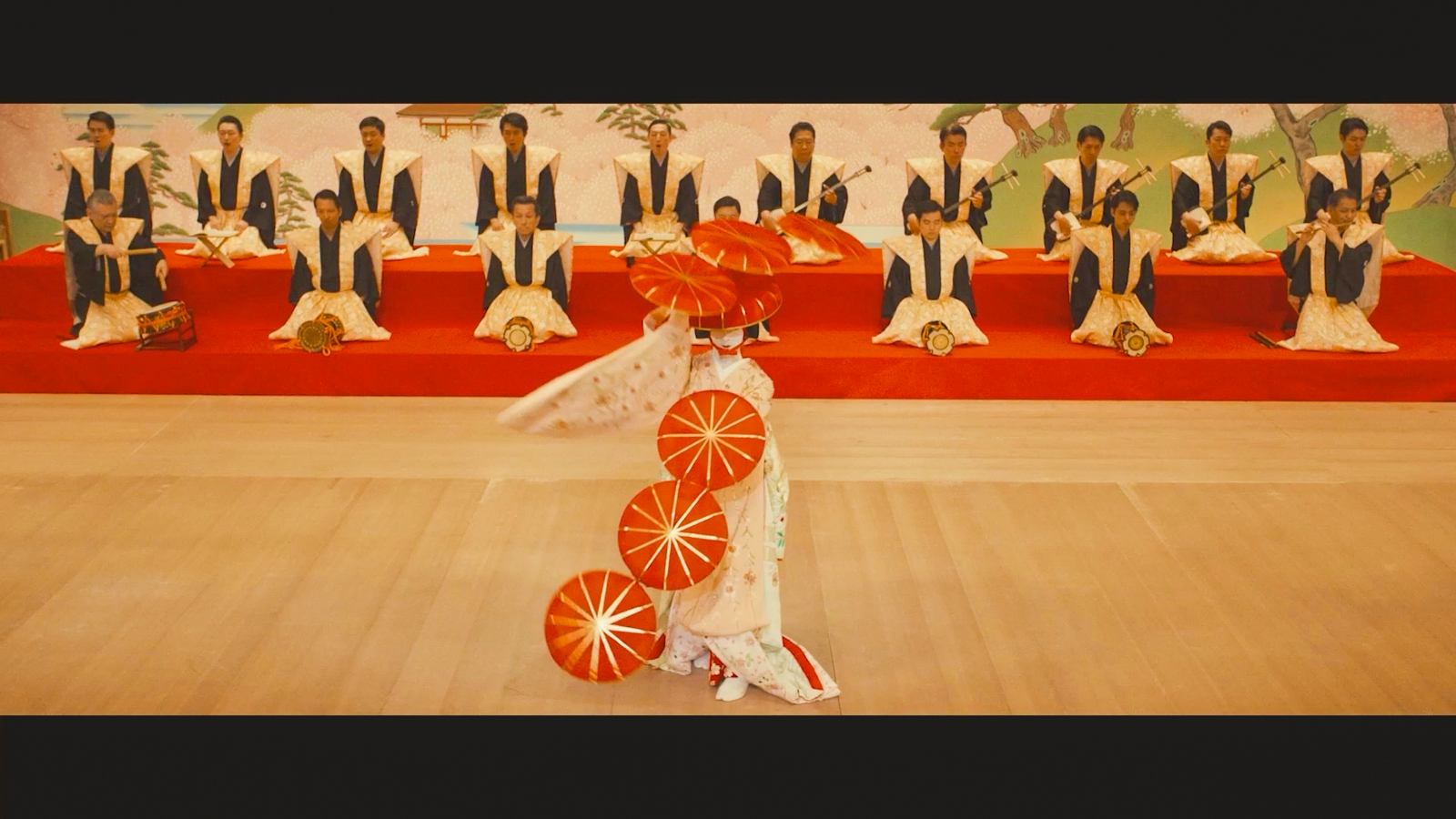
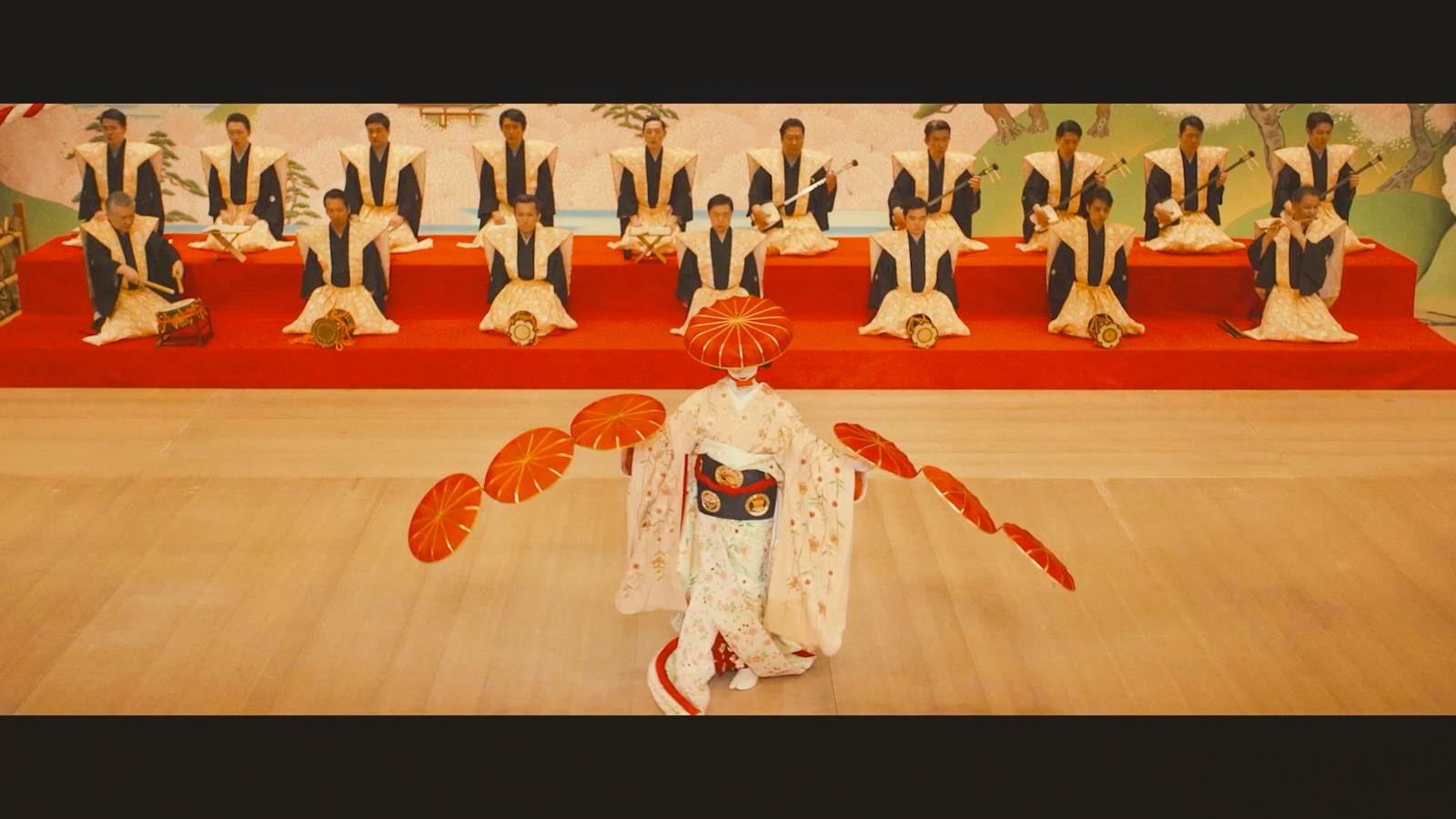
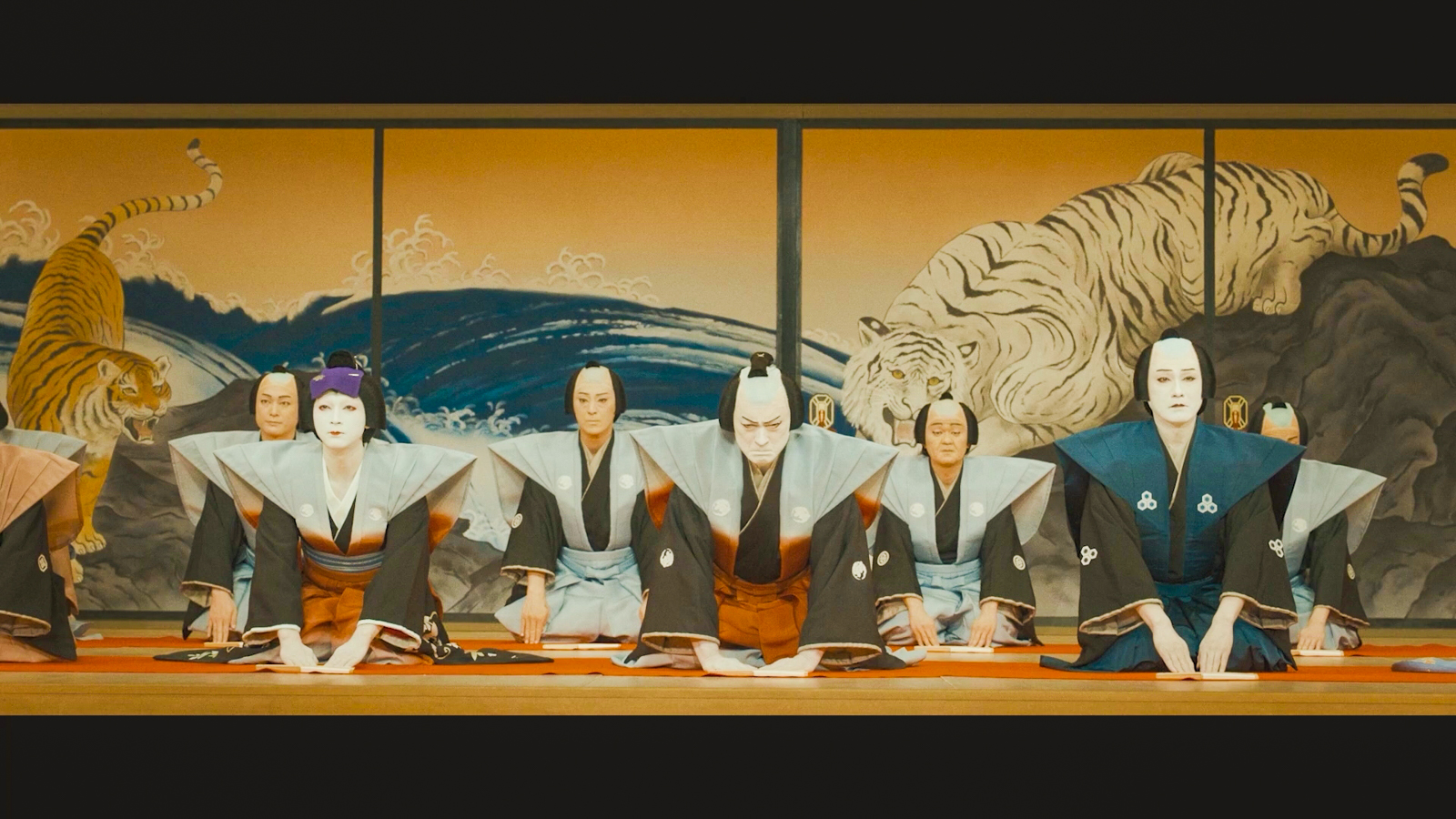
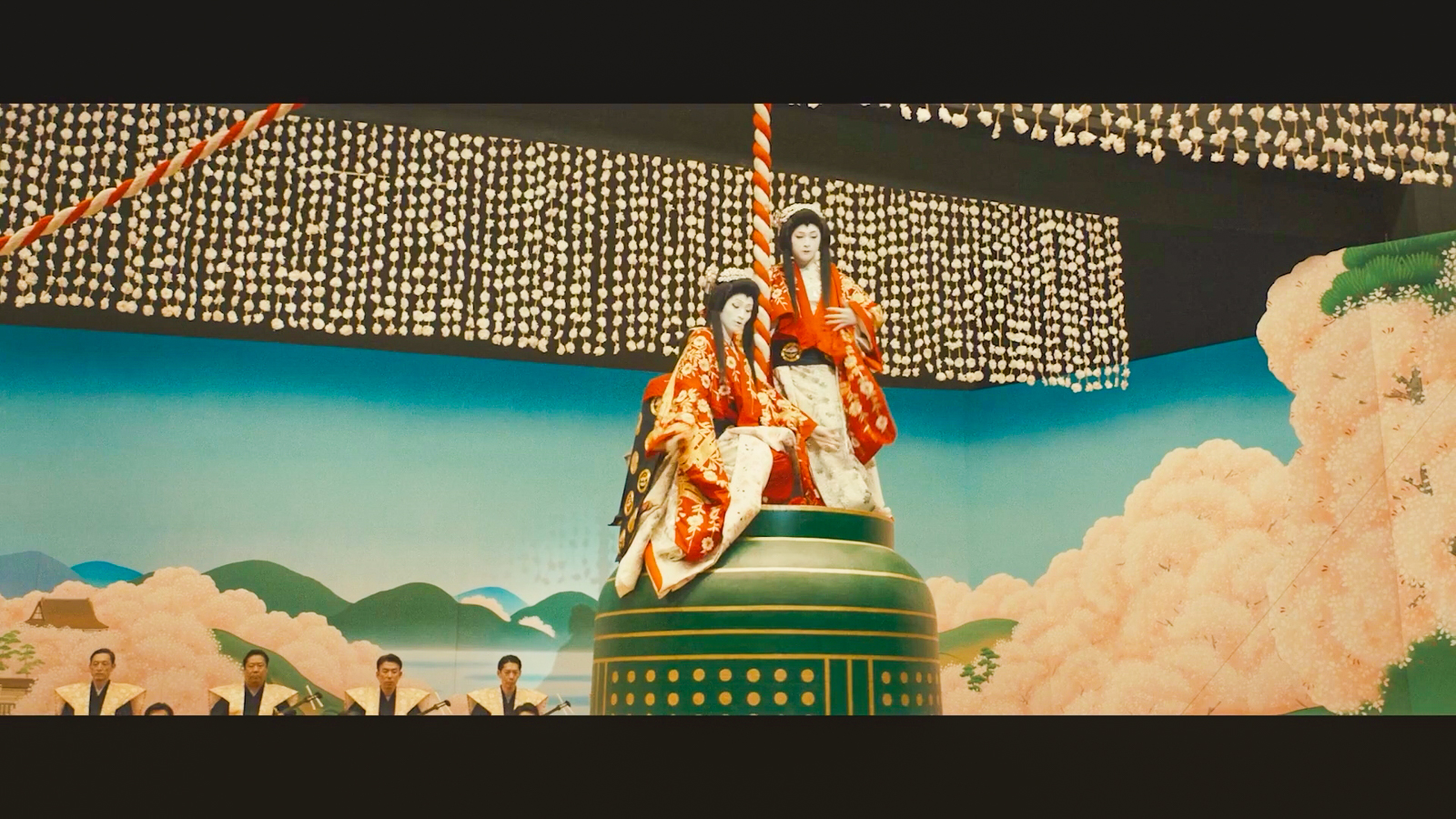
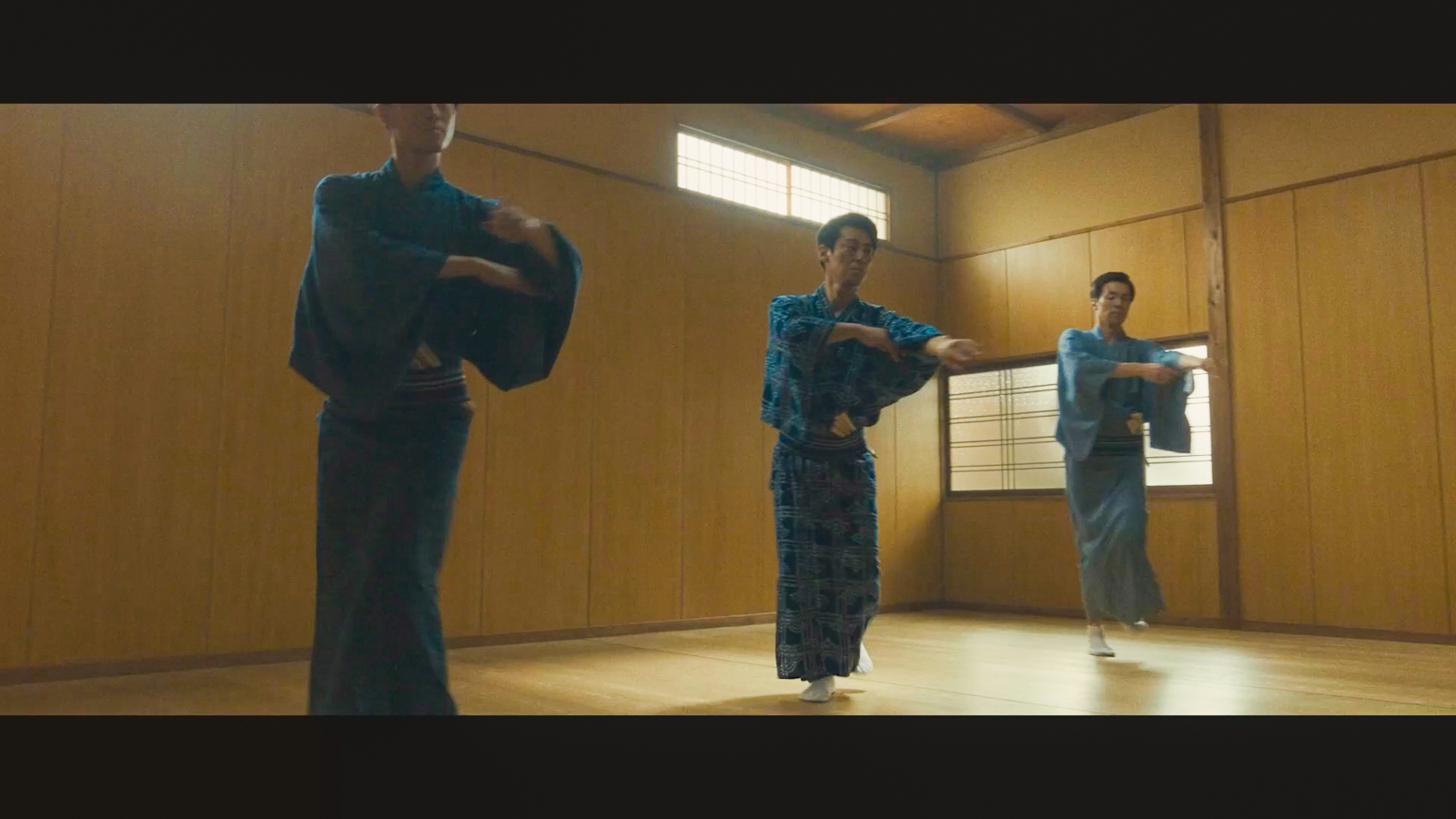
Kokuho is a visual masterpiece, a lush love letter to a venerated art form. The story unfolds in a sharp contrast of dramatic, gut-wrenching action and quiet, meditative moments that embody the Japanese concept of ma (間), a sort of purposeful void, pause, or empty moment that helps to emphasise the action or space surrounding it. Ma is often used in traditional theatre, both noh and kabuki, and I have no doubt the similar use of pauses, silences, and visual empty or liminal spaces was absolutely intentional. However, it can make things hard to follow if you are unfamiliar with it; jumps in scene, location, or emotional tone may end up feeling disjointed or even badly edited to viewers without that frame of reference. The lives of the actors are interwoven deftly with stage performances, which help to underscore the reflected themes and emotions happening in both, but again, this may prove distracting or confusing for some viewers, especially those coming into this with little to no knowledge of kabuki.

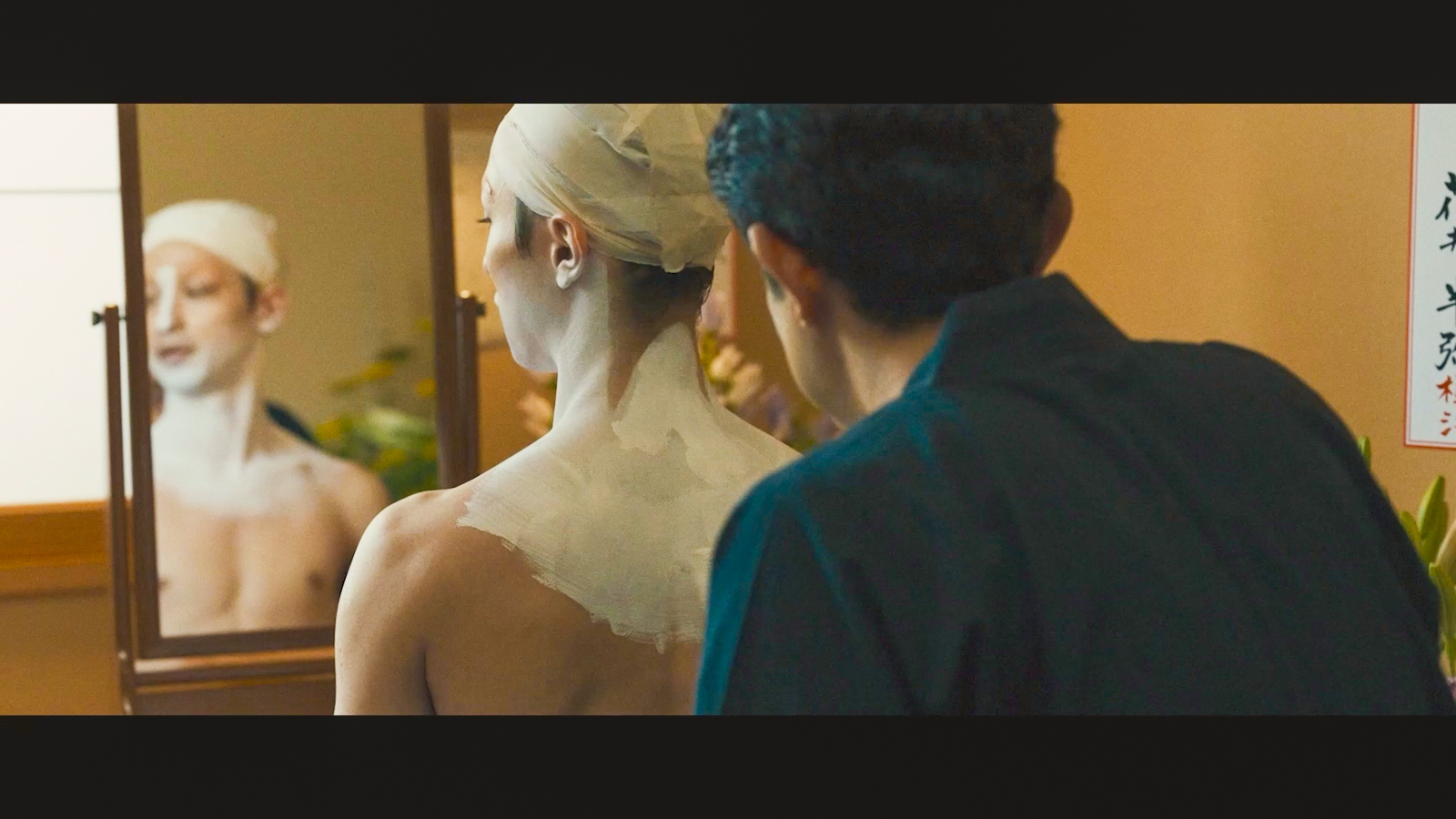
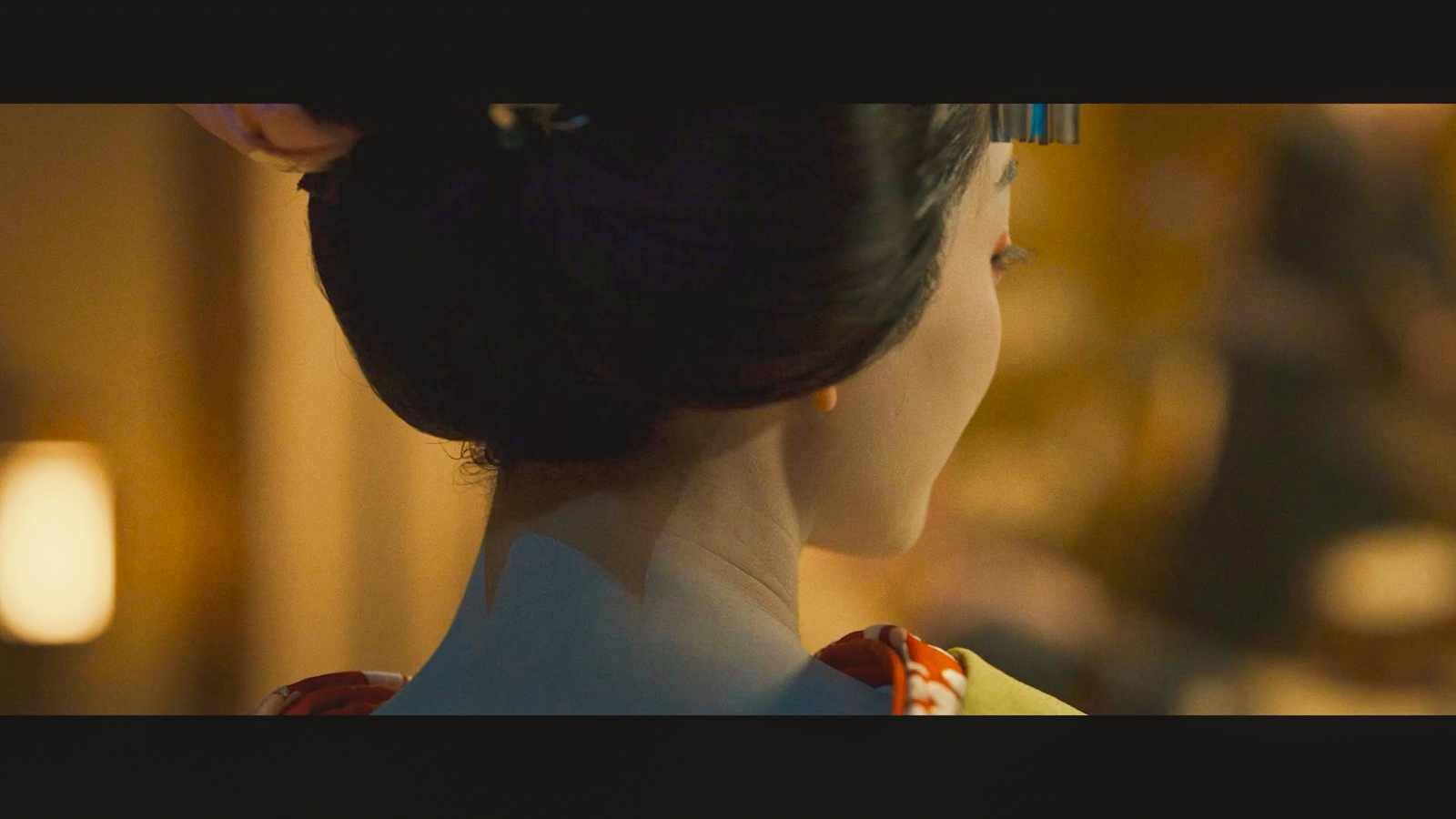
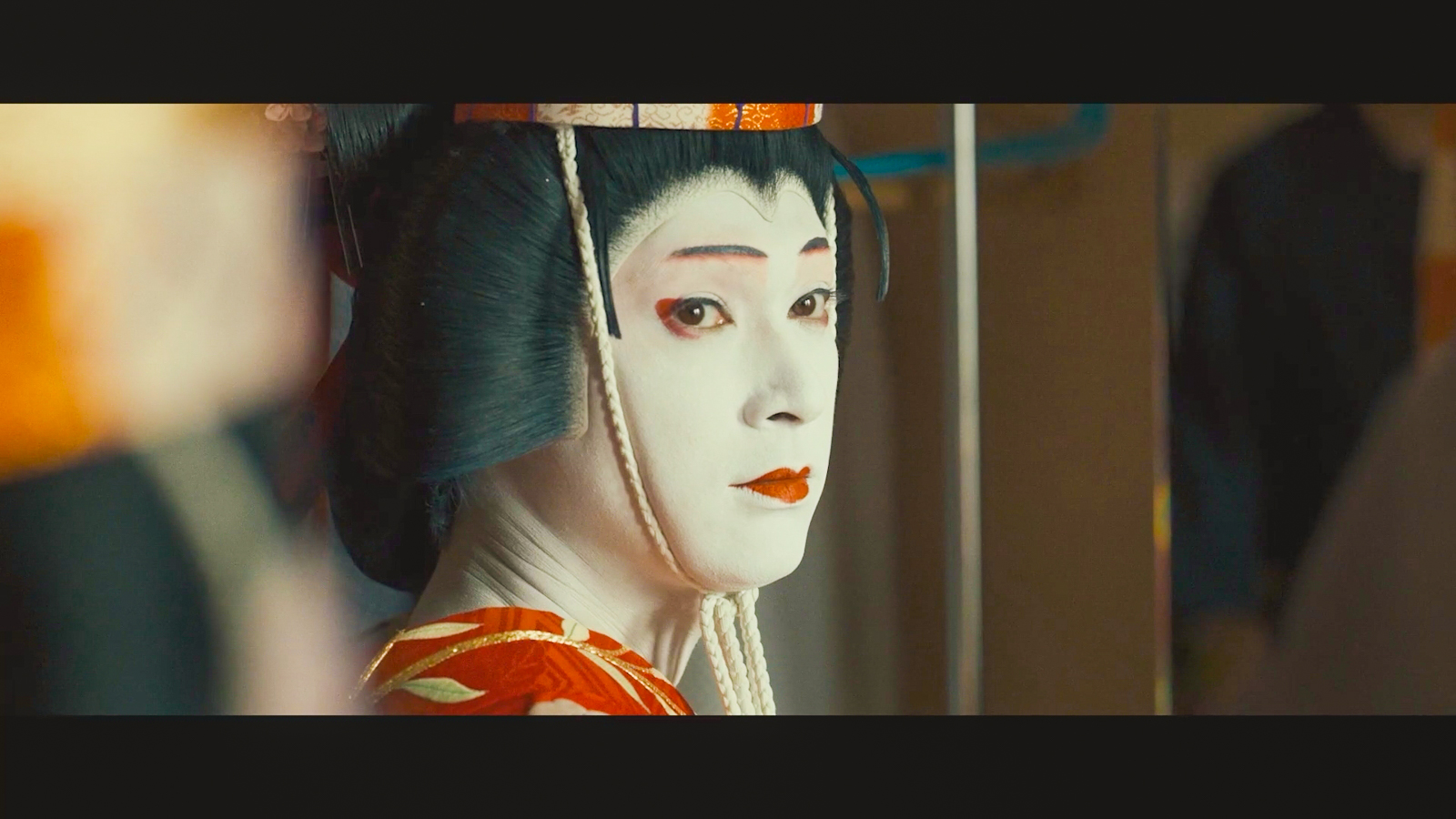
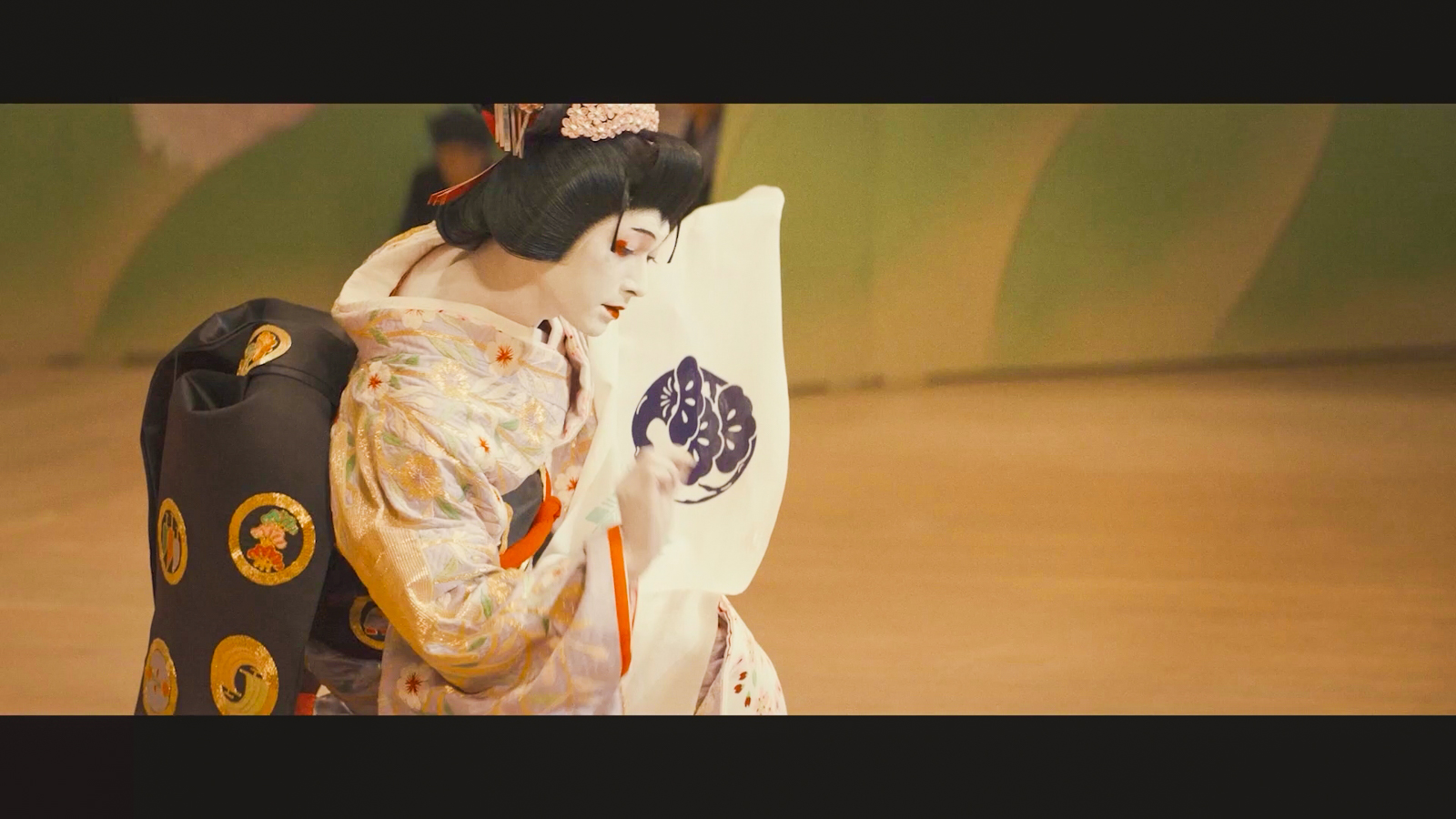
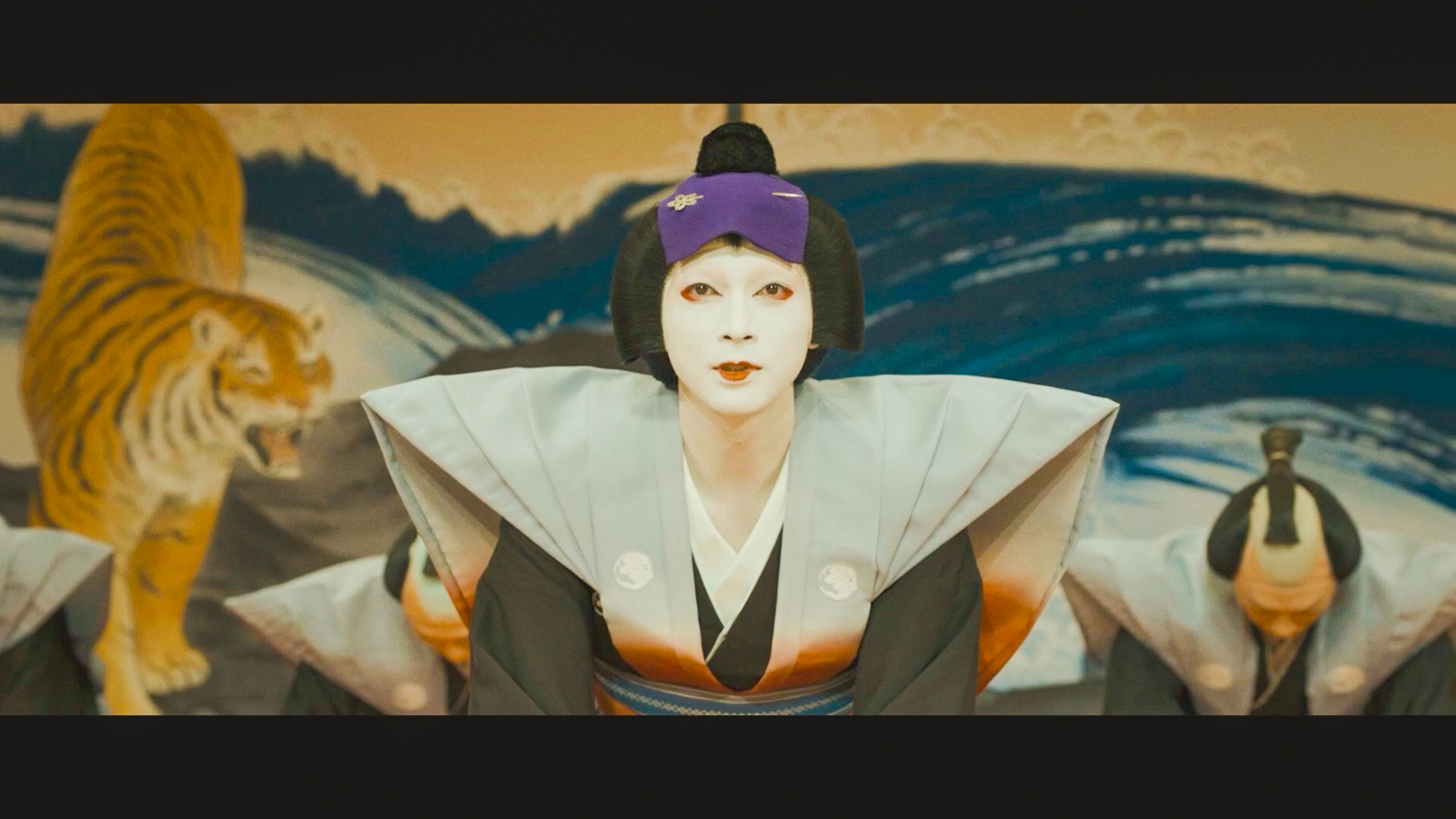
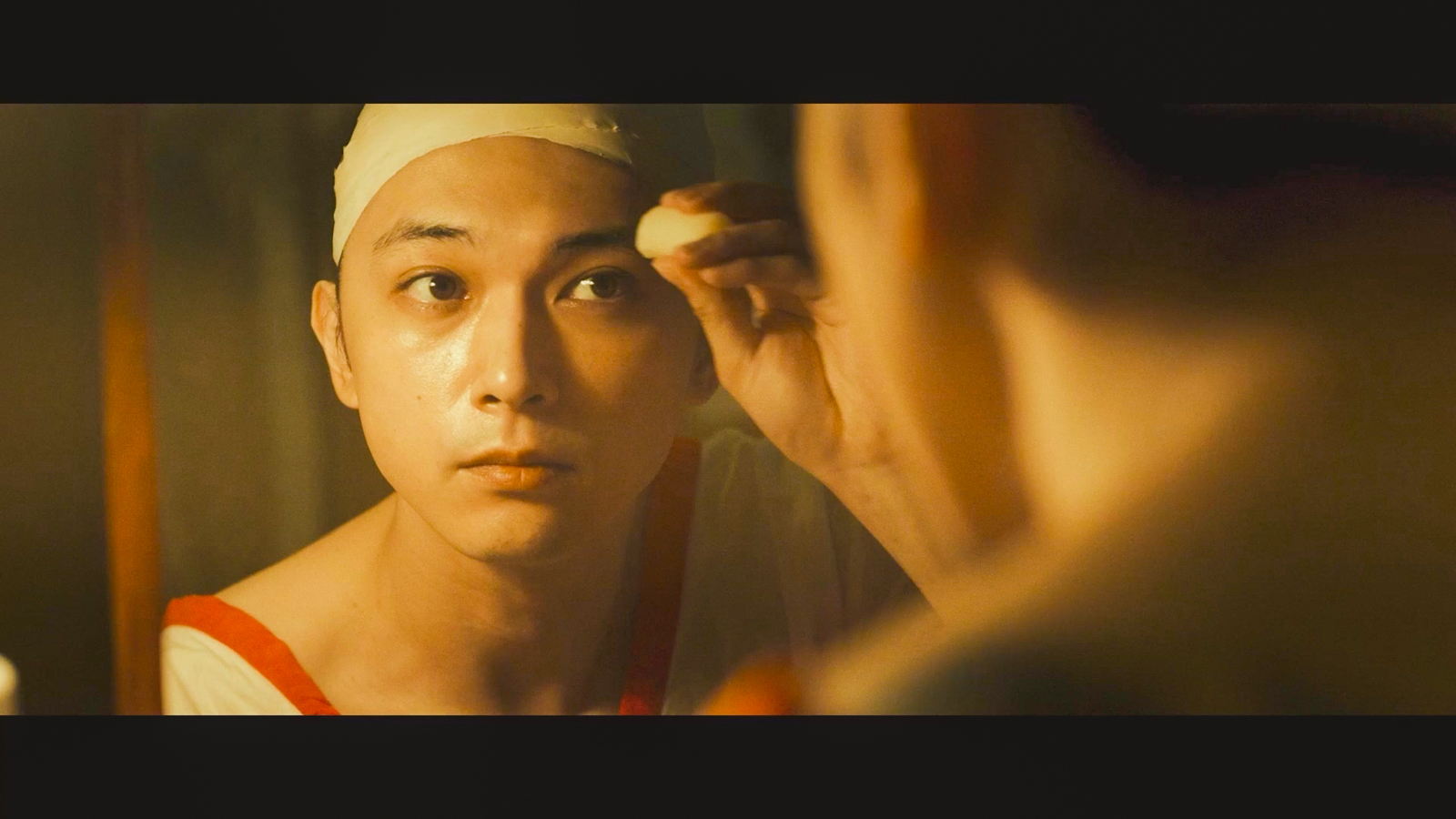
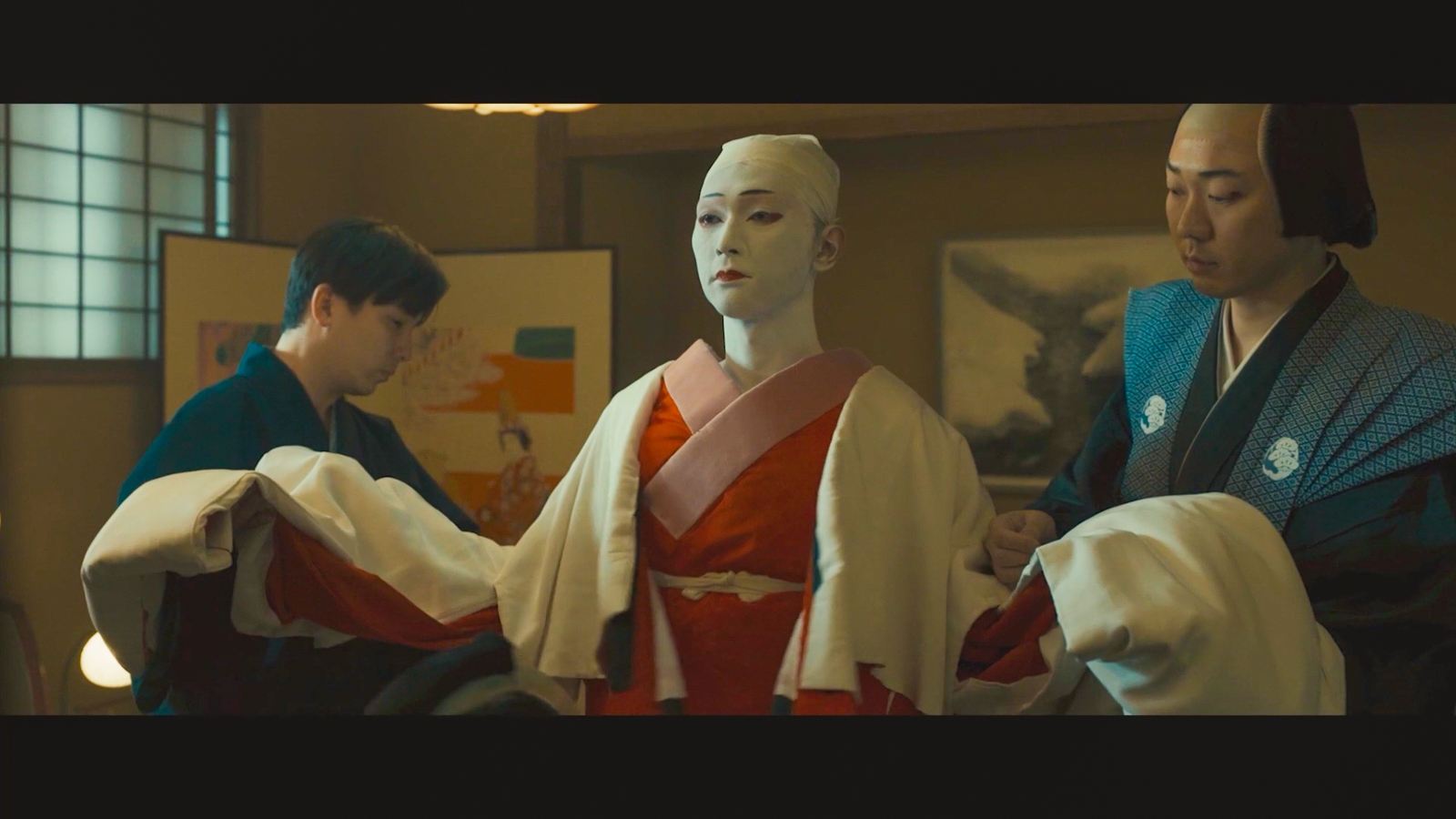
It may be due to this that Kokuho was not nominated for a best foreign film Academy Award, which is a travesty in my opinion. I haven’t seen any of the films that did get nominated but I stand stubbornly by my statement, because this is my blog and I can. It was nominated for Best Makeup and Hairstyling, which I absolutely understand. Not just for the traditional oshiroi and wigs, but for the incredibly natural aging that happens over the course of the film. It’s impossible to tell what ages the actors actually are, and if they were aged down or up. I do hope we get to see the team in kimono (and maybe even nihongami) on red carpets during awards season, but I don’t have my hopes up.

There’s a reason Kokuho has become the highest-grossing live-action film in Japanese history. It’s more than a “foreign film” at this point, it’s a global phenomenon. And not without due cause; it is a feat of both visual and emotional storytelling. It’s rare that I sit through an entire movie without getting up at least a couple of times to pee or stretch my legs — let alone a movie with a three-hour run time. During my first watch, I somehow managed to stay put for the whole thing (minus one quick washroom break), and at no point did I find myself wondering how much was left. The second watch-through was much longer and more fragmented over the course of several days, as I paused regularly to take notes and capture images.

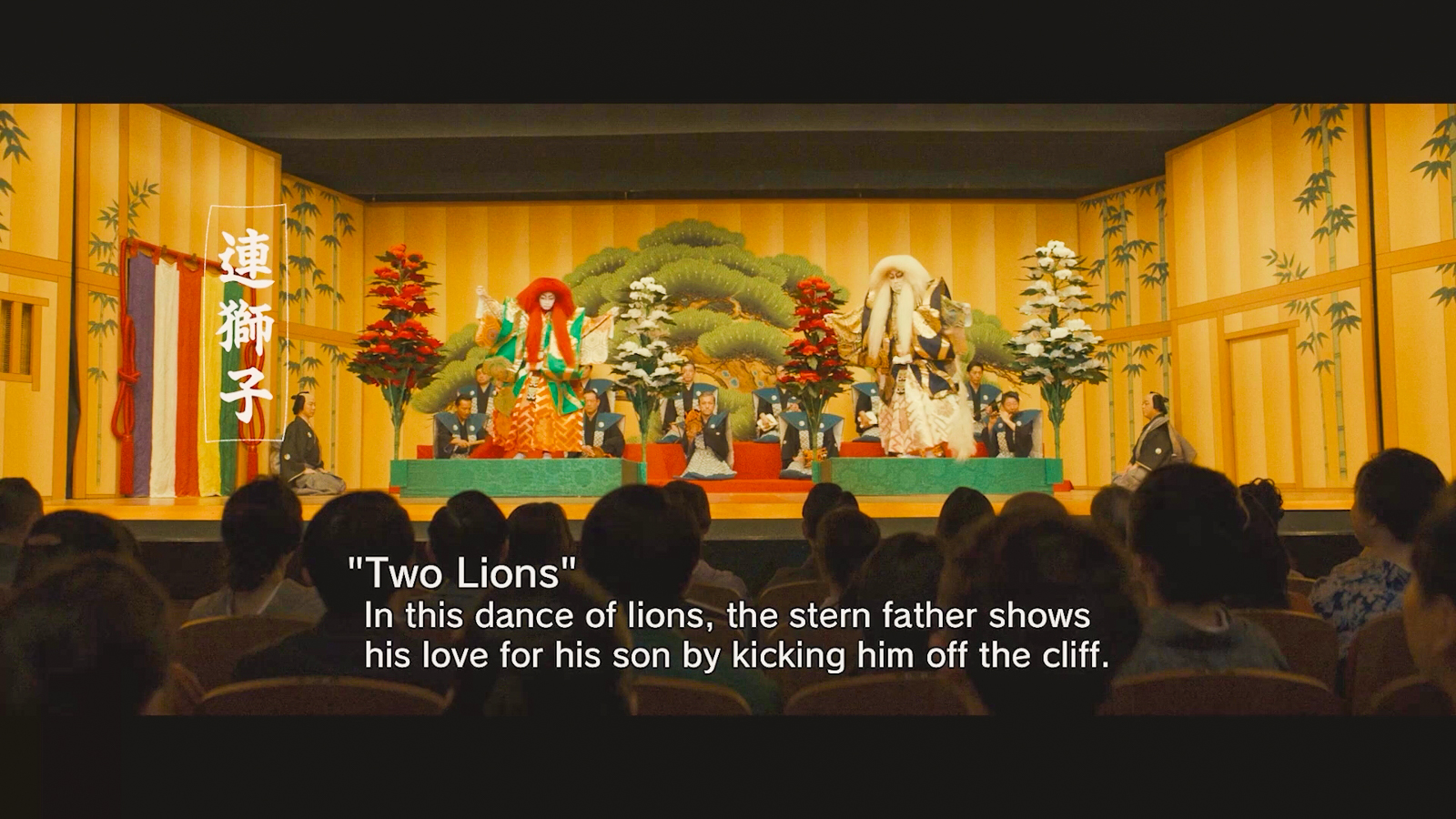
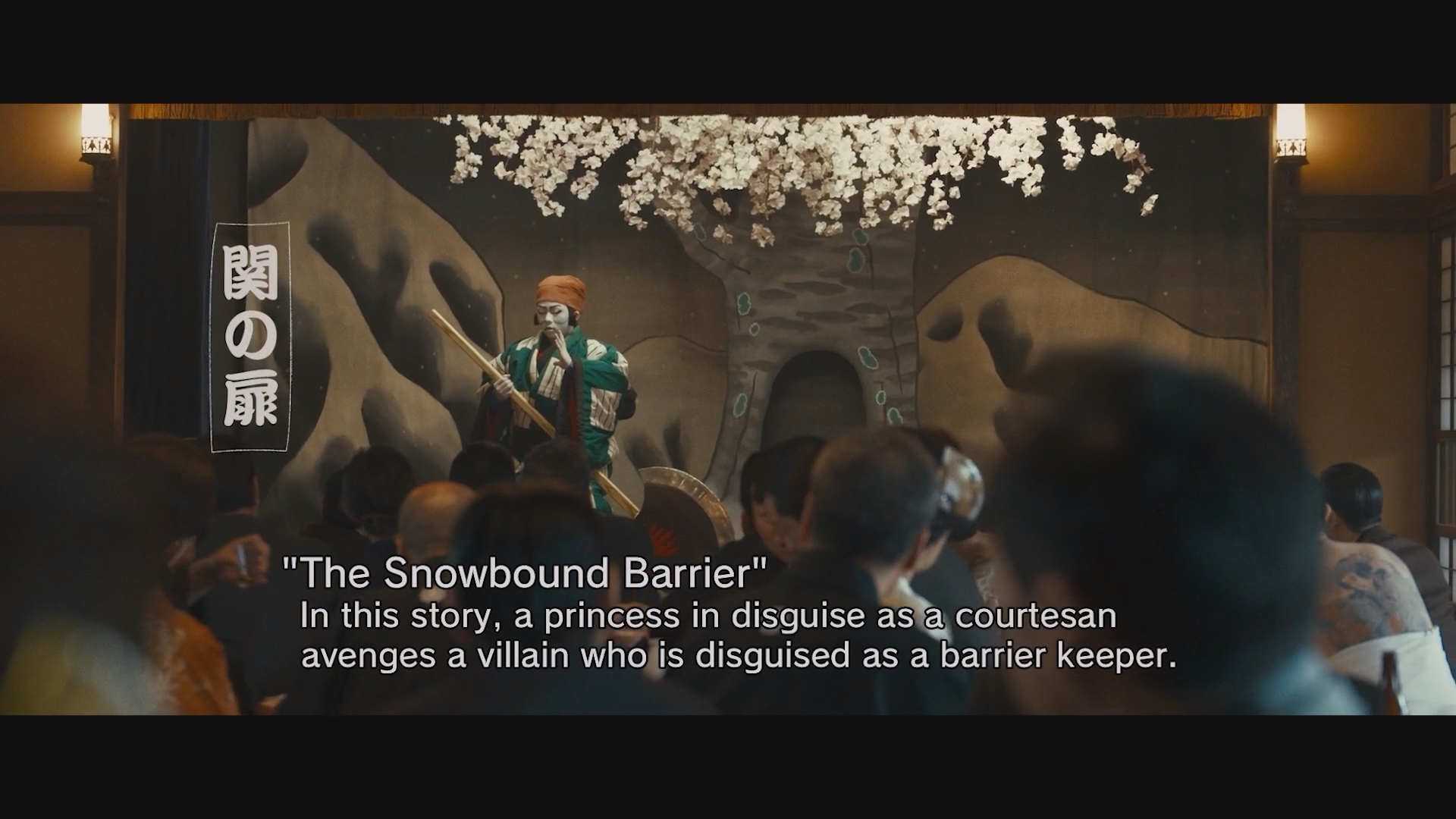
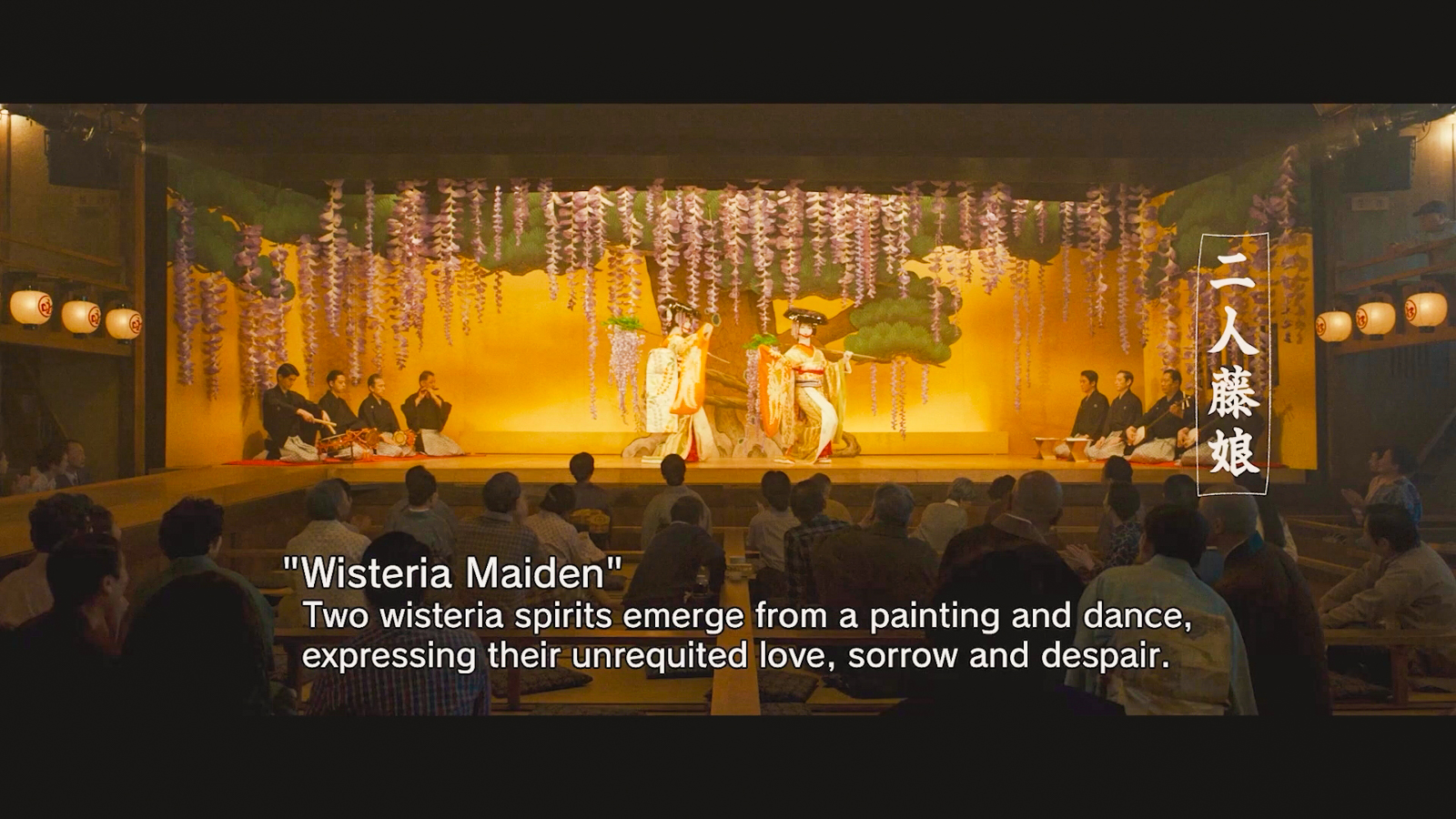
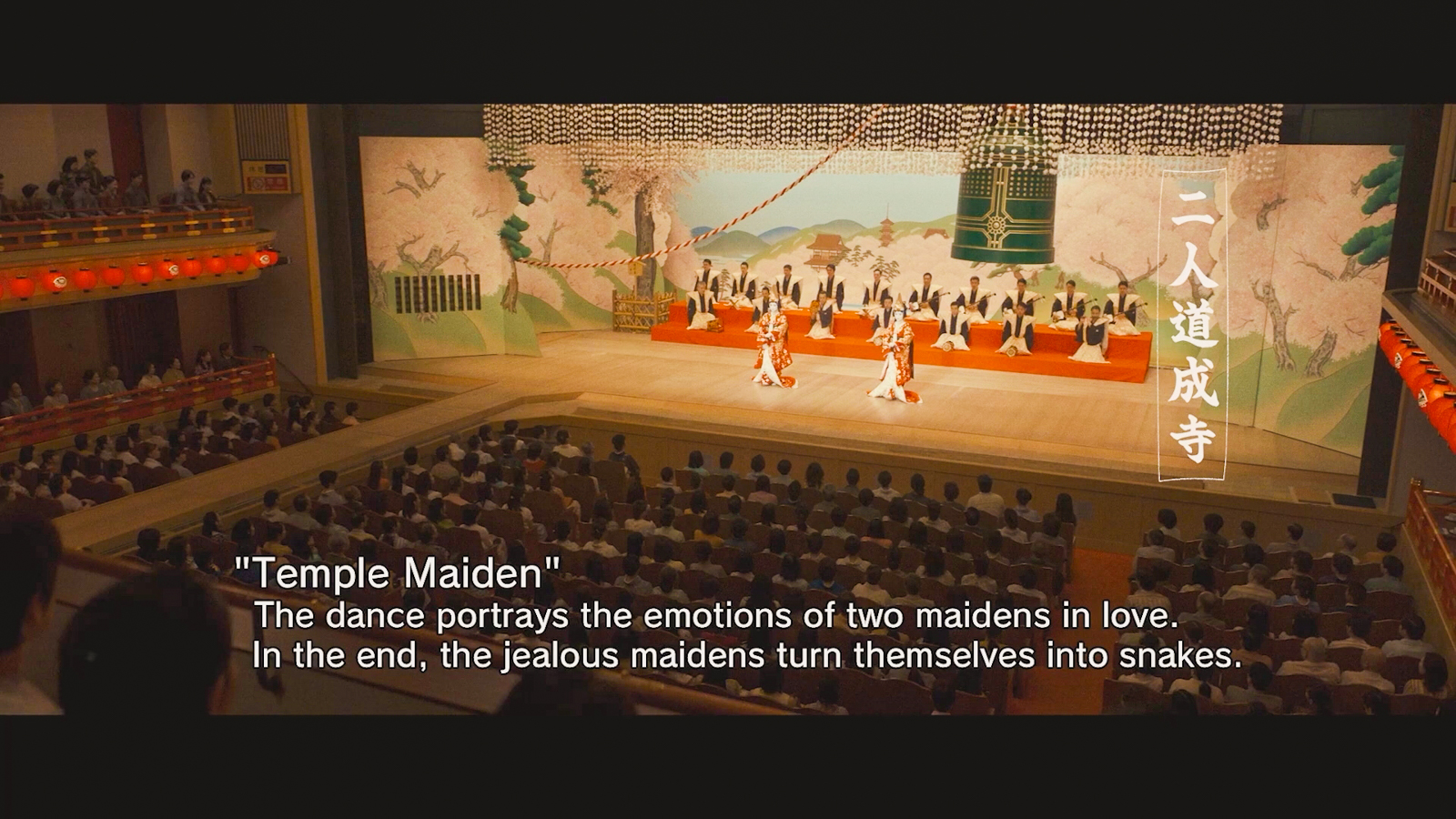
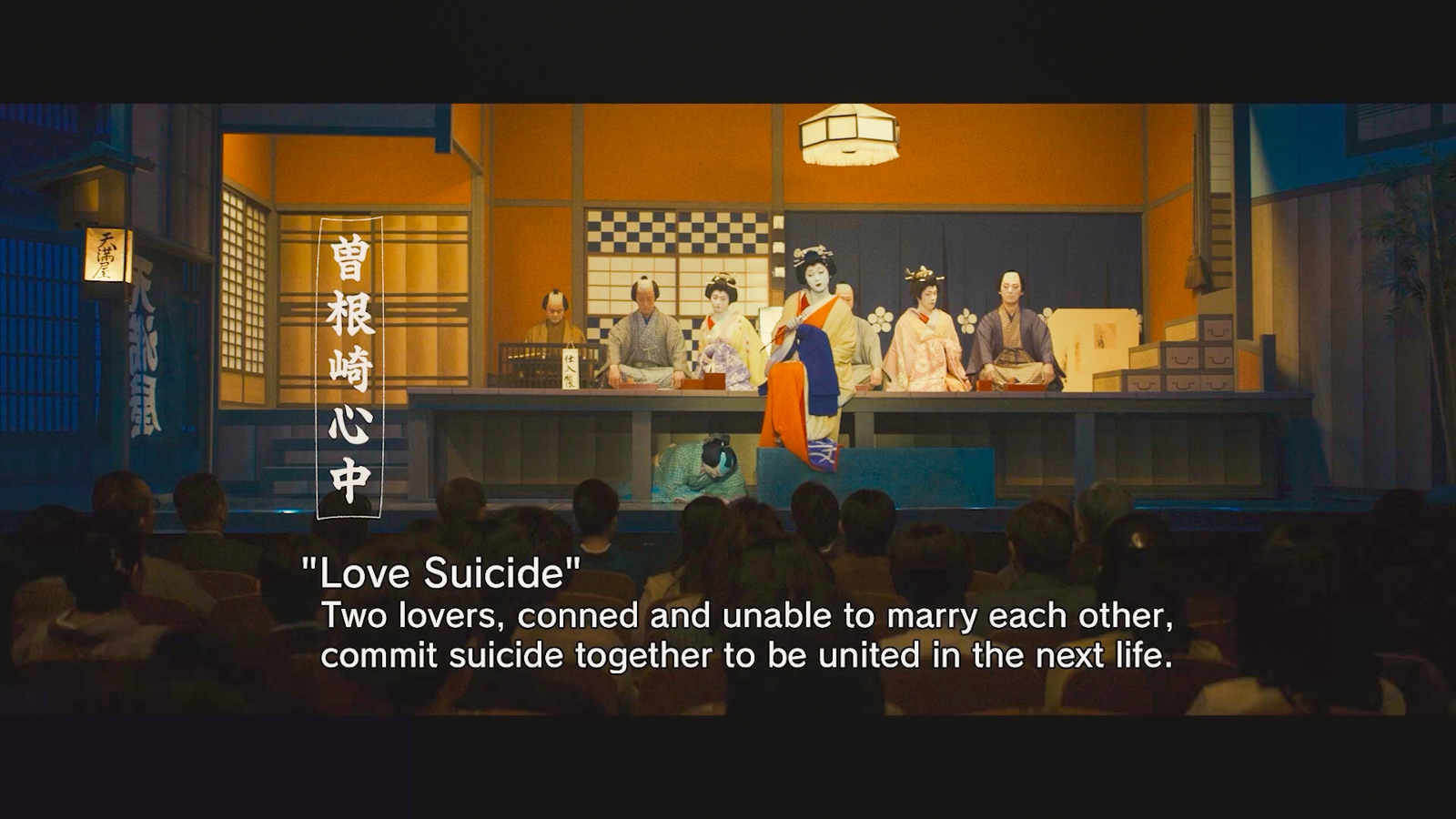
One repeated device in the movie that I really appreciated, as someone not terribly familiar with kabuki, was these cards at the beginning of every major dance sequence. It helped give context to each dance, which is vitally important since, as I mentioned earlier, the themes and emotions conveyed in the dances often mirror what’s happening off-stage in some way.

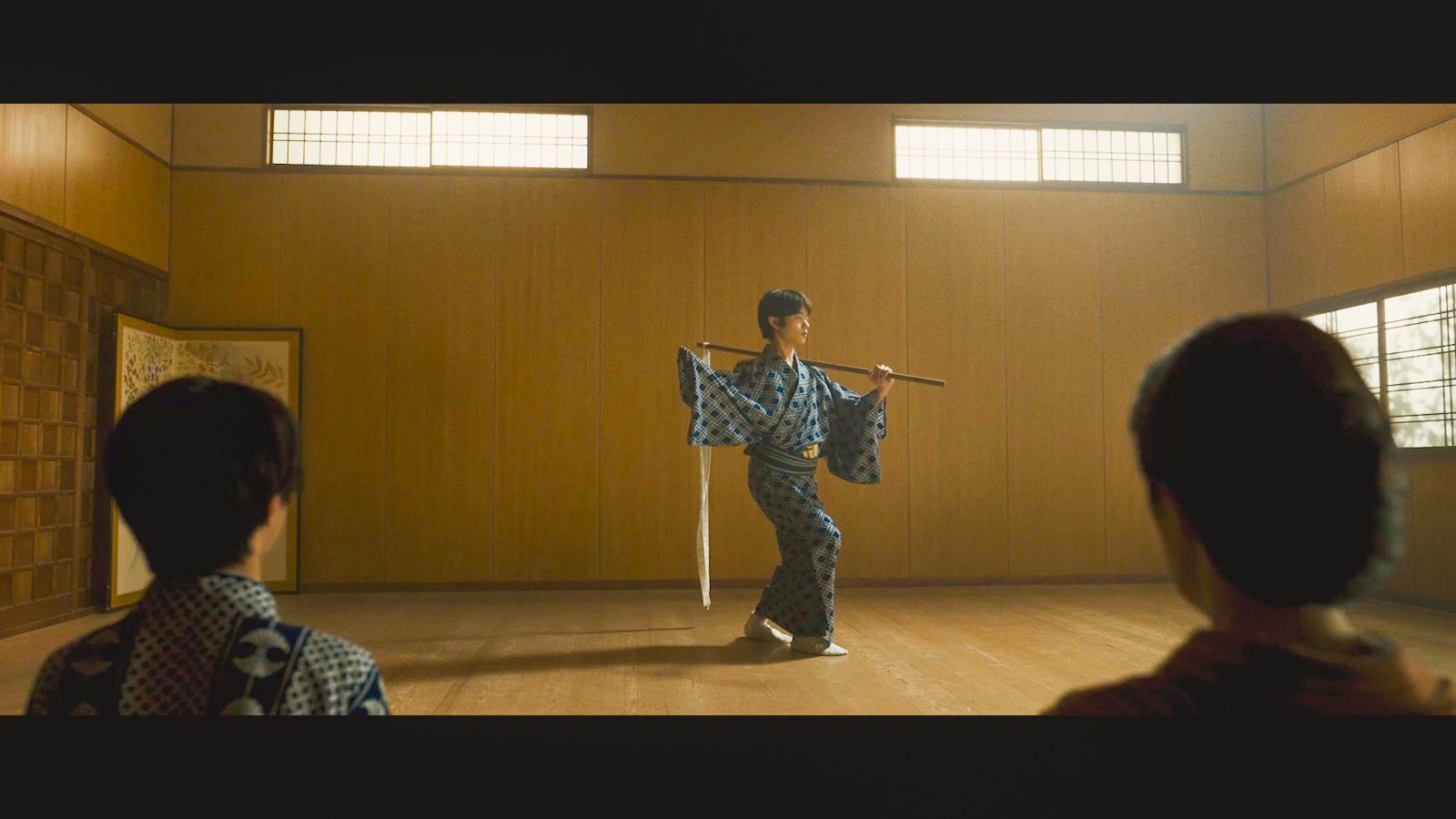
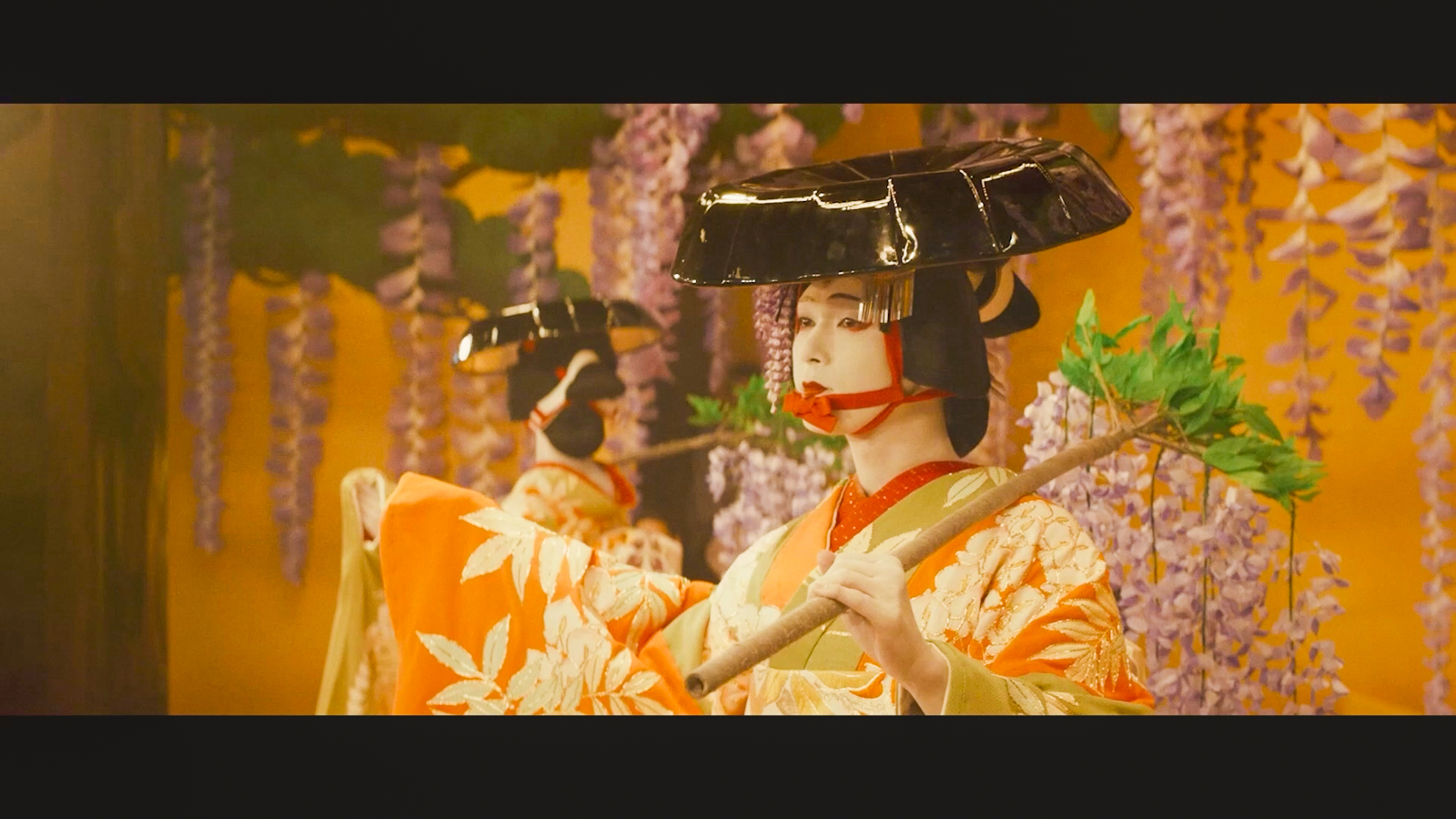
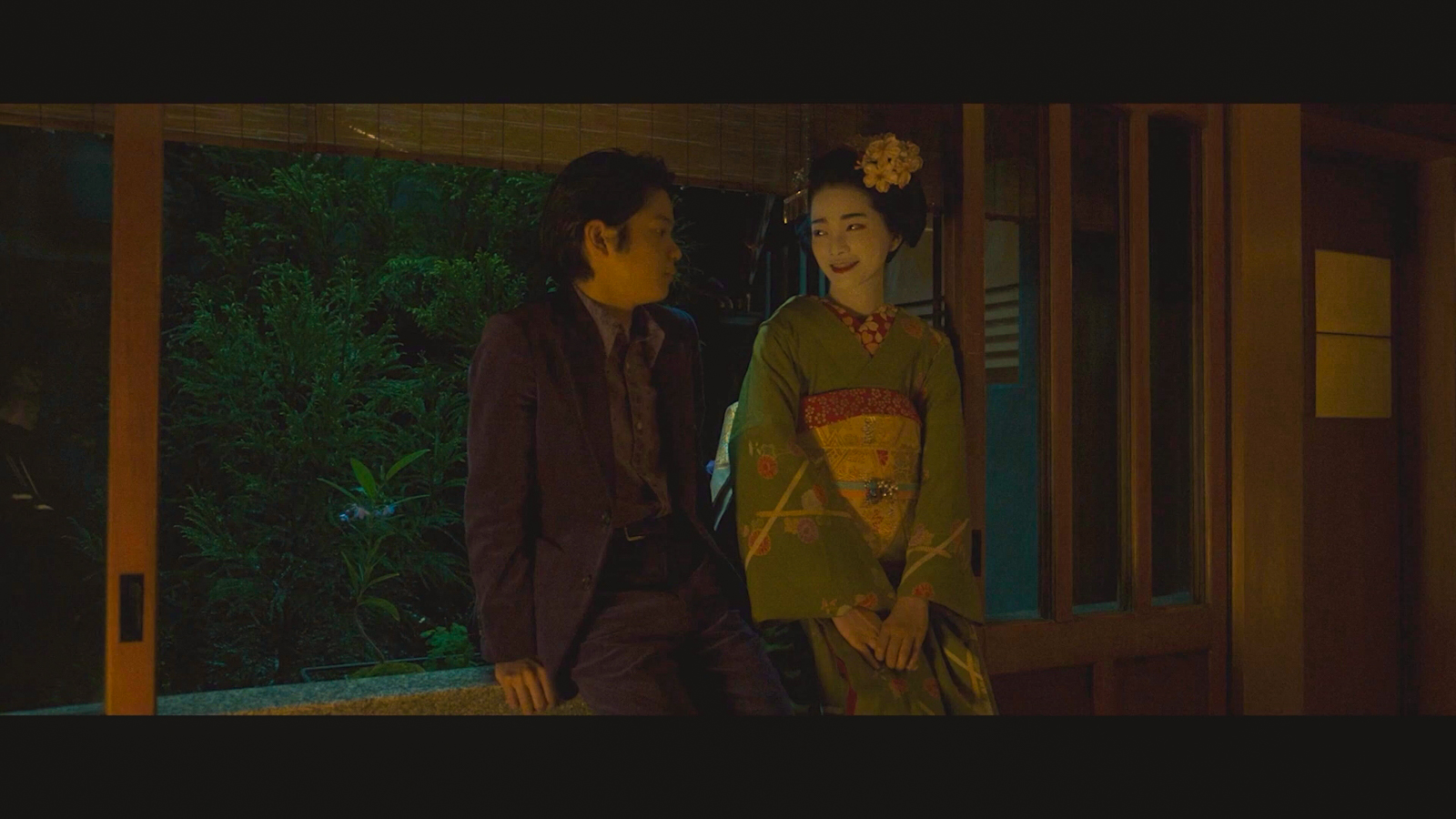
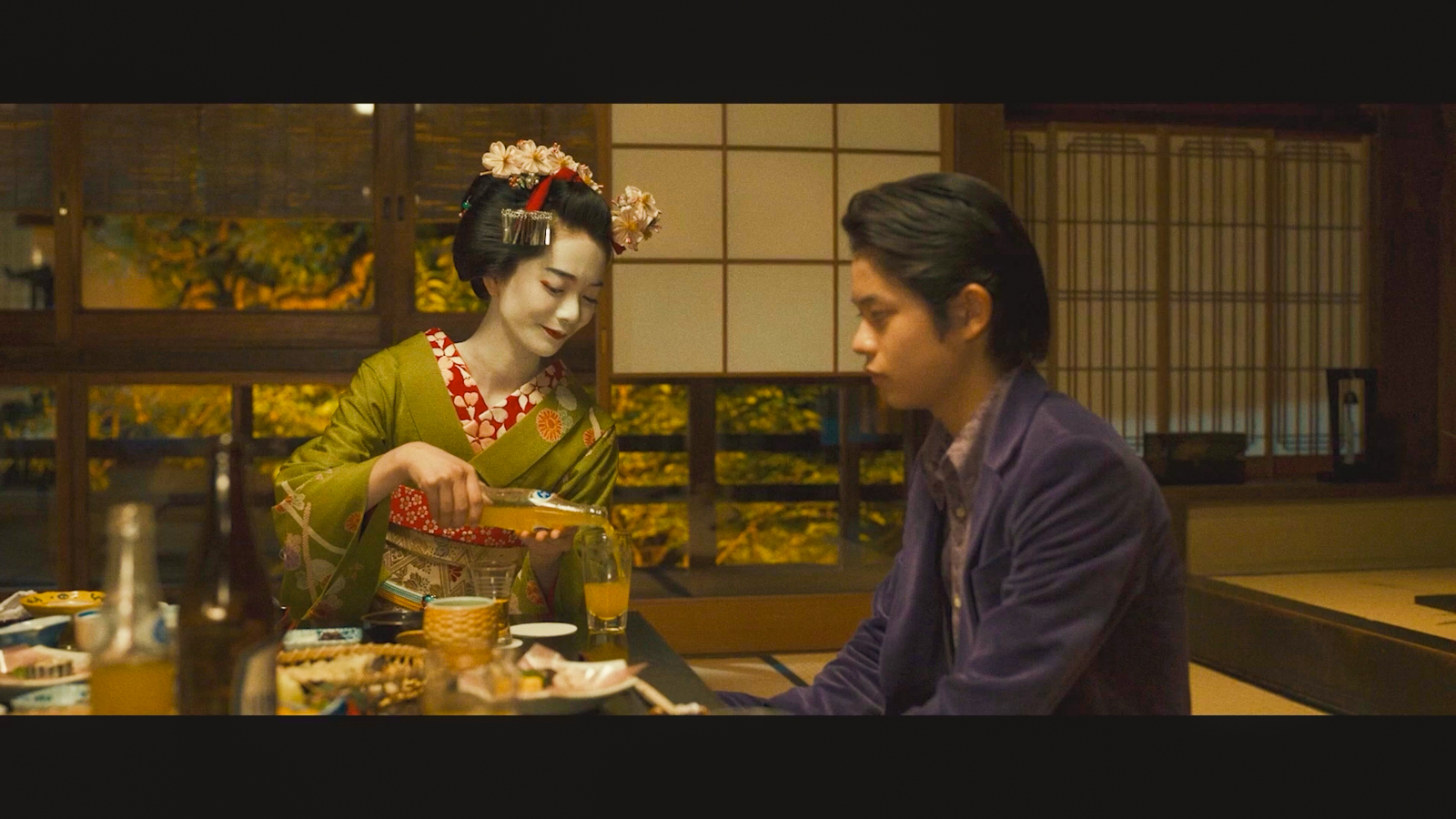
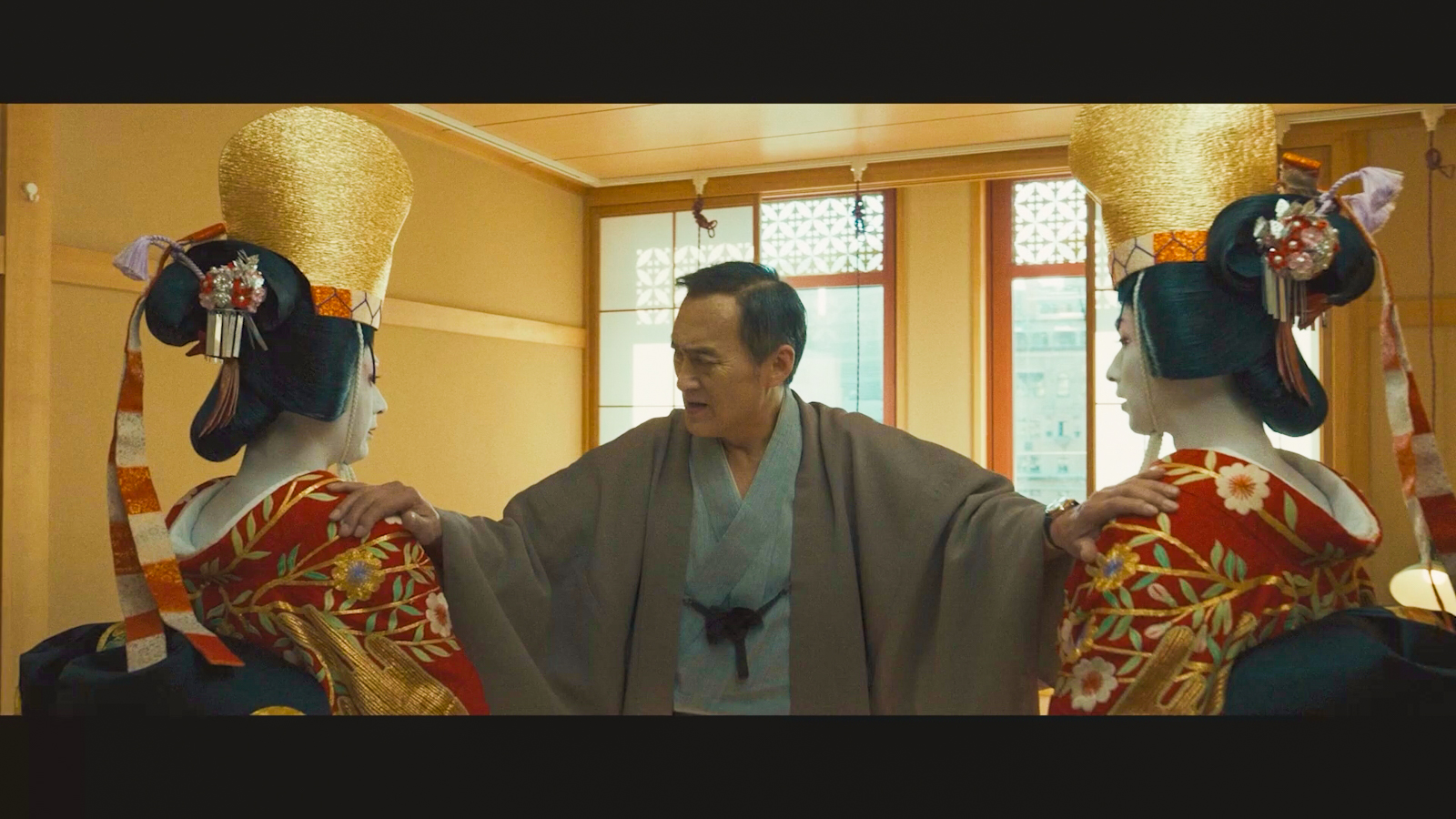
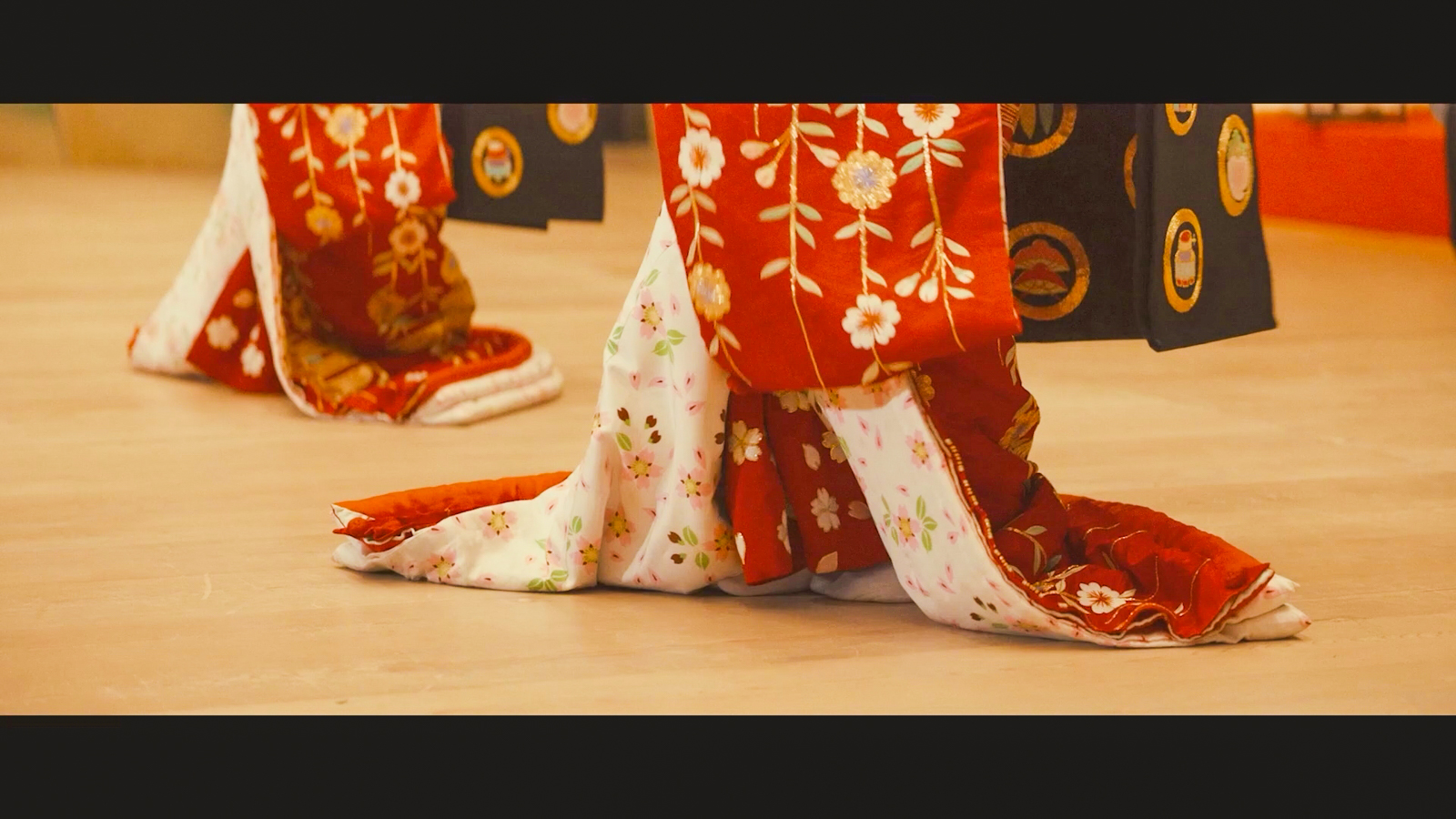
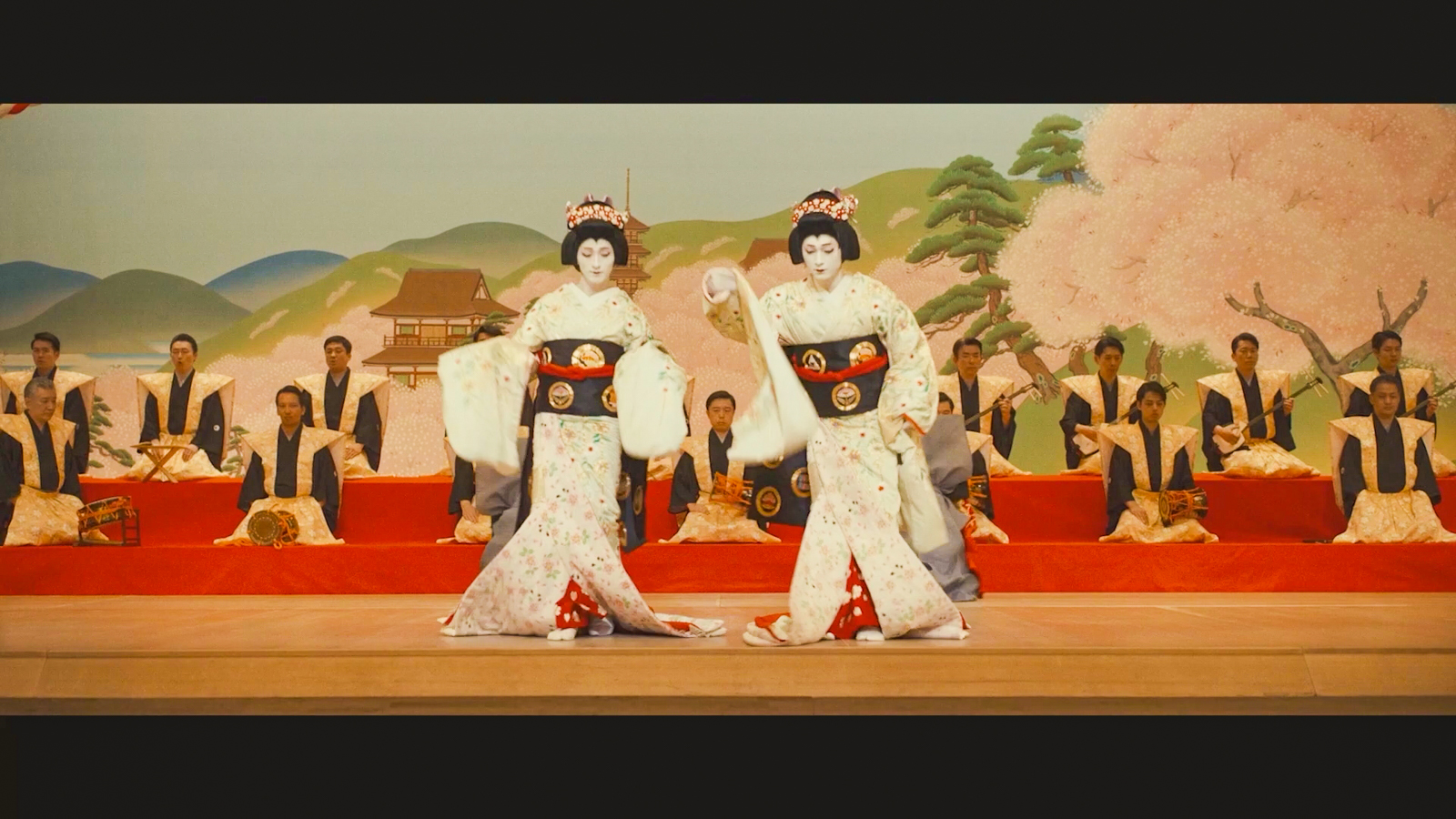
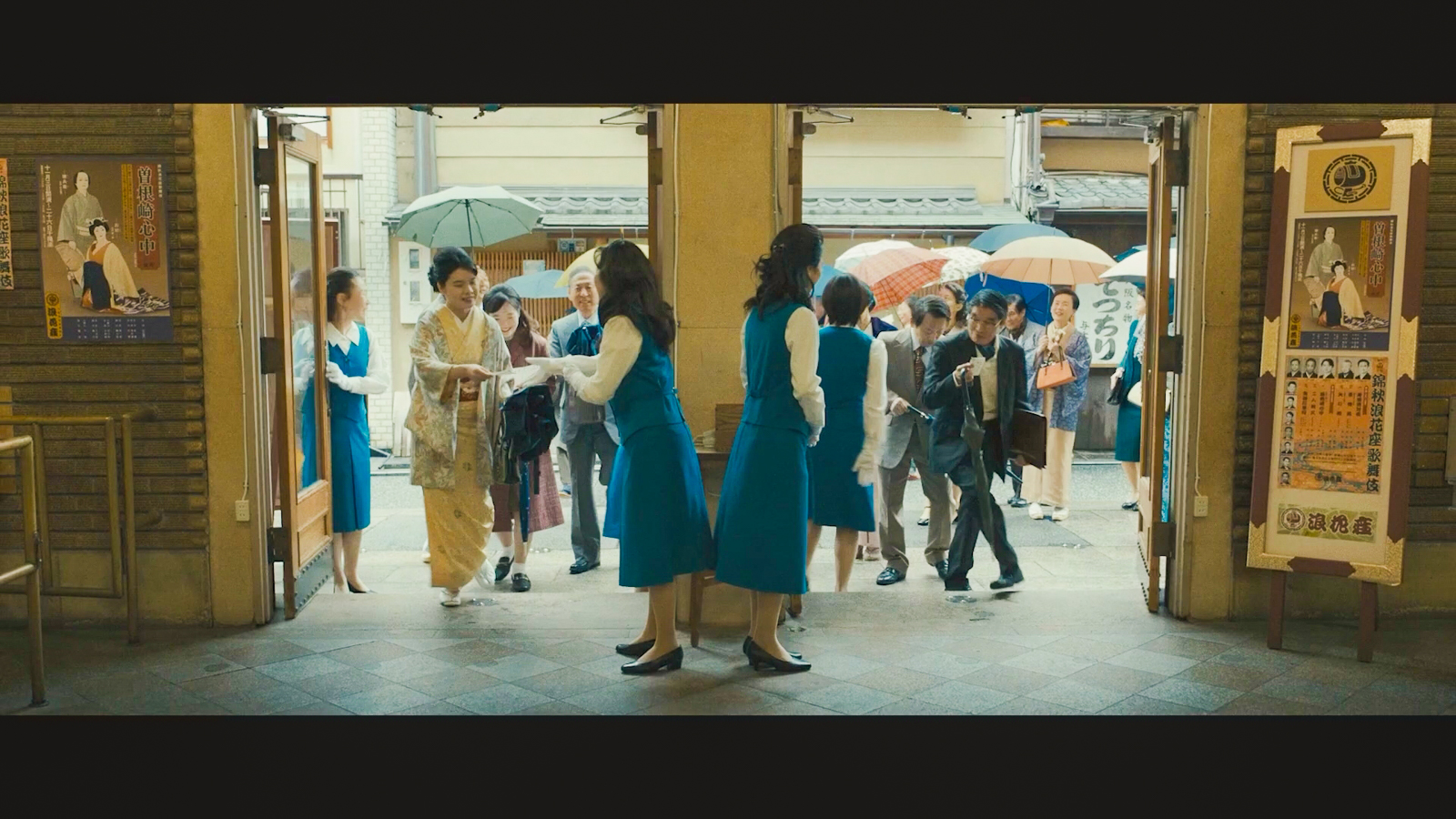
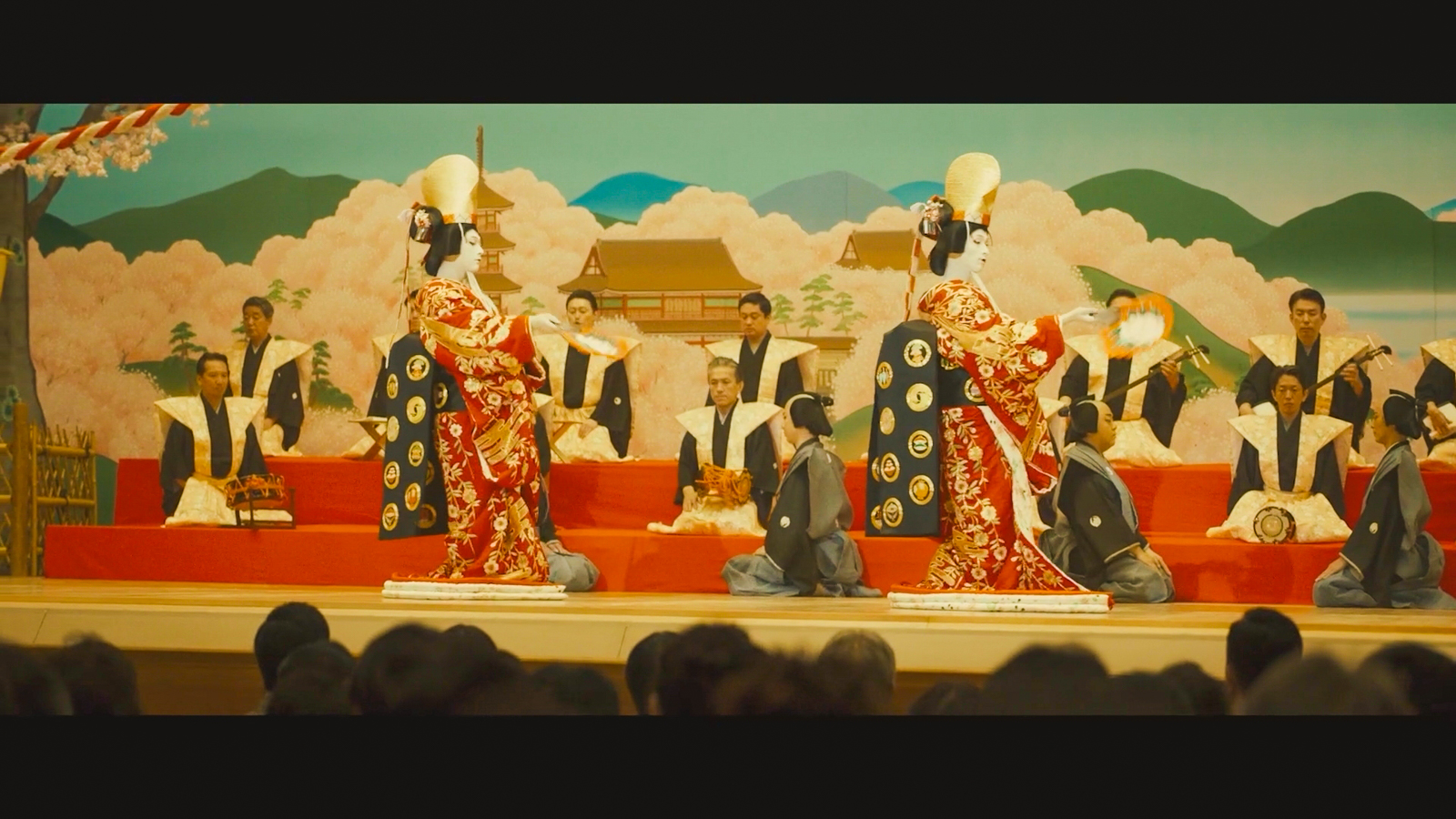
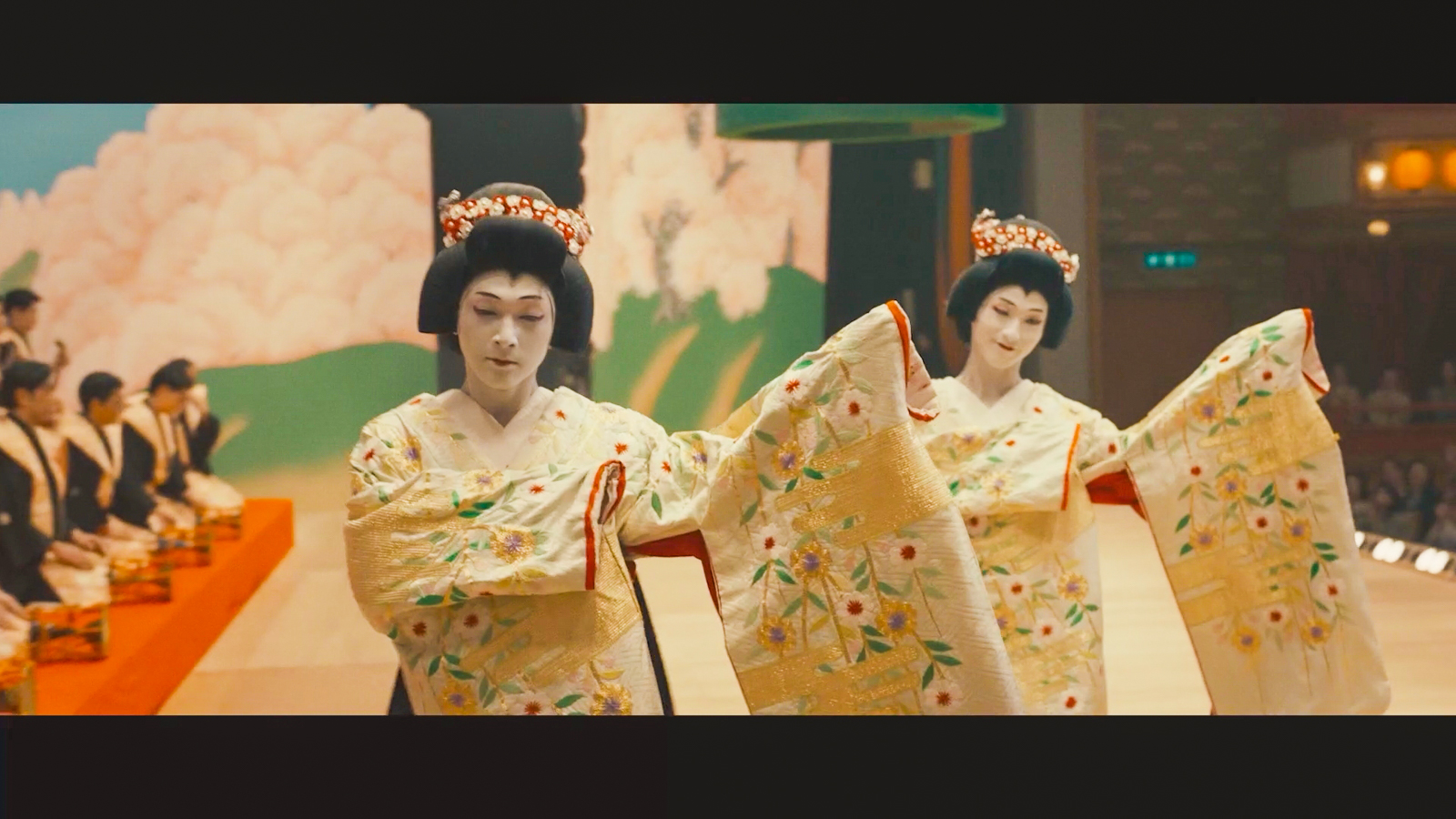
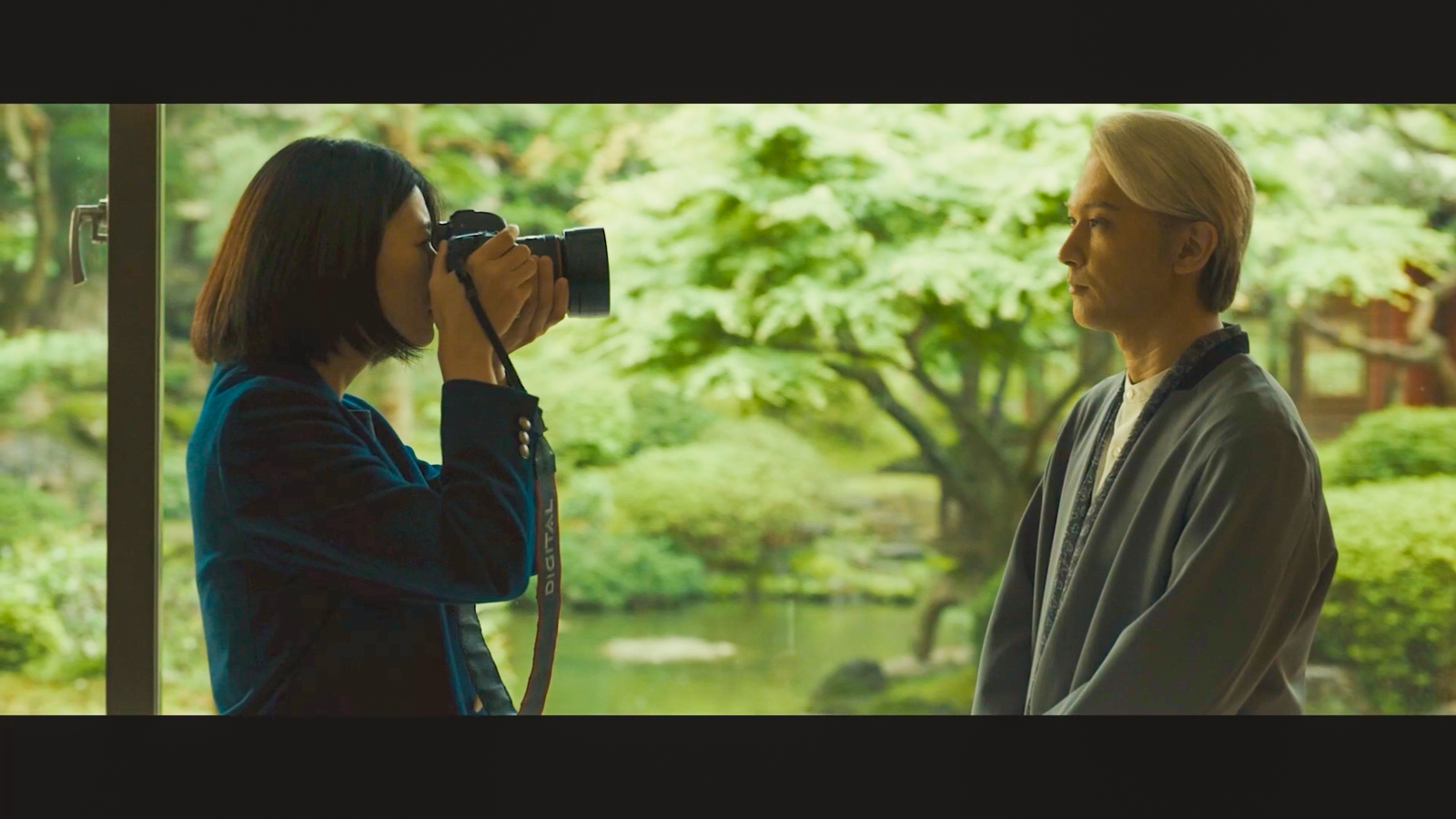
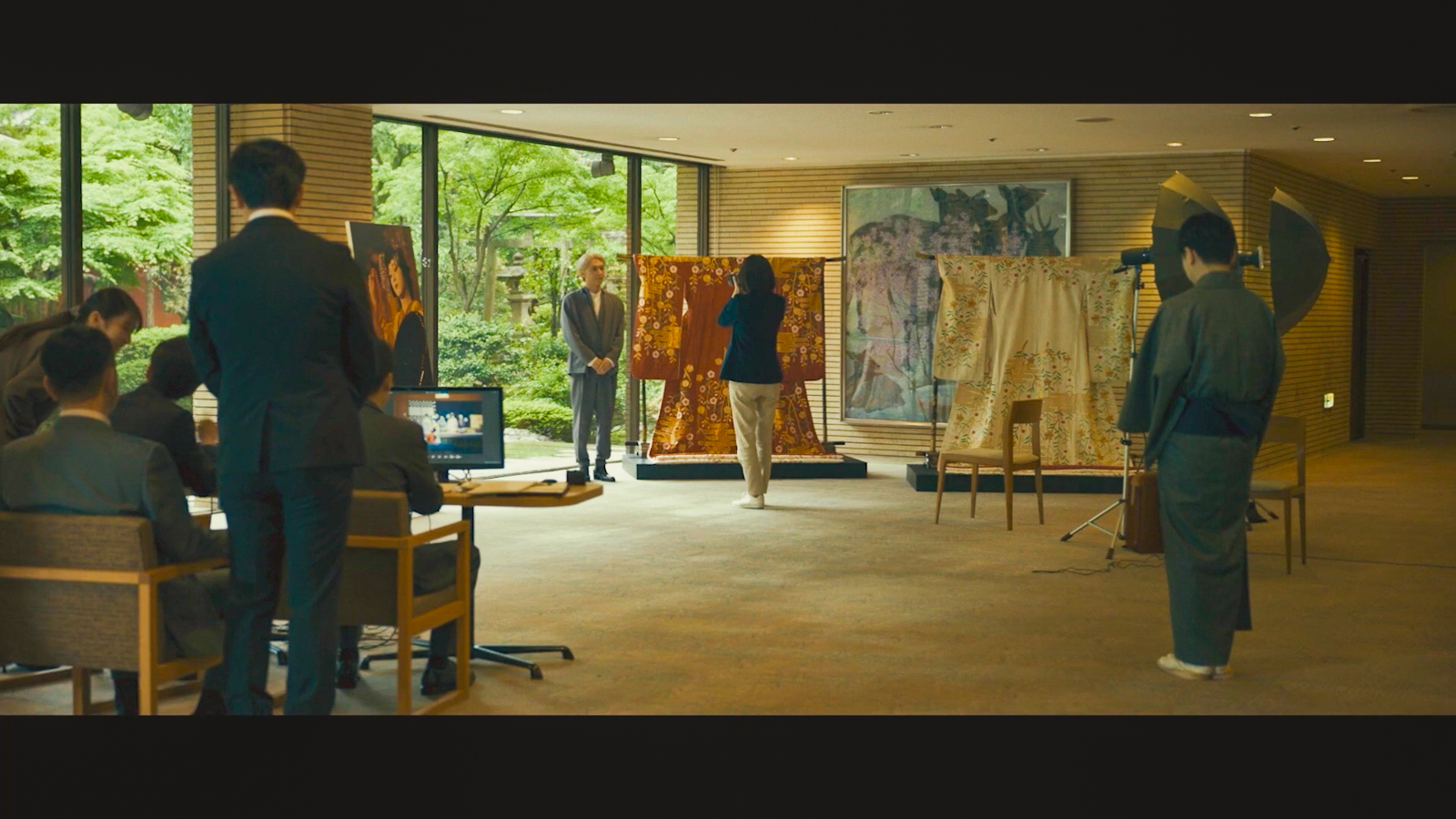
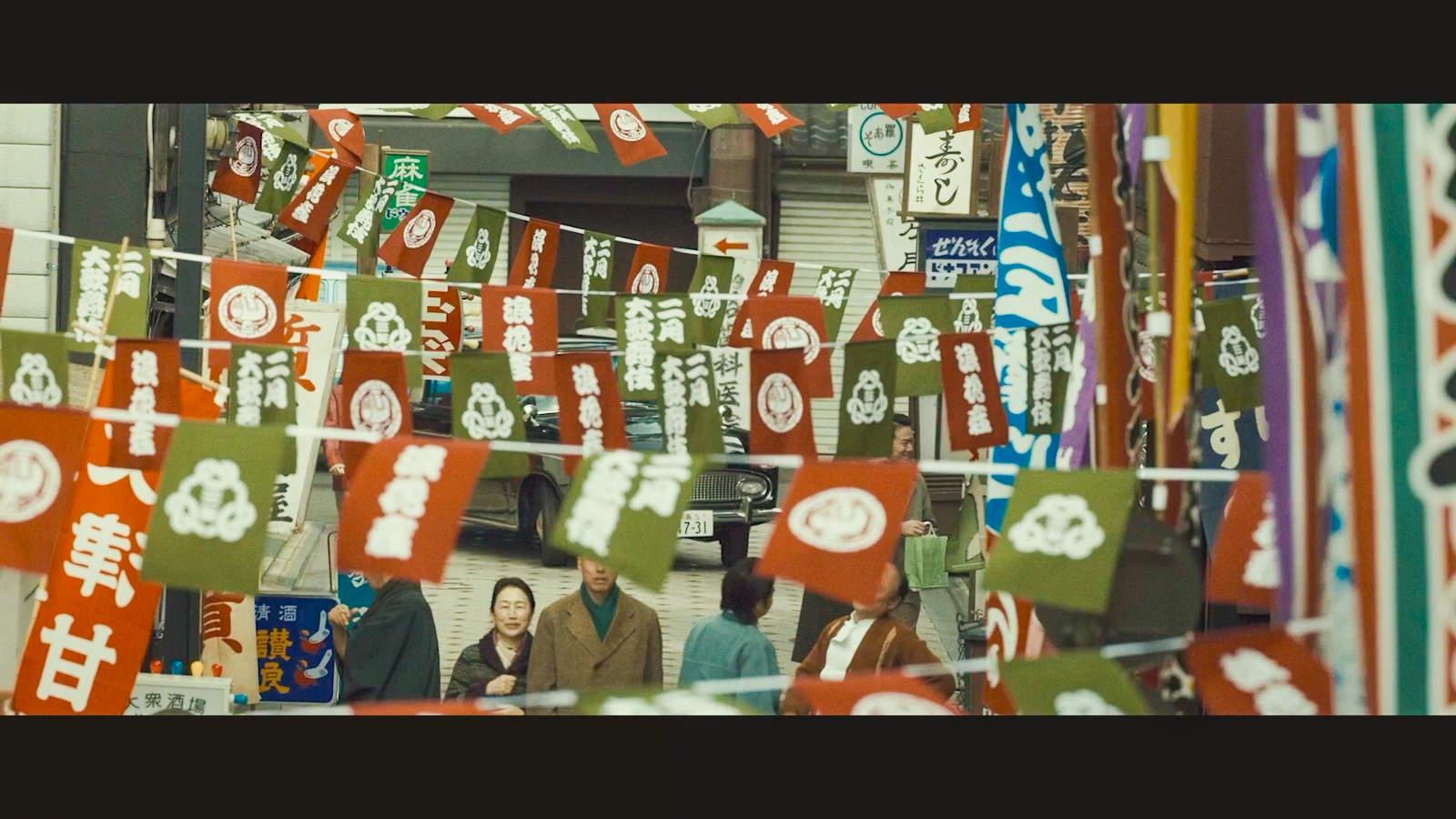
Of course, it wouldn’t be a Kimono Tsuki review if I didn’t talk about the kimono, now would it? The thing that started my love letter to the Japanese arts, and continues to be my primary obsession. The stage costumes, obviously, are all lush, gorgeous, and deftly handled. The costumes in kabuki tend to be relatively standardized and help to identify the characters and archetypes being performed, so it’s no surprise that a movie that is such a passionate and thorough love letter to the art form went all-in with the costuming. What really caught my attention, kimono-wise, was how well the non-costume outfits were coordinated, and how well they telegraphed pertinent details such as age, status, time of year, and yes, decade. From the rough meisen day-wear of the 60s to the subdued silk houmongi of the 80s, they really ensured that the style, colours, and patterns of each kimono accurately reflected what situation and timeframe of the movie we were in. Considering the attention to detail in the rest of the movie, I should not have been surprised by this, but it was still a lovely thing to see.

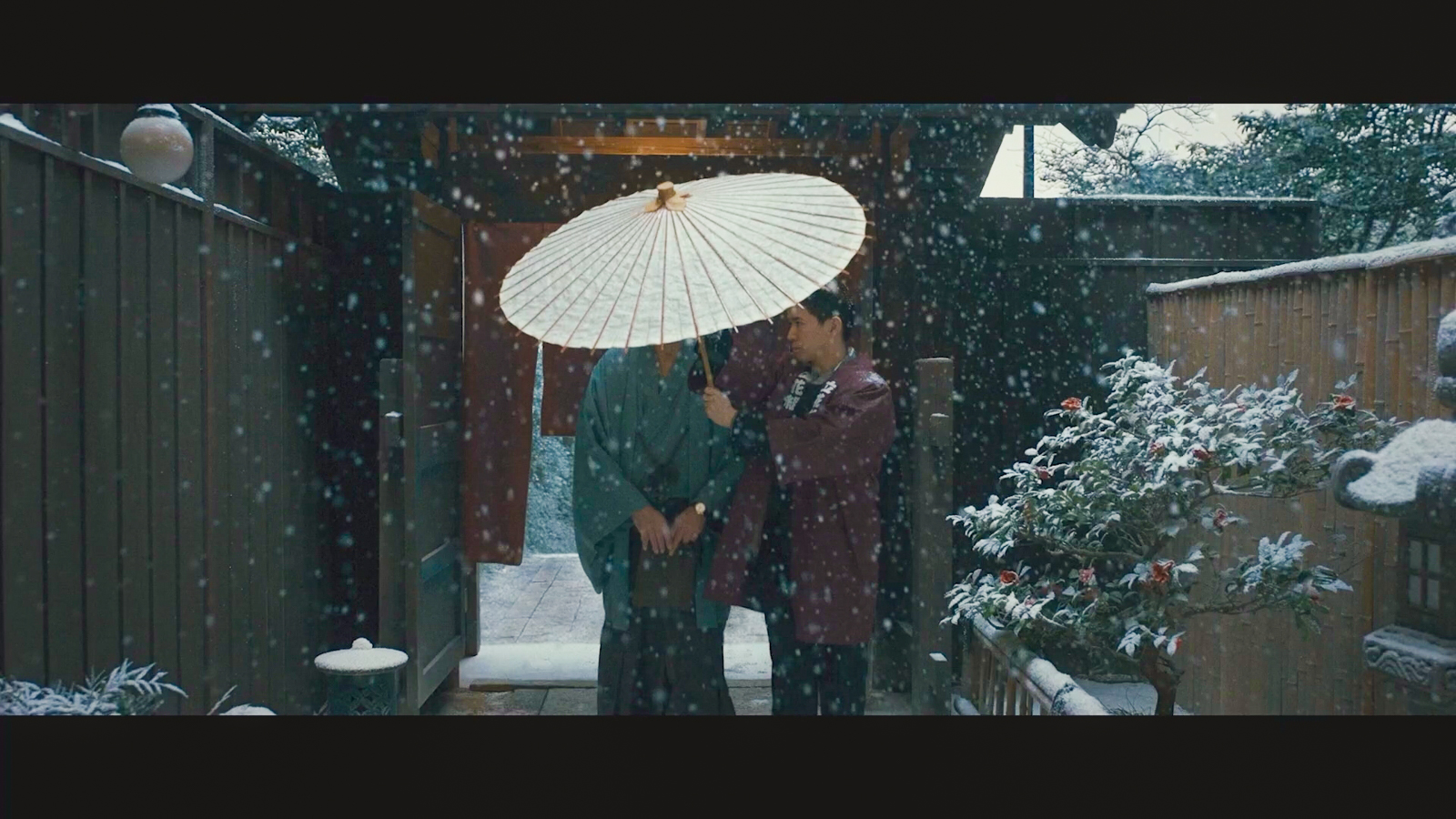
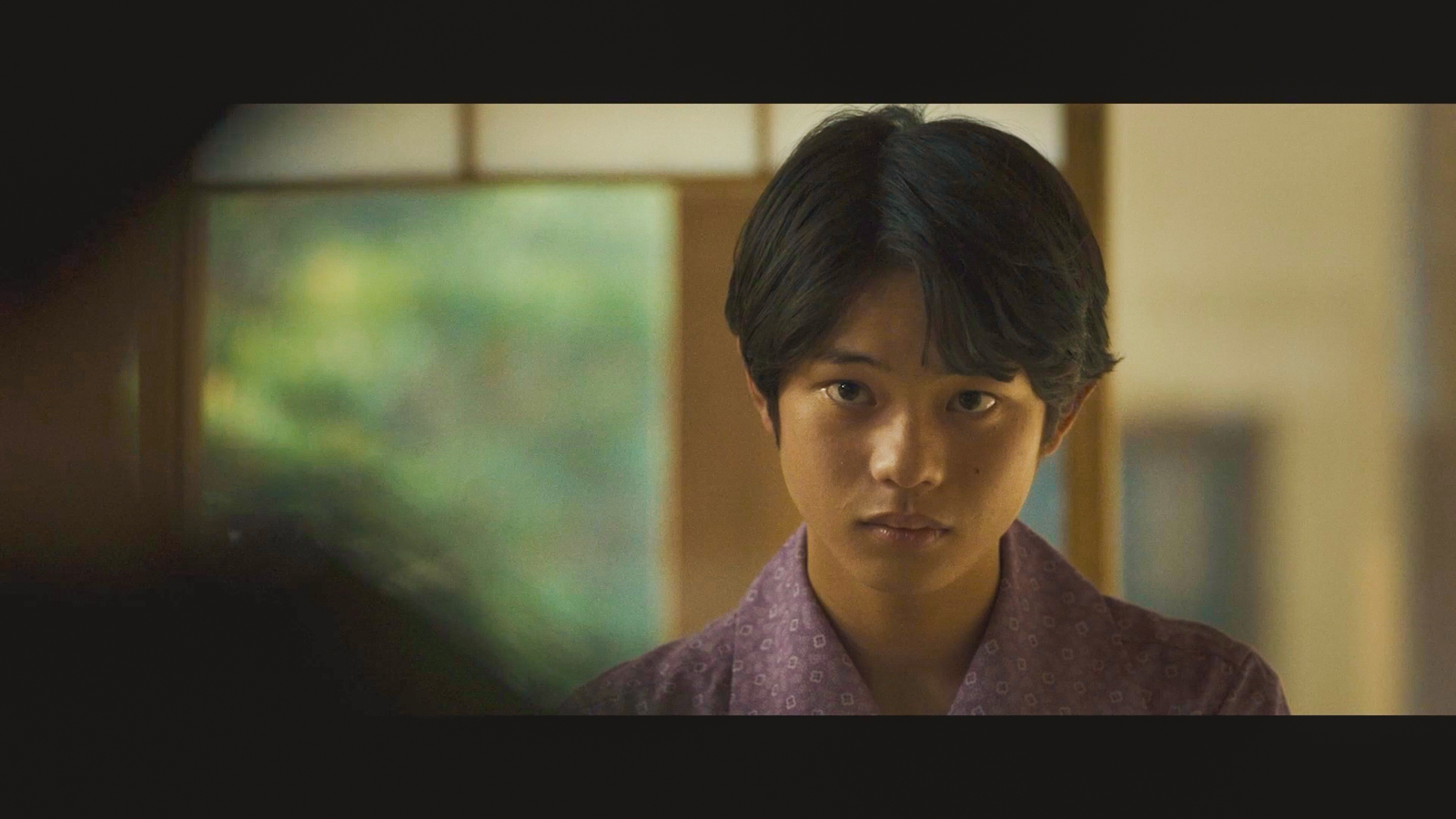
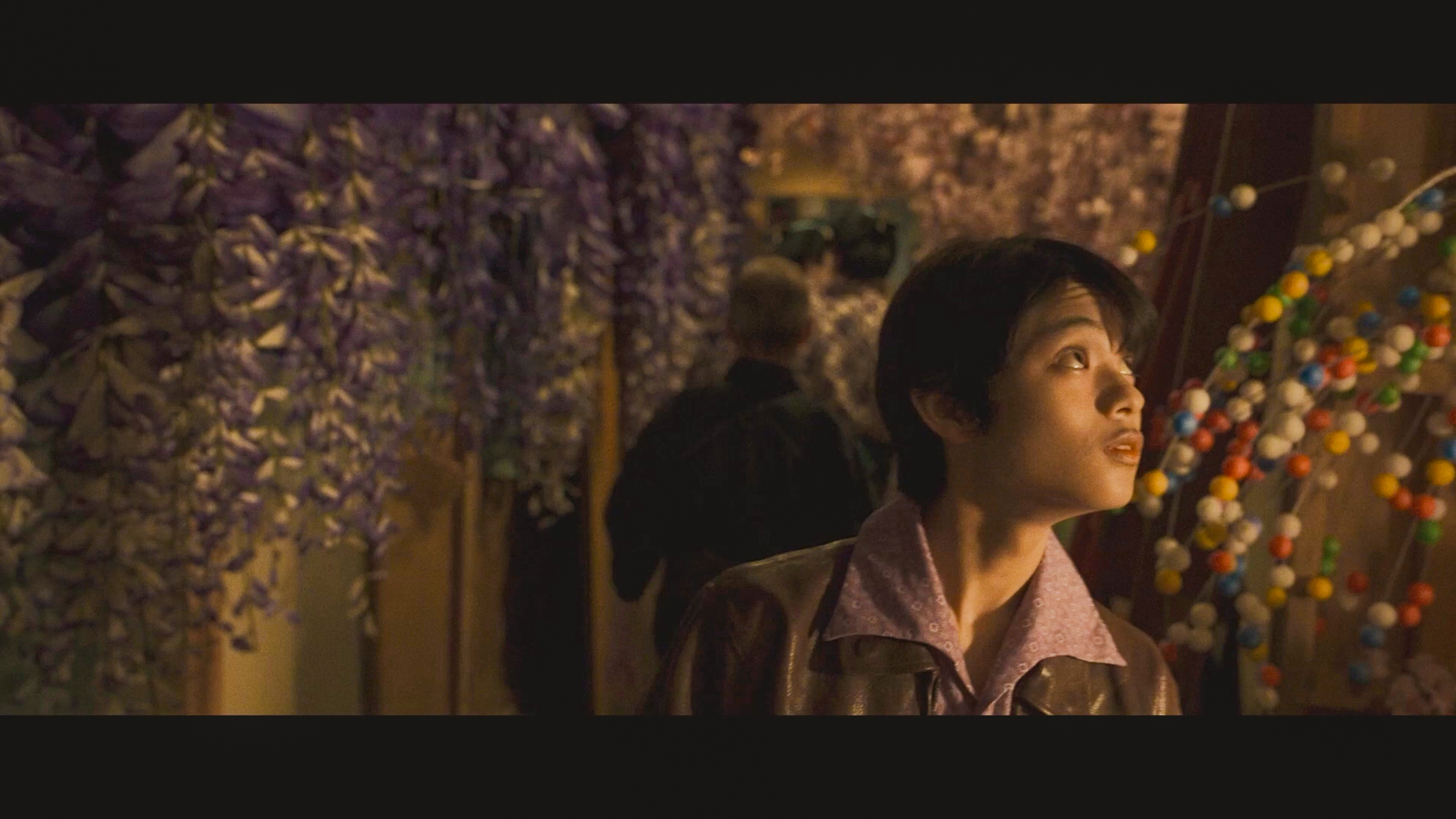
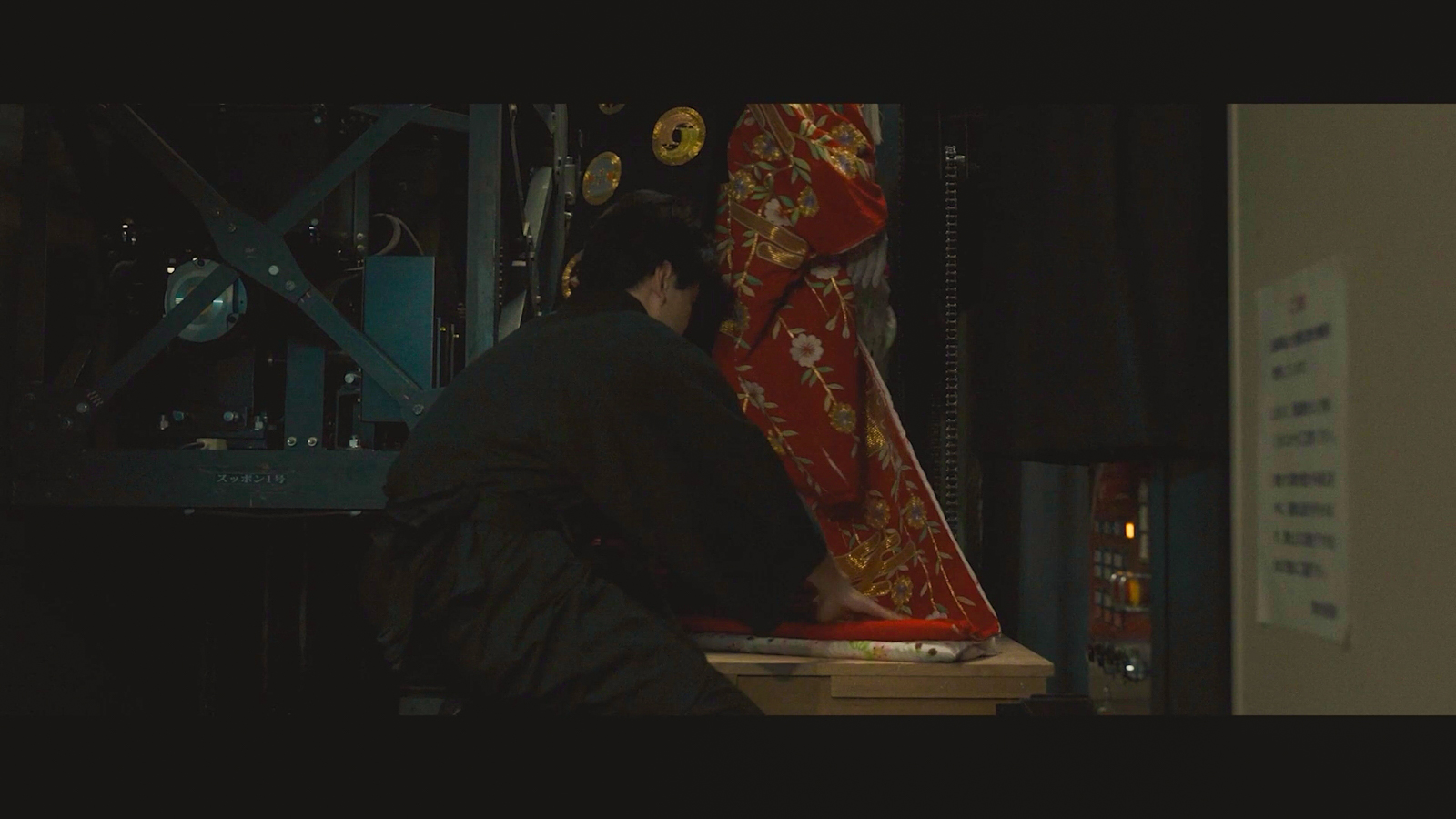
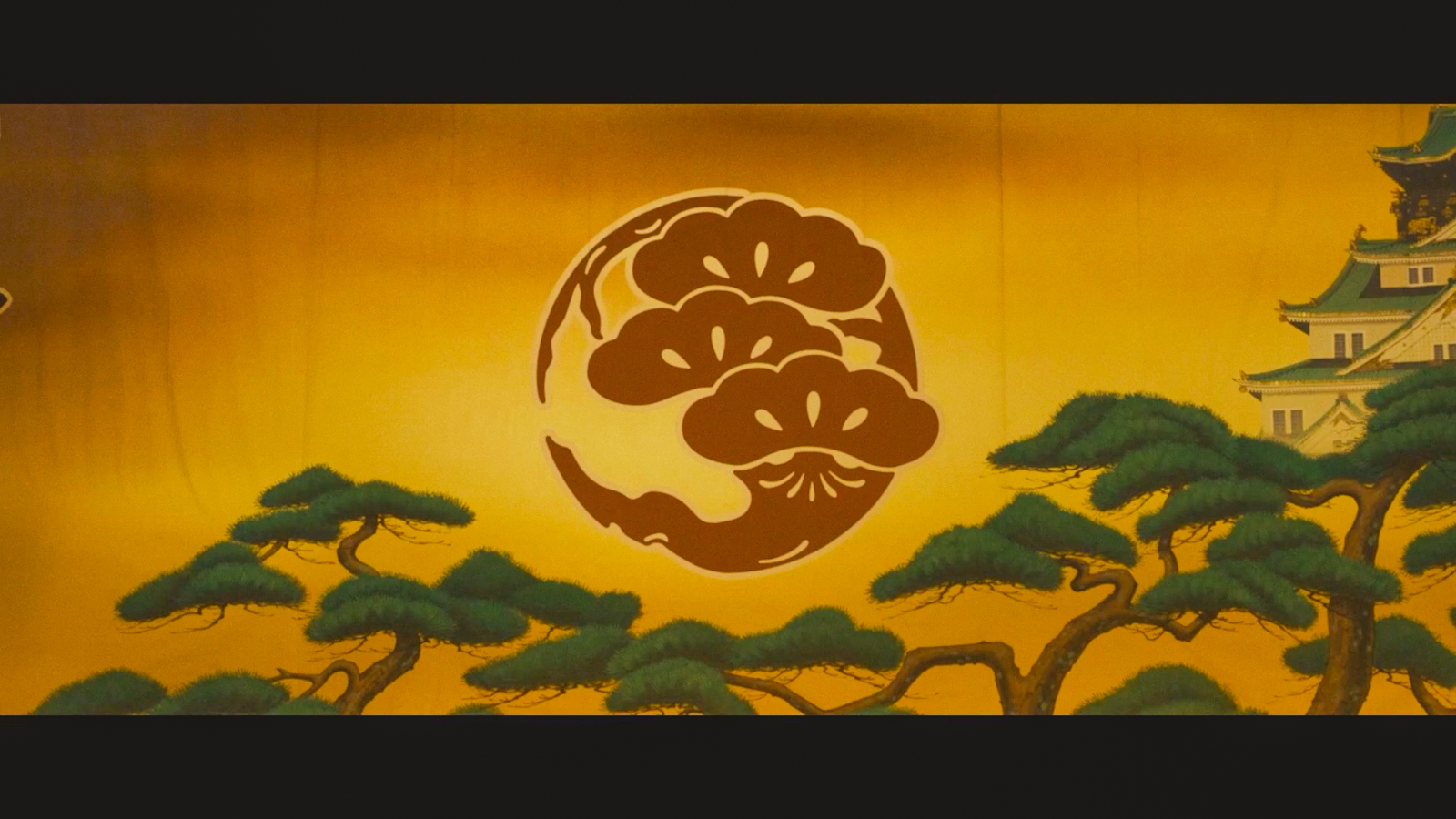
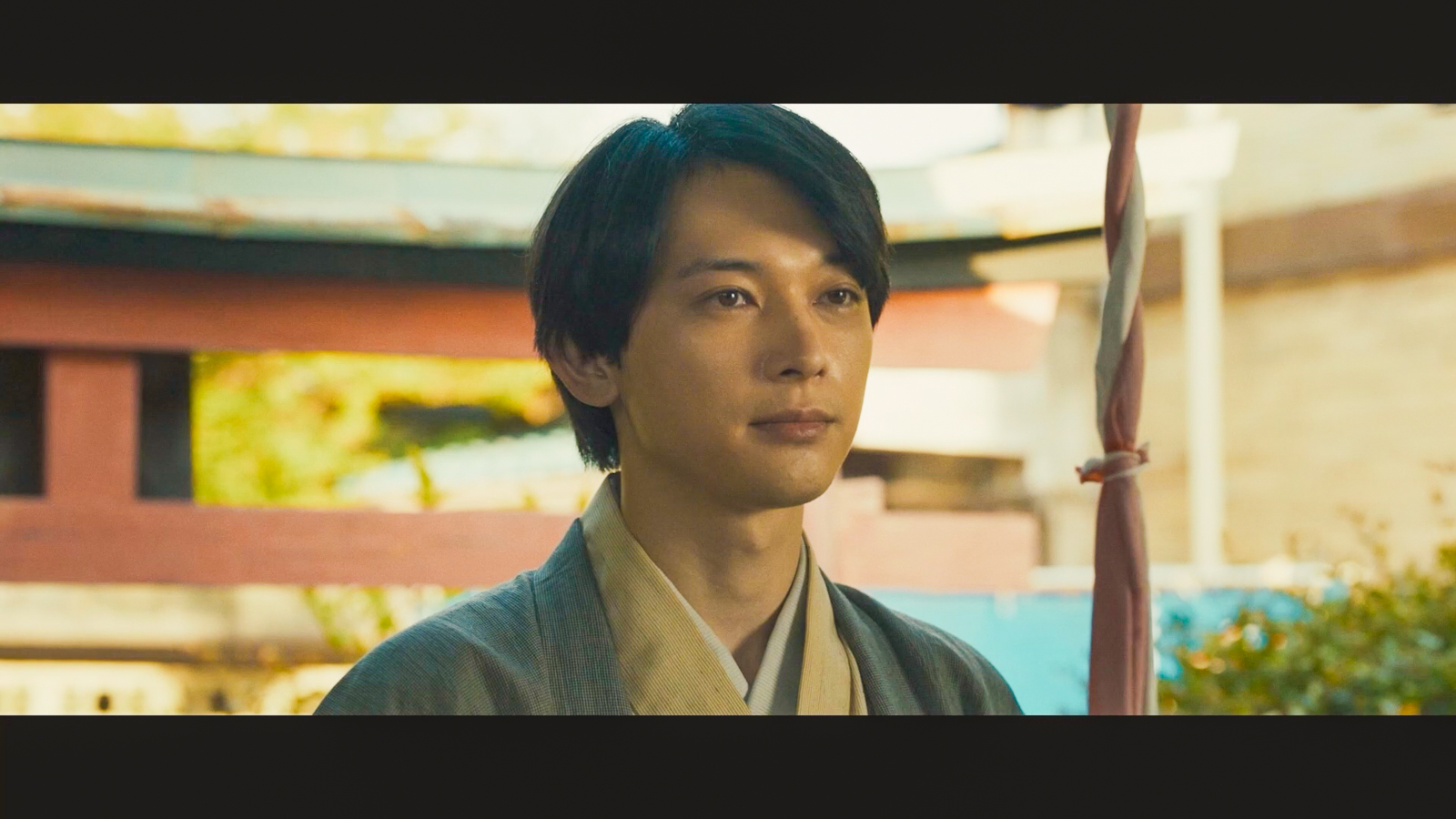
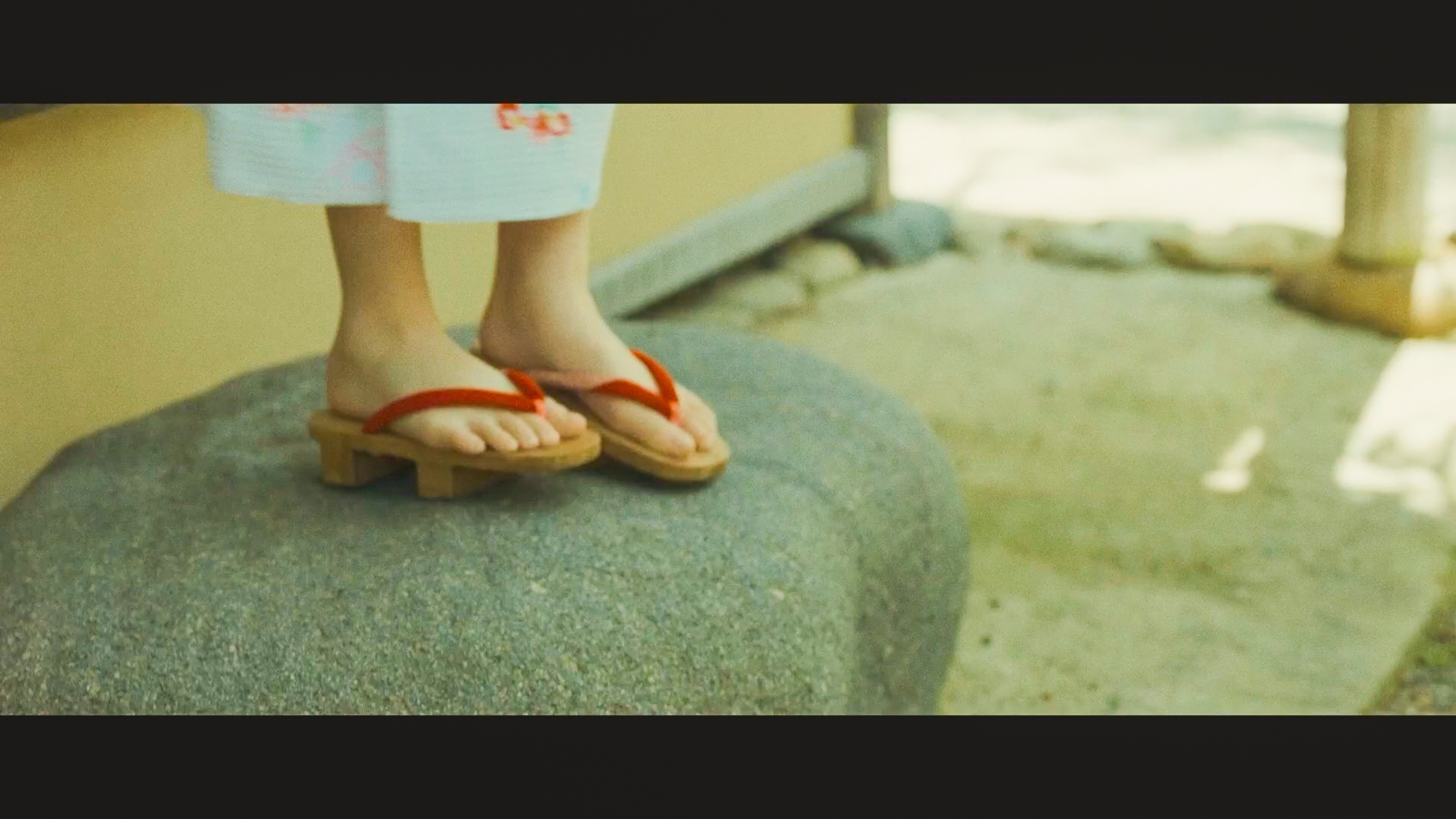
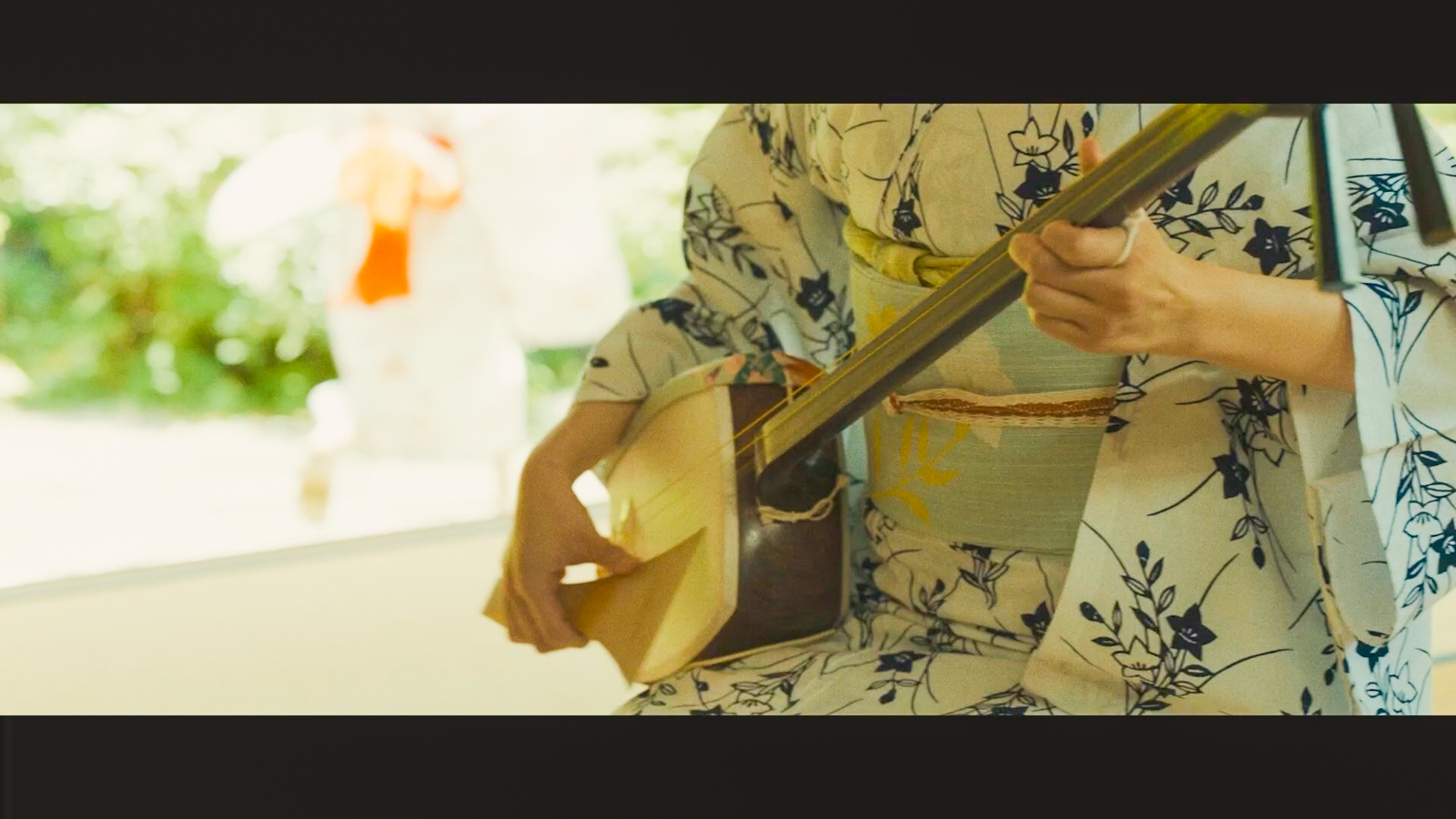
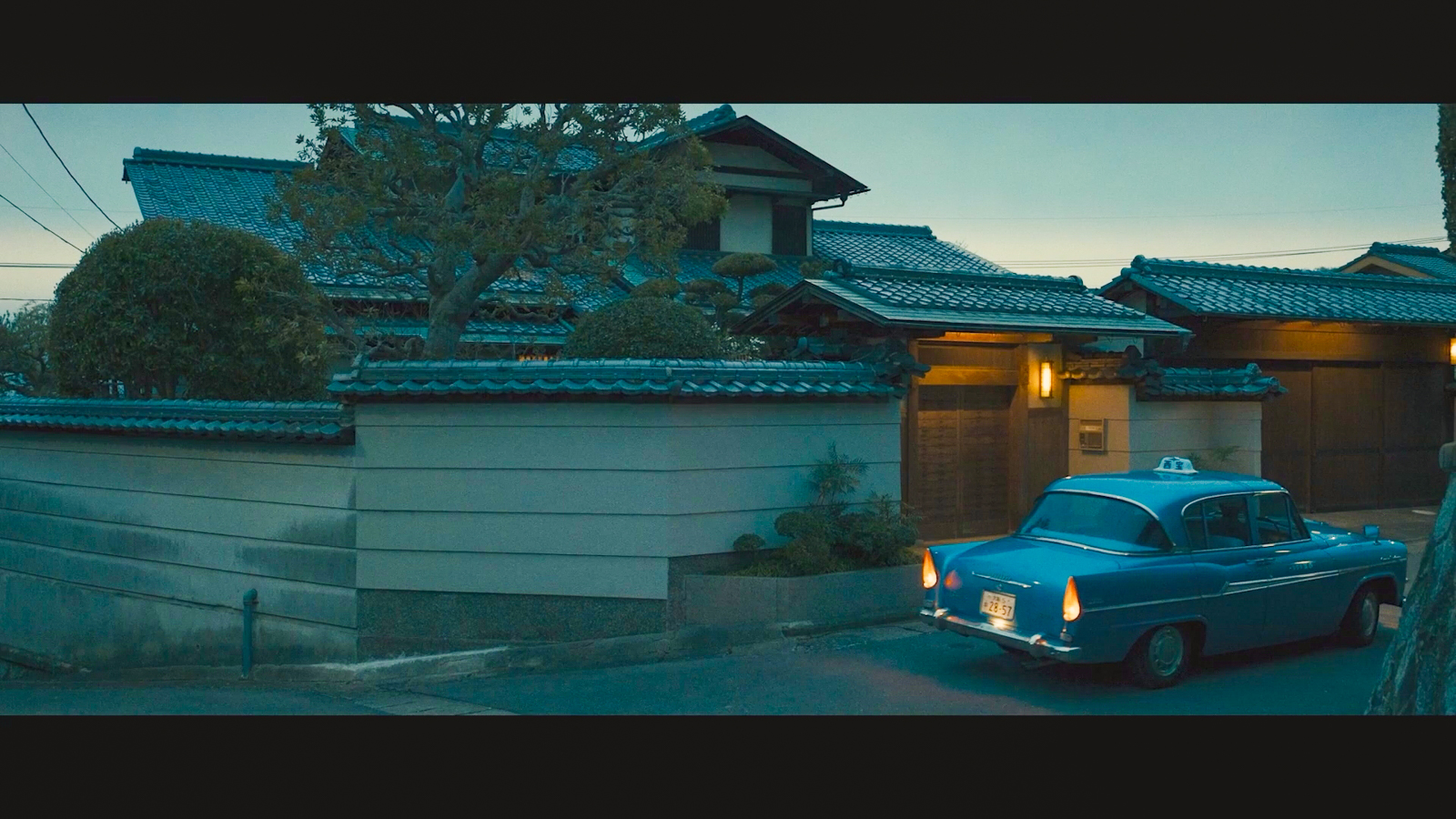
Speaking of “lovely things to see”; when I say it was nearly impossible to keep my screenshotting to a minimum here, you need to believe me. Since Kokuho is over three hours long and nearly every scene is visually stunning, I had to be selective. I also had to skip over large chunks to avoid spoilers. And I still ended up with all these breathtaking images I had to share with you.
My only real “complaint” (such as it is) about the movie is that there are so few women in it, and they’re so one-dimensional that they may as well all be the same character. However, this is the story about two men, their friendship, and their journeys, so nearly all the secondary characters are equally undeveloped. Kabuki has historically been a male-only field — hence the need for onnagata — so it makes sense that the female characters are basically set dressing or accessories. It is simply something to keep in mind if that sort of representation is important to you.

Kokuho will be receiving a wide English-subtitled North American theatrical release this coming Friday, February 20th, and will hopefully be available on streaming and blu-ray later this spring. If you are creative at sailing the seas of the internet, there are ways to find it currently (which is how I was able to get screenshots) but I urge you to show your love and support for this fantastic movie by seeing it on the big screen. The visuals alone will be worth it.

Kokuho on IMdb
Kokuho on Wikipedia

Review – L’Occitane Cherry Blossom

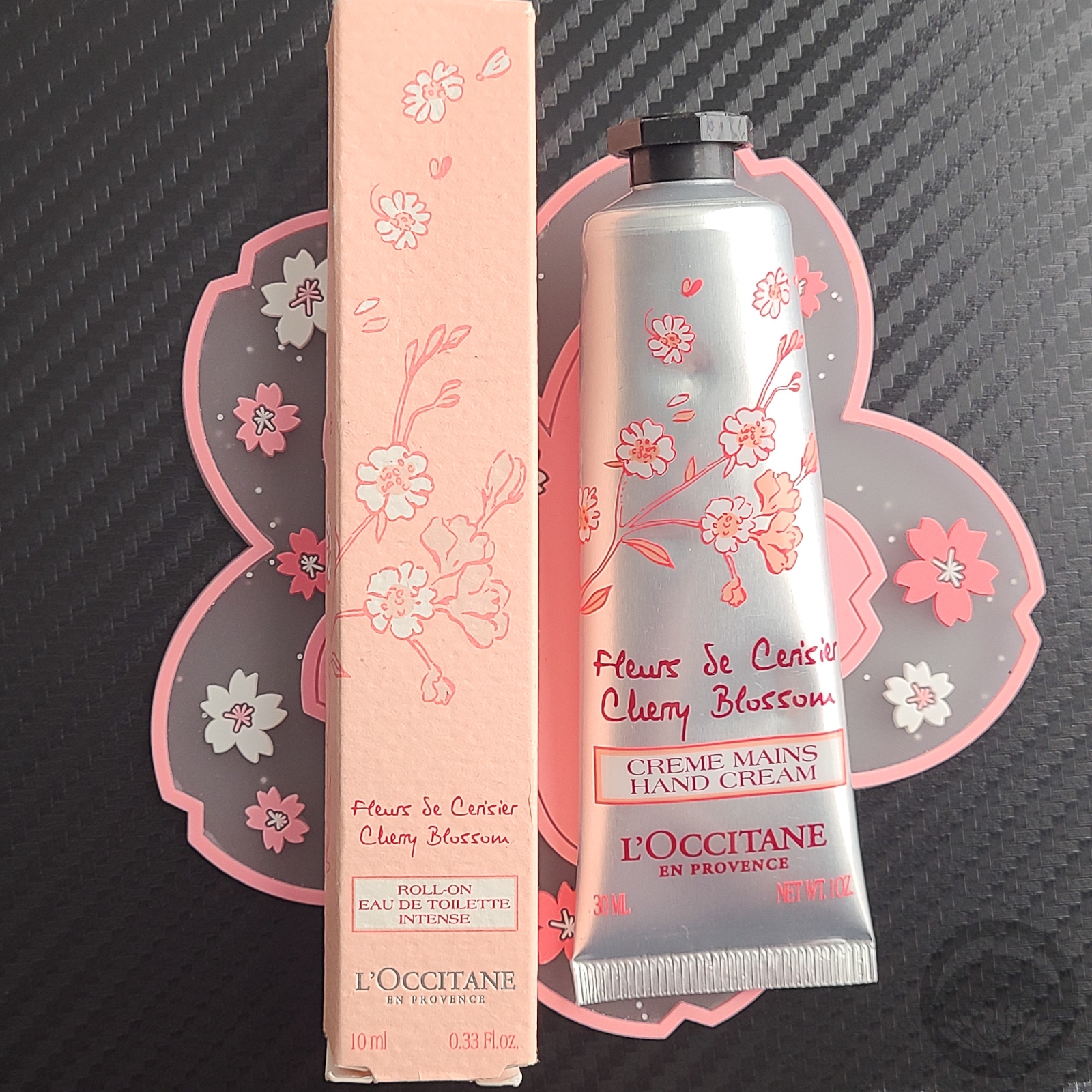
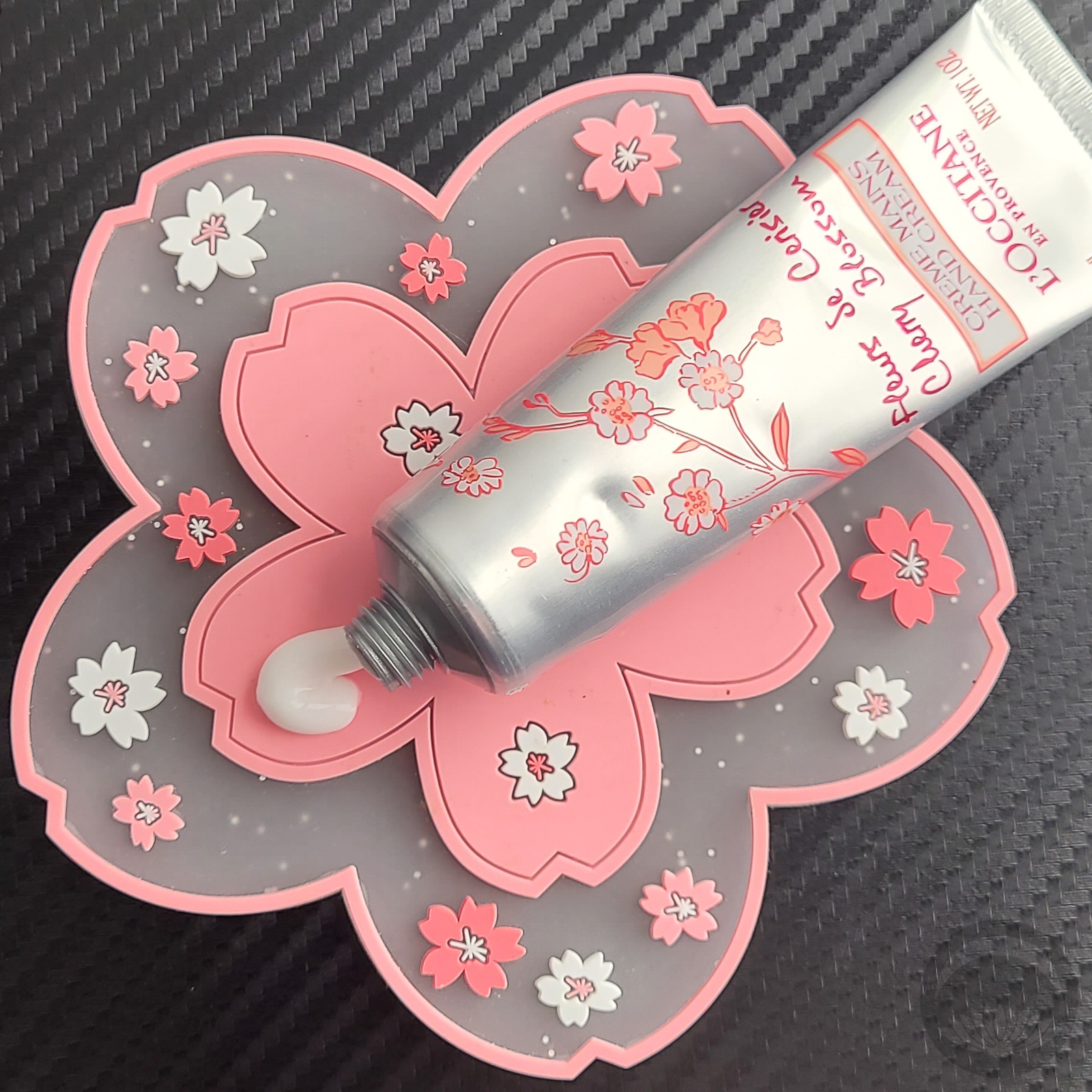
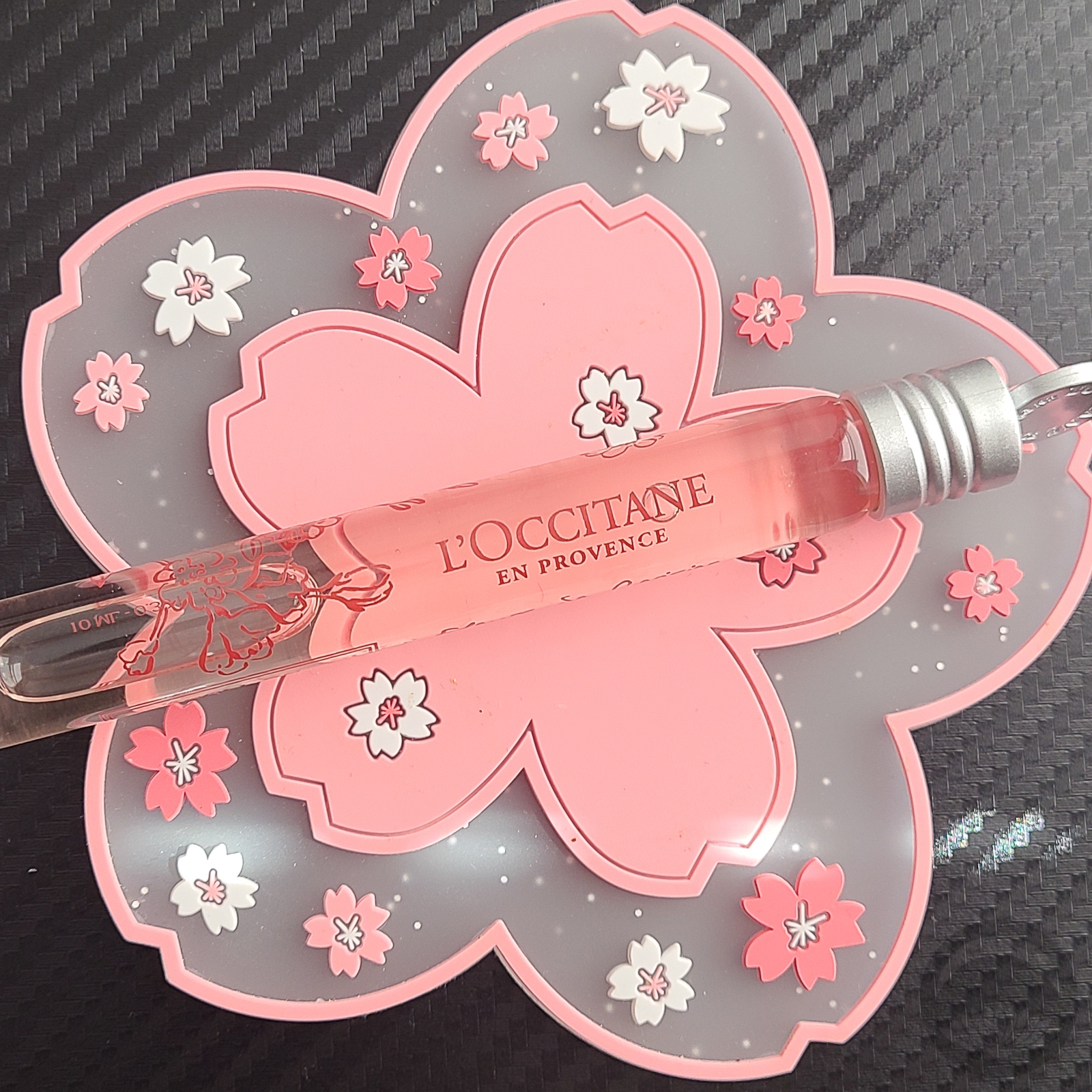
I may have not posted about it of late, but my quest for a true, easily accessible sakura fragrance is ongoing. L’Occitane is a French brand that is available world-wide, and Fleurs de Cerisier is part of their permanent collection, so you can’t get much more accessible than that. I grabbed an Eau De Toilette rollerball and matching hand cream, since I alternate between living with electric heat all winter and living in the desert. I can never have too many hand creams!

Please note: L’Occitane recently redid their visual identity and packaging and I purchased these right before that happened, but the product remains the same.
Unfortunately (and this is entirely my fault for not reading details ahead of time), this is definitely not a singular cherry blossom scent. It’s described as having opening notes of cherry, lemon, and freesia. The heart is cherry blossom, yes, but also heavy on the lily of the valley. It definitely has more of the clean, fresh smell I am looking for, unlike the powder-heavy Rituals set from a while back, but it’s still got too much going on to fit the brief. I do enjoy the notes and progression of this one and it will definitely get used. No worries there! The hand cream is also nice and moisturising but absorbs quickly. This is important to me, as someone who spends a lot of time using a mouse and also can’t risk getting products like this on kimono when  am working with them.
So while I have a lovely new fragrance to add to the rotation, my search for the “perfect” sakura continues! Do you have any suggestions? If so, please leave me a comment!

 I purchased this item myself and chose to review it.